
ChatGPT is a bullshitter. (shit-ton-money-journey-part-2)
In the previous article, I shared with you guys how I came out with a “ChatGPT idea”. The idea to create an automated blog with articles that recommends books based on Twitter trends… With affiliate links 🤑 A blog that can generate a shit-ton of dollars. Or not 😅
To be honest I did not expect that many interactions ! So thank you guys for encouraging me to keep writing !
Here is what happened next.
ChatGPT, the bullshitter.
As you understood, the goal is to have fun. To try to build things with great technologies, and share the story with you. Hopefully it will make money but first it need to be something cool to use. Something that really helps, with trustful content.
So, we have 3 steps:
✅ We get Twitter trends via its API ✅ We generate an article via OpenAI API with a detailed prompt ✅ We scrape Amazon to get related books
From a technical point of view it perfectly worked ! I used timlrx/tailwind-nextjs-starter-blog for the blog as we can embed markdown articles directly in it. The soft (Laravel command) just have to generate markdown formatted articles, put them in the right folder and that’s it !
Technically I could have created a fully automated blog.
But…
⚠️ OpenAI’s recommended books topics were sometime irrelevant ⚠️ GPT was often totally bullshitting when summarizing books 😅
Here is an example
The current top trend in San Francisco while I am writing this article (Jan 20th) is “Warriors”, the basketball team.
Here are the 5 selected tweets to build the prompt.
Those tweets will give GPT enough context to write a relevant article.
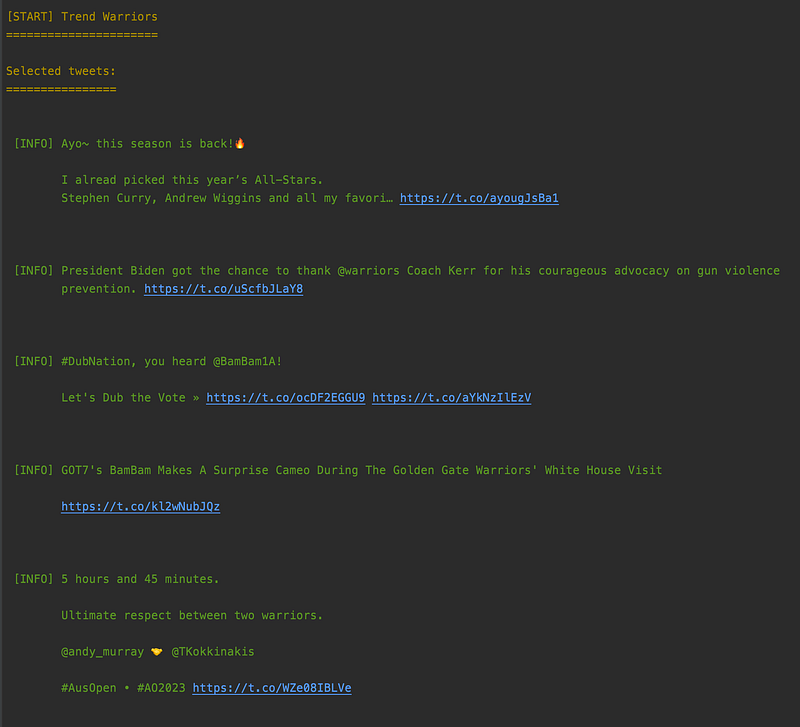
Based on the prompt, it has generated an article and added 3 topics to be searched on Amazon:
- __Watching the Warriors play__ that led to the book Mental Toughness For Young Athletes 👍
- __Learning about basketball strategy__ leading to The A-Z Basketball Book 👍
- __Reading about the history of the Warriors__ for which the first book result on Amazon is… The Best is Yet to Come: The Memoir of a Peaceful Warrior 💩
In this example the last book is totally irrelevant.
For each book, the soft calls GPT API to get a friendly summary. The last book’s summary is even more annoying.
Here is the third book’s description on Amazon:
🔫 After 41 years in the U.S. Army and the private sector, as a “Warrior”, Colonel (Retired) Rick Kiernan has witnessed American History “first-hand” from the Cold War to Vietnam, to the Gulf War, and finally, the Global War on Terrorism. His experiences involved sharing sacrifices with a “band of brothers”. In this memoir, which has been a “labor of love”, he describes his adventures during his years in the service, a journey which has taken him to live in ten states and six countries. He also includes “lessons learned” in an effort to “pass the torch” of service to others who may serve their country and the values that we hold so dear but always have to defend from all enemies foreign and domestic.
Now here is the GPT sum up, from the prompt ‘summarize the book [BOOK_TITLE] to make people want to read it.’
☮️ The Best is Yet to Come: The Memoir of a Peaceful Warrior is an inspiring story of one man’s journey to discover inner peace and fulfillment. Through his life experiences, he learns to embrace the power of meditation, mindfulness, and self-love. He shares his wisdom and insights on how to live a life of joy and purpose, and how to create a better world for all. This book is an uplifting and inspiring read that will motivate readers to find their own inner peace and strength.
It’s false, it far from the book’s story and has nothing to do with the trend.
Untrustable GPT.
Why is GPT lying ?
While looking to understand how GPT works and why it produces fake answers that looks real I discovered a great Youtube video ! (🇫🇷 enable subtitles)
I learnt that:
“ChatGPT does not answer to questions. It just generates a credible sequel to your prompt.”
They basically explain that ChatGPT is not meant to answer right to your questions. It “completes” your prompt with the most likely sequel. Like your phone auto-completion, but trained with huge data.
By the way, write a word and keep choosing the middle word (auto-complete) in your phone, you will discover your own “mini-GPT” 😀
Here is mine, starting with “I”
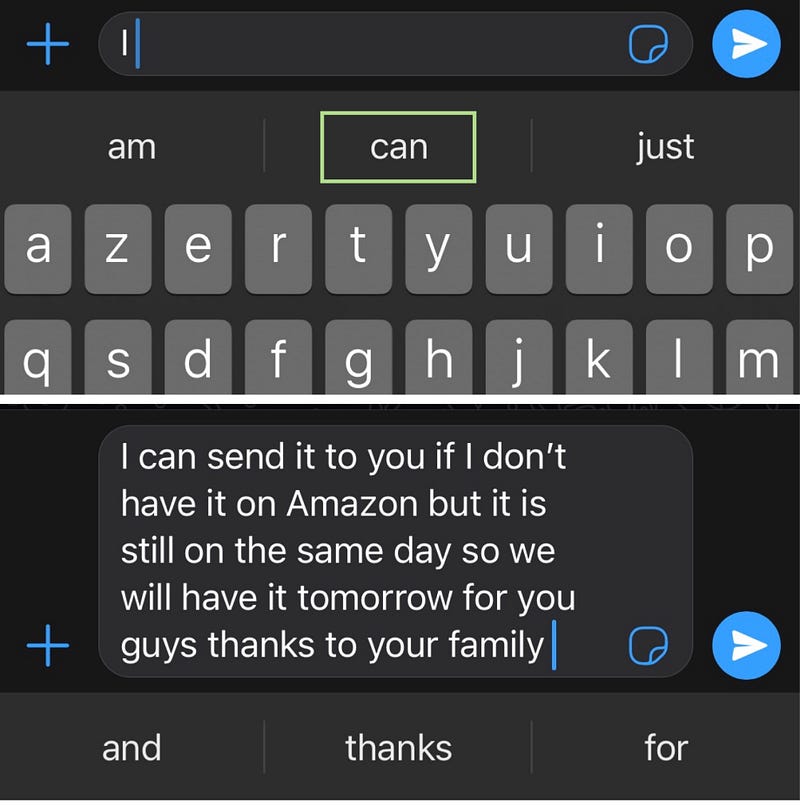
That explains why it wrote a credible yet totally wrong summary for the last book.
So, how to make it tell the truth ?
We have been blown away by its capacity. Now we have to understand its limits and the way it works so we can get the best out of it.
We now know that it is completing, not answering. We know that it can help us a lot when it comes to writing content but not totally replace us, nor be fully trusted.
We must therefore have two important roles: Guide and Guard.
The more we guide GPT, with precise and contextual information, the more relevant the content will be.
That said, I think we will always have to be the guard. We must check the result before spreading it.
By the way, Dr. Lê Nguyên Hoang, computer science researcher, who talks in the video I shared above, said:
We can imagine that the next generations of ChatBot will not only seek to predict what a human would write, but increasingly to predict what human editors prefer (among the things it predicts that a human would write). This is already quite clearly the case with GPT-3.5, which is trained to avoid certain topics…
📚 Back to the blog
Guide and guard… To ensure that the articles are interesting and without irrelevant books recommendations, I decided not to auto-publish.
Instead, I put several checks and validations during the process.
Here is the current one:
- The command shows each trend + 5 tweets and let me choose if we should write an article about it.
- It send an OpenAI prompt to get an article and 3 related topics.
- It then displays the topics. I can validate or edit each topic before it’s being searched on Amazon.
- The command scrapes Amazon’s result page searching for the topic in the book section. It gets book’s title, images and urls.
- Instead of auto-selecting the first book, it shows me the first 10 organic ranked (avoiding sponsored ones) and let me choose which one should be included.
- I personally check on Amazon and select the right one.
- It calls OpenAI again with the book title, asking a sum up linked to the trend.
- Shows me the result that I once again can edit and validate.
- Generate the article, at the right place to be ready for publication.
- I just have to recheck the article and publish it.
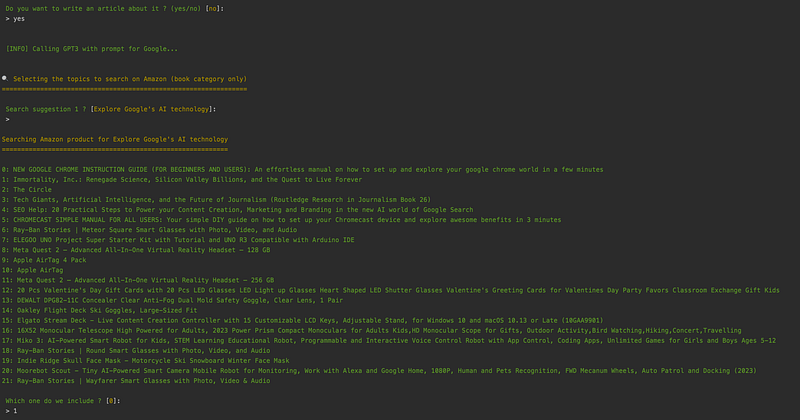

Doing so, it takes around a minute to create an article, on a trendy topic, with 3 books recommendations, fully checked by a human.
Good enough ✅
Does it work ?
For the moment, absolutely not 😅
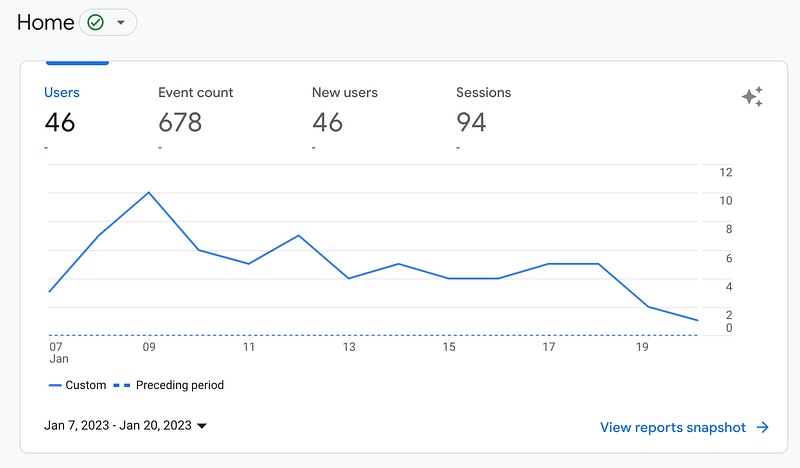
The last 14 days I published 36 articles, including up to 3 books each. Today, only 7 of those articles are indexed on Google.
That is the reality behind what seems to be a great idea vs real world execution. The reason why most of us will not make money with ChatGPT.
In order for the blog to work, I have to keep pushing. Find ways to bring the first users.
I could develop a Twitter bot that uses GPT to respond to related tweets and spread the articles. I could find other sources of trends. You also certainly have a lot of ideas that worth sharing…
But as it is a side experimental project, I can’t spend too much time on it.
Any developer wants to join me in this ? (There is a shit-ton-of-money to make 😄)
Shares
I wanted to share the blog link with you guys but as I just started writing english articles today instead of french, I want to let it run one more week to see how it ranks, without medium’s external visits. I will share it in a few days
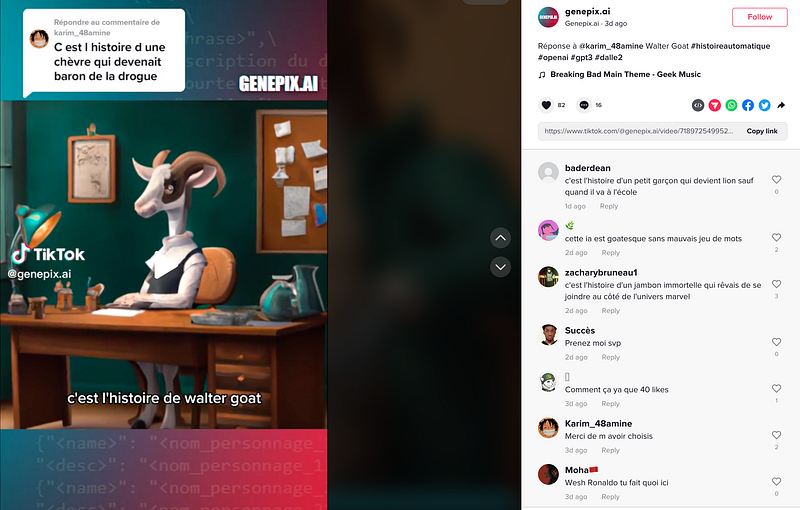
Meanwhile, a friend sent me a very funny project mixing midjourney / OpenAI GPT and Tiktok.
A Tiktok account with short stories written and drawn by AI. People submits stories in comment. Each day they select one and post the result the day after.
It is only in French tho. You could do the same in English.
Share the best projects, videos and books you know !
I will keep you guys updated on this STOM-journey 😄