
Chasing Eternity: The Unseen Limits of ‘Infinite’ Energy
Decoding the Paradoxes of Our Sustainable Odyssey
The world finds itself in a desperate dash against the clock to counteract the ravages of climate change. Energy, drawn from the ceaseless cycles of the sun and wind, has been heralded as the panacea for our planetary tribulations. Across the globe, nations and institutions have poured untold billions into projects harnessing this energy, all in a bid to lessen their carbon imprint and set forth on a path towards sustainability. Yet, in the midst of the fervor and enthusiasm that envelops the realm of renewable energy, have we paused to contemplate the true endurance of these resources? Is it, in a technical sense, possible to label anything as truly renewable? Let us explore the lesser-discussed facets of renewable energy to gain a more comprehensive understanding of the overarching narrative.
The Sun: A Finite Source of Energy
The sun, oftentimes considered the quintessence of renewable energy, has bathed our planet in its light for an estimated 4.6 billion years and is predicted to persist for another 5 billion years. While this span may appear interminable, it is, ultimately, bounded. In the fullness of time, the sun will deplete its reserves of energy, marking the cessation of its lifecycle. This prompts a profound inquiry — if the sun, the very linchpin of life on Earth, is subject to mortality, can we genuinely deem any form of energy as authentically renewable? The capture of solar energy necessitates the employment of solar panels, primarily constituted of silicon, metals, and, of paramount importance, lithium-ion batteries for the preservation of energy. Although these elements inflict markedly lower environmental detriments in comparison to fossil fuels, they are far from innocuous. The fabrication, conveyance, and disposal of solar panels and batteries entail substantial energy expenditure and engender waste that demands judicious management. This ushers us to an additional, pivotal facet of renewable energy — the management of waste.
The Waste Management Conundrum
Nuclear energy, frequently classified as a variant of renewable energy, confronts a formidable challenge in the management of waste. The radioactivity in waste emanating from nuclear power facilities persists in its hazardous state for millennia, necessitating intricate methods of containment and disposal. Despite the relatively modest carbon footprint of nuclear energy, the waste it begets harbors enduring environmental perils. This paradox accentuates the intricacies involved in delineating what genuinely constitutes ‘renewable’ energy. The principle of energy conservation posits that energy, in its essence, can neither be conjured nor annihilated, only metamorphosed from one state to another. Einstein’s renowned equation, E=mc², augments this notion by elucidating the interchangeability of mass and energy. Fundamentally, we are either transmuting one form of energy into another or converting mass into energy. Viewing from this lens, it is palpable that all energy transmutations entail some degree of resource utilization, be it in the form of mass or energy. This, once more, brings into question the idea of any energy being wholly renewable.
The Efficiency Paradox
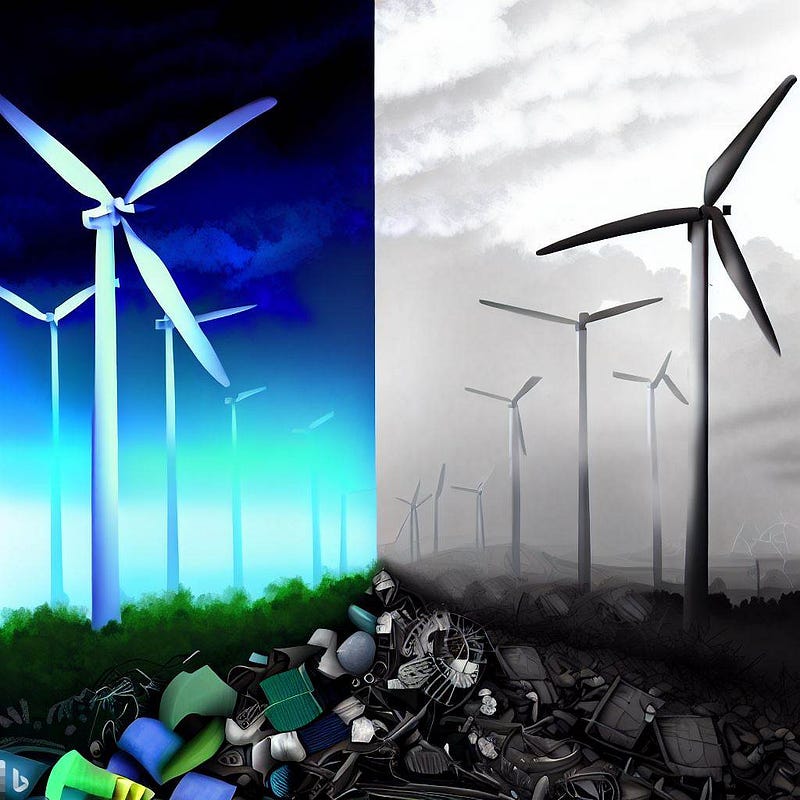
Efficiency stands as a pivotal element in our pursuit of sustainable energy. The metamorphosis of one form of energy into another invariably results in some dissipation of energy, typically manifested as heat. If the process of energy transformation lacks efficiency and inflicts harm upon the environment, it nullifies the very rationale behind resorting to renewable energy sources. This confrontation with a fundamental question becomes inevitable — if the environmental ramifications of renewable energy sources mirror those of fossil fuels, is our endeavor genuinely effecting a difference? Does the salvation of our planet lie merely in a transition to renewable energy, or is there a need to recalibrate our strategy towards sustainability?
While renewable energy is unquestionably a stride towards the right direction, it does not present a universal remedy for our environmental tribulations. It is imperative to embrace a comprehensive perspective on sustainability, one that incorporates not just the procurement of renewable energy, but also conscientious consumption, adept management of waste, and the preservation of the environment. Furthermore, it is incumbent upon us to perpetually innovate and enhance the efficiency of renewable energy technologies to curtail their environmental footprint.
The odyssey towards a future defined by sustainability is strewn with obstacles and intricacies. Although renewable energy is a quintessential element of this journey, it does not represent the sole panacea. It is incumbent upon us to interrogate the actual sustainability of our endeavors and adopt an all-encompassing approach that addresses the manifold facets of environmental preservation. Ultimately, the trajectory towards genuine sustainability is contingent upon our capacity to question, innovate, and adapt. As we contemplate the road ahead, let us ruminate on this question: Can we legitimately designate any form of energy as renewable, and is this designation sufficient to salvage our planet? Your reflections and insights are of paramount importance as we collectively navigate this expedition towards a sustainable future.