Chasing Checkmate: 3 Life Lessons I Learned From Playing Chess
Don’t Chase Checkmate in Chess or in Life
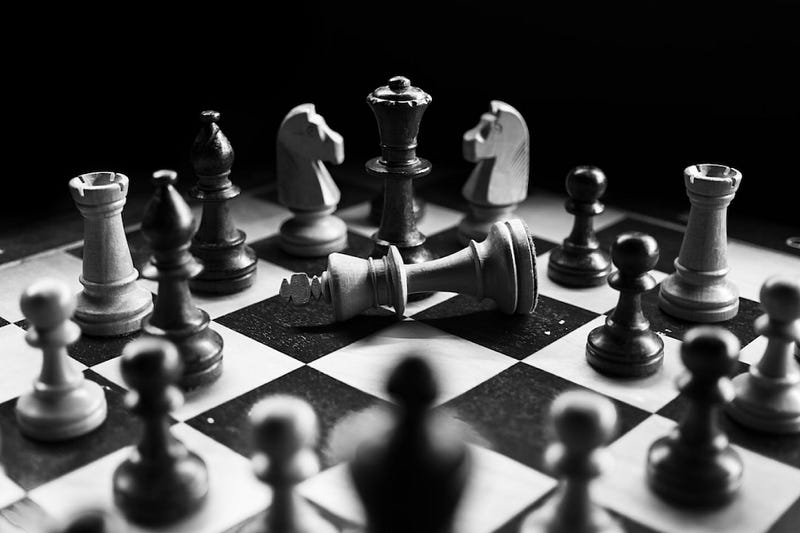
Have you ever wondered why chess players love chess so much?
Chess players love the game because the mechanics are simple but the gameplay is complex and very deep in terms of strategy.
To be consistently successful requires you to maintain your physical and mental composure during many periods of tension during a single game.
You must exercise initiative, patience, intellect, prediction, courage, practice, and resolution.
Very few board games require the level of presence that is needed to be successful at chess. At this intersection of simplicity and complexity, there are many parallels to a life well lived.
Life Lessons Emerge
Three life lessons have emerged since I started diving deeper into chess. They are specifically related to achieving the desired end state of the game, winning by checkmate. (Threatening the opposing King with all escape paths blocked)
1) Understand your options
In chess, knowing how your pieces can move is critical to playing the game correctly.
Every move of a piece can change the state of the board. Before moving a piece, you must understand the second and third order effects of that piece’s new position.
Life is no different. How does this move affect my options? Does this limit me or allow more freedom and control? Does this move put me at risk? Professionally? Relationally? Spiritually? We must take all of this into consideration.
2) Strategically expose yourself
One of the biggest mistakes beginners make is to expose the queen too early in the game. The queen is considered the most powerful piece in the game, boasting the ability to travel an unlimited distance in a single direction to move or capture an enemy’s piece.
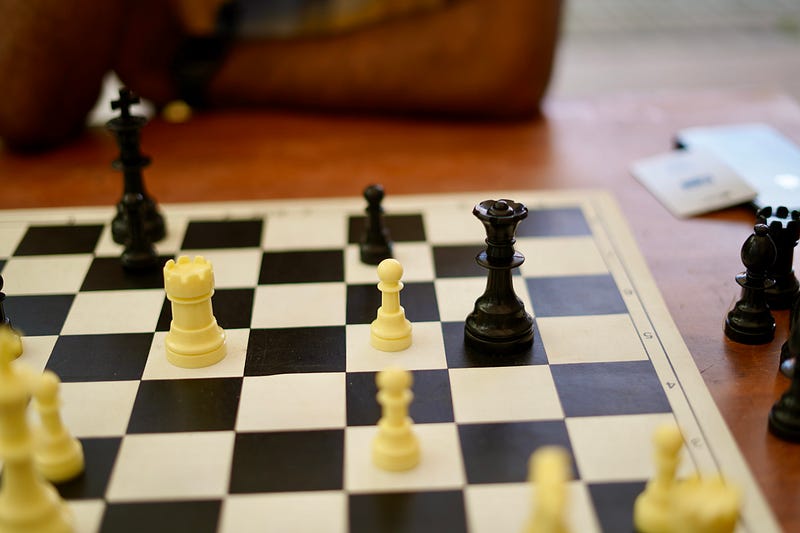
Think of exposing your queen as a big, bold move. If you do this move too soon you may be wasting your efforts and lose your momentum.
Once the queen is exposed, she becomes a valuable target that is often easily challenged. If she isn’t supported by other pieces, you will spend multiple moves retreating her to safety, wasting time and giving up ground.
Instead, strategically expose her power when you can do so safely and still achieve your desired results. Luckily above, the queen is able to use her movement to threaten many white pieces from relative safety.
In life, each of us are all the queen. We choose what we do and how much effort we put into something. Our ability to pursue something is nearly limitless.
If we throw all our assets in a single direction without a plan, we’ll be risking everything. If we fail, we may lose our assets or have to implement damage control and hope that we may return to a previous path unscathed.
3) Develop your support structure
Once you understand your options and you have a overall strategy to employ your pieces, it’s time to build your strength.
You must develop your pieces. This means positioning your pieces in a way that they can be used. Your powerful pieces aren’t worth anything if they can not move.
In life, each chess piece may be a friend, a skill you have learned, a piece of valuable knowledge, or any other thing you consider an asset. Slowly move each piece into a position that support other pieces and become usable.
Once you have a supporting structure you will be able to move each piece safely, moving you one step closer to your goal.
Chasing Checkmate
Chasing checkmate is like constantly threatening the king with no supporting structure. Every threatening position will be immediately defended and your most valuable assets threatened.
In life, this looks like throwing everything you have and are at each opportunity that you think will be the quickest path to your goal. It can be jarring to the stability if your life and you will burn out quickly without a plan. Sometimes the quick path isn’t the best path.
You don’t run a marathon without training. You don’t make a million dollars from a single penny stock trade. You probably shouldn’t change careers without research and some form of training.
You rarely do anything of value successfully without taking small steps to prepare yourself to perform well at the task.
Have you been chasing a checkmate in your life? Which of these life lessons could you apply to a situation in your life right now?
Key Message: Don’t chase checkmate, in chess or in life.