
Charles Baudelaire — Modernizing Beauty
Viens-tu du ciel profond ou sors-tu de l’abîme, O Beauté? ton regard, infernal et divin, Verse confusément le bienfait et le crime, Et l’on peut pour cela te comparer au vin.
Did you fall from high heaven or surge from the abyss, O Beauty? Your bright gaze, infernal and divine, Confusedly pours out courage and cowardice, Or love and crime. In this one can compare you to wine.
What is beauty?
Is it found in the virtuous, in the heroic? Is it hidden deep down within the work of art? Is it found in nature, in the human form? Is it found in love, or joy, or melancholy?
We are all, in some sense, in daily contact with beauty. We probably think we know what is beautiful and what isn’t.
We think there is a common thread that unites all things beautiful, and that relates our subjective experience of it to a more general, objective property of things, people, places.
But when we have to put our finger on what beauty is, things get tricky. It seems to be rather a lot like the problem of defining words in one of Wittgenstein‘s language games: we use beauty in an idosyncratic, operational way, and we kind of know what it means within our way of living. But when pressed hard we are literally hardpressed to find a general, objective definition of the term.
Philosophers have ground their teeth for ages on exploring and understanding what beauty is. This question constitutes one of the key challenges of aesthetics. Is beauty subjective? Is it objective? Are we the observers defining what is beautiful based on our whims? Or do the laws of beauty reflect a deeper, even metaphysical order?
As with almost everything, Plato and Aristotle had their own opinions about this.
The former saw in beauty an objective quality of things in the world that was in some way connected to the realm of ideas, and, more specifically, to the idea of the virtuous, the good, the perfect. In that sense, the search for beauty becomes the striving after the ideal.
In the Symposium, Plato lays the groundwork for his ideal conception of beauty by letting Sokrates speak of the instructions he received about beauty by a woman called Diotima (she is later to be caricatured in Musil’s fantastic Man without Attributes).
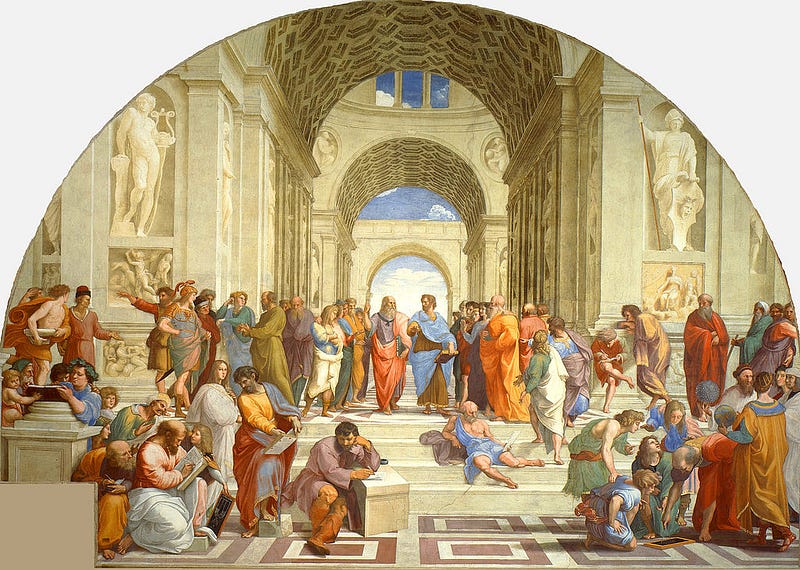
She teaches him how to attain to the ideal of beauty. The “candidate for the initiation” starts out with an appreciation of the individual human body. Beauty is found in the desire to reproduce, which reflects man’s longing for the eternal. But to reach higher levels of insight, desire must first turn into an appreciation for all human bodies, and then into one of the more abstract human soul. The candidate soon finds beauty in institutions, in order and in learning, and finally he beholds real beauty, which is nothing besides itself. Diotima exclaims “Man’s life is ever worth living, it is when he has attained this vision of the very soul of beauty”. Summa sumarum: striving for beauty brings one into closer contact with the higher reality that is the realm of ideas in Plato’s thinking, and beauty is there most manifest where the abstract, ideal order of reality is most manifest.
Aristotle talks about a more “classical”, less idealized version of beauty in the Metaphysics, which nevertheless ties together well with aspects of Plato: “The chief forms of beauty are order and symmetry and definiteness, which the mathematical sciences demonstrate in a special degree.”
But it’s not only the philosophers that are concerned with beauty. Foremost of all, it is the artists that are struggling in their daily lives to find and reveal beauty in their works of art.
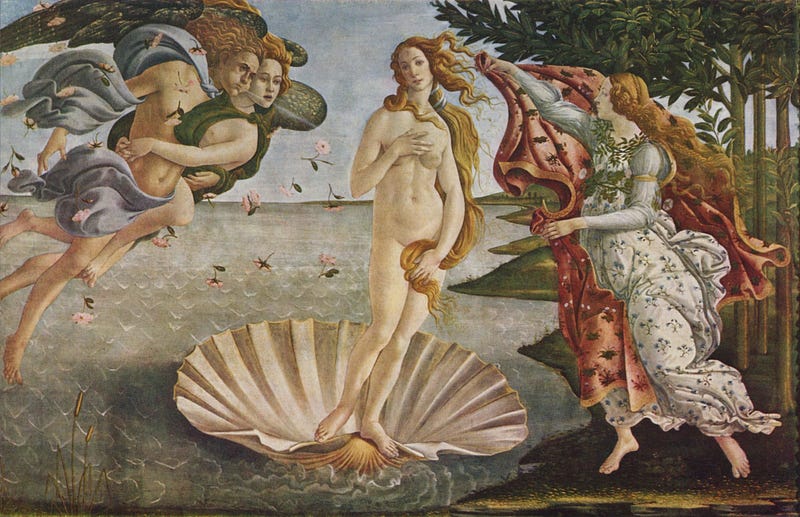
Renaissance art reflects this striving for perfection of form after the classical conception. It is formally composed, full of order, structure, purity, abstraction, allegory. It looks back at antiquity and pays hommage to the classical ideas of beauty. Beauty is something inherent in the divine order of the world or the order of the realm of ideas, and it is revealed by the work of art.
In music of the Classical Era, structure and symmetry are of paramount importance.
There is the period that formalizes melodies, we have the sonata form that defines the formal structure of the pieces (according to Bruce Adolphe, it is “so not a form”, but that point aside it nevertheless brings order and symmetry to the piece of music that employs it), we have the larger forms of symphony, sonata, string quartet etc. In Bach’s fugues, almost all the music arises out of the, as Adorno would say, mimetic impulses of the thematic material. All is organically connected to a deeper order, reflecting the order of the universe, which is, as Bach believed, imposed on it by god.
The empiricists in the 18th century were of a very different opinion. Hume states that
“Beauty is no quality in things themselves: It exists merely in the mind which contemplates them; and each mind perceives a different beauty. One person may even perceive deformity, where another is sensible of beauty”.
The result of applying this in fullest consequence is the Hedonist perspective on aesthetics: beauty is that which gives the perceiver of beauty pleasure. It is completely subjective, and should be taken for what it is. Simple as that.
Most of art reception and art production swing between these two poles, but during different periods, different things are more or less emphasized.
Romanticism
Some of the boundaries set up by classical aesthetics and Enlightenment get eroded during the transition into Romanticism, and other principles find their way into art production.
While it is infamously hard to define what actually makes the Romantics romantic, there is nevertheless a trend away from classical ideals, away from rationality, logic, structure, symmetry.
In the philosophy of German idealism that stands right at the beginning of Romantic era, the whole world is aestheticized.
In Schelling’s “System des Transzendentalen Idealismus”, the work of art is the final act in the Self-realization of the system: in which the Self becomes truly conscious of itself. In Hegel’s “Vorlesungen zur Ästhetik”, the “Absolute Spirit” shines through in the real work of art, and is thus a similar vehicle of self-realization, albeit in Hegel the last stage of Self-realization is found within the system itself.
This Romantic ideal therefore does not imply a full departure from the ideas of Plato and Aristotle.
Hölderlin goes so far as to write “ I am now convinced that the highest act of reason, by encompassing all ideas, is an aesthetic act, and that truth and goodness are siblings only in beauty.” Reason is still a big part of what is beautiful, and art itself is transcendental in the sense that it is an integral part in understanding the world.
But man and his relationship with the world and nature is shifted to the center of attention.
Sensibility, imagination and the sublime become major themes in Romantic art. The subjective aspect of producing art and the subjective aspect of experiencing it are emphasized.
Schubert’s Winterreise is an early example of this Romantic ideal that depicts the lonely quest of one man and his sensations that are invoked in the listener.
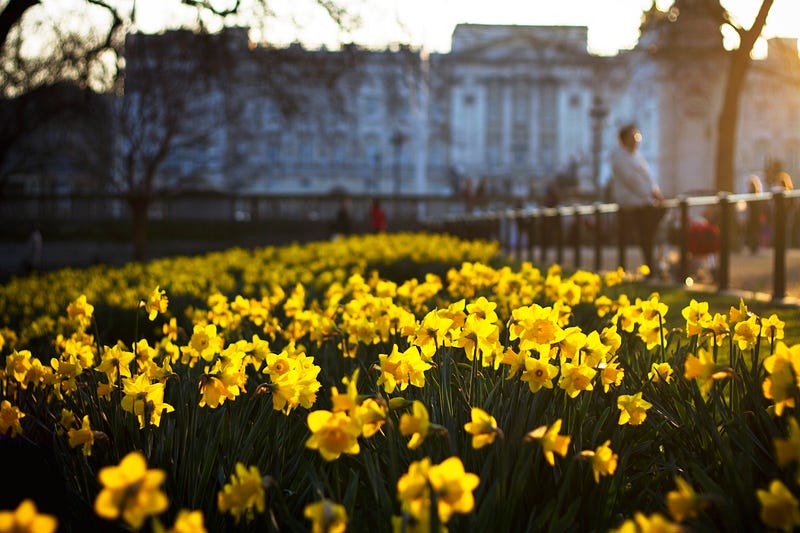
One of the archetypal Romantic poems for me is Wordsworth’s “I Wandered Lonely As A Cloud”. The last lines read
For oft, when on my couch I lie In vacant or in pensive mood, They flash upon that inward eye Which is the bliss of solitude; And then my heart with pleasure fills, And dances with the daffodils.
Beauty is found in nature, in memory, in childhood. Emotions are stated and represented more directly.
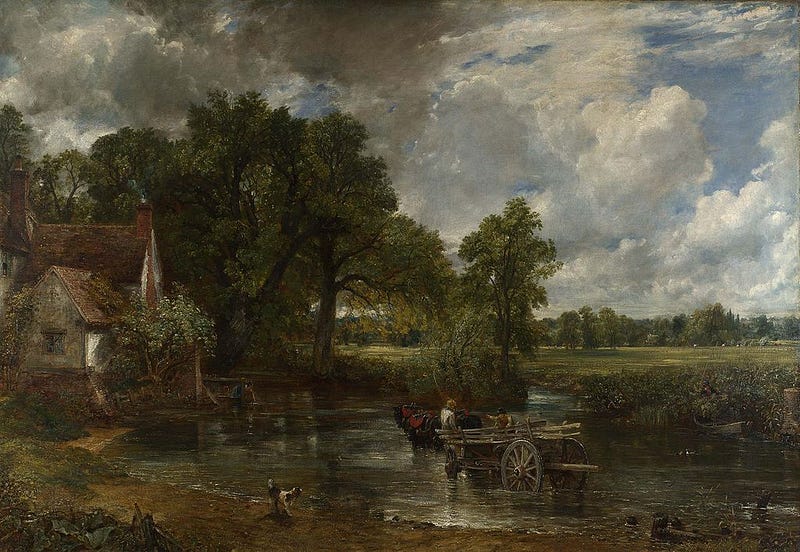
Art is autobiographical, as life itself is art. In music, there is Beethoven’s Sixth Symphony that paints images of rural life, and that interweaves man dancing at the brook with birdcalls and a tempest. A painting that for me breathes a very similar spirit is the British’s second favourite painting (after Turner’s Temeraire): the Hay Wain by Constable.
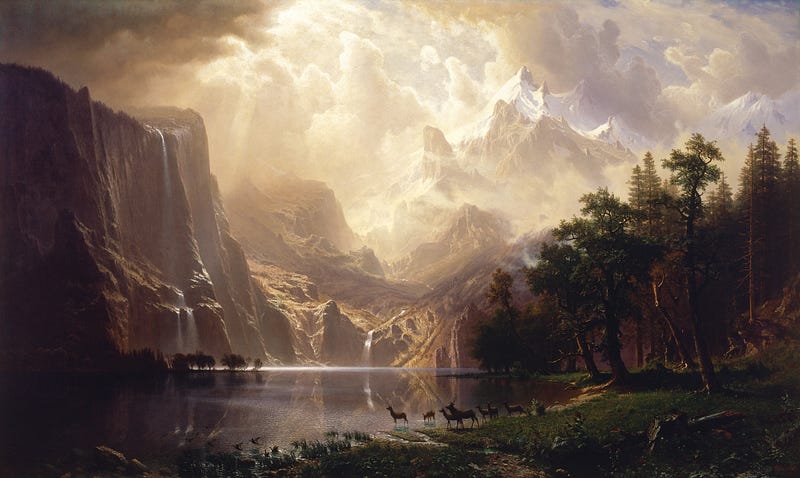
In later Romanticism, the search for the sublime and overwhelming becomes more and more emphasized and, some would say, almost overemphasized. There is Tristan’s Liebestod. There are the landscapes of Bierstadt, which for me bear the same relationship to The Hay Way as Bruckner’s Symphonies have to Beethoven’s Sixth. One can call this sublime. Others might call it “Größenwahn”, and it is perhaps not surprising that Hitler appreciated Bruckner and Wagner so much.
I’m noticing that I could talk about these things for hours, and this already has been a lengthy digression from what I actually want to focus on.
And I’m trying to be mindful of not overgeneralizing what constitutes art periods that lasted for hundreds of years. But this at least is true: during different periods in art history, different ideals of what beauty is were held, which consciously and subconsciously defined which goals artists pursued when creating their works of art.
It is part of the artist’s challenge to gauge what is beautiful, and perhaps to move beyond boundaries, to explore new ways of revealing beauty.
This is where we turn our attention towards Charles Baudelaire.
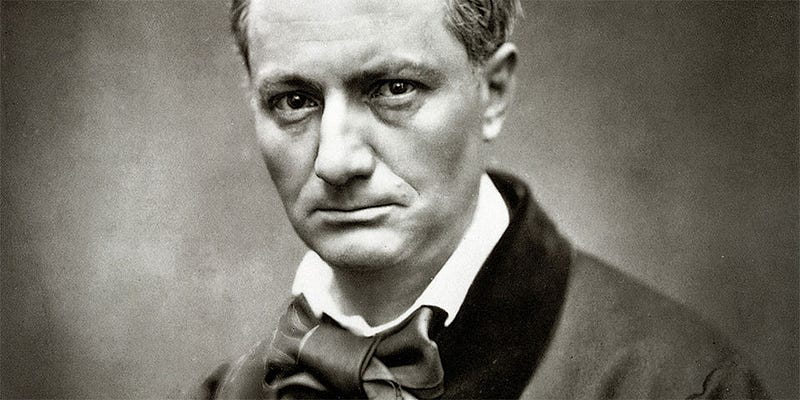
The late 19th century in France is a period of extraordinary artistry, and has always been one that I have greatly admired. In all the major disciplines of the arts, there is outstanding talent and outstanding genius, be it the music of Debussy and Faure or the paintings of Manet and Renoir. And many of them knew, liked and influenced each other: Baudelaire was friends with Manet, and his praises of Wagner’s music encouraged its consecutive spread in France. Debussy composed songs after his poetry, was inspired by paintings for “La Mer”, by a poem of Massenet for “L’Apres-Midi D’Une Faune” etc.
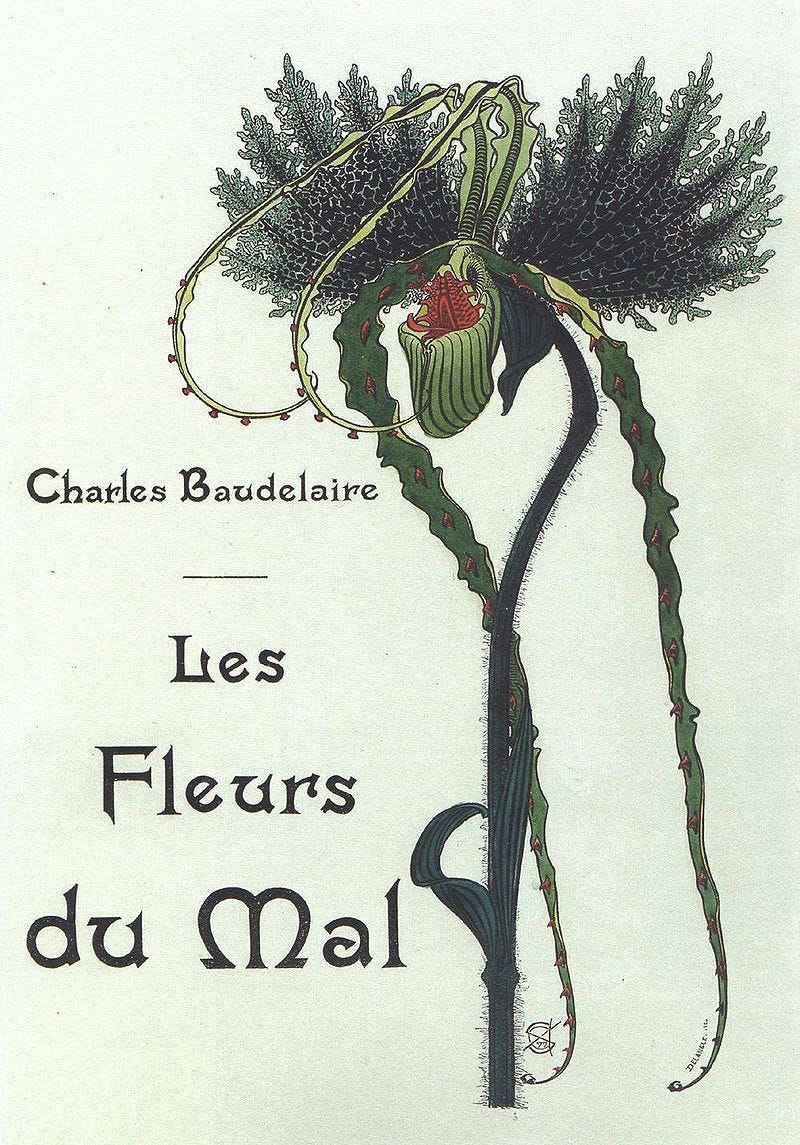
In some ways, Baudelaire stands at the beginning of much of this, and his influence lasts until today. I read somewhere that the bible is the only book that had more new editions and translations being released during the twentieth century than Baudelaire’s most important work, the Fleurs du Mal.
He is one of the, if not the most celebrated poet the French ever had.
Rimbaud called him “le premier voyant, roi des poètes, un vrai Dieu” (the first seer, king of poets, a true God).
He is also often considered to be the first “modern” poet. In the great modernist long poem of the twentieth century, T.S. Eliots Wasteland, the first poem of Les Fleurs du Mal, “Au Lecteur”, is directly quoted, a hommage by Eliot to Baudelaire. So what makes his influence so endearing? And in which way does he “modernize” the aesthetic ideal of Romanticism?
Les Fleurs du Mal are a collection of around 100 poems. There is without question craft, intensity and imagination behind his poetry that made him much appreciated by his contempory poets, among them Victor Hugo. Baudelaire is inventive in his use of symbols to represent life in his poetry (such as the famed Albatros), of countering reason and naturalism by writing in a highly suggestive, metaphorical manner. Much of this influence will only really unfold a generation later, through the symbolist poets like Verlaine, Rimbaud or Mallarmé. Baudelaire is also one of the first to define the lifestyle of the modern poet: the poetes maudites of Verlaine are isolated, misunderstood and poor. But they also feel the responsibility of their brilliance, and so bear the burden of a life dedicated to art.
There is also a revolutionary aspect to where Baudelaire looks to reveal beauty.
Baudelaire wrote in a Paris that was changing tremendously, that was modernized, with all the upsides and downsides that came with it. Out of this emerged a new way of living daily life, of experiencing the world, of interacting in the public sphere.
In the opening quote, Baudelaire likens beauty to wine:
ton regard, infernal et divin, Verse confusément le bienfait et le crime
Your gaze, infernal and divine, Confusedly pours out courage and cowardice,
The divine gaze reminiscent of Plato crashes with the infernal, devilish qualities of beauty. Beauty pours out both the good and the bad.
Likewise, very unclassical things like intoxication and irrationality find their way into art, as later perhaps best exemplified by Rimbaud’s The Drunken Boat, but also already in Baudelaire’s poems.
The poet needs the courage to seek out extreme situations and, at times, extreme isolation, to find true expressive force. And while this motive is already present in Romanticism, it is given its own, even more extreme twist, in the French Symbolists.
The first part of the Fleurs is titled Spleen et Ideal. Both the Ideal of Plato and the Spleen, which Walter Benjamin defines the “feeling of constant catastrophy”, collide in life and in the work of art.
In Au Lecteur, we read:
Si le viol, le poison, le poignard, l’incendie, N’ont pas encor brodé de leurs plaisants dessins Le canevas banal de nos piteux destins, C’est que notre âme, hélas! n’est pas assez hardie.
If rape, poison, daggers, arson Have not yet embroidered with their pleasing designs The banal canvas of our pitiable lives, It is because our souls have not enough boldness.
The pleasing designs of poison: talk about a departure from classical beauty ideals. The title of the work itself is telling. The flowers of evil contain within them a contrast, almost a paradox.
The final lines of Au Lecteur read:
C’est l’Ennui! L’oeil chargé d’un pleur involontaire, II rêve d’échafauds en fumant son houka. Tu le connais, lecteur, ce monstre délicat, — Hypocrite lecteur, — mon semblable, — mon frère!
Boredom! He smokes his hookah, while he dreams Of gibbets, weeping tears he cannot smother. You know this dainty monster, too, it seems — Hypocrite reader! — You! — My twin! — My brother!
The hypocrite reader is sucked into the poetry. He is the poet’s likeness. His brother, his sister. He knows what is being talked about even when he would much rather deny it.
In other poems, Baudelaire portrays “la vie quotidienne” of modern live.
In A Une Passante, the poet falls in love with a woman that passes him on the street for just a couple of seconds. In the final stanza, he exclaims:
In Ailleurs, bien loin d’ici ! trop tard ! jamais peut-être ! Car j’ignore où tu fuis, tu ne sais où je vais, Ô toi que j’eusse aimée, ô toi qui le savais !
Somewhere else, very far from here! Too late! Perhaps never! For I do not know where you flee, nor you where I am going, You who I would have loved, you who knew it!
The loneliness and isolation of big city life. The constant onrush of new people, new impressions, new encounters, and nevertheless the sensation of being completely cut off from all of them.
Les Fleurs du Mal was put on obscenity trial after its publication, and Baudelaire was forced to exclude 6 poems from the collection and pay a 300 Franc fine (francly, I don’t know how much that is in today’s money, but Baudelaire was horribly poor, so it hurt).
One of the six forbidden poems is called Lesbos. One stanza reads:
“ Les filles aux yeux creux, de leur corps amoureuses, Caressent les fruits mûrs de leur nubilité; Lesbos, terre des nuits chaudes et langoureuses”
It is incredibly hard to translate the sensual quality that these lines have in French, but to sum it up, it’s about naked women doing dirty things to themselves in front of mirrors.
As you can see, Baudelaire does not cherry pick his topics.
The poet seeks out intoxication in drugs and erotic fantasies. His poems reflect boredom, evil, death and decay, reflect the ordinary, the sinful and depraved. The horrors of modern live, the loneliness, the ambivalence, the boredom, the emptiness. The slow rise of nihilistic tendencies, of disappointment in a disenchanted world. The existentialist struggle of modernity, of a life depraved of divine order and divine support.
But sometimes, there is the upswing, there is the short but precious moment that transfigures the ordinary, the boring, the sinful. There is beauty in the ugly, in the poorest of the poor. There is value in the mundane:
Blanche fille aux cheveux roux, Dont la robe par ses trous Laisse voir la pauvreté Et la beauté
Pale girl with the auburn hair, Whose dress through its tears and holes Reveals your poverty And your beauty
Baudelaire reveals a new way of seeing life, of struggling and fighting for beauty in a world that has changed and is ever further changing.
Poetry is consolation and refuge, poetry is symbol of this search. Many artists of the twentieth century followed in Baudelaire’s wake. Their art incoporates the mundane and the profane, looks at life in modern cities and its anonymity and isolation, finds beauty in modernity.
This is the quest of the artist: to question into reality in all its facets, to struggle for and reveal that in which value can be found.
And so to help transform the vision of all mankind.