
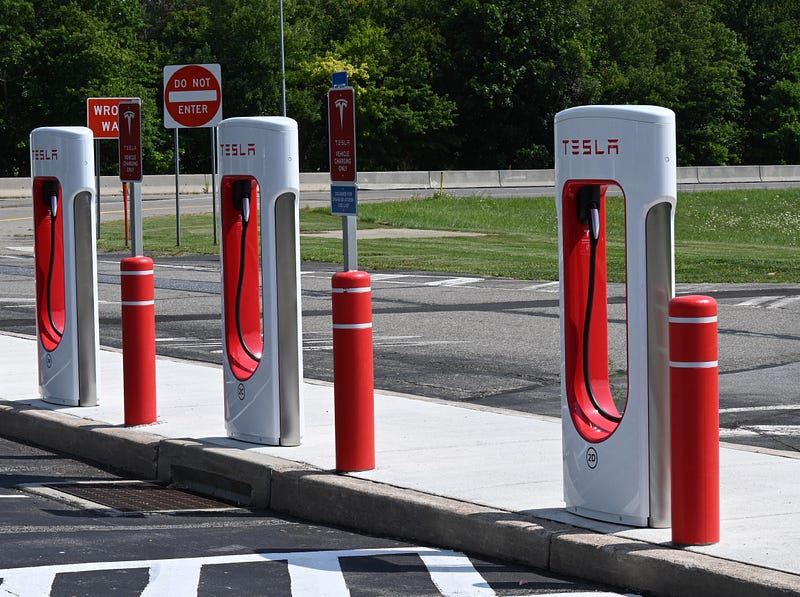
To understand how to charge our EVs, we need to know what kind of chargers are available and where they should be placed. The reality is, there is little need for public charging. But when it is needed, it’s critical to have it fast enough and in the locations desired.
Unfortunately, a lot of the information about electric car charging is all over the map. There’s all sorts of names for plugs and chargers: Type one, Type two, Level 1, Level 2, Level 3, J-1772, J-plug, CCS/SAE, CHAdeMo, Tesla, KiloWattHours, KiloWatts, AmpHours, KiloVoltAmps, NEMA 19–50, it’s all a chocolate mess.
It gives the perception that buying an EV is not only more expensive, but much more difficult to accommodate into your routine, when it’s not.
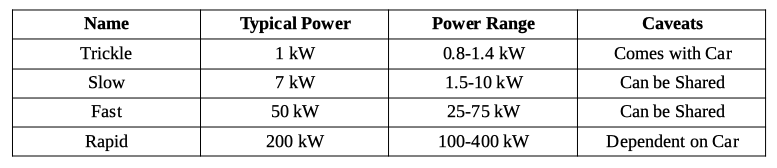
In reality there are just four types: Trickle charging, Slow charging, Fast charging, and Rapid charging. Done.
Trickle chargers come with your car and can be used for about 95% of your driving needs. They plug into a regular electrical outlet and add about 40 miles of range for every 10 hours of charge (overnight).
Slow chargers can be added to your house and they appear at most public charging spots around town. They use the same amount of power as your oven. With a good slow charger, you can add about 250 miles of range with every 10 hours of charge.
Fast and rapid charging are basically the same thing. The only difference is how fast the juice goes into your car. With a fast or rapid charger, 250 miles can be added to your car between 15 and 90 minutes, depending on the charger and your car’s capability. Charging speeds are so fast it is akin to placing a garden hose running full blast into a gallon milk jug. To prevent messing things up, the current must be reduced for the final 20% of charge. That is handled by the car and the charger.
EV owners have two different charging needs: close to home and when they’re traveling long distances. The vast majority of charging occurs at home, because 95% of vehicle trips are less than 30 miles. The only time an EV owner needs to think about different charger types is on an extended trip.
Charging Locations
Interstate and Arterial Travel Stops
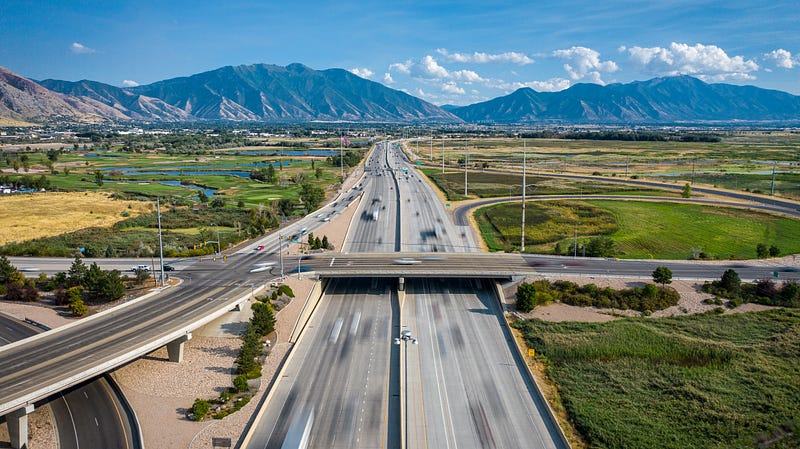
This is the only place a fast or rapid charger is needed. They should be within 100 miles of each other and located at restaurants and similar locations. Not fuel pumps. A gas station or convenience store is not where you want to spend half an hour or more. A fast charging station on a major arterial should have at least three different businesses within a short walking distance to the charger. A late night diner, a coffeehouse or desert shop, and a nice sit down restaurant.
Stadiums and Entertainment Venues
Having a fast charger at a stadium will not draw spectators to the events. It is not a free service. It’s a profit center. Venues should charge for the convenience of having a charging location while at the event. A slow charger will only provide 50–75 miles of additional range and is not worth the effort. Due to the sporadic demand, chargers here will not be very profitable.
Cities and Towns
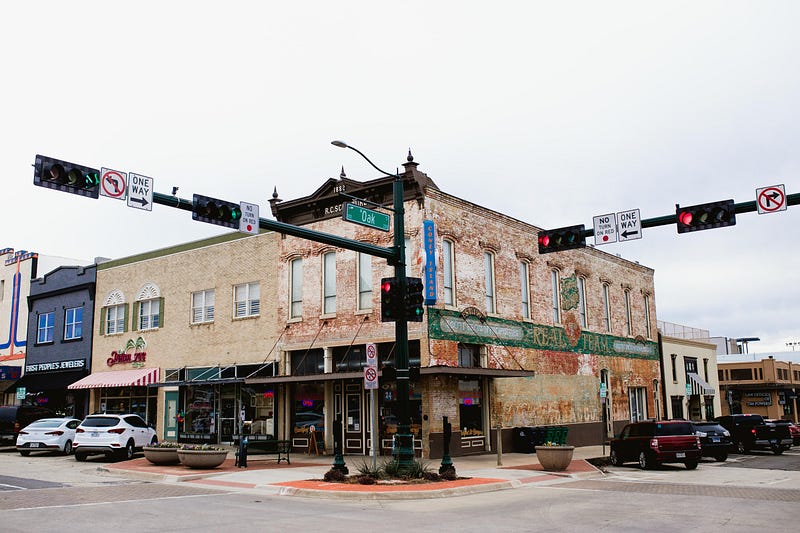
If on arterial highway, a fast charger will encourage retail business. Creating a fast charging station spot along the interstate or major highway may seem as simple as putting a charging station at the gas station exit, but that is not the best solution. The best solution is a charging station at a pedestrian friendly downtown area up to 2 miles away from the exit. You want customers traveling through the area to make an hour stop for a fast charger, not be forced to spend the entire day. Stopping for a slow charger is not worth the effort unless you are at a daylong event. The chargers need to be at a retail center with walking access to businesses. You want to be a pedestrian friendly charging magnet, with chargers in the middle of downtown, not the far end of it.
Retail
This is the same as cities and towns. Create a better mousetrap. The charger should be fast and the retail businesses within walking distance. They should be service oriented retail such as coffee shops, restaurants, gaming centers, museums, libraries, and malls. The chargers should be the central point with pedestrian friendly services around them.
Slow chargers are inadequate for this placement. Why would you slow charge your car at a store? If you spend an hour there, at most you will get 25 miles of range. EV owners are not going to bother plugging in their car at the far end of a parking lot to gain 25 miles of range.
The only case for slow charging at retail locations would be for local EVs without a convenient slow or trickle charger at home. Even then it would be a poor solution to a bad situation.
Hospitality
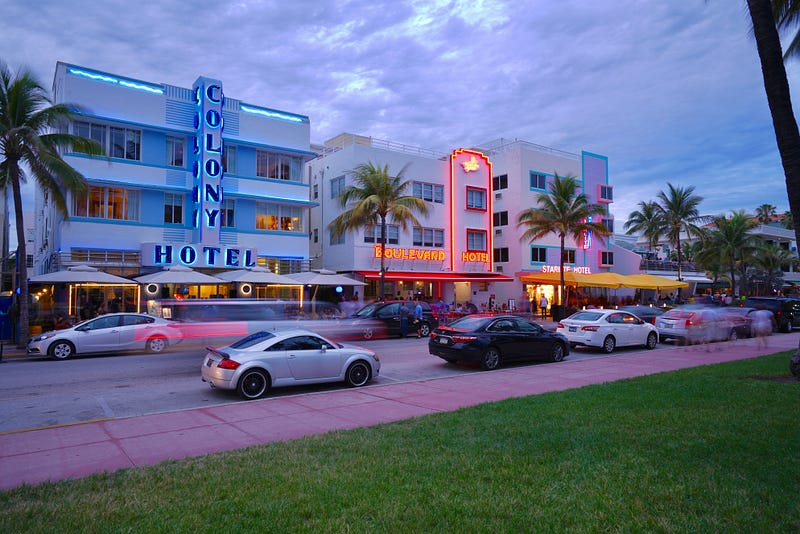
This is the exception for public slow chargers. It is a weak link and crucial for travelers. Typical overnight charging at a hotel requires about 200 miles of charging range. So: Charging time for a trickle charger will take 50 hours. Charging time for a shared slow charger will take 16 hours. Charging time for a good slow charger will take 8 hours. Charging time for complete charge on a fast charger is about 1 hour.
Fast charging at a hotel is overkill. Of the slow charging options, only a dedicated slow charger offering 20–25 miles of range per hour of charge is adequate. If two EVs are sharing the same circuit, it would put a serious kink in the charge rate. The only remedy for the EV would be access to a fast charger elsewhere. Even being the only car using a shared charging station doesn’t prevent another EV from plugging in next to you later, reducing your charge rate by half.
If a hotel wants to attract EV drivers, they need to set up good dedicated slow chargers that can be reserved with a room, and provide a full 7 kW of power the entire night for each plug. To do otherwise invites bad reviews.
Charging stations can be handled several different ways by hotels. The first is laissez-faire. Set up some charging stations with card readers on a first come first serve basis. Currently that is the way most hotels offer the service. And as long as there are more than enough chargers for the customers, it works.
Chargers are like free breakfast.
I’m sure the argument by hotels for not having any chargers is that EV owners can use fast charging stations elsewhere, and that is true. But on that same thought, there are plenty of places for travelers to eat breakfast, yet the majority of hotels now offer free breakfast for their patrons. That wasn’t the case until some hotels started offering free breakfast to attract more business. It worked out well. So much so, that now most hotels offer free breakfast.
Having a reliable, convenient place to charge your car overnight would be a huge draw for someone traveling in an EV. In addition to the convenience benefit, an overnight slow charge is easier on the batteries and provides a more complete charge. Offering dedicated slow charging stations to travelers would be cheaper than offering free breakfast. Fifty kWh, a typical full charge from empty, is $6 at $0.12/kwh. There are no additional labor costs involved, unlike serving breakfast or providing a shuttle service.
But, EV owners need reassurance that a dedicated slow charging station will be available at the hotel. Even more than the expectation of enough food at the free breakfast bar. Slow charging stations are cheap and will eventually be critical consumer amenities. Having a hotel without charging spots will be like a house without doors.
“As a hotel manager, that’s where you come in.
You are in a unique position to provide a valuable amenity to the growing number of EV drivers on the road. Providing a place for your guests to charge their cars would take the guesswork out of locating an EV charging station while away. In addition, it allows EV owners to charge their cars during the most practical time of their trip — while they are asleep.”
Chargers won’t significantly increase your electrical load. Hotels use about 50 kWh of electricity per room per day. That is about the same amount of electricity it takes to to charge an EV from empty. And because it happens at night, it should have a low impact on the hotel electrical capacity needs due to load leveling.
Apartments, Condos, Houses, and Dorms
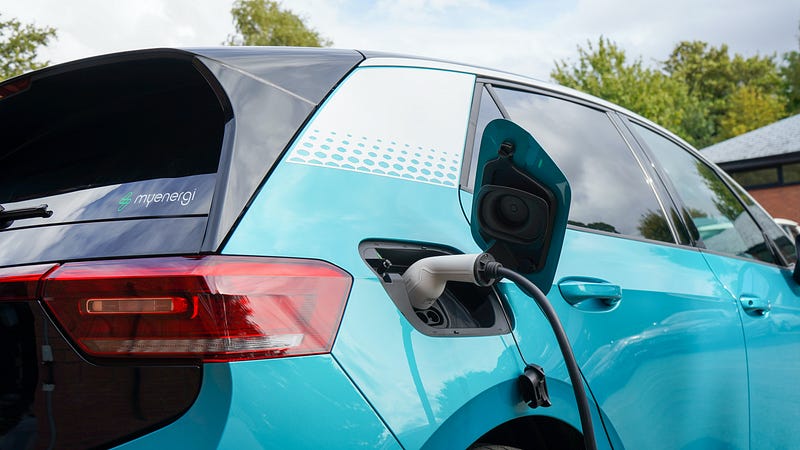
Trickle and slow charging stations are needed here. This is where more than 95% of the charging takes place. Most garages already have 110v outlets. If parking is outdoors, provide hard wired slow and trickle charger outlets for weather protection and to deter theft of personal chargers.
Typical daily use of an EV is between 10 and 50 miles. Overnight charge time for trickle charger is between 3 and 12 hours. Daily charge time for a slow charger is between 1/2 and 2 hours.
Slow chargers are only needed if the car owner typically drives more than 40 miles per day on consecutive days. Most of the charging need is already met with regular 110v outlets for trickle chargers in garages. Free range parking at dorms and apartment complexes will become more of a problem as more EVs appear. This can be fixed with pay as you go slow charging stations in the parking lot.
Fueling and Convenience Stores
Not the best location for chargers. Gas stations have no better infrastructure for charging than any other retail location.
The difference between filling up for gas and charging a car. Pumping gas is something that you want to get done with as fast as possible and leave as quickly as you can. Charging your EV is completely different. EV owners will want to do something while the car is charging. They don’t babysit a pump. Charging time will be viewed as an experience like eating out, not a task like scarfing down a sandwich at your desk.
Parking Garage Operators
Charging needs depend on clientele. If local shoppers, no. If supporting residents, then slow or trickle chargers are needed.
Utilities
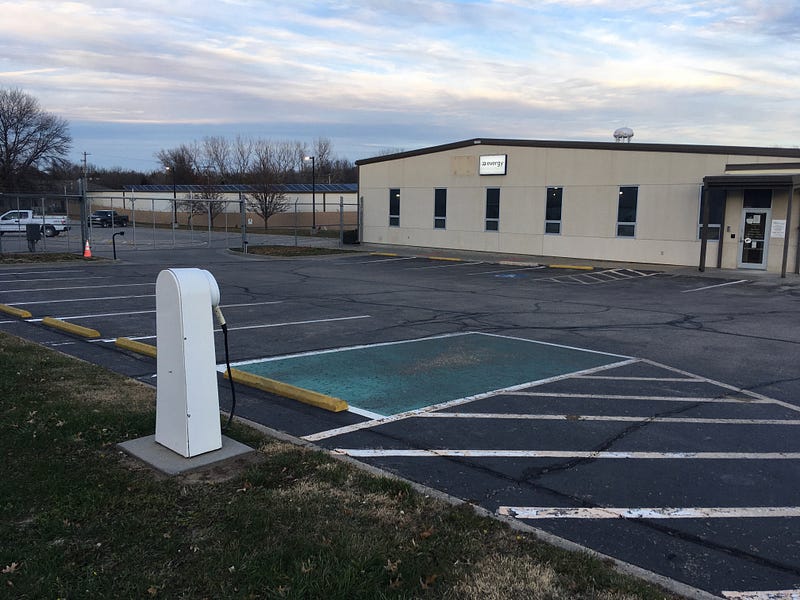
This is not a place the typical traveler wants to spend time. Where they exist, they are usually slow chargers.
Electric vehicle (EV) charging station vendors are doing themselves a disfavor by locating slow charging points at unused locations. Those locations become points of reference and dissuade good charging points such as hotels, from being developed.
We have been installing charging stations for 10 years. By now we should know where to put them. Yet many hotels and apartment complexes seem to be completely oblivious to the potential loss of business.
EV car owners are a desirable demographic to draw to your business. They tend to have more expendable income. Why, as a business owner would you shun that demographic?
“Taking a wait and see approach to EV charging can lead to “wait and cede”, as in ceding market share to competitors.”
We’re making this much harder than it needs to be. We are putting slow charging stations in places that have little need for them. EV owners have a real need for additional services at fast charging locations and are under served.
Charging stations don’t magically appear where we need them. Small business owners in our communities make these decisions. That is why we need to talk about solutions. Not just whine about how things turned out. It is up to us, not the government, to decide how we progress as a society. We are not spectators. We are active decision makers.
I will be writing more about alternative energy solutions in the future. If this is interesting, follow me.