
I LOVE YOU, WE SAID
Chapter 9: ‘Autumn’
A serialised novel
At sixty-nine, my oupa’s heart stopped beating where he sat in his easy chair, ending a life of steadfastness, hard work and sacrifice.
I was made to sit in a wooden chair in the empty lounge to receive the news after school, opposite his chair, which was dreadfully vacant.
I didn’t understand; as the days went by, nobody seemed to be having trouble with his death. Perhaps they were hiding their feelings. But really, I knew: they were at peace, had loved him well, had been loved in return, and could talk about him. When they stopped hurting, all would be well.
I, on the other hand — I wasn’t right or natural. I had no business missing him. I had merely wanted to prove myself to him when everyone else knew to love him and let him in, and now I never could. It was just and fair, in its way.
Ouma began to sell his things. His Valiant went to a taxi driver who’d wanted to buy it from him for years, but now didn’t take care of it. I saw it around for four more years. In time, the back door wouldn’t close properly anymore.
His beautiful oaken office chair was put up for auction at the school fête. I had a five rand note in my pocket, folded over twice, and I wanted to bid on it, but my heart began to beat unbearably fast. On a television screen mounted on the wall of the school hall, a rugby match was playing out. Medical staff carried the All Blacks scrumhalf off after a monster tackle by Morné du Plessis. I brayed like a donkey at this, my mother shushing me. The walls seemed fluid and I could taste the rankness of life in my mouth. I didn’t bid; I was afraid I might die of a heart attack, and so I left the fair and forgot about the money in my pocket.
In my third year of school we were made to write an essay a week. My first was about the neighbouring children on the farm we’d left behind.
“Henry has a horse,” I wrote. “The horse is yellow and brown and smells nice. He’s a king! When you put your arms around his neck, he stands still. Sonja also has a horse. The horse stands and jerks her head [around]. Henry and Sonja are my friends. They are brother and sister.”
We never mixed with them, even though I wanted to. Were we not suitable? Did I know and not have the words for knowing that we weren’t friends, that we had no place in their inner circle? That even our farm was theirs?
Maybe. It didn’t show in the written words. But that’s the sting and perverse reward of the sensitive child, knowing and not being equal to it. Knowing it only too well. And always the hope that knowing will lead to finding the words that will let him rise above it.
In the same year, a teacher picked out a group of boys to help introduce gymnastics to the school. Somehow, I’d taught myself to walk on my hands and made the squad. Among the boys who didn’t make the cut was Bradley Anderson, a slack-faced kid who once peed in class; Raymond Williams, an unruly boy with unbrushed hair; and Willie Hartenberg, a fat kid who lied about everything — including having a secret underground lair with just ten centimetres of earth separating himself, his brother and their arms cache from their fat mom walking overhead.
On the last day of school that year, each boy in our class brought a mystery gift. We sat in a circle and sang a song, passing our parcels around to the next boy until it stopped. Everyone including me avoided being left with Willie’s gift, which had been simply wrapped in ugly brown paper, and it ended up with Bradley. It turned out to be a beautiful penknife, and I couldn’t get over Bradley’s beatific smile on seeing it.
I wish I could claim some big illumination from it; I who had thought so little of Willie and Bradley and Raymond — poor boys like me, gravitating towards the bigger group but never quite making it in. But it had taught me nothing. I’d been snobbish, devious, and in that moment, I belonged and found that I hated it. Yet even my revulsion was unworthy. I was simply embarrassed — not about judging him, but about misjudging him. His generosity hadn’t changed me. It was his beautiful gift that had suddenly made him OK.
I suppose I wanted nice things too. But I was a fraud like the worst of the bullies in my class, and a freak like the unpopular boys. I belonged to neither group. A comfort normally, and sometimes, like now, a curse.
And yet Gary, the coolest kid on the team, became my friend. His father had died flying his plane into the Cahora Bassa Lake during active duty, and my mother phoned his mother and decided we’d be friends, like she did with Andre.
It was a good call. Gary had Beano Annuals and was a good climber. He hung off gym frames by the soles of his sandals and co-anchored the base of our gymnastics pyramid with me.
But time passed and things happened, and not a thing could be done about any of it.
His family moved to Pietermaritzburg, where, during his army years, he ended up luring gay men into toilets and beating them up, either for ambiguous thrills or because of the madness of the time and the paralysis of our free will.
Dotted around the school grounds were English, Greek and Jewish kids, curiously exotic and superior. It was hard to pinpoint the source of their condescension; they were pale and unassertive and weak but well-spoken and individualistic, and we were jealous of the way they stood around the cleaners’ open fires during assembly prayer, louche and free and bored. Only by exception were they good at sport, and then very good, while the rest of them noodled around in pointless non-scoring soccer games during break. Wearing their pants and scuffed-up shoes with bony elegance, they probably sized us up just the same, with equal parts interest and disdain.
At eleven, a boy from Paarl joined our class. He was dark, as dark as me, but with sun-streaked, unkempt hair and almond-shaped eyes. He had an outlandish name, Alain. The teachers liked him; he was from a famous school and his father’s job was shrouded in secrecy. I also liked Alain, whose father’s car seemed so much like them, shabby but classy, insouciant and foreign — common elsewhere but superior there.
He and I had a peculiar status, something that brought us respect but kept us at a distance from the others. We could write.
I was the undisputed king of Afrikaans “compositions” and lived for Mondays, when I’d know my mark on the last one and get the teacher’s affirmation in red ink. This carried on as the highlight of my schooling when, one day, Alain received a perfect score — something I’d never achieved and couldn’t understand on seeing his essay. It was simple and straightforward and entirely ordinary, and when asked what I thought of it by my favourite teacher, Miss van Staden, I said so.
She smiled at my harsh verdict, her eyes fixed overhead at the classroom wall in the back in apparent dismissal. I was shocked and mortified at how cold she seemed after asking my opinion, which I wouldn’t have given otherwise.
I’d merely been honest — and obliging — and it hadn’t occurred to me to be kind then. Should it have? Then what was the point of the question?
And what magic had I missed in his essay?
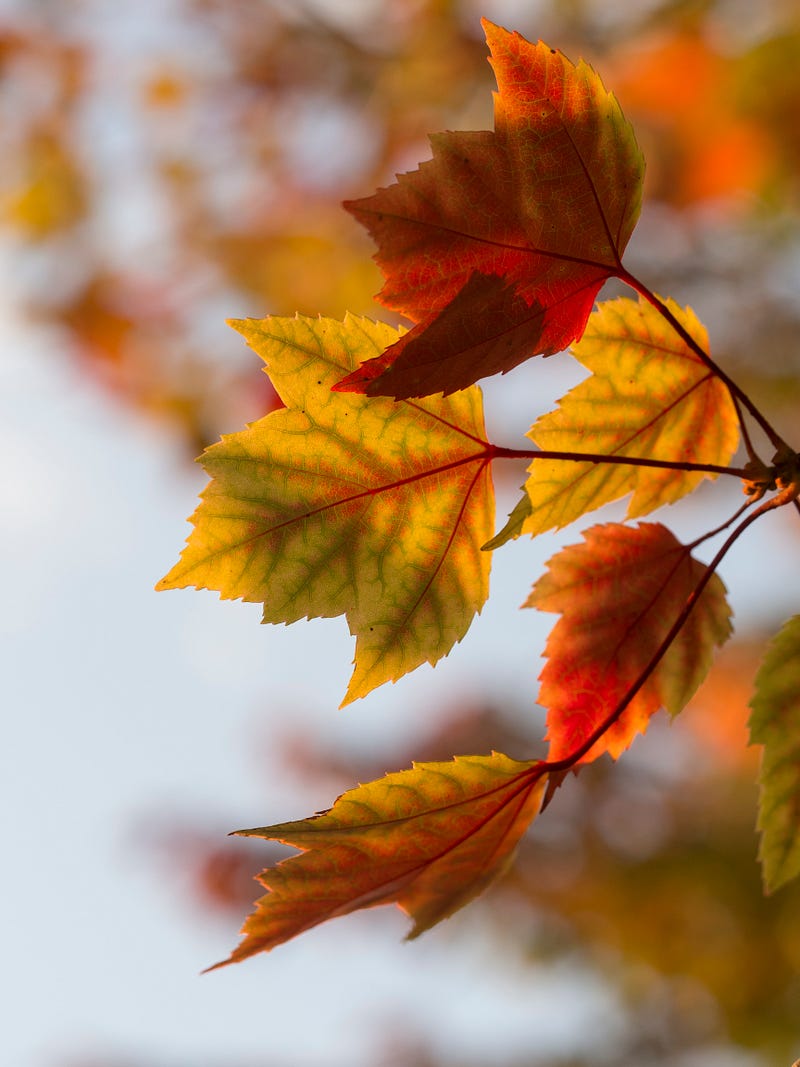
In the same year I wrote a poem (“Autumn”), which Miss showed to an author friend. Her feedback was to “practise, practise, practise” my grammar. It was awful advice. Grammar was the least of my concerns. Would it have hurt to say something about the sense and music of the piece, its meaning? Give it the least bit of writerly recognition? I didn’t understand. I didn’t understand anything. This wasn’t even honest. Weren’t writers beyond such smallness?
I visited Miss van Staden twenty years later. She gave me the piece of paper with the ancient, faint pencil writing on it.
‘I’m writing a book on language studies,’ she said. ‘This will go into the section about art that stood the test of time.’ She offered it to me. Looking at it, I remembered how I’d felt when I wrote it; a fluid, focused session of creation, calmly working outside the consecrated amazement I felt at the beauty of the season and picking the twenty-seven words I needed for the subject and occasion at ten or eleven years. It was still beautiful. How beautiful! I wasn’t even proud; it was too pure.
I said no, I would only lose it.
I wanted her to keep it. She had believed in me more than anyone, followed my progress over twenty years and bought me a birthday present every year.
But it was a mistake. Again her face stiffened and she seemed displeased.
I went back for the poem in later years but, now sick and reclusive, my old teacher was refusing visitors.
At school, my reputation as a writer was not on the same level as that of the sportsmen. I was thought of as different, certainly, especially when Alain left the school again, swept along in his family’s migrant ways. I don’t know why I thought something as solitary and misunderstood as writing should have admirers, to be honest. Did accounting or maths or chess nerds want prestige? Well, why not?
When I left primary school, an English kid one year my junior was named the first editor of the student paper that would be launched the next year. He phoned me, wanting my advice on the project. Scales fell from my eyes. Here was someone I shared an interest with, someone alert, clever, confident, sophisticated. But at the same time, streets ahead of me — someone who took initiative. Who had told him he could start something so wonderful? I realised I didn’t have any advice for him. I’d never been asked my opinion about anything before, and it had never occurred to me to package what I knew about writing as something transferable and of value. Embarrassed, I said I’d phone him once I’d collected my thoughts, but when I did he wasn’t in, and neither of us phoned back.
And then there was Tersia, a slight girl with translucent skin and a beautiful, forking vein on her forehead that stood out when she laughed.
One Saturday I visited a friend in the block of flats she lived in, realising as I knocked that it was the wrong door. Alarmingly, her mother opened, recognised me, and promptly invited me on a day out with her daughter to a resort outside Coltrane. I said no, but she wouldn’t hear of it and pressured me into going home to get my swimming costume.
I lied to my mother about who had invited me. I didn’t know what the hell was happening, but the programming of my upbringing put me inexorably, confusedly, through the motions.
Her mother left us to ourselves, to play or swim. Tersia looked beautiful, but I knew something would happen. The moment would pass. My heart would beat too fast, or she would suddenly look ugly or weak or say something awful.
When, after hours in the sun and water, she came up out of the water and looked at me, I felt as if I remembered a burning love I’d felt for her before, as if in a dream. Her chin was up in sweet, modest courage, her eyes tranquil and pale and softened by laughter. But I turned my head away.
She loved me but all I could feel was sorrow. My heart held nothing anymore; not hurt, and not wonder. I was alone.
This novel serialisation is exclusive to The Pro Files on Medium.
To be notified of new chapters, subscribe on my profile page. To read all my stories, join Medium using my referral link. I will get a small commission at no extra cost to you.
Or, if you’d like to own a copy, buy my book here! Thanks for reading.