
Chapter 44: Zau eats his driver
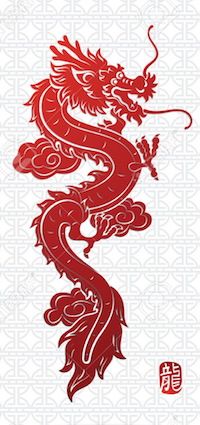
Zau was, rarely for him these days, fully in his human guise. He was seated at the table on the deck of his chûn, rain matts rolled back on the frame overhead, pot of tea steaming, cup full. He was wearing his deck robe, but now the yellow was on full display. He had ascended to royalty of his new world order, and would no longer hide his importance, no longer play the importer of fruit, vegetables and sundries. There was only his driver to see, but that was immaterial. Soon, he would hold court in the refurbished great hall of his estate.
He was looking at more videos on the iPad Dian Mu had gifted him with, had found that it was much easier to control with human fingers, much easier to see with human eyes, much easier to hear with human ears.
The boat was well offshore in the South China Sea. He’d had it sailed out to a vantage point where he could watch the lights of civilization die at night, and they were sitting at sea anchor, the chûn rocking slightly, the wind in the rigging playing a low-pitched Aeolian harp tune, waves lapping against the hull.
He sat back. Perhaps his estate was insufficient. Panxi and Liwan Lake had once been imperial grounds. He would take them over, have the area made into his palace. If nothing else, he could bath in the lake, poor substitute for the sea as it was, no crushing depths, no undersea calderas, no immense ice floes. No killer whales, no kraken, no enormous predators of the deep to test himself against.
He would have his human slaves dredge it. He would have them stock it with massive carp and perhaps Asian crocodiles for his amusement. It would suffice for a century or two until the seas were once again welcoming to him and his kind.
A faint whine overhead caught his attention, drew it away from the momentarily silent tablet. He looked up, shaded his eyes, saw a tiny craft or possibly bird high overhead.
He looked down again, sipped his tea, reached for the tablet. But something had changed. Dian Mu’s face was on the screen, a video he hadn’t selected popped up. He touched the play arrow. Her face started moving, her voice coming out of the tiny speakers.
“Ni hao, Zau. As discussed, our plans are coming to fruition today. I’m not sure you’ve discovered this, but the iPad has a wireless plan. You’ll be able to watch the news. It’s starting now. I made a few minor changes to our arrangement, but the major strokes are still in place. Zàijiàn.”
The video ended, a browser surfaced and started streaming CNN Hong Kong live.
Zau watched. His face grew red with anger, grew in size, fangs and snout deforming his face, eyes growing to saucers, then plates. His robe slipped off his shoulders, became a pool of emerald and yellow upon the deck.
Even as he transformed into his full majesty, his head stayed cocked, one eye on the tiny tablet. Finally, he could stand it no longer, roared his wrath at the sky, bellowed, frothed and thrashed.
The table dissolved under one massive, taloned paw. The frame above it exploded. His claws hooked in the bamboo-battened matts of the sails, ripped them down, the mast cracking in half with them.
Zau’s head swung around, saw his driver cowering in the stern of the chûn, trying to press himself into the square corner, make himself invisible. He was bleeding, a shard of wood exploded from frame or mast piercing through this thigh. He had soiled himself in terror.
Zau descended on him, hooked him out of his pathetic shelter with one massive talon through his uninjured thigh, hung him dangling to look him in the eye, savour his horror and fear, then bit him in two, swallowed, tossed the rest of the writhing dumpling into his mouth.
He looked around. The chûn was a disaster. No wheel. No cabin. No mast. No sails. No table. It was a floating shell of its former self. He slumped into his human form, walked carelessly among the wreckage. It could be rebuilt, retooled, refitted. He could have the mast replaced, the sails rewoven. He could get a new driver.
He could remake his life in this strange new world which Dian Mu had crafted around his plans, a world which would satisfy, eventually, his desire to swim once more in the seas.
He could rebuild another private club, perhaps in the Pearl River Tower, perhaps somewhere else with a different view.
He could re-establish a coterie of power around himself, puissant courtiers to his most puissant self.
He could adapt. He could change.
But he was tired. He had dreamed a dream of the past made the future, had torn down the last shards of his present. He had lived twice as long as the Roman Empire, surpassed the span of time of many Chinese dynasties. He had swum against a current in the affairs of the Earth, had succeeded, perhaps, albeit differently than he’d envisioned.
He could adapt. He could. But would he?


