
Chapter 4: A father’s wrath finds focus
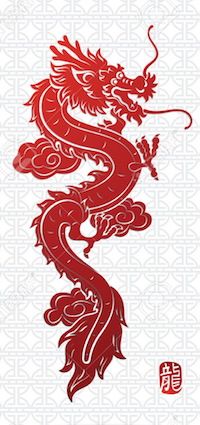
Zau stood in the doorway of his daughter’s suite in their home. No, his home, not theirs any longer. Her rooms were full of her long life, from its beginning — fragile exercise books and yellowing dolls — through her middle years — ink-and-wash paintings, porcelain, texts and clothes — to the last two decades, when she realized what was happening.
Qi had understood before any of them. She had studied at the Seto Marine Biological Laboratory in Kyoto, then worked on post-graduate studies out of the Scripp’s Institution of Oceanography in La Jolla, California. She had seen firsthand the bleaching of corals, the expansion of jellyfish, the shift toward the poles of key species’ migration patterns. She had read the IPCC reports. She saw the impacts of climate change on ocean acidification.
And she felt them, as they all did. Their skin burned, their eyes grew milky, their great gills rotted. Most of them stayed out of the ocean as much as possible once it had become clear that the seas that had nurtured them were now slowly killing them.
But Qi refused to stay ashore. Her great intellect combined with her passion for the seas and her chosen academic path to lead her always back into the waters, whether clad in neoprene or scales, as part of an expedition to mark the ongoing impacts or in a furious rush deep into the trenches after architeuthis and kraken. She barely pretended to live ashore, having boats in marinas on three continents, as well as her rooms in her father’s home.
And now the cost of humanity’s rush to the future had been borne by his beloved daughter. To be sure, he had profited greatly by the expansion of trade and population of the past two centuries, had profited as steam ships took boring staples across the oceans to where they were exotic and profitable goods.
How could he have known that his riches were laced with a sifting scale of justice? That he was not entitled to solely good fortune? That the fates would impeach him as surely as they had assisted him in the past.
He remembered the Genoese, Giovanni Caboto. Zau was a long way from home, swimming in a great, century-long circumnavigation of the globe when he ran across the tiny ship tossed on the seas off of what was then a continent barely known to Europeans. He’d slid aboard, found the Captain’s cabin, assumed a hue whiter than his norm to appear less exotic and slipped in.
Caboto was interesting and conflicted, with a religious upbringing, the favour of a king and a heart destined to die on a foreign shore. They’d talked into the night of the great currents of the oceans, how to steer both with and across them but never against them. They talked of the ideas of predestination of St. John the Evangelist, ideas that Caboto had as a behest of his childhood education. Caboto briefly returned to the ardor of his youth, talking about the Revelations of John, the coming Apocalypse, the end of the world and the turning of the sea into blood.
The sea had not become blood that night, although at some point Caboto realized he was talking to a beast that had risen from the sea and shook in fear. Zau had left him with a fading memory of a fever dream, and slid back into the embracing ocean.
And now, the sea was still not blood, but the death of his daughter made him think that it should be. It was time for a reset, time to short circuit at least briefly the acidification of the seas that had taken so much from him, rip out the solder at the heart of human society.
There was a current in the world that he could not swim with or across any longer. He had to resist it. He suspected it might yield his death instead of success. He, who had felt the pulse of the world in his century long journey under the oceans, who had incited stories of ocean monsters in every sea of the world, who had been gashed by killer whales off of British Columbia and great white sharks off of Australia, had a long and dark path ahead.