
Chapter 1: A loved one dies
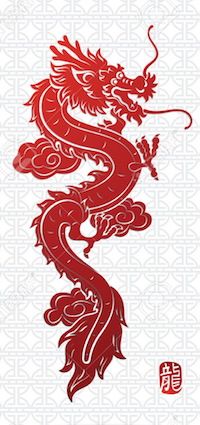
He was the padre, he was the headman, he was a Capricorn — meaningless as that was — , he was the outmatched adult in charge of a school of shrieking imps intent on destruction. The private religious school was on Shangchuan Island, fourteen kilometers into the South China Sea, a legacy of the Portuguese empire and the death on the island of St. Francis Xavier. His was a heavy burden, the sanctity of his religious charge competing with the venality of the private endowments which allowed the school to take in the worst children of the rich of South East Asia and attempt to instill in them decorum, if not grace.
But he was easing his aching shoulders with a moment of peace. He was not native to Asia and neither was the pea blossom, but he was still attempting to paint it in the ink-and-wash guóhuà style. He preferred the delicate ink to the crude oils the headman he’d looked up to as a child in Portugal had used. The sweet pea had taken hold at some point in the centuries of trade with this bustling corner of China, and now climbed up a low branch looking out over the currently green-blue and troubled waters.
The landscape was muted under the clouds, the gusting breeze threatening to overturn his easel, but he persisted in his task. His charges almost universally detested classical arts, preferring the landscapes of video games, the snap of first-person shooters, the dishy female caricatures wielding improbable weapons or the thrills of online skiing games. They avoided him quite nicely when he painted, leaving him his hour of peace with the muted colours of the sea, sky and plants.
Which were disrupted by something at the water’s edge more like the colours of neon signs in Macau. Something large, something long, something that shimmered in the fading light. Something that rolled in the surf. He placed his brush in a holder, and wiping his hands on a rag, walked to the water’s edge.
Features started to become distinct. Horns. Scales. Talons. Legs. But they refused to coalesce into a singular whole. Each was vivid in his eyes, but together, in the water of the South China Sea they were a phantasmagoria. What had the waves deposited on the shore that sinful pride allowed him to think of as his? Would it endanger the children? More shamefully, would it endanger the endowments?
Each wave exposed a new facet of the flotsam to him. Rather than resolving, however, it remained opaque. What was it?
Then an angle presented itself and he laughed quietly to himself. It was a dragon’s dance mask, fierce and glowering, long lashes over milky eyes above a gaping mouth. He ran his eyes down the length, trying to resolve the optical illusion, willing the serpentine body to turn into fabric and spars.
But it refused to turn from muscular, scaled flesh into man-made costume. It refused to turn from a water dragon into something more mundane. The brilliant iridescence of its scales refused to turn into soaked silk.
Instead, he turned, ran back to his easel. He carried it back to the seaside, back to the impossible creature dead before him. He must record this. People more learned than him would worry about causes, preen their intellects upon its mythical reality. He would capture this in ink, litmused by water into something more.
He heard a low hum and the sound of a wake. He looked up from the miracle he had been granted and saw an antique junk, just offshore. He felt a rush of wind, pin pricks on his arms and legs, then was dropped onto its deck. He lay there, limbs crossed in unnatural ways, blood seeping out of countless wounds.
An old Chinese man stood over him, tears streaming from his milky eyes.
“She excelled at the art you so fumblingly attempt, gwai lo. You could never have captured her. I could not let you try.”
Out of the corner of his eye, darkening, he saw a long, scaled form being pulled over the side of the ancient boat. Superimposed was a beautiful woman with long, flowing hair. And then his eyes failed him forever.


