Challenging the Divine — Does Qur’anic Verse 4:34 Deliver a Free Pass for Muslim Men to Beat Their Wives?


Genesis 3:16 of the Bible and the Torah provides an inkling of the place held by women in two of the three Abrahamic religions: Judaism and Christianity. In every single translation of that verse, pain and submission are identified as a woman’s lot in life. In the King James Version we find, “ Unto the woman he said, I will greatly multiply thy sorrow and thy conception; in sorrow thou shalt bring forth children; and thy desire shall be to thy husband, and he shall rule over thee.”
In addition to that depressing edict, religious texts are replete with tales of rape, oppression, forced marriage, and the physical “education” of women, but one holy text in particular has textual morsels that are challenging the 21st century beliefs and faith of women and even men across the planet. It is Verse 4:34 in the Muslim Qur’an, which reads:
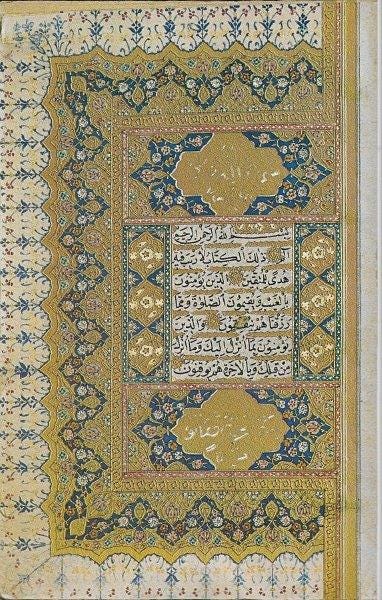
“Men are the protectors and maintainers of women, because God has given the one more (strength) than the other, and because they support them from their means. Therefore, the righteous women are devoutly obedient, and guard in (the husband’s) absence what God would have them guard. As to those women on whose part ye fear disloyalty and ill-conduct, admonish them, refuse to share their beds, and beat them; but if they return to obedience, seek not against them means (of annoyance): For God is Most High, Great (above you all).” (4:34)

This quote, translated from Arabic, clearly seems to grant men the right, nay, the obligation, to commit domestic violence against their wives should they perceive her behavior as inappropriate, stubborn, or promiscuous. That supposedly divine doctrine has guided the fists, belts, shoes, and sticks of too many Muslim husbands in the past 1500 years. This is not to say that Christian men, Jewish men, and male devotees of other religions don’t beat their wives. In the US, for example, 20 people per minute are victimized by some form of domestic violence or abuse, spiritual devotions notwithstanding. Abroad, especially in patriarchal cultural systems, the number per capita may be even higher, resulting in an array of horrors including permanent or temporary injury, PTSD, psychological problems, thoughts of and actual suicide, and multi-pronged damage to any children involved.
The controversy around Verse 4:34 has grown in volume and disapproval in recent decades as women’s rights have gained ground and their voices have risen in protest. Laleh Bakhtiar, a female translator asks, “How could God, the Merciful, the Compassionate, sanction husbands beating their wives?” But is is not just women challenging the norm.

Men, too, are looking at beloved wives and mothers and sisters and wondering the same thing. One male scholar in particular, a convert to Islam from Canada, Dr. John A. Morrow, began to look at Verse 4:34 with a father’s eye when his daughter was born. The more he looked, researched, and debated, the more questions arose. The result of several years work and literally thousands of textual resources is his recent book — The Most Controversial Qur’anic Verse: Why 4:34 Does Not Promote Violence Against Women.
At the core of Morrow’s definitively detailed argument is the assertion that the determination of meaning within a primary source text cannot be done in isolation. That is, to accurately interpret Verse 4:34, a fair-minded commentator would analyze context, related elements, prima facie evidence, traditional doctrine, allegorical possibilities, and the overall themes of divine teachings. Morrow does all of this and more, weighing the influence of men desirous of having the upper hand against the behavior and attitude of the Prophet Muhammed himself, for example.

- Relating the verse to itself — Verse 4:34 begins with the phrase Men are the protectors and maintainers of women” so one might well ask “Why then would the verse end with a beating?” Why is “beat” the chosen translation? The Arabic word is ḍaraba, and is comprised of the root sounds /d/, /r/, and /b/. This root, according to Morrow, occurs 58 times in the Qur’an, 55 as a verb and 3 as a noun. As he states: “The verb in question has multifarious meanings, including, to beat, to strike, and to hit; to shoot, to fire, to shell, and to bombard; to play; to make music; to sting; to express indignation and disregard; to separate and to part; to impose; to set forth, to travel, to move; to turn away from, to dispense with, to leave, to forsake, to abandon, to desert, to avoid, to ignore, to disregard or to shun. In fact, the verb has over fifty-eight meanings.” Yet, with all these as options, Muslim religious authorities, almost exclusively male, have determine that “beat” was God’s intention.
- Relating the verse to other verses — Does Verse 4:34 run counter to other related verses? Beatings as punishment are found in various places in the Qur’an, notably in the case of a man or a woman being unfaithful to his or her spouse. In those cases, the Qur’an demands 100 lashes and adjures the punisher not to hold back. Ouch! Yet daraba is not the chosen verb for these beatings. Instead, jalada is used, which means to lash, to whip, or to flog. Morrow also points out that “the only other verse that deals with striking one’s spouse is clearly symbolic, namely, God commanding Ayyūb or Job to fa iḍrib or strike his wife with a “tuft of grass” instead of breaking his oath (38:44).” The tuft of grass would have 100 slender blades of grass. Thus, it would be akin to “beating” his wife 100 times. However, rather than applaud Job for his tenderness, his right to strike his wife in any way needs to be confronted.
3. How does the common interpretation meld with the Qur’an as a whole? This more holistic method connects to the Qur’an as a macrocosm of holy instruction to Verse 4:34 representing an outlier. The question becomes, does “beat them” fit? Said Dahlia Eissa, one of Dr. Morrow’s sources, “Placing the interpretation of 4:34 in the context of other verses in the Qur’ān, it is clear that its traditional interpretation is inconsistent with many other verses that espouse principles of equality.” For example, Verse 2:28 states that women have equal rights to men, which would imply that if the men get to beat the women, then, rightly, the women would have leave to beat the men. God has also obligated men, in Verse 65:6, to keep their wives in the same style they keep themselves and to not “annoy them not so as to restrict them.”
As Dr. Morrow elucidates, with all this divine attention to equity and caring, a rational person would naturally question the veracity and intent of a verse which seems to promote an oppositional attitude. Even in extreme cases of domestic ire, God cautions “Repel (evil) with what is better,” (41:34) never suggesting that brutal punishments are the answer in terms of correcting inappropriate behavior. Divorce or separation for cause, those worst-case-scenarios for a relationship, were likewise not seen as circumstances within which to mete out violence. “[R]etain them in kindness or set them free in kindness; but do not take them back to injure them, [or] to take undue advantage; if anyone does that, he wrongs his own soul” (2:231).
The purpose of John Morrow’s book, The Most Controversial Qur’anic Verse: Why 4:34 Does Not Promote Violence Against Women is to illuminate with reason the glaring anomaly that is the accepted interpretation of Qur’anic Verse 4:34. Its punitive words need to be reconsidered in light of the profuse evidence indicating that the original intent has been manipulated. Dr. Morrow and dozens of other commentators point to the culprit in this semantic recasting— Muslim men. He says…
“As a study of Islāmic jurisprudence reveals, misogynistic Muslim jurists, from medieval to modern times, effectively institutionalized male supremacy. Their goal was to consolidate the superior status of men in society and subjugate women to their control. Domestic violence was merely another tool at their disposal.”
Yet, neither modern societies, modern women, nor enlightened Muslims are necessarily bound by an obvious interpretive error however anchored it may be in tradition. Consider that, as indicated above, most thinking people recognize now that the idea of keeping slaves is anathema to a nation’s citizenship in the global world community with its diversity of partners and societies. Similarly, holding the entire Jewish religion responsible for a death two thousand years ago smacks of the worst kind of generational guilt. It is time to rethink the divine intention of three small consonants d/r/b in light of all the other, more seemly, and more consistent options and the myriad dictums in the holy Qur’an.