avatarCrypto Crumb SnatchersšŸŖā§¦

Free AI web copilot to create summaries, insights and extended knowledge, download it at here

5993

Abstract

sality and versatility set it apart in the crypto cosmos.</p> <figure id="587b"> <div> <div> <img class="ratio" src="http://placehold.it/16x9"> <iframe class="" src="https://cdn.embedly.com/widgets/media.html?src=https%3A%2F%2Fwww.youtube.com%2Fembed%2F3_uDuZ9Pbu0&amp;display_name=YouTube&amp;url=https%3A%2F%2Fwww.youtube.com%2Fwatch%3Fv%3D3_uDuZ9Pbu0&amp;image=http%3A%2F%2Fi.ytimg.com%2Fvi%2F3_uDuZ9Pbu0%2Fhqdefault.jpg&amp;key=a19fcc184b9711e1b4764040d3dc5c07&amp;type=text%2Fhtml&amp;schema=youtube" allowfullscreen="" frameborder="0" height="480" width="854"> </div> </div> </figure></iframe></div></div></figure><h1 id="e65a">Chainlink’s Consensus Protocol: What Does it Use?</h1><figure id="406e"><img src="https://cdn-images-1.readmedium.com/v2/resize:fit:800/1*[email protected]"><figcaption></figcaption></figure><figure id="9adc"><img src="https://cdn-images-1.readmedium.com/v2/resize:fit:800/1*[email protected]"><figcaption></figcaption></figure><p id="d252">Chainlink uses a unique version of a consensus protocol. It’s not <b>Proof of Work (PoW)</b> like Bitcoin, nor is it <b>Proof of Stake (PoS)</b> like Ethereum 2.0. Instead, Chainlink relies on a reputation system for its node operators. The accuracy and reliability of data provided by node operators are continuously monitored, and node operators with a strong track record are chosen more frequently to fulfill data requests.</p><h1 id="2440">Miners? Nodes?</h1><figure id="1ece"><img src="https://cdn-images-1.readmedium.com/v2/resize:fit:800/1*[email protected]"><figcaption></figcaption></figure><p id="cd8b">In the context of Chainlink, the term ā€˜miners’ doesn’t quite fit. Instead, we have ā€˜<b>node operators</b>.’ These operators provide the necessary computational resources for the network, similar to miners in a traditional blockchain system. However, unlike traditional miners who validate transactions, Chainlink node operators fulfill data requests from smart contracts.</p><h1 id="750d">Chainlink’s Services to the Average User and How to Use Them</h1><p id="8c14">Chainlink, with its innovative technology and user-friendly approach, offers a plethora of services to users. Most importantly, it provides reliable, tamper-proof inputs and outputs for complex smart contracts on any blockchain. So whether you’re a business wanting to integrate payment services or an app developer seeking to include real-world data, Chainlink can make it happen.</p> <figure id="221a"> <div> <div> <img class="ratio" src="http://placehold.it/16x9"> <iframe class="" src="https://cdn.embedly.com/widgets/media.html?src=https%3A%2F%2Fwww.youtube.com%2Fembed%2FmvD8N06dtL4%3Ffeature%3Doembed&amp;display_name=YouTube&amp;url=https%3A%2F%2Fwww.youtube.com%2Fwatch%3Fv%3DmvD8N06dtL4&amp;image=https%3A%2F%2Fi.ytimg.com%2Fvi%2FmvD8N06dtL4%2Fhqdefault.jpg&amp;key=a19fcc184b9711e1b4764040d3dc5c07&amp;type=text%2Fhtml&amp;schema=youtube" allowfullscreen="" frameborder="0" height="480" width="854"> </div> </div> </figure></iframe></div></div></figure><p id="4c6a">To use Chainlink’s services, you’ll need to hold some LINK tokens to pay for data services. You can acquire these on any major cryptocurrency exchange. From there, the world of decentralized applications (dApps) is your oyster, thanks to Chainlink’s comprehensive documentation and support.</p><h1 id="7008">Web3 & Chainlink</h1> <figure id="63d5"> <div> <div> <img class="ratio" src="http://placehold.it/16x9"> <iframe class="" src="https://cdn.embedly.com/widgets/media.html?src=https%3A%2F%2Fwww.youtube.com%2Fembed%2FJR41UgJR7jw%3Ffeature%3Doembed&amp;display_name=YouTube&amp;url=https%3A%2F%2Fwww.youtube.com%2Fwatch%3Fv%3DJR41UgJR7jw&amp;image=https%3A%2F%2Fi.ytimg.com%2Fvi%2FJR41UgJR7jw%2Fhqdefault.jpg&amp;key=a19fcc184b9711e1b4764040d3dc5c07&amp;type=text%2Fhtml&amp;schema=youtube" allowfullscreen="" frameborder="0" height="480" width="854"> </div> </div> </figure></iframe></div></div></figure><p id="21d6">Web3, short for Web 3.0, is often referred to as the ā€œfuture of the internetā€. It’s a radical idea that visualizes a more secure, open, and trustless version of the web, powered by blockchain technology and decentralization. To understand Web3, it’s necessary to take a brief look at its predecessors.</p><p id="cba0">Web 1.0 was the first generation of the internet. It was primarily a place for information storage and retrieval, marked by static webpages and minimal user interaction. Then came Web 2.0, which we are currently using. It’s a more interactive and dynamic version of the web, allowing for social networking, user-generated content, and more.</p><p id="6367">Web3 aims to be a giant leap forward. It proposes a decentralized internet, one where users have more control over their data and their digital interactions. This control is made possible through the use of blockchain technology.</p> <figure id="526d"> <div> <div> <img class="ratio" src="http://placehold.it/16x9"> <iframe class="" src="https://cdn.embedly.com/widgets/media.html?src=https%3A%2F%2Fwww.youtube.com%2Fembed%2FKk3iEbPDoyc%3Ffeature%3Doembed&amp;display_name=YouTube&amp;url=https%3A%2F%2Fwww.youtube.com%2Fwatch%3Fv%3DKk3iEbPDoyc&amp;image=https%3A%2F%2Fi.ytimg.com%2Fvi%2FKk3iEbPDoyc%2Fhqdefault.jpg&amp;key=a19fcc184b9711e1b4764040d3dc5c07&amp;type=text%2Fhtml&amp;schema=youtube" allowfullscreen="" frameborder="0" height="480" width="854"> </div> </div> </figure></iframe></div></div></figure><p id="36cf">Blockchain, at its core, is a digital ledger system. It allows for the secure and transparent re

Options

cording of transactions. Its decentralization comes from the fact that this ledger is maintained by multiple nodes (computers) that each hold a copy of the ledger, instead of being controlled by a single entity.</p><p id="1482">Now, where does Chainlink fit into the Web3 vision? As we’ve discussed earlier, Chainlink is a decentralized oracle network, acting as a bridge between on-chain and off-chain environments. It enables smart contracts (self-executing contracts with the terms of the agreement directly written into code) on the blockchain to interact with real-world data and external APIs.</p><p id="4b31">In the context of Web3, Chainlink’s role is critical. For the decentralized web to function seamlessly, smart contracts need to interact with various real-world data sources and services. However, by nature, smart contracts live on the blockchain and cannot directly interact with off-chain data. That’s where Chainlink steps in.</p><figure id="9f75"><img src="https://cdn-images-1.readmedium.com/v2/resize:fit:800/1*[email protected]"><figcaption></figcaption></figure><p id="4082">Chainlink’s decentralized oracle network can reliably and securely bring off-chain data onto the blockchain. This capability allows smart contracts to engage with the world outside their native blockchain, making them significantly more useful. In essence, Chainlink could be one of the key building blocks for Web3, providing the necessary bridge between on-chain and off-chain environments.</p><p id="7840">For example, suppose you want to create a decentralized insurance application on the blockchain that pays out automatically when there’s adverse weather. You’d need accurate, real-time weather data for the smart contract to work. Chainlink can provide this data from trusted, off-chain sources in a tamper-proof manner, allowing the smart contract to execute when certain weather conditions are met.</p> <figure id="5c20"> <div> <div> <img class="ratio" src="http://placehold.it/16x9"> <iframe class="" src="https://cdn.embedly.com/widgets/media.html?src=https%3A%2F%2Fwww.youtube.com%2Fembed%2FRD9M6xbdlPM%3Ffeature%3Doembed&amp;display_name=YouTube&amp;url=https%3A%2F%2Fwww.youtube.com%2Fwatch%3Fv%3DRD9M6xbdlPM&amp;image=https%3A%2F%2Fi.ytimg.com%2Fvi%2FRD9M6xbdlPM%2Fhqdefault.jpg&amp;key=a19fcc184b9711e1b4764040d3dc5c07&amp;type=text%2Fhtml&amp;schema=youtube" allowfullscreen="" frameborder="0" height="480" width="854"> </div> </div> </figure></iframe></div></div></figure><p id="cd0f">Therefore, Chainlink has an essential role in the realization of Web3, making the dream of a fully integrated, decentralized web a feasible reality.</p><h1 id="ab68">Wrapping Up</h1><p id="7b18">Chainlink is more than just a tokenā€Šā€”ā€Šit’s a bridge, a connector, a revolutionary force in the crypto world. Its capacity to enable smart contracts to interact with real-world data is a game-changer, transforming what was once a field of untapped potential into a land of infinite possibilities.</p> <figure id="c036"> <div> <div> <img class="ratio" src="http://placehold.it/16x9"> <iframe class="" src="https://cdn.embedly.com/widgets/media.html?src=https%3A%2F%2Fwww.youtube.com%2Fembed%2FYShbzR7mlog%3Ffeature%3Doembed&amp;display_name=YouTube&amp;url=https%3A%2F%2Fwww.youtube.com%2Fwatch%3Fv%3DYShbzR7mlog&amp;image=https%3A%2F%2Fi.ytimg.com%2Fvi%2FYShbzR7mlog%2Fhqdefault.jpg&amp;key=a19fcc184b9711e1b4764040d3dc5c07&amp;type=text%2Fhtml&amp;schema=youtube" allowfullscreen="" frameborder="0" height="480" width="854"> </div> </div> </figure></iframe></div></div></figure><p id="8828">As always, remember that while the crypto universe is exciting, it’s also complex and constantly evolving. Continue learning, continue exploring, and let’s journey through this crypto cosmos together.</p><h1 id="7632">Crypto Price Updates Below</h1><blockquote id="87e4"><p><a href="https://coinmarketcap.com/currencies/bitcoin/"><b><i>Bitcoin</i></b></a><b><i> | <a href="https://coinmarketcap.com/currencies/ethereum/">Ethereum</a> | <a href="https://coinmarketcap.com/currencies/xrp/">Ripple (XRP)</a> | <a href="https://coinmarketcap.com/currencies/litecoin/">Litecoin</a> | <a href="https://coinmarketcap.com/currencies/dogecoin/">Dogecoin</a></i></b></p></blockquote><h1 id="cab1">Have you ever seen a Throwback GPU Mining Rig?</h1> <figure id="3e1d"> <div> <div> <img class="ratio" src="http://placehold.it/16x9"> <iframe class="" src="https://cdn.embedly.com/widgets/media.html?src=https%3A%2F%2Fwww.youtube.com%2Fembed%2FYk_uyQ5YRdo%3Ffeature%3Doembed&amp;display_name=YouTube&amp;url=https%3A%2F%2Fwww.youtube.com%2Fwatch%3Fv%3DYk_uyQ5YRdo&amp;image=https%3A%2F%2Fi.ytimg.com%2Fvi%2FYk_uyQ5YRdo%2Fhqdefault.jpg&amp;key=a19fcc184b9711e1b4764040d3dc5c07&amp;type=text%2Fhtml&amp;schema=youtube" allowfullscreen="" frameborder="0" height="480" width="854"> </div> </div> </figure></iframe></div></div></figure><p id="c1af"><a href="https://discord.gg/pYSDZ9Af"><b>Discord</b></a><b> | <a href="https://www.reddit.com/r/CryptoCrumbSnatchers/?utm_source=share&amp;utm_medium=ios_app&amp;utm_name=ioscss&amp;utm_content=1&amp;utm_term=1">Reddit</a> | <a href="https://t.me/CryptocurrencyWatch">Telegram</a> | <a href="https://twitter.com/ccrumbsnatchers">Twitter</a></b></p><p id="d4b7">Welcome to the world of cryptocurrency mining, where human ingenuity meets machine muscle. It’s a place where GPUs become the heart of supercomputers, where a constant stream of maintenance, analysis, and documentation keeps the machine alive, and where the human touch still makes all the difference. It’s not the wild west of the crypto world; it’s more like its beating heart.</p></article></body>

Chainlink (LINK): Cryptocurrency šŸŖ™ā›“ļø

Chainlink’s Link, Side Chains, Cross Chains, and More in the Crypto World
Welcome to the innovative world of Chainlink, where crypto and real-world data meet. To keep it straightforward, Chainlink (LINK) is a decentralized oracle network. It has a native cryptocurrency, LINK, that powers it. But Chainlink offers more than just a currency; it’s the connective tissue between blockchain technology and real-world applications. This is achieved through the use of ā€˜oracles’ which are third-party services designed to link blockchains to the world

Chainlink’s space in the digital currency universe is truly like no other. It’s not just a cryptocurrencyā€Šā€”ā€Šit’s a bridge, a connector, a facilitator. But let’s take it one step at a time, because good things, especially things as good as Chainlink, deserve to be savored and understood in all their complexity and simplicity.

Websiteā€Šā€”ā€ŠChainlink: (LINK price)

Is Chainlink a Coin or a Token?

The terms ā€˜coin’ and ā€˜token’ are often used interchangeably in the crypto world, but they do have distinct meanings. A ā€˜coin’ usually refers to cryptocurrencies like Bitcoin or Ethereum that are based on their own, unique blockchain. In contrast, a ā€˜token’ is a form of cryptocurrency that’s built on an existing blockchain. As for Chainlink? It’s a token. LINK is an ERC-20 token, which means it’s built on the Ethereum blockchain. However, it’s not just any token. LINK is used to pay node operators in the Chainlink network for their services, especially for the retrieval of off-chain data.

Side Chains and Cross Chains: What are They?

ā€˜Side chain’ and ā€˜cross chain’ are two key terms in the blockchain universe that warrant some friendly chit-chat. A side chain is a separate blockchain that runs parallel to the main blockchain, allowing for more scalability and customization. On the other hand, a cross chain is a technology that enables interaction between two different blockchainsā€Šā€”ā€Šsay, Ethereum and Bitcoin.

Chainlink comes into play as the bridge that can connect these side chains and cross chains to the main blockchains, enabling them to communicate and share information in a secure, trustless manner.

The Chainlink Network: What’s It All About?

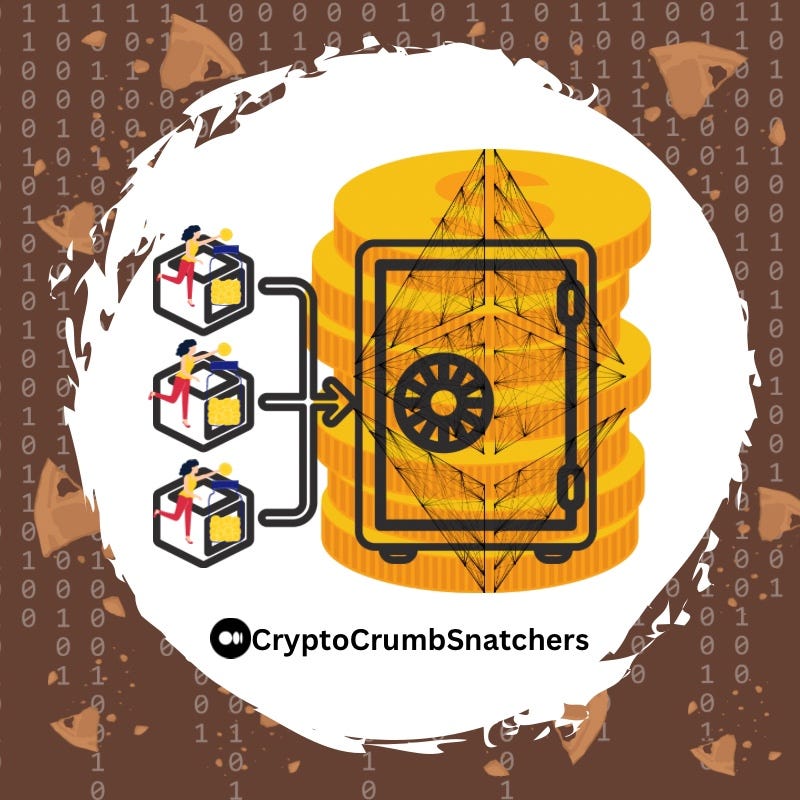
The Chainlink network is a beautifully complex and yet elegantly simple ecosystem. It’s the ā€˜oracle’ of the crypto universe, if you will. This network facilitates communication between blockchain-based smart contracts and external data sources. In other words, Chainlink enables your smart contracts to interact with the world outside their blockchain, which opens up endless possibilities for integration with real-world applications.

How is Chainlink Better Than Most Crypto?

Here’s where Chainlink shines with all the luminosity of a supernova. Where other cryptocurrencies provide a medium of exchange, Chainlink goes a step furtherā€Šā€”ā€Šit doesn’t just provide a currency, it provides a service. Its decentralized network of oracles enables blockchains to interact with real-world data, expanding the scope of what blockchain technology can achieve.

Moreover, Chainlink is not limited to the Ethereum network. Its architecture allows it to service any blockchain. This universality and versatility set it apart in the crypto cosmos.

Chainlink’s Consensus Protocol: What Does it Use?
Chainlink uses a unique version of a consensus protocol. It’s not Proof of Work (PoW) like Bitcoin, nor is it Proof of Stake (PoS) like Ethereum 2.0. Instead, Chainlink relies on a reputation system for its node operators. The accuracy and reliability of data provided by node operators are continuously monitored, and node operators with a strong track record are chosen more frequently to fulfill data requests.

Miners? Nodes?
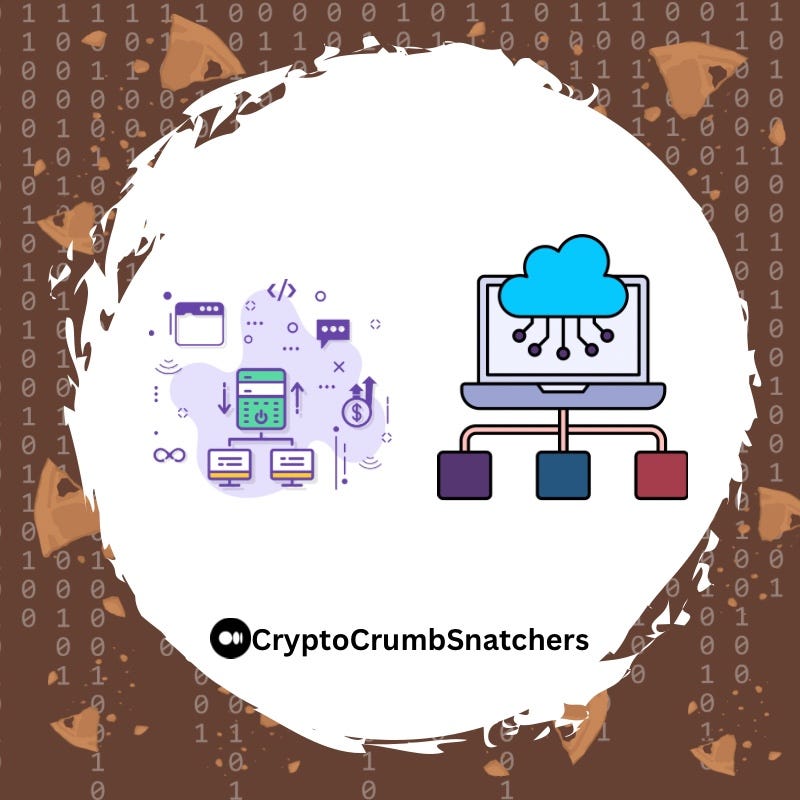
In the context of Chainlink, the term ā€˜miners’ doesn’t quite fit. Instead, we have ā€˜node operators.’ These operators provide the necessary computational resources for the network, similar to miners in a traditional blockchain system. However, unlike traditional miners who validate transactions, Chainlink node operators fulfill data requests from smart contracts.

Chainlink’s Services to the Average User and How to Use Them

Chainlink, with its innovative technology and user-friendly approach, offers a plethora of services to users. Most importantly, it provides reliable, tamper-proof inputs and outputs for complex smart contracts on any blockchain. So whether you’re a business wanting to integrate payment services or an app developer seeking to include real-world data, Chainlink can make it happen.

To use Chainlink’s services, you’ll need to hold some LINK tokens to pay for data services. You can acquire these on any major cryptocurrency exchange. From there, the world of decentralized applications (dApps) is your oyster, thanks to Chainlink’s comprehensive documentation and support.

Web3 & Chainlink

Web3, short for Web 3.0, is often referred to as the ā€œfuture of the internetā€. It’s a radical idea that visualizes a more secure, open, and trustless version of the web, powered by blockchain technology and decentralization. To understand Web3, it’s necessary to take a brief look at its predecessors.

Web 1.0 was the first generation of the internet. It was primarily a place for information storage and retrieval, marked by static webpages and minimal user interaction. Then came Web 2.0, which we are currently using. It’s a more interactive and dynamic version of the web, allowing for social networking, user-generated content, and more.

Web3 aims to be a giant leap forward. It proposes a decentralized internet, one where users have more control over their data and their digital interactions. This control is made possible through the use of blockchain technology.

Blockchain, at its core, is a digital ledger system. It allows for the secure and transparent recording of transactions. Its decentralization comes from the fact that this ledger is maintained by multiple nodes (computers) that each hold a copy of the ledger, instead of being controlled by a single entity.

Now, where does Chainlink fit into the Web3 vision? As we’ve discussed earlier, Chainlink is a decentralized oracle network, acting as a bridge between on-chain and off-chain environments. It enables smart contracts (self-executing contracts with the terms of the agreement directly written into code) on the blockchain to interact with real-world data and external APIs.

In the context of Web3, Chainlink’s role is critical. For the decentralized web to function seamlessly, smart contracts need to interact with various real-world data sources and services. However, by nature, smart contracts live on the blockchain and cannot directly interact with off-chain data. That’s where Chainlink steps in.
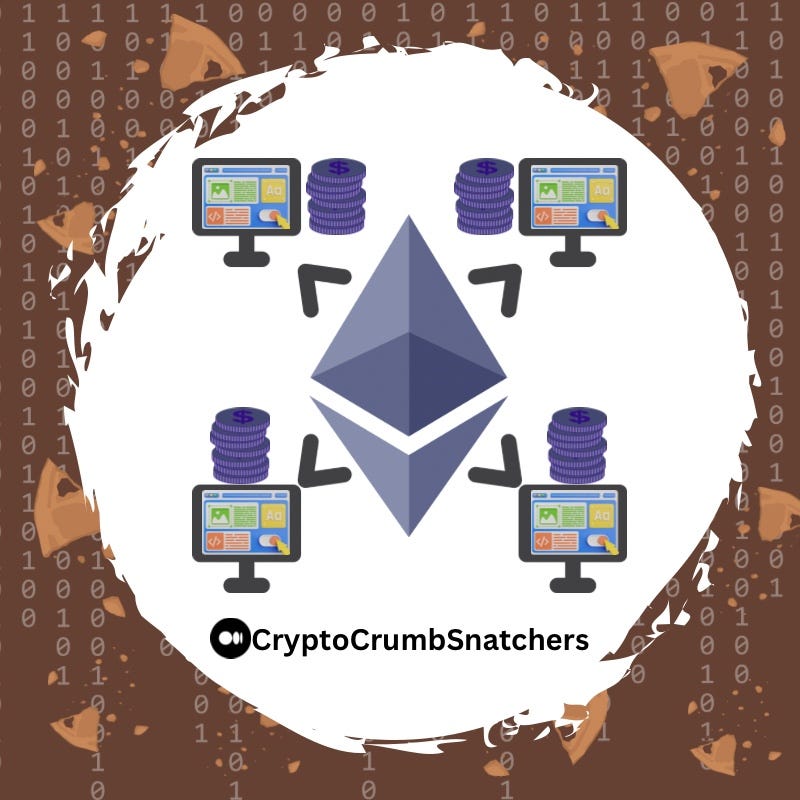
Chainlink’s decentralized oracle network can reliably and securely bring off-chain data onto the blockchain. This capability allows smart contracts to engage with the world outside their native blockchain, making them significantly more useful. In essence, Chainlink could be one of the key building blocks for Web3, providing the necessary bridge between on-chain and off-chain environments.

For example, suppose you want to create a decentralized insurance application on the blockchain that pays out automatically when there’s adverse weather. You’d need accurate, real-time weather data for the smart contract to work. Chainlink can provide this data from trusted, off-chain sources in a tamper-proof manner, allowing the smart contract to execute when certain weather conditions are met.

Therefore, Chainlink has an essential role in the realization of Web3, making the dream of a fully integrated, decentralized web a feasible reality.

Wrapping Up

Chainlink is more than just a tokenā€Šā€”ā€Šit’s a bridge, a connector, a revolutionary force in the crypto world. Its capacity to enable smart contracts to interact with real-world data is a game-changer, transforming what was once a field of untapped potential into a land of infinite possibilities.

As always, remember that while the crypto universe is exciting, it’s also complex and constantly evolving. Continue learning, continue exploring, and let’s journey through this crypto cosmos together.

Crypto Price Updates Below

Bitcoin | Ethereum | Ripple (XRP) | Litecoin | Dogecoin

Have you ever seen a Throwback GPU Mining Rig?

Discord | Reddit | Telegram | Twitter

Welcome to the world of cryptocurrency mining, where human ingenuity meets machine muscle. It’s a place where GPUs become the heart of supercomputers, where a constant stream of maintenance, analysis, and documentation keeps the machine alive, and where the human touch still makes all the difference. It’s not the wild west of the crypto world; it’s more like its beating heart.

Chain Link
Chainlink Oracles
Chainlink Token
Eth
Ethereum Blockchain
Recommended from ReadMedium