
Chained to the Farm
How did my grandparents stand it?
Drop a pin onto a map aiming for the upper quadrant of Michigan, making sure the tiny town of Bentley is precisely targeted, and you will have found rural farming countryside, specifically dairy country.
Now, from this pinned geographical location, measure a space with a two-and a-half-hour radius — and the resulting perimeter will give you an accurate depiction of my grandparents’ entire world.
This boundary of space was required by their life’s work.
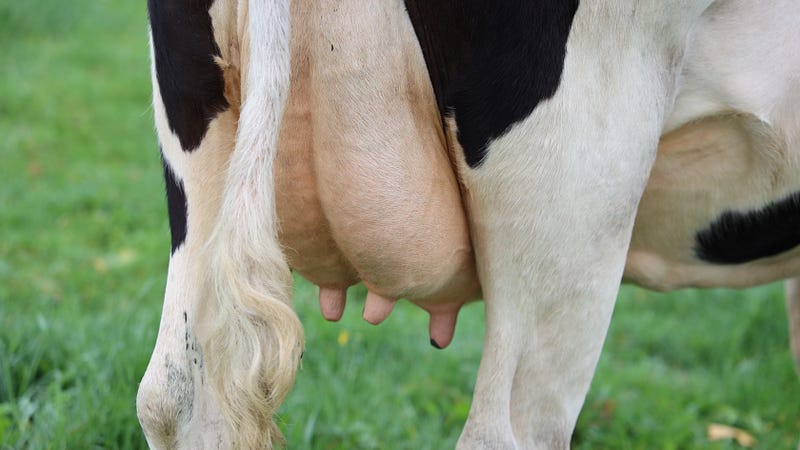
Milking cows, namely Holsteins, was my grandparents’ livelihood — white, frothy, sweet milk paid the bills.
The cattle that were providing the dollar signs for this production had twice daily needs in order to simply survive their lot in life. Their physical requirements and demands were time sensitive and non-negotiable.
As a result, the lifestyle of these dairy farmers was limited — and one without vacations or weekends off.
Their sweet-eyed black and white cattle demanded a strict schedule for their daily physical release. They were the mature “money makers” and they naturally set the pace.
These gentle, milk-bag-swaying creatures provided the survival of the farm, while dictating just how each day would play out.
The rest of the herd of calves and heifers needed their basic needs met; namely food, water and pastures in which to graze, while in contrast the mature head presented needs that were more complicated.
When I was a nursing mama, I remember the building pressure that demanded my attention. Any nursing moms out there? When it’s time to feed your baby, the female body requires relief within a small window of time.
It’s no different for the mamas of the bovine variety.
On a dairy farm, the calves are weaned, while the mechanics of producing milk are continued for the purpose of a dairy farmer’s business objectives. Calves are replaced by milking machines. And, the cooler is filled with milk.
The milking routine is set by the cattle’s internal, nature-framed time clocks.
This was clearly communicated by the lactating livestock. There was no missing the unmistakable vocalizations from the cows when it was TIME. Their distressed bawling, mooing, and hoof stomping could not be denied. When their milk bags were full, the bovine theatrics could not be contained. There would be no farm yard peace until the milking routine was completed.
Without exception, two times per day.
Prior to sunrise: The farmhouse lights were a beacon that dominoed down the lane… to the barn lights… which in turn switched on the lights in the milk house. Everyone was up!
The cows’ elongated mooing was the morning’s expected soundtrack — impatiently demanding their turn to enter the barn’s sliding door.
The stalls for milking were filled and emptied twice. The mooing mamas were then settled, as they plodded to the pasture for the day in their unique and peaceful way.
The two hour milking chore was completed, the remaining herd got its deserved attention — with breakfast served. Next, the barn was cleaned. And, finally, the milking supplies were prepared for the next job with steaming hot water, compliments of my grandma’s chapped and capable hands.
The fresh milk, which had been continuously making its way to the cooler in the milk house, via the system of milking machines and tube connections, was awaiting the eighteen-wheeler that had a scheduled pick-up each day.
Breakfast for mere humans came second and the farm work-day followed.
There was hay, corn, and oats to nurture through to harvest. There were fences to mend, machinery to fix and a myriad of outdoor “this and thats” to fill the day. There was the family garden and washing and house cleaning and cooking and baking, with canning and so much more that kept the farm house every bit as busy as the fields.
And then… milking time on REPEAT in the afternoon.
The livestock on a dairy farm had unwavering schedules to keep. If the farmers left their property, they didn’t get far before a return was required.
Some chores could be put on pause, but never, ever the chore of milking.
The tiny perimeter of the pin on the map was their guide; and it was also their dead end.
Everyday had to be bookended with milking the cows. Between the bookends there were approximately seven hours. If my grandparents left the farmstead, you do you math with me…
I surmise that an approximate two-and-one-half-hour perimeter enclosed the space of these farmer’s lives — factoring in a couple of hours to spend at a destination — these farmers didn’t get too far.
For their whole lives, with very few exceptions.
It seems apparent, that for them, space and freedom were related.
The livelihood of a rural Michigan farm, run by one couple, forced them to live their whole lives in a tiny space in this big ‘ole world. It was a tiny space for their lives to play out — their freedom was limited by the constraints of their job.
This inherited farm tied them to this space as surely as the binder twine held the hay bales.
Life was simple, and life was hard.
Space, for them, had a definition that few can appreciate or understand.
Even with the special place in my heart for this family farm in my heritage, I can’t stand the idea of constraint that it held for my grandparents. They knew no other life.
I know they were happy and grateful to have this life that provided for their needs. But, when zooming out to look at the big picture of their lives, they appeared to be chained, in bondage to their life’s work. They lived in a space of narrow boundaries for their entire lives.
It was the only life they knew and they were faithful to it.
In my mom’s words, “They had us three girls and each other and I hope they were happy. I know they loved God and life. What else is there really?”
Wouldn’t you like to hear a couple of more stories about my grandparent’s farm? Thank you for reading!


