
Chado — The Art of Tea
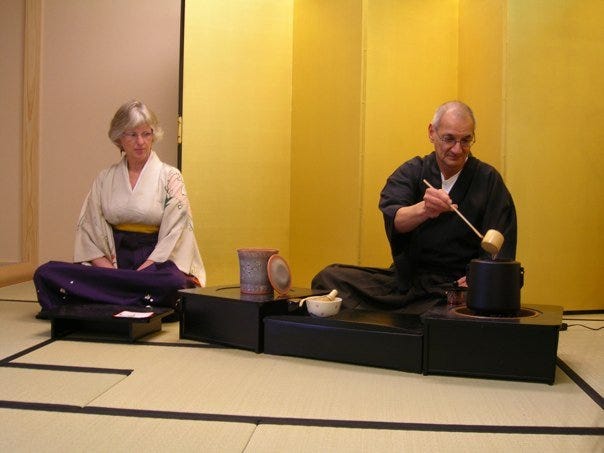
During my six years living and teaching in Japan, I would once a week, learn to make and serve a traditional bowl of tea. To the uninitiated, the Japanese Tea Ceremony may appear forced, tedious, and even contrived. At its very core, however, it is all about serving others through a dedicated craft. The Way of Tea is the call to take the time to ensure that whatever you do in life offers the greatest possible benefit for others, and to remember to be thankful for all things received. It is expressed in the sincere and simple act of preparing and serving a bowl of tea and receiving it with gratitude.
The Way of Tea is based on the four principles of harmony, respect, purity, and tranquility. Harmony dispenses with pretensions, walks the path of moderation, and embraces humility. Respect opens us to a proper relationship with nature and our fellow human beings. Purity, the act of cleaning the tea utensils, represents the clearing of worldly attachments that enable people and things to be perceived in their true state. tranquility is arrived at by practicing the first three principles. (adapted from Tea Life, Tea Mind by Soshitsu Sen XV)
Harmony (Wa) reminds us that openness and humility is the key to all learning. It is the humble that realize that the more they learn, the more they do not know. Harmony is being one in accord with people and nature.
Respect (Kei) reminds us to look deep into another’s heart to come to understanding. Respect comes from a feeling of gratitude for people as well as things.
Purity (Sei) exemplifies cleanliness and orderliness in both the physical and spiritual sense. When one purifies the tea utensils in Chado, one is also purifying heart and mind. The hosts and guests focus on the tea ceremony and leave worldly distractions outside the tea room.
Tranquility (Jaku) is the state of calm and peace that allows one to meet any situation with calm and preparedness.
The principles of Chado are meant to be applied to all activities in everyday life. These principles of the Art of Life are exemplified through the simple but purposeful activity of host and guest taking time to enjoy and fully appreciate a meticulously prepared bowl of tea.


