
Cereal Killers…An Experiment That Surprised Even Young Medical Professionals
A documentary to touch your heart…
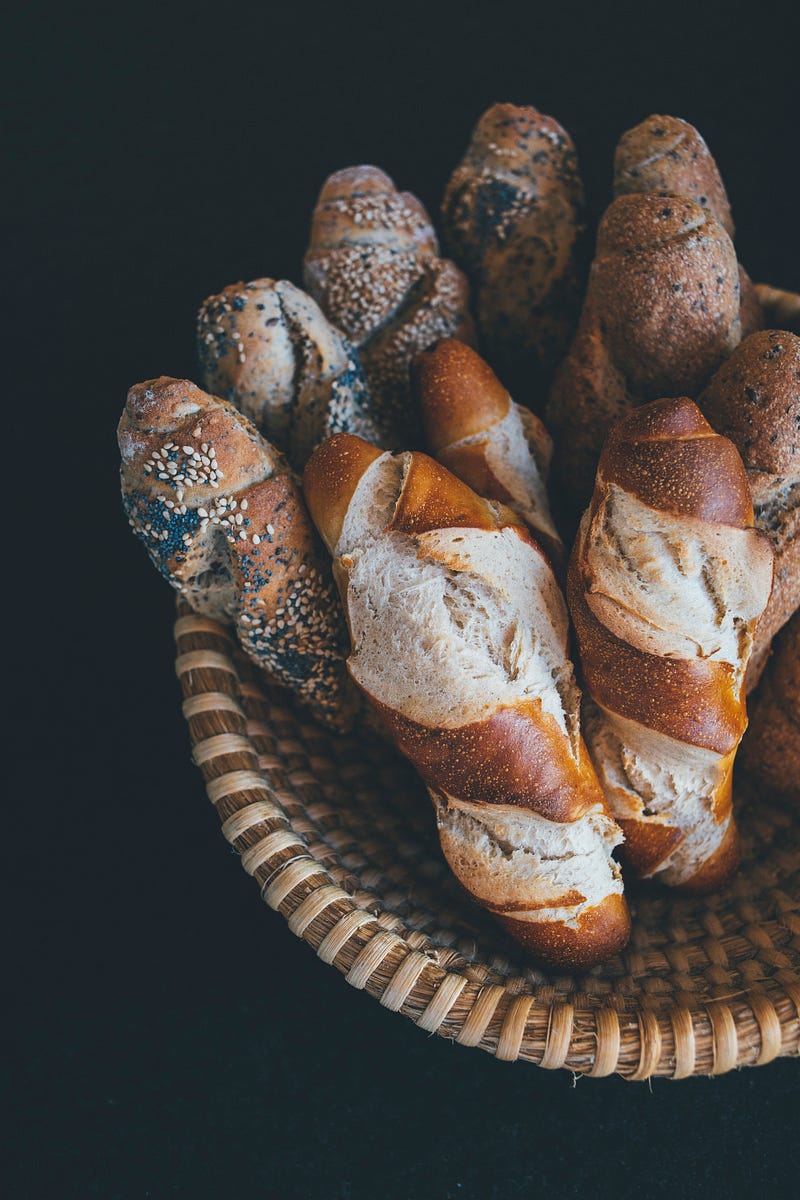
When I was a little girl I yearned for white, fluffy bread, the kind you can eat a lot of, and still not feel satisfied. All my peers were enjoying it, but my parents were insistent that we eat small, dense bread, commonly called cottage loaves.
Yes, we complained. Bitterly! But nothing changed. So we had to eat them, or starve. Choice was not up for grabs.
These days, though I’d probably thoroughly enjoy them, I’m older and wiser, and I understand now why white fluffy bread had no place in our home.
But there again, are grains good for you at all? We’re assured that nutritious whole grains must be incorporated into a healthy diet, but does the evidence stack up? Are whole grains the super-food they are purported to be?
Some years ago, two of my friends lost their fathers. They both went to work in the morning, and didn’t return home. That freaked me out, to be honest. They were both quiet family men, not overweight, and yet each suffered a severe heart attack, and collapsed on the job, within months of each other.
Ours was a carb-loaded society. Carbohydrates are a cheap, and cheerful way of filling people up, and yet, evidence suggests that they were not necessarily good for health.
‘According to one study on remains of early Europeans, prior to 16,000 BC, European males stood 179 cm tall, or 5’10.5″, and females stood 158 cm, or 5’2″. Between 8,000 to 6,600 BC, average heights had dropped to 166 cm for males. Heights fell even further in Neolithic populations, dropping down to 164 cm for males and 150 cm for females, only reaching and surpassing 170 cm at the end of the 19th century.
‘Another source found that Paleolithic humans living between 30,000 and 9,000 BC ran almost 5’10”, which is close to the average modern American male’s height. After agriculture (growing grains), was fully adopted, male height dropped to 161 cm, or 5’5.4″. Females went from 166.5 cm to 154.3 cm under the same parameters.
‘We know these changes to height also reflected worsened health, because with shortness came dental pathologies like caries, plaque, and decay:signs of arrested growth indicating instances of severe malnutrition, and skull abnormalities that stem from iron deficiency. People got shorter, sicker, and less healthy. Height wasn’t a cause of poor health, of course, but it was an indicator.’
All these years later and I wonder whose dogma we have been following. Who is paying the piper? Why have we been told that grains are good for a healthy diet?
A few years ago I watched an interesting documentary called Cereal Killers, a feature length documentary about one man’s efforts not only to call out the tenets of the food pyramid, but also to turn his life around and regain health.
Although a seemingly fit and healthy man, Donal O’Neill was worried that he too, when he got older, would suffer the ill health that seemed to plague his family in their latter years.
His was a fit, sporty family, and yet, his uncle was subsequently diagnosed with type2 diabetes, and his father, a non-smoker, non-drinker, developed heart problems, despite having undergone, and passed a heart stress test.
“I got angry,” he says. “I come from a marketing background. I’ve worked with the big food companies. I know what they do. The more I found out how far removed we are from what works in maintaining health, the more annoyed I got.
“I started to think it was a little bit strange for a man who had been so fit and healthy — he had sailed through these stress tests for checking heart issues.
“That was my starting point and then I thought, ‘Am I next?’ When they moved to look at my father’s brother, my uncle Sean O’Neill, who was the more famous footballer, they discovered he had type 2 diabetes; again — not a man who had abused himself in any way. The research fascinated me.”
Sometimes you just have to put your money where your mouth is, and so, he elected to be part of an experiment that ran contrary to his traditional diet. Essentially he would be following a ketogenic diet where for a time he’d say goodbye to grains and sugar.
In the documentary you can note that the younger medicos are alarmed at the very idea that Donal will be consuming high amounts of fats, a certain recipe for disaster.
Nonetheless, Donal pressed on with his plan, told them not to worry, and assured them he would be back. And he WAS…one month later, complete with amazing markers for positive health:
- inflammation all but gone
- normalized BP
- toned
- muscled
He was a renewed man, trim, toned, and fit, all from eating a LCHF (Low Carbohydrate High Fat) Diet!
It seems we’ve been led down the garden path ins terms of nutrition. Donal talks about Kellogg’s Special K:
“One of the most devious products out there is Kellogg’s Special K. It has 23 grams of sugar per 100 grams. A bar of Lindt 90 per cent dark chocolate has 7 grams of sugar so you’d need to eat nearly half a kilo of 90 per cent dark chocolate to get the same amount of sugar you’d get in a big bowl of Special K.”
So it leaves us wondering who really cares about us, and where does our traditional dietary advice come from?
Doctors? Dieticians? And if not, then who?
No prizes for guessing that there’s a whole industry out there, bent, not in protecting our health, but in duping us into believing their dogma, that fats are bad, and carbohydrates are necessary for health.
And from the number of obese people in our society (and I’m not referring here to people who are a little overweight), it would seem that many have been hoodwinked into believing the fear mongering.
The thing is this. It’s having a filtered-down effect and now we have a whole nation of children whose health is at stake, BECAUSE, the processed food industry knows exactly how to capture them with their feel-good advertising ploys. When it comes to making money, this industry is without conscience!
A friend of mine had a recent medical and the specialist said to him, “I have no idea what you are doing, but whatever it is, keep doing it.”
Now why didn’t he ask? Over the last few years this friend’s diabetic medication has been reduced to zero. He has renewed energy, and has offloaded the weight around his middle that wouldn’t budge whilst ever he took insulin.
It’s time for change. It’s time for all of us to say goodbye to what passes as food, and eat for health, because unless we do so, the situation will only worsen for generations to come.
“Today, more than 95% of all chronic disease is caused by food choice, toxic food ingredients, nutritional deficiencies and lack of physical exercise.”
Is it time to turn our backs on industries that do not serve us well, food manufacturers and the drug industries?
A wellness industry should not be about making inordinate profits for shareholders.
It should be about serving the community as best they can.
It should be about honesty and integrity, and if that is in short supply, best to give them a wide berth. They don’t deserve our patronage.
Of course that challenges us all to be part of the solution. Giving these industries the thumbs down is one thing, affording good food is another.
Not all of us have the resources to turn our gardens into abundance, but thoughts turn to ways in which we can share with others. It requires thinking about, but I have dreams of a transformed society that really cares about their fellow man. It was done in war times, so why not now? Our health depends on it.


