
Celebrating the Miracle of Colour Television
How this changed our lives…
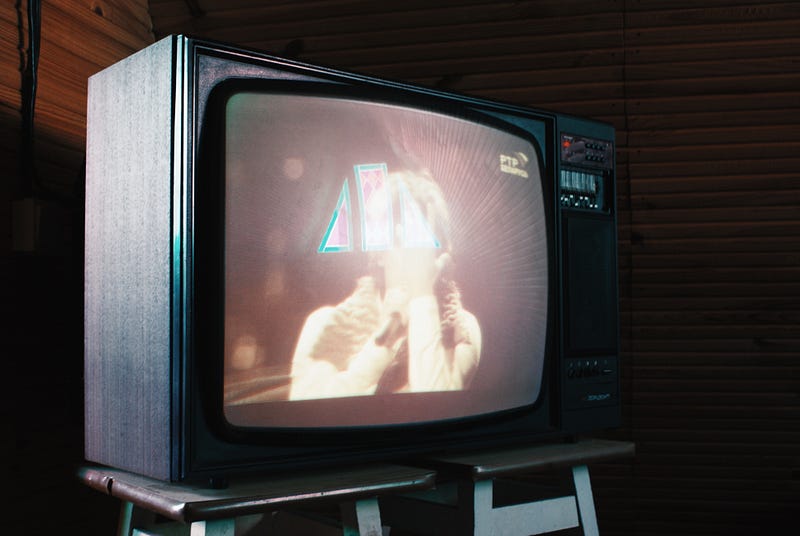
I know that many people take colour television for granted, and cannot imagine that once upon a time, the smart TV, with its access to everything online was just a thought bubble in a scientist’s brain, and that the amazing television was a boxy piece of furniture, looking like the above specimen.
Before the advent of colour TV, television-watching audiences lived in a dim world of black-and-white, which was all that these sets were able to receive and show.
The Dawn of Colour
The United States was the first country to introduce colour television, with an experimental version trialled in 1950. It was then gradually introduced to the entire country from 1953–1972. The first sets were very expensive, resulting in a small market for this innovation. However, as it became more popular and an increasing number of prime-time shows were aired in colour, its cost came down.
The United Kingdom started experimenting with colour broadcasting in 1955, but it wasn’t introduced to the viewing public until July 1st, 1967 when the Wimbledon tennis tournament was shown in full colour. The full-colour service was then started on December 2nd.
Colour was introduced in the rest of the world during the 1960s-1980s, with many countries celebrating it with broadcasts of major sporting events such as soccer’s World Cup and the Olympic Games.
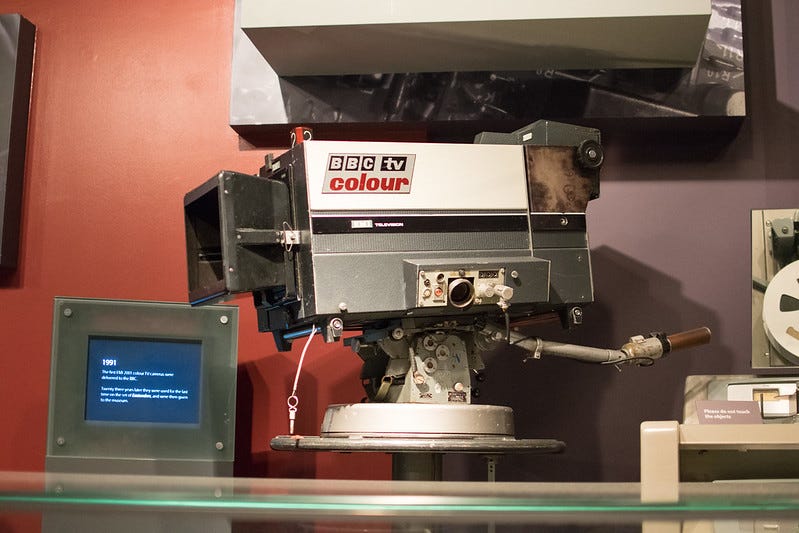
In Australia, where my family and I live, yesterday (March 1st) marked 48 years of colour TV — it was introduced nationwide on the 1st of March, 1975. Like other countries, these sets were initially expensive (up to $3000 for a top-quality 63cm set), resulting in their market penetration being slow. This improved as more were produced and sold.
The Interesting things that Colour TV made people do
In my household, in which my conservative mother was the influential parent, the established 1967 Thorn-Atlas Black and White TV remained in place long after it was made a dated appliance by its colour successor.
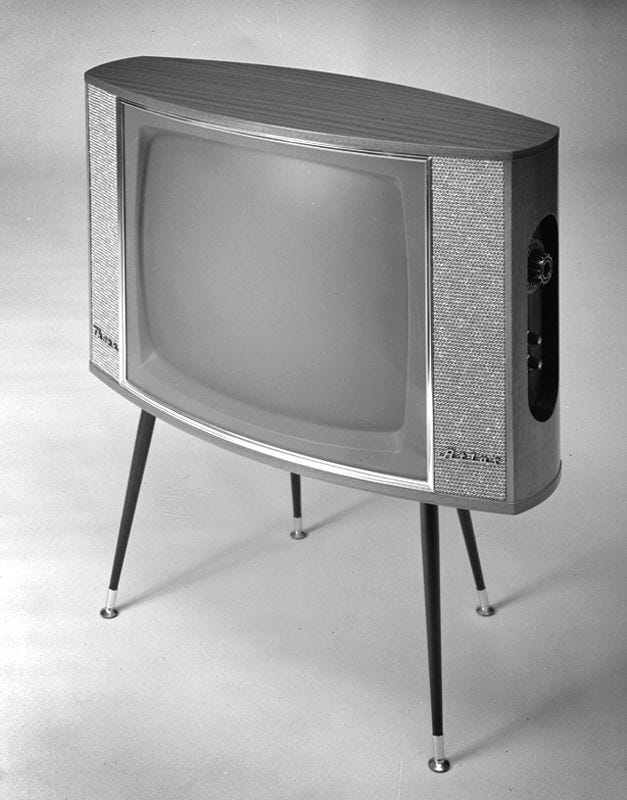
It was only when the picture started to shrink and an increasing hum in the key of D Minor began to emit from its ageing speakers that, in 1982, she reluctantly agreed to replace it with a brand-new AWA colour marvel. I remember arriving home from College on the day of its arrival in the Kleimann living room and likened it to a beam of sunlight blessing the TV corner.
My mother remained unimpressed — she considered television to be a bad influence — the “devil’s eye”.
As colour television became increasingly popular in Australia, there were many wise words of advice from the Federal Government of the time, with the science minister warning people that, while this was a great innovation, the picture was very unstable.
He warned viewers not to place electric clocks on it, as they emit electrostatic radiation, which interferes with the colour reception. He also stated that the reception would be affected by it being moved around.
This popularity (or maybe colour reception) also affected the brains of fathers, switching off the parts of their brains which controlled their tendencies to become mischievous.
I know of one father, who, after constant badgering by his children to replace their ancient black and white television set with a colour one, eventually relented. His three boys arrived home from school one afternoon to find him unpacking a large cardboard box on the dining room table.
They gasped in wonder as he reached inside, to lift out …. an orange black and white portable TV. “There’s your colour TV”, he said with a Trump-like grin. The room quickly emptied, as the boys headed towards their rooms.
The first colour TVs had nothing like the sharp-resolution pictures of today’s smart TVs, with the displays rather washed-out in comparison. However, viewers were, at last, able to see iconic shows like the edgy Auntie Jack and ABC’s hit pop show Countdown, with its legendary host Ian “Molly” Meldrum, in full colour.

I have fond memories of the Kleimann family watching episodes of MASH and many Australian Football matches on their new colour TV.
Gain access to amazing stories by becoming a Medium Member via this link. As a member, part of your $5.00 per month membership fee goes to supporting the amazing writers whose stories you read.