avatarPenofgold

Free AI web copilot to create summaries, insights and extended knowledge, download it at here

2000

Abstract

ds consoled, “You are not the cause of this injustice.” Wrapped her kneeling, in Healing Winds. She rose, tall as the Cedars of Lebanon.</p><p id="4633">Ay ay ay ay ay ay ay Ay ay ay ay ay ay ay, Ay ay ay ay ay ay ay, Ay ay ay ay ay ay ay.</p><figure id="ea28"><img src="https://cdn-images-1.readmedium.com/v2/resize:fit:800/1*P4xuOqGxWsFtM6Rdvx71hg.jpeg"><figcaption>And the wind of God blows over the face of the waters. Genesis 1:2 (Hebrew hand-written by author).</figcaption></figure><p id="f022"><i>Thank you, <a href="https://medium.com/paper-poetry">Paper Poetry</a>’s <a href="undefined">Suntonu Bhadra</a>, for welcoming and creating an amphitheater for our creativity, and inspiring us to write out our poems. <a href="undefined"></a></i><a href="undefined">Indubala Kachhawa</a>’s <i>encouragement for this poem is kindly appreciated.</i></p><p id="c685"><i>Thanks, each of you who’ve read “Cedars of Lebanon”! The fourth poem of the series will be titled “What We Need”.</i></p><ul><li><b><i>Resources for safety:</i></b><i> During the pandemic domestic violence and child abuse have increased due to lock-downs, and often go unreported. If suspected, please check the Internet for resources/hot-lines in your country. Here are U.S. resources: The National Domestic Violence Hotline: 1–800–799–7233, National Childhelp Abuse Hotline: 1–800–422–4453.</i></li></ul><p id="6190"><b>Editorial Note</b>: Paper Poetry is running a themed poetry series. This is third on the theme <b>Mizpah,</b> which means deep emotional connect between people separated by death or distance.</p><p id="cc58"><b><i>Author note</i>:</b> <i>In the Old Testament there are 21 references to Mizpah in seven books. The Hebrew word means watchtower or look-out. The first reference is in <a href="https://sarata.com/bible/chapter/Genesis.31.html#31:49">Genesis 31:49</a> “And Mizpah; for he said, The LORD watch between me and thee, when we are absent one from another.”</i></p><p id="aa02">The first poem of the se

Options

ries, “Morning Eileen”, is linked below.</p><div id="9905" class="link-block"> <a href="https://link.medium.com/Vkz12veP2eb"> <div> <div> <h2>Morning Eileen</h2> <div><h3>“…blessed be He, beyond all the blessings and hymns, praises and consolations that are ever spoken in the world.” …</h3></div> <div><p>link.medium.com</p></div> </div> <div> <div style="background-image: url(https://miro.readmedium.com/v2/resize:fit:320/0*8lSNkgb8ZLdHDsLX)"></div> </div> </div> </a> </div><p id="f587">The second poem of the series is “A Funeral for Disappointment”.</p><div id="be37" class="link-block"> <a href="https://readmedium.com/a-funeral-for-disappointment-502099c3f8bb"> <div> <div> <h2>A Funeral for Disappointment</h2> <div><h3>I’ll Mourn Wth Daisies</h3></div> <div><p>medium.com</p></div> </div> <div> <div style="background-image: url(https://miro.readmedium.com/v2/resize:fit:320/0*IQA7-cvp7xDfLWVO)"></div> </div> </div> </a> </div><p id="6d84">“May I Bow Low”, the poem I wrote to<i> </i>Indubala Kachhawa while corresponding about the Mizpah series, is below.</p><div id="f013" class="link-block"> <a href="https://readmedium.com/may-i-bow-low-d056a171b7e7"> <div> <div> <h2>May I Bow Low</h2> <div><h3>Inspired by writing to Indubala Kachhawa, an editor for “Paper Poetry”</h3></div> <div><p>medium.com</p></div> </div> <div> <div style="background-image: url(https://miro.readmedium.com/v2/resize:fit:320/0*DVokoeN_LkHfiM_9)"></div> </div> </div> </a> </div></article></body>

POETRY | THIRD IN MIZPAH SERIES

Cedars of Lebanon

A poem
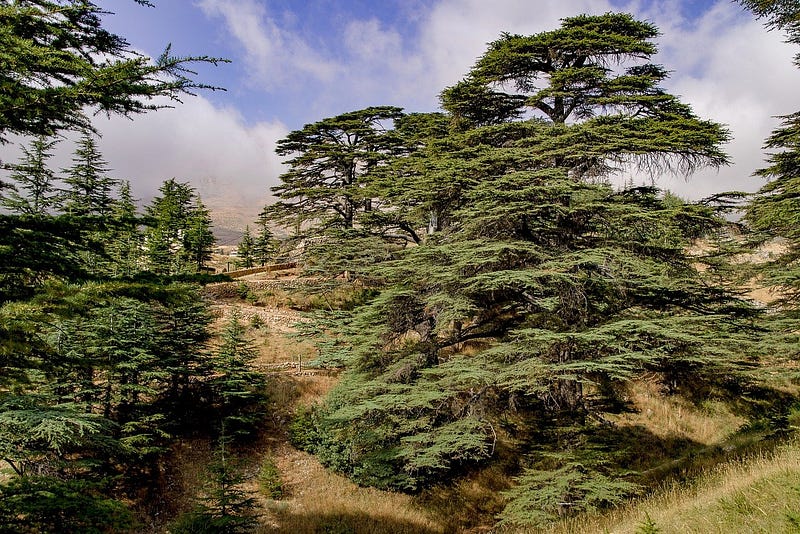
djedj@pixabay.com

I lift up my eyes to the mountains — where does my help come from? My help comes from the Lord, the Maker of heaven and earth… אֶשָּׂא עֵינַי, אֶל-הֶהָרִים מֵאַיִן, יָבֹא עֶזְרִי. עֶזְרִי, מֵעִם יְהוָה — עֹשֵׂה, שָׁמַיִם וָאָרֶץ. Psalm 121

How could you who’ve not been beaten Know the beating of hands From someone you love, On a back that knew their tender touch.

Words from the mouth she’d kissed Like slingshots shot her stones, Filling her with poison, Her hands would always quiver.

How could she be expected to forgive The beast whose hail fell upon her ‘Till she didn’t know who she was, she flew upward to the palm trees.

Ay ay ay ay ay ay ay Ay ay ay ay ay ay ay, Ay ay ay ay ay ay ay, Ay ay ay ay ay ay ay.

One morning when she rose She didn’t know who to cry for, Knowing sadness of one who pierced her, And the thousand mistakes she had made.

She walked through hot sun to Mizpah Benjamin, Shook her tambourine ‘till the side shattered, Danced and danced, kicked the stony sand, Screamed a scream that trembled Jerusalem.

Ay ay ay ay ay ay ay Ay ay ay ay ay ay ay, Ay ay ay ay ay ay ay, Ay ay ay ay ay ay ay.

Lifting her eyes to hills of Neby Samwil, She bowed on sand and cried, “My help will come from the Lord, Creator of skies and earth.”

“Please God pray on my behalf My neshama feels so soiled, grant the one who shamed me forgiveness And heal the boils in my heart.”

God of lovingkindness to thousands consoled, “You are not the cause of this injustice.” Wrapped her kneeling, in Healing Winds. She rose, tall as the Cedars of Lebanon.

Ay ay ay ay ay ay ay Ay ay ay ay ay ay ay, Ay ay ay ay ay ay ay, Ay ay ay ay ay ay ay.
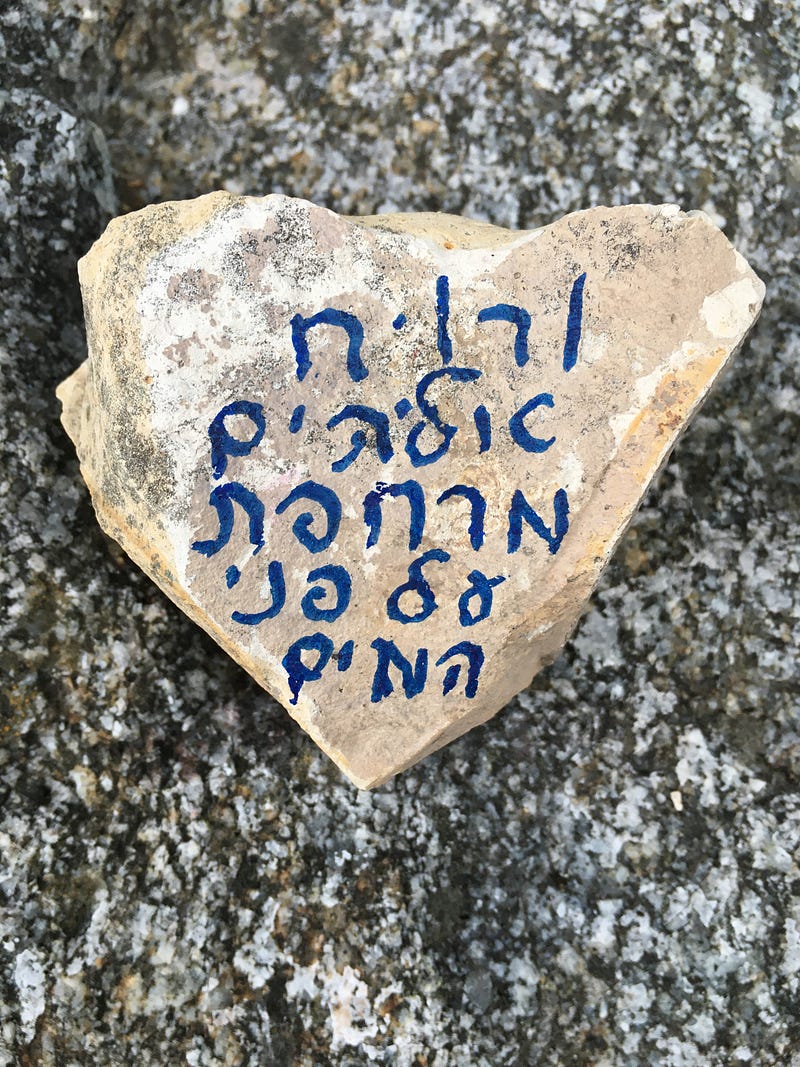
And the wind of God blows over the face of the waters. Genesis 1:2 (Hebrew hand-written by author).

Thank you, Paper Poetry’s Suntonu Bhadra, for welcoming and creating an amphitheater for our creativity, and inspiring us to write out our poems. Indubala Kachhawa’s encouragement for this poem is kindly appreciated.

Thanks, each of you who’ve read “Cedars of Lebanon”! The fourth poem of the series will be titled “What We Need”.

  • Resources for safety: During the pandemic domestic violence and child abuse have increased due to lock-downs, and often go unreported. If suspected, please check the Internet for resources/hot-lines in your country. Here are U.S. resources: The National Domestic Violence Hotline: 1–800–799–7233, National Childhelp Abuse Hotline: 1–800–422–4453.

Editorial Note: Paper Poetry is running a themed poetry series. This is third on the theme Mizpah, which means deep emotional connect between people separated by death or distance.

Author note: In the Old Testament there are 21 references to Mizpah in seven books. The Hebrew word means watchtower or look-out. The first reference is in Genesis 31:49 “And Mizpah; for he said, The LORD watch between me and thee, when we are absent one from another.”

The first poem of the series, “Morning Eileen”, is linked below.

The second poem of the series is “A Funeral for Disappointment”.

“May I Bow Low”, the poem I wrote to Indubala Kachhawa while corresponding about the Mizpah series, is below.

Poetry
Domestic Violence
Feminism
Poetry Series
Mizpah
Recommended from ReadMedium