
Cedar Sentinels and Parking Lot Princes
There are cracks in the pavements of paradise.
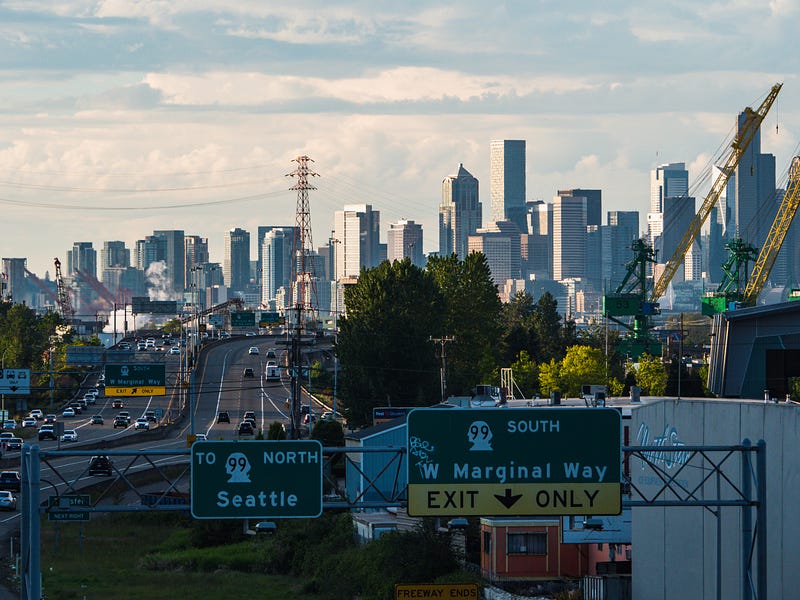
The maps app assured me that the 80-mile drive ahead of me would take no more than an hour and 15 minutes, but I knew it was lying to me.
The last time I drove this route the world was still quietly in the midst of a global pandemic. I had cruised down an empty interstate and into a ghost town. It had been a few weeks before a jackboot-clad leg put a knee against a begging man’s throat and choked the life from him, a few weeks before the city had erupted into tears and righteous anger. That drive had been pleasant, the city quiet except for the whispers of hope — nature is healing.
I was drawn to make this dreaded journey to pick up my younger son.
He was flying into Sea-Tac that morning. Knowing I wasn’t up to driving all the way to the airport, he had opted to take the light rail to the station in the north part of the city. That would shorten the drive by 20 miles and save at least an hour of my sanity.
As I grow older I become more like my grandparents and less like my parents. In the spirit of my childhood country drives with grandma, I tuck a couple of sandwiches and some fruit into a picnic bag. Nostalgia mixed with thrifty necessity. I leave early, in part because I know the app is lying and in part so I can have time to decompress and enjoy lunch after the rigors of city driving. So I can be refreshed when my son, who has been gone for three weeks, tumbles into the passenger seat full of stories, light, and laughter.
It takes over two hours to make the drive.
Sun-baked pavement greets me at the parking lot, so I circle around to the derelict mall up the street and find a spot in the shade. Across the road sits a retirement home, the fancy type for the stylish wealthy, and independent elderly. The rest of the street is lined with walls, as tall as a Douglas fir, emblazoned with the logos and depersonalized colors of capitalism.
Not an ideal place for lunch.
There is no time to find a park or a bit of green, so my eyes instinctively look for an anchor. I see it on the horizon, peeking out between buildings, a block or two away. A lone cedar tree, wind-battered but still proud.
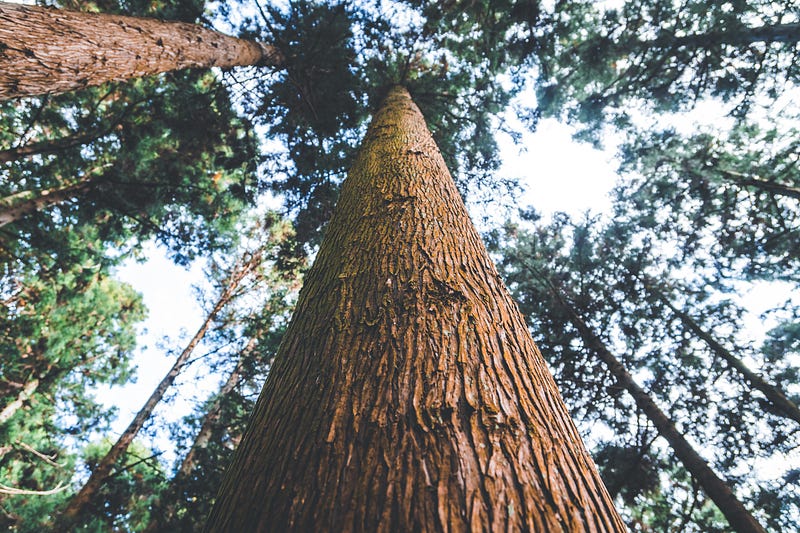
I commune with the tree while enjoying my sandwich. Small birds are flying in and out of the tree. I can imagine their songs, though I cannot hear them over the raucous rumble of the city. If this cedar has the same friends as the one I know back home, its visitors are likely chickadees and juncos, sparrows and finches.
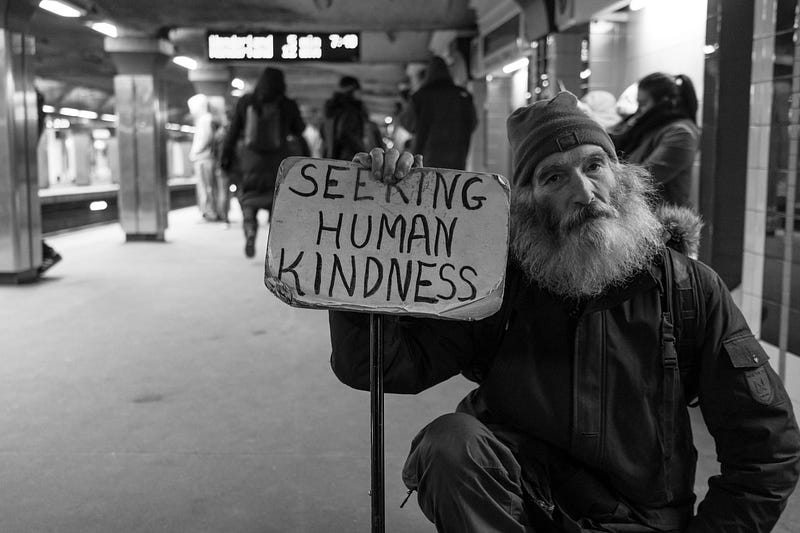
An older man walks through the parking lot, the weight of street living heavy on his shoulders. He’s pushing a cart that holds all of his belongings. I do not notice at first, until I feel the eyes cutting through the windshield. I glance toward him, and he looks away and gazes at the tree as though he must complete the quest that my eyes had just abandoned.
The old training from days past, when I lived in the city, bubbles up. Look ahead and keep moving. I remember the sting of invisibility, the sting of poverty. We are all invisible in the city, just as I am becoming invisible in middle age. So I ignore the old cautions and instead roll down the window. I don’t have money but I do have granola bars and cold water, so I call out and offer the man both. He walks over and accepts them with a polite nod.
As he turns to walk away, he glances again at the cedar and speaks, “We need more trees and less…” he waves his hand around, encompassing the whole damn city. I murmur my assent, confused that he could read my mind so clearly.
A parking lot angel? No, just another human soul mucking through as best they can. A parking lot prince without a kingdom.
My heart gets lighter the further we get from the city.
We shed highway lanes — five, four, three, and finally just two. A sensible number, a sustainable number. Green fields overtake the broken-down strip malls, and the tent cities on highway verges slowly dwindle into the past.
I’m glad that my son is bubbling over with all the sights and sounds he’s experienced over the last few weeks. I don’t want to share about the man nor see my son’s concerned eyes as he chastises me for letting a stranger approach me, a middle-aged woman alone, in the city. He is young and still sees the wisdom in looking ahead, in walking with purpose.
My son doesn’t know that I once walked the city as bravely then as he does now. He doesn’t know that his mother once slept in her car in the city, without a roof or homeport to return to. He doesn’t know that when you harden your shell, it cracks easier.
As for me, I trust the wisdom in the cedar.
We are all just getting through the best we can, so let us shelter whom we may as we are able. Like songbirds that can’t be heard, but can still be felt, seeking each other out in the welcoming boughs of an old tree.
Jenny Wren is an essayist, botanist, herbalist, and future market farmer. She writes about nature and life on Medium and via her newsletter The Flora of Jenny Wren.