
Ron DeSantis Would Ban My Textbook
and other reasons you should read it

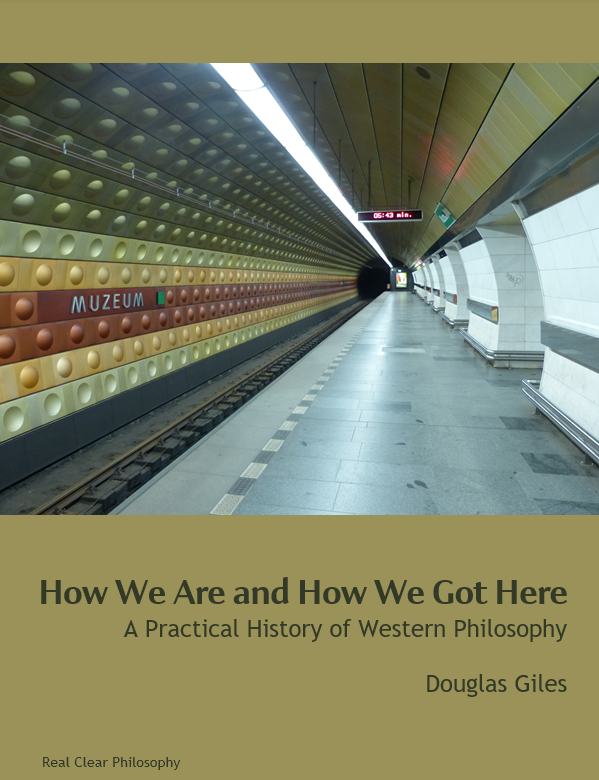
I’ve taught philosophy, politics, and religion to university students for 21 years in three different countries. I’ve learned a lot through teaching and speaking with students. Frustrated by the low quality and high price of the corporate textbooks, I put what I learned to good use and wrote my own philosophy textbook: How We Are and How We Got Here.
Based on everything I know about Ron DeSantis’s crusade against his imaginary dragon of “wokeism” in higher education, he would seek to ban my textbook.
Why? Because my book mentions facts DeSantis doesn’t want mentioned and invites discussion on issues that DeSantis doesn’t want discussed. My book mentions:
- The trans-Atlantic slave trade and the institution of slavery and how philosophers responded to these historical facts.
- Racism and philosophical explanations for it, including (gasp) a short subsection on critical race theory.
- American progressive political philosophies that advocated for the expansion of political and economic rights.
- Feminist philosophy and critiques of gender ideology.
- Nonheteronormative philosophy, including queer theory.
- Postcolonial theory — how philosophers think we can get past racial and ethnic discrimination.
- Oh yeah, and Karl Marx and neo-Marxist theories.
These are all subjects that DeSantis and other culture warriors on the Right have sought to ban from education. Perhaps if I indoctrinated my students into the white-hot irrational attacks of right-wing bloggers against these subjects, it would be okay with these people. But no, I discuss historical facts and philosophical arguments with accuracy, reason, and fairness — the three things these cultural warriors are most wanting kept out of education. I even (gasp) allow my students to think for themselves and openly question the ideas presented.
Censorship is a means of control and denial of other people. Yes, some attempts at censorship in education comes from those who pretend to be on the Left, but most threats to academic freedom come from the Right. That would be people like DeSantis who want to control people and deny them a voice and rights. It’s fear that open, rational discussion will show how empty their own ideas are.
Philosophy is the open exploration of the world and the open questioning of our ideas. That’s why some people on the Right want to remove philosophy from education. Fear of questioning. Fear of individuals thinking for themselves. People like DeSantis don’t just want to ban my textbook; they want to silence my profession.
Enough About DeSantis, Why Care About My Textbook?
Because philosophy is worth learning. The history of philosophy is the history of what made our culture what it is today.
What? You weren’t taught that? No, because education is poor in teaching what matters, and especially poor at cultivating critical and original thinking. Philosophy is scary to some people, including educators and politicians, so they ignore it and even suppress it.
Regardless of you were taught — or weren’t taught — philosophers have shaped our world, and the more you understand philosophy, the better you understand how we are as a human society. Even more importantly, the more you know about philosophy, the better equipped you are at dealing with life, people, and social issues.
That’s why I wrote my philosophy textbook. To help people.
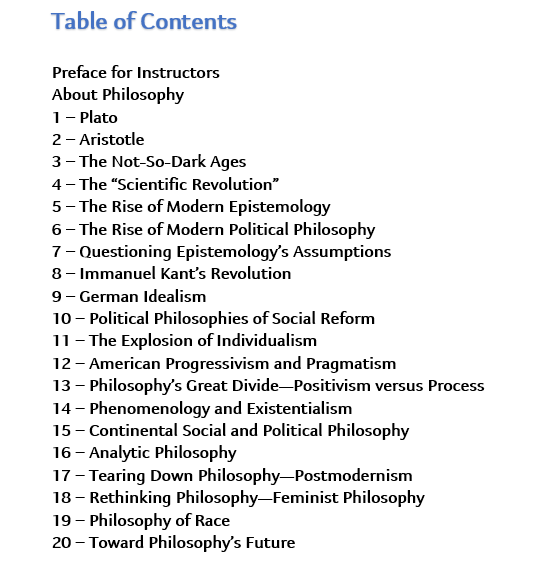
How We Are and How We Got Here is designed to connect with readers to help them understand philosophy and why it matters to them. Its straightforward conversational presentation of philosophy involves readers in philosophy’s long conversation. Its chronological presentation places philosophers in their historical context, showing how philosophy is an ongoing interaction with society seeking practical knowledge useful to us in everyday life.
How this book improves on existing textbooks:
- Shows how innovations in philosophy have interacted with and changed history, leading to how we are today.
- Presents philosophy as a vital part of our lives, not as a set of isolated theoretical problems, avoiding the disconnected and fragmented silo approach of most textbooks.
- Avoids the sink-or-swim approach of anthologies that plunges readers into a hodgepodge of disjoint readings without adequate guidance.
- Extensively covers vital areas of philosophy ignored by most textbooks, including pragmatism, phenomenology, social and political philosophy, postmodernism, feminist philosophy, and philosophy of race.
- Always remains engaging and accessible to the reader. Neither dumbs down the material nor over complicates it.
- Provides clear and direct text unencumbered by bells and whistles and other extraneous materials.
How We Are and How We Got Here provides students of all backgrounds with a clear and whole understanding of philosophy and its role in history and society, making the 2,400-year history of Western philosophy vital and relevant to today. It shows that philosophy is not a cold analytical academic procedure, but exciting and alive and reveals how we are all philosophers.
Real Clear Philosophy. ISBN: 978–1–7358808–8–4.
Yes, I make a very small amount of money from sales through the affiliate links in this article.


