
Activists Attacking Trans Athletes Keep Targeting Cis Women Instead
“You can always tell,” they said. Except, they can’t
For months, anti-trans activists, often self-described as “Gender Critics” on social media have unleashed a torrent of abuse on transgender athletes. Not long ago, their central focus was on weight lifter, Laurel Hubbard, who became the first transgender athlete compete in an individual event at the Summer Olympics.
Hubbard suffered extreme bullying and abuse as her more sinister critics misgendered her, claiming, “She will always win competing against women! It’s unfair!” Hubbard ultimately lost, failing to make a coveted top three spot on the Olympic podium.
Since then, the same organized group have turned their attention to competitive swimmer, Lia Thomas. Flooding social media with misinformation and out-of-context statistics regarding her history in the sport, she has become the new favorite target for agitators online who keep trying to body shame her and use images of her to proclaim that her “body is male” and her “Build is manly” all while posting pictures of competitive swimmers… none of which are Lia Thomas, but young cisgender women in the same sport.
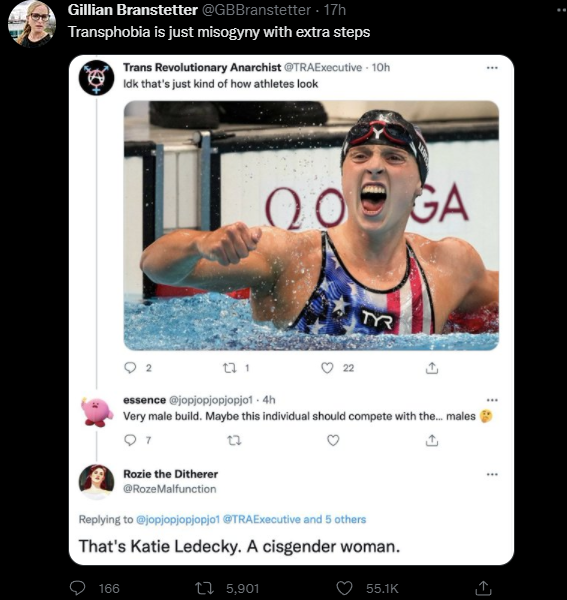
It happened to Katie Ledecky, targeted by transphobic social media users for being transgender. She is not transgender.
Neither is Sierra Schmidt, known for her animated warm-up dancing before competing- however, a viral post that identified her as trans left her suddenly berated and abused by those hurling insults, making offensive remarks on her body, breast size and mannerisms they believed to be “male.”
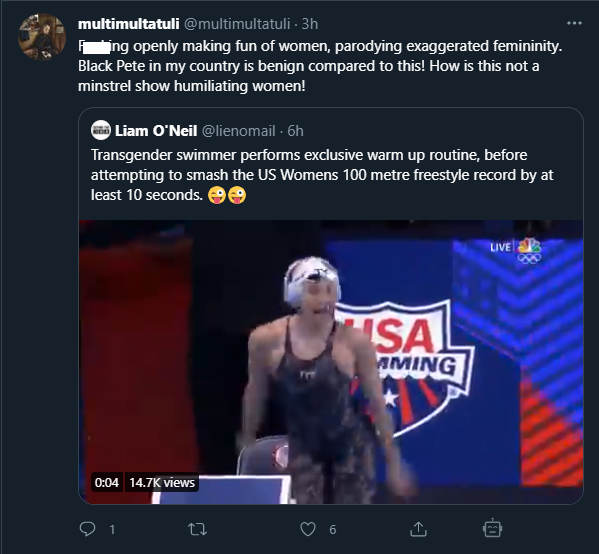
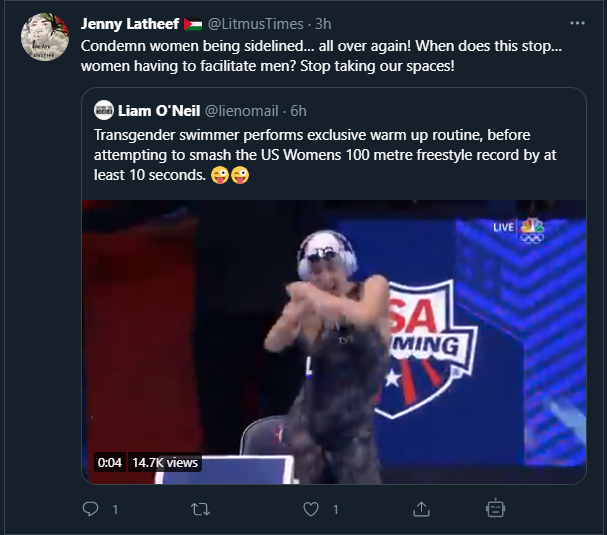
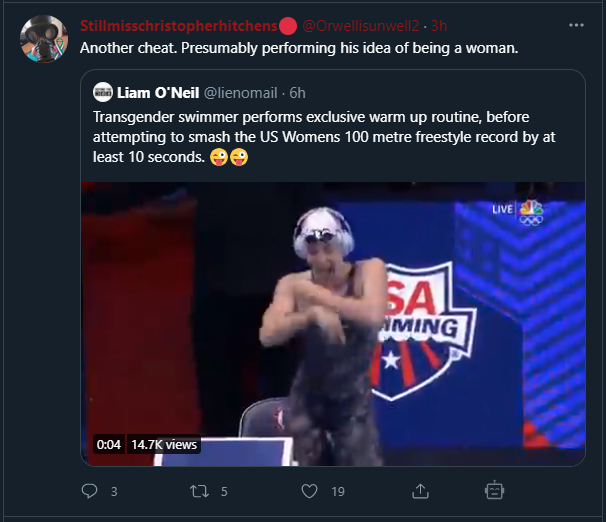
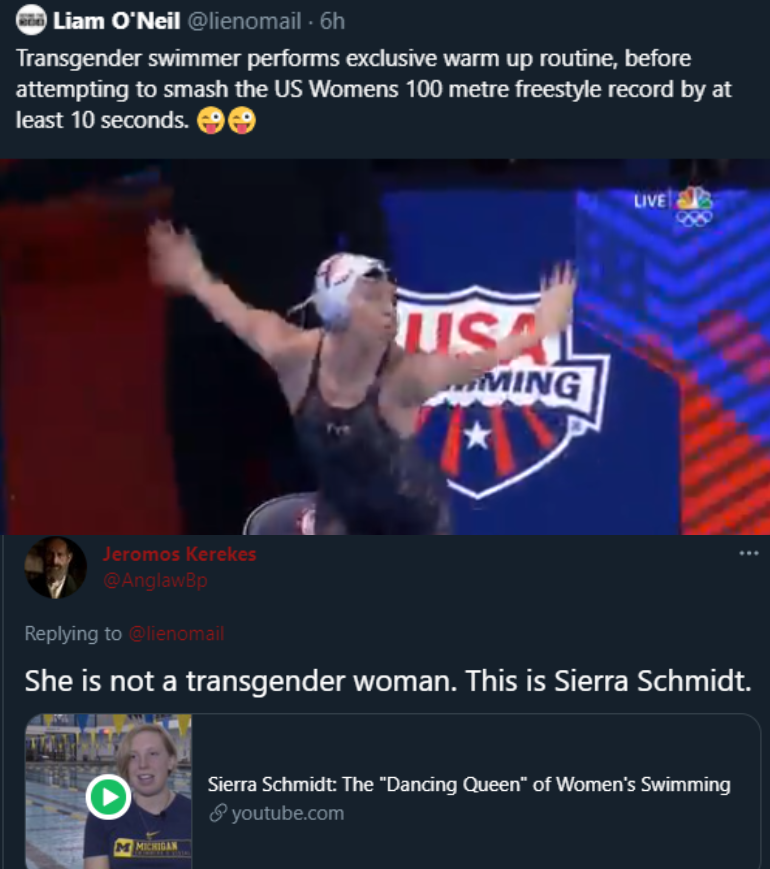
These error of identification by anti-trans extremists even led cisgender rugby player Katherine Merchant to plead for mercy as she endured an onslaught of heinous attacks by gender critics who were calling her “a man.” In an editorial written for the Telegraph in January, Merchant explained she was just “A strong woman, stop calling me a man.” She begins by saying “As a society we are guilty of associating strength and muscle with masculinity — and this needs to change.”
Prior to this, in late 2021, openly trans athlete Alana McLaughlin, a military veteran and the second out trans woman to compete in professional mixed martial arts (MMA) was heavily criticized for fighting other women… except users of social media going to great efforts to pelt her with offensive slurs kept misidentifying her competition as the trans fighter, instead of McLaughlin herself.
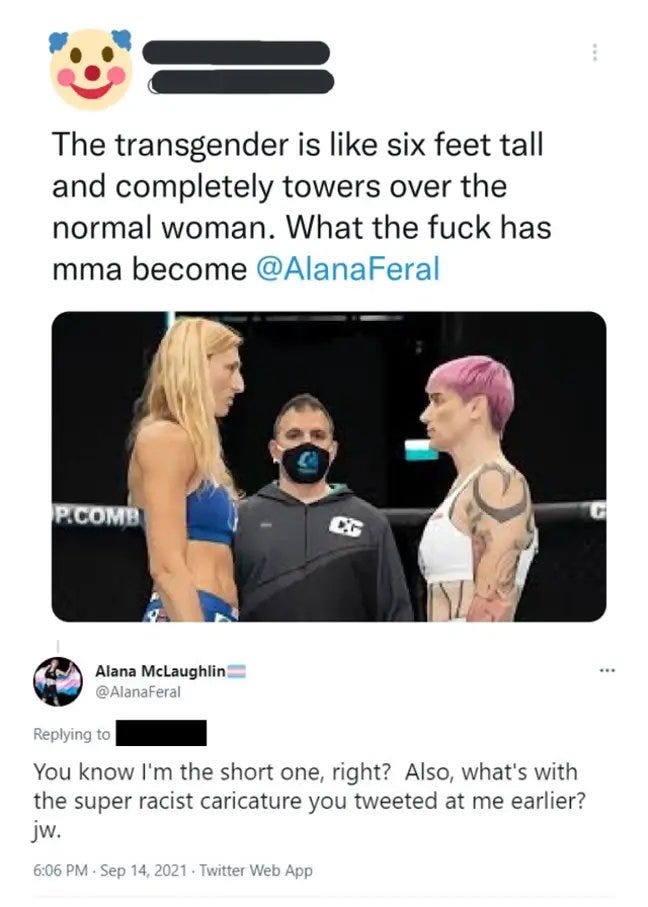
Historically, it has become commonplace for cis women to find themselves in the crosshairs of abusive users on social media if they are found to be in conflict with radical feminist ideology of what exactly femininity is. Too tall? Shoulders too wide? Voice too deep? If a woman of any nature does not satisfy their concept of womanhood, they launch an assault. And you don’t have to be an athlete.
Unfortunately, when a fan of superstar singer, Billie Eilish, posted a photo of her on their twitter account, gender criticals, having no clue who the celebrity was, erroneously identified her as a trans women and the transphobic floodgates opened.
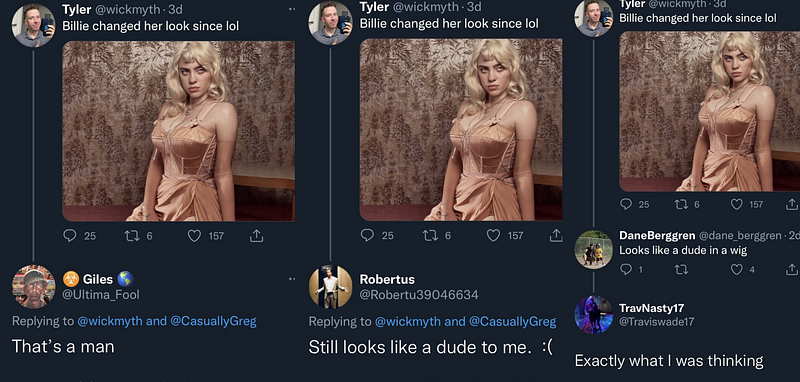
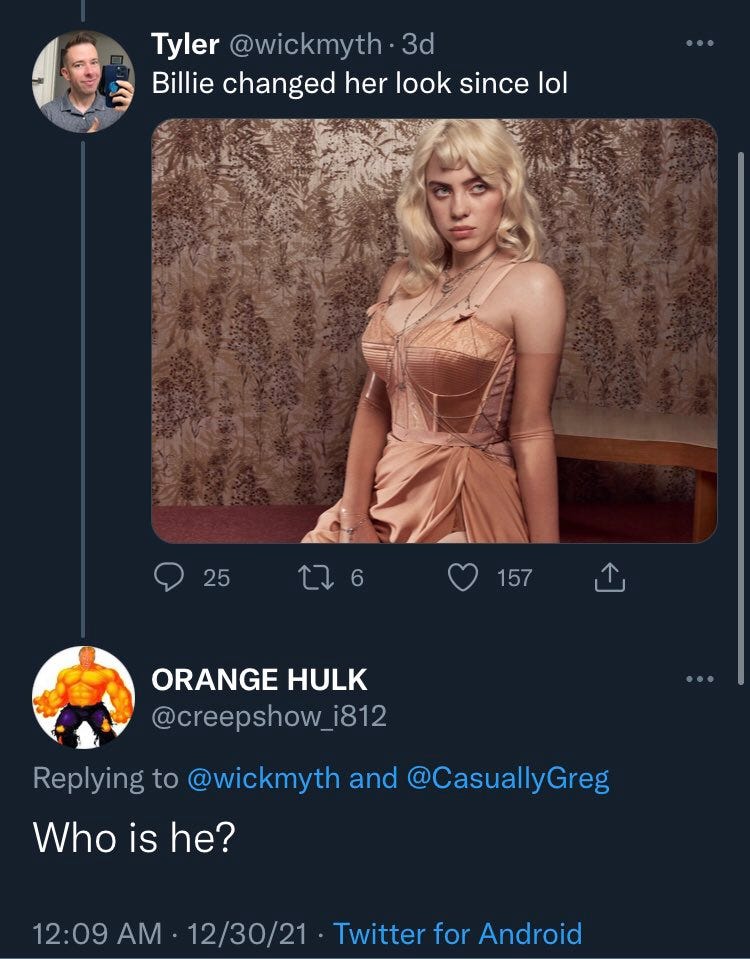
The stark reality of transgender women and those who relentlessly pursue them is that there is no genuine concern for women, at least not one that usurps their unprovoked contempt for trans women. As previously reported, in states that have enforced notorious bathroom bills in an effort to stop transgender people from using public spaces, including locker rooms, cis women who don’t possess enough femininity to satisfy the judgement of observers in parks, restaurants or gyms, have been frequently and viciously confronted, even beaten, by men who believe them to be transgender.
Be it politically or socially, they don’t want to help any woman as much as they simply want to hurt trans women in general. That’s not feminism. That’s bigotry, no matter how you frame it.
These gender critics have been dubbed the “We Can Always Tell Brigade” by transgender allies who have been instrumental in pointing out the hypocrisy playing out before their eyes.


