
Causes of Catastrophic Fires in California (And Elsewhere)
Primer on fire ecology by a former plant ecologist
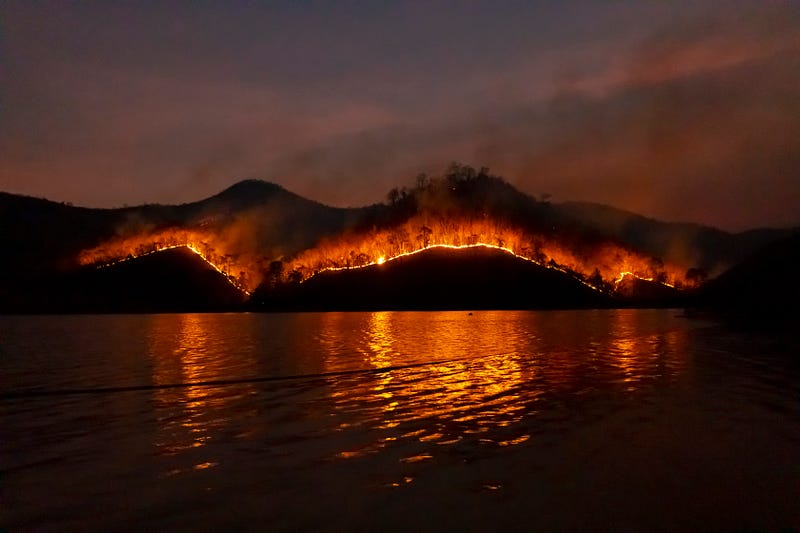
Fire is natural. Wildfires occur naturally in almost all terrestrial ecosystems around the world, even if it is extremely rare in some areas. The issues we face with catastrophic fires in the modern world are complex.
To understand the causes, we need to first understand the basics of fire ecology. To keep things simple here, I’m going to only discuss fire in California. In California, as well as all the arid western states and regions of the world, fire is extremely common.
Fire ecology basics
California has what is called a Mediterranean climate — long, hot dry summers and short moist, cool winters. During its ecological history (prior to current human influences) the forests, scrub, chaparral and grassland communities that make up most of the state would have burned within their own “fire regime.”
Fire regime
What is a “fire regime?” It has two primary variables: fire frequency and fire intensity. Another important factor is fire speed.
Fire frequency
Fire frequency is how often it is normal for a given ecosystem to burn —e.g., every 50 years, 150 years, 500 years, etc. Fire ecologists have figured out historic (non-human influenced) frequencies for the systems they study so this is pretty well known at this point for many areas in the world.
Fire intensity
Fire intensity is a measure of the temperature of the fire, and will be a function of the amount of fuel present and other factors such as wind speed, wind direction, vegetation moisture levels (related to recent drought or rain), etc.
Fire speed
Related to fire intensity is how quickly a fire moves through an area. Less fuel load (available material to burn) and lower burn temperature usually mean a fast moving fire. However, a fire can also move fast when there is a high fuel load, especially if the fuel is extremely dry, in which case the fire can also burn very hot.
Plant and animal adaptations — fire is regenerative
It is also important to know that that plants (and animals) have evolved adaptations to fire according the the fire regime they have been exposed to over long time periods. For instance, many conifers in frequent-fire communities have “closed cones” which require hot temperatures to burst them open and spread their seeds into the post-fire cleared forest.
Other plants have seeds that disperse each year but lay dormant in the ground until fire passes over. The fire causes heat and other soil chemistry changes, which trigger the dormant seeds to sprout and grow.
So, you see, even though we think of fire as destructive, it is also regenerative. It is a natural part of the cycle of fire-adapted area.
California has naturally frequent fire intervals
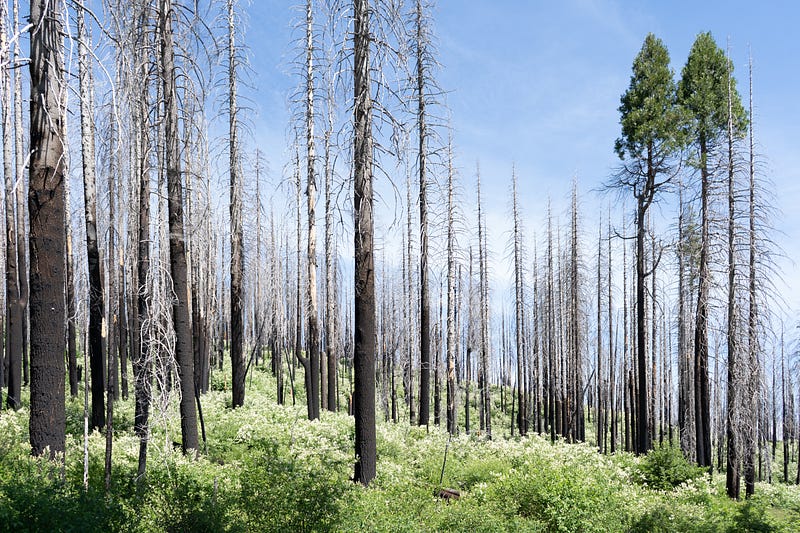
Next thing to know: most of the plant communities and ecosystems of California, from the swaths of forests in the coastal and inland mountain ranges to the extensive arrays of scrub, chaparral and grassland communities across those same mountains are all adapted to fairly frequent fire intervals. These are on the order of 75–150 year cycles.
Given this, fire would have historically moved through these areas quickly at relatively low intensity (temperature). This is because there would be minimal fuel accumulation since the last fire passed through. Mostly there would be mature, aging or dying plants but not a lot of dead/downed (burnable) plant material.
Does this make sense?
Yes? Good.
Then what happened?
All hell broke loose with regard to the natural fire regime when, a few centuries ago, a whole lotta people of European descent headed west and started “settling” (or we could say “invading” although that’s not what this article is about) the lands that became California and the rest of the western states. Those people started to suppress fires because (God bless ’em) they didn’t understand that the fire was natural and necessary.
(Note: there is a lot of evidence that the indigenous peoples of the western US were conducting managed burns prior to European invasion, but they did not suppress the natural, adapted fire cycles)
Fires were put out
So, for a long time fires were extinguished before they could complete their natural cycle.
Wildfire was not seen as natural, or even if it was, there were houses and farms and other human interests they were trying to protect. Thus, even in remote areas with little to no human population, people put fires out. They thought it was the right thing to do.
But, uh-oh.
Fires returned, regardless
Fuel started to accumulate from plant material that died in place instead of being burned by frequent fires.
Then when a fire finally came again (because remember they are natural and they will always come again), there was more material to burn.
The fires burned hotter and they were more intense.
This seriously disrupted the adaptations of the plants involved. For instance, fires might burn so hot that they killed seeds in closed cones and in the dormant soil seed banks instead of stimulating them to grow.
And of course, hotter, more intense fires were harder to put out. They got out of control easily and burned fast and hot. Which freaked everyone out and made them try to suppress fire even more.
Imagine this happening for a century or two.
Eventually ecologists and land managers did figure out that fire is natural and that fire regimes need to be allowed to play out. It was a catastrophic fire in Yellowstone National Park in 1988 that started to change the way fires and wildlands were managed, and how the general public was educated about fire.
But by then, it was kinda too late, because so much fire had been suppressed that there was an INTENSE accumulation of “unnatural” fuel everywhere in California and across the western U.S.
Human presence in wildlands expanded
Add to this the fact that human population has exploded and there’s been a massive influx of people to California and human communities have expanded more and more into fire-prone ecosystems and plant communities across the state.
(Because, remember, the entire freaking state is fire-prone and is adapted to frequent fire intervals.)
And, bam, we have had a mess to deal with for a long time.
There is not much we can do to stop these fires
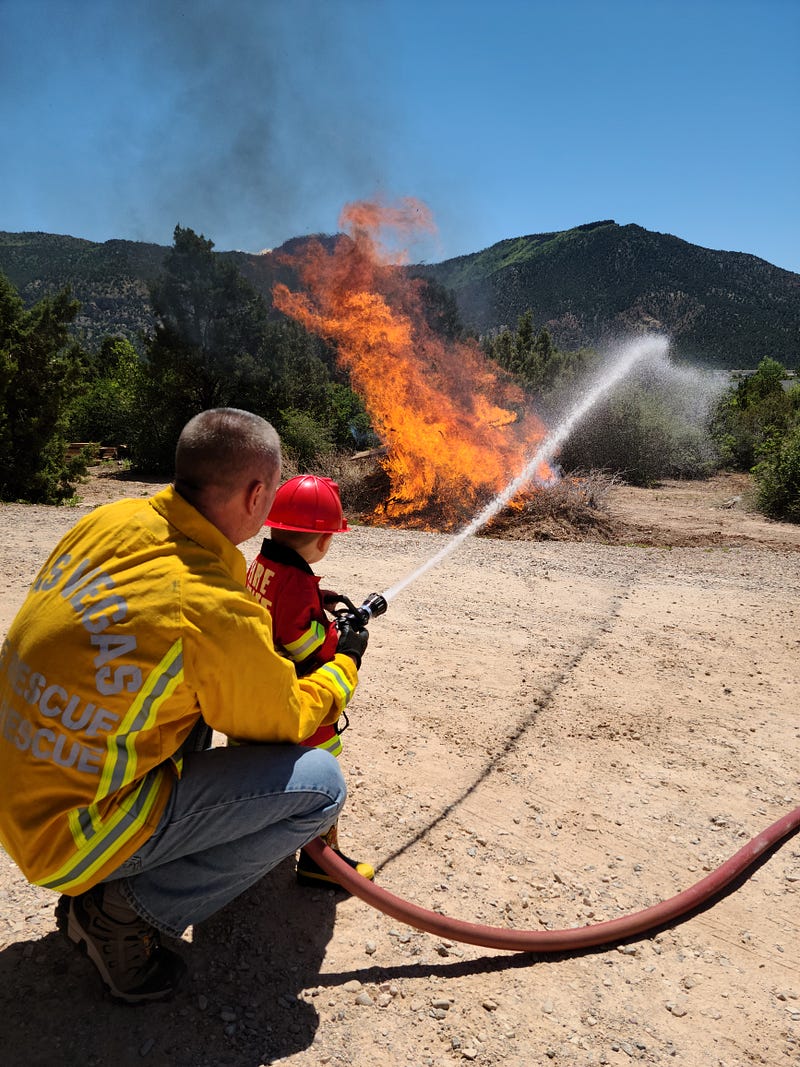
One management tool is “controlled” (a.k.a., “management”) burns in an attempt to burn up accumulated fuels. It’s a great idea in theory.
But, seriously. Can you imagine how difficult it would be to implement controlled burns across large areas?
Just pull up Google maps, turn on satellite view, and peruse the state of California. Look at the massive amount of area we are talking about, most of it incredibly remote with steep, inaccessible terrain.
It is just about impossible to conduct controlled burns near any kind of human development. Do you think that residents are very keen on it when black smoke billows out of a hillside on the edge of their subdivision, and fire trucks are parked on the road there?
What kind of conditions are needed for it to be safe to conduct such a fire? How many things can go horribly wrong? What is the narrow margin of it going right?
Finally, let’s add in a few climate factors
Number 1. California is fire adapted to frequent fires because it is a VERY DRY PLACE and has been for a long time. Remember, Mediterranean climate. Remember, “long, hot, dry summers.”
Number 2. In addition to a long summer, California is also prone to prolonged droughts. Studies of lake bed sediments and tree ring analysis of super old trees in the Sierra Nevada have shown evidence of really long droughts many times over the past few thousand years.
(I should really research this right now so I can add links to actual studies here, but I’m not going to right this instant. You can if you want and let me know what you find out. Or I will do it later and edit this article. I know, shame on me.)
Number 3. Global climate change. I’m not really ready to dive into the modeling or projections or studies or any of that, and I’ve been out of the field for too long to be up to date on any of the details. But I know there’s a ton of data out there.
Clearly the catastrophic fires are related to the increased severe weather of all kinds. The specifics of how it’s playing out in CA and what kind of evidence we have for it is another article. Or two.
Concluding thought
And with that, I bring to an end your introductory lesson in fire ecology and what we are up against with catastrophic fires across the world. May the Force be with us.
Originally published in an unedited manuscript at https://theumaverse.com on November 11, 2018.
Uma Bode is a writer, self-discovery coach, and photographic artist. She holds a Master’s degree in Ecology and Systematic Biology from San Francisco State University. You can learn about her work and the tools she offers for authentic awaking at https://theumaverse.com


