
Cats In The Barn And Cats In The Veldt
And why I love them all
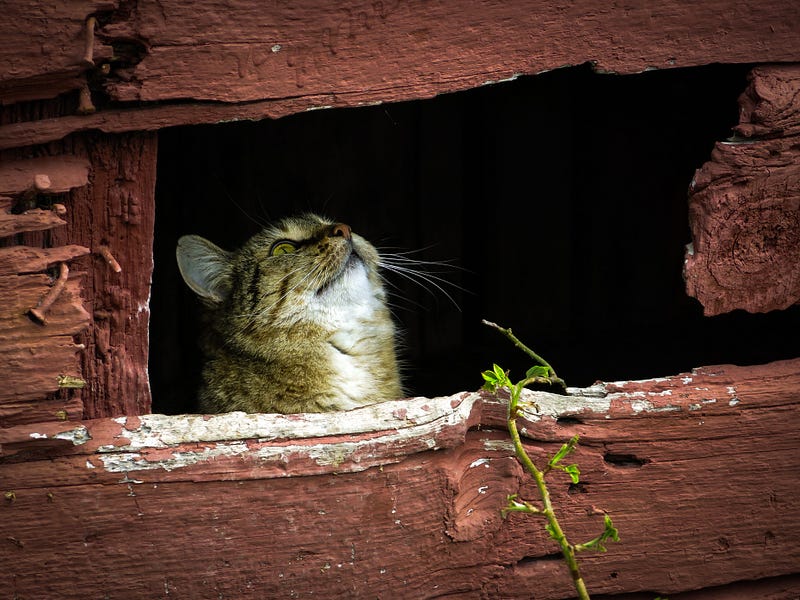
“When a man loves cats, I am his friend and comrade, without further introduction.” — Mark Twain
One time, as a young child visiting country cousins, I was treated to a trip to the barn to see the new kittens. One tiny kitten fell asleep in my hand, and I was smitten for life. But it took until I was a rebellious teenager before I had a cat of my own because Dad was against animals in the house — so at age 14, I smuggled a black kitten home from school in a gym bag. Dad was mad, but Mom stood up for me, so Mephistopheles (“Muffy” to Mom) joined our household. It’s an old Scottish belief that when a cat joins a household, it brings prosperity, but what she really brought was happiness.
I was a pretty decent cat-mom, and I not only fed her properly and combed her coat, but I also researched cats, then told her what I found. She would always talk back to me; in fact, she talked all the time. One friend thought it was because she was part Siamese, but I learned later that couldn’t be true, because black-mix Siamese always have blue eyes, and she had yellow.
I always thought domestic cats were as wild as big cats, and the law agreed with me. Locally, there were two separate instances where animals broke into people’s houses and tore things up. The dog owner had to pay damages because you can train dogs and so should be able to control them, but the cat owner wasn’t required to pay, because cats were considered to be still wild.
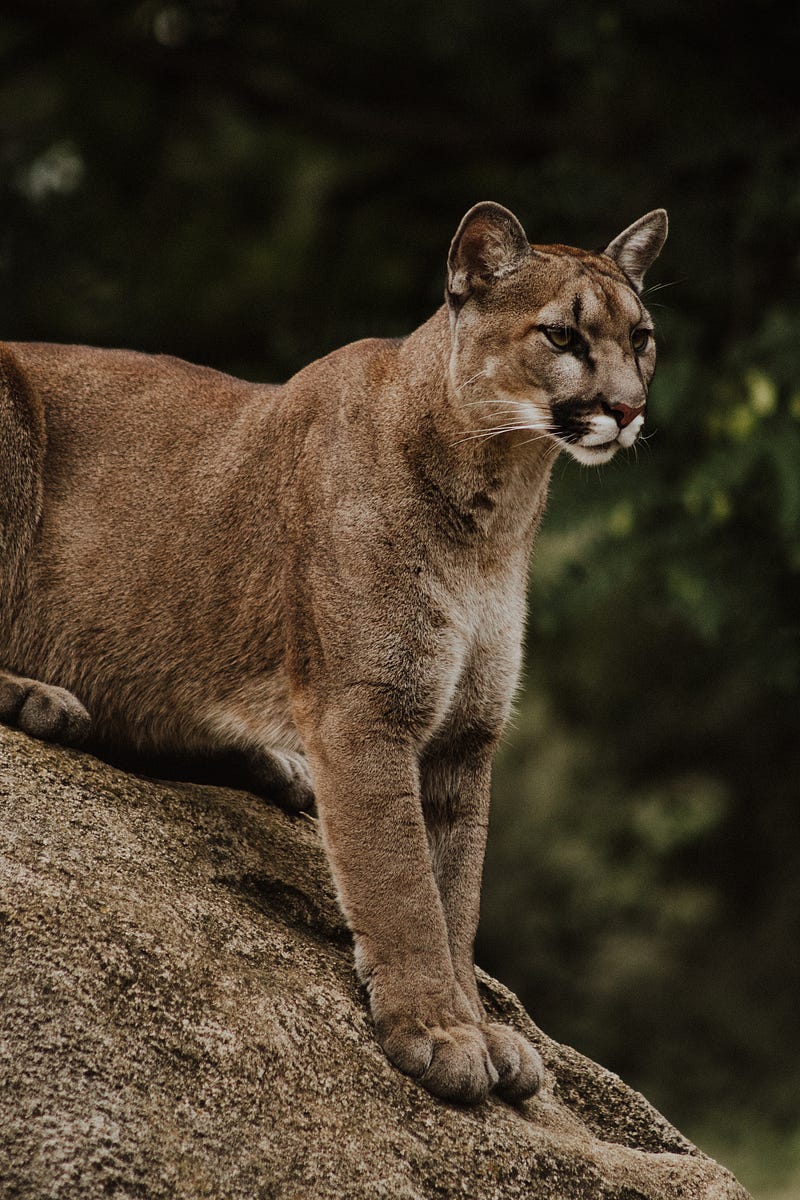
Mephi was unimpressed when I told her that barn cats have the same social structure as lions in Africa, but seemed a little more interested when I told her that she (Felis catus) was a close cousin to our California mountain lion (formerly Felis concolor now Puma concolor). When I told her that all cats, large and small, sleep about 18 hours a day, she yawned as if to say, “I could have told you that.”
She nodded sagely when I read aloud what author Terry Pratchett wrote:
“In ancient times, cats were worshipped as gods; they have not forgotten this.”
I researched cat proverbs and cat mythology. Not only did ancient Egypt have a cat goddess, Bastet, who was the protector of women, but the Chinese cat god Li Shou was worshipped by farmers because he kept the fields free of mice. The Greek goddess of the moon, Hecate, could change shape into a cat. The Norse goddess of love, wealth and magic, Freya, drove a chariot pulled by two giant grey cats, while the Celtic goddess of wisdom, Ceridwen, was often accompanied by white cats.
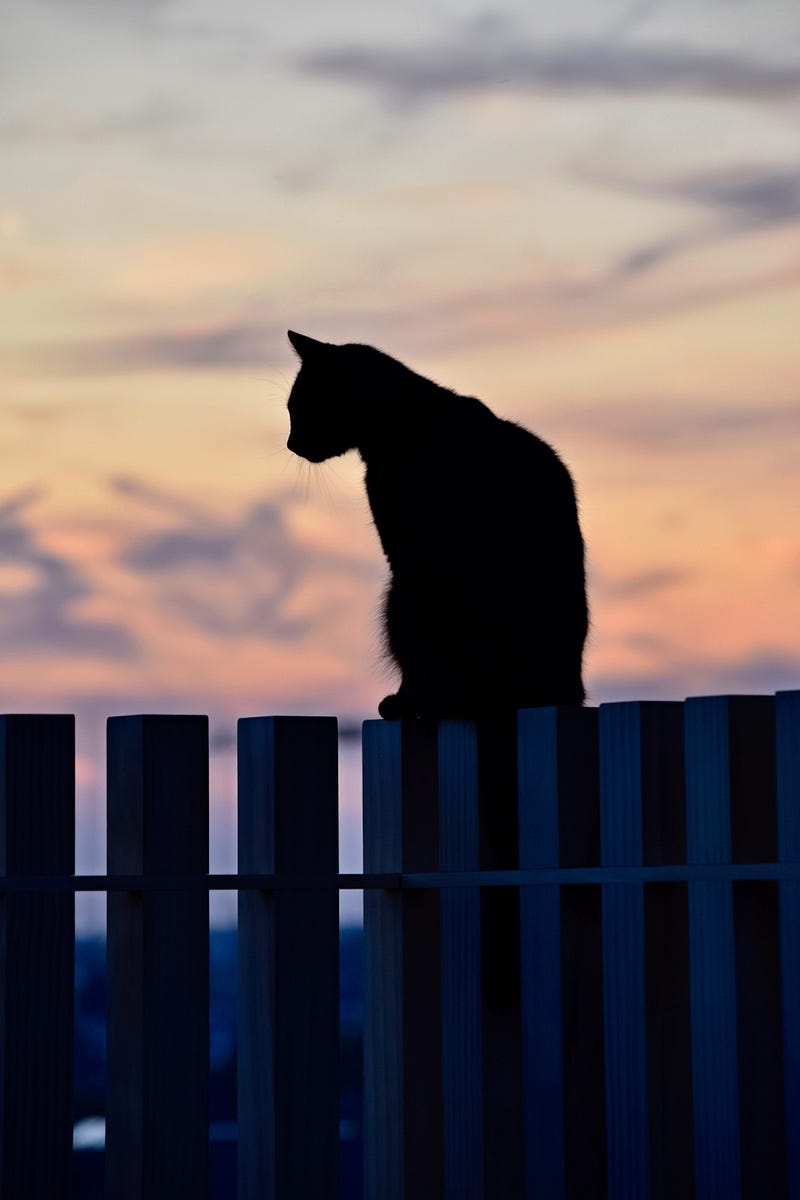
Mephistopheles wasn’t let out of the house the week before Halloween, because people do terrible things to black cats at that time. So October 27 has been designated Black Cat Day by the Cats Protection League in the UK.
In 1340, people in Europe were so superstitious about black cats supposedly being evil, that they killed all the cats they could find, which led to the explosion of the rat population and then the Black Death when plague decimated Europe.
But not everyone thought black cats were bad luck. Sailors thought a ship’s cat should be black because it would bring good luck. Black cats are also considered to be good luck in Japan.
I always thought it was good luck to see a cat in the wild. I’ve been blessed to see a bobcat near a stream, and also saw long scratches on a tree and footprints below of a cougar (a.k.a. puma/mountain lion), but they are the only wild cats in California. I didn’t realize until I was an adult that there are many other wild cats besides the big five we’re all familiar with: lion, tiger, cheetah, leopard, jaguar.
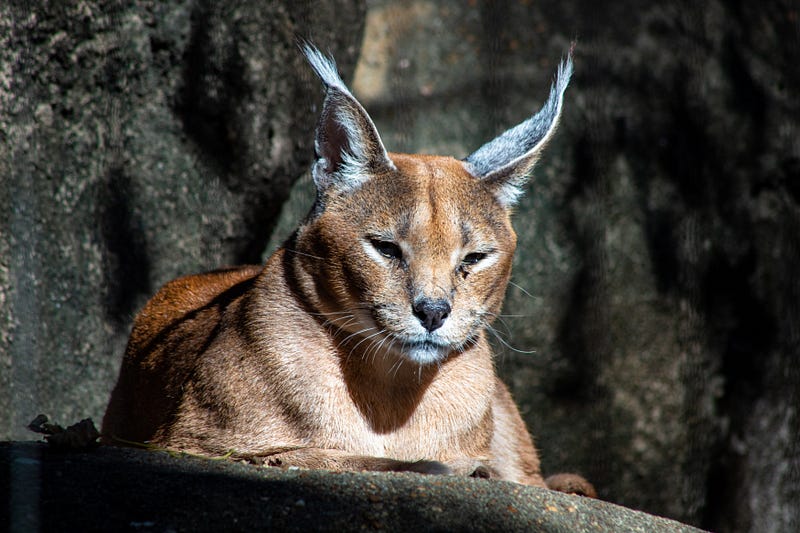
There are 40 wild cats around the world, and some of them are quite small, almost as small as house cats, such as the Sand Cat, Chinese Mountain Cat, and Jungle Cat. One of the few wild cats that can purr, the Clouded Leopard, lives in Thailand and elsewhere in Asia. Cheetahs, pumas, bobcats, ocelots and lynxes can purr, too.
Here’s a great website with pictures and descriptions of all 40 wild cats:
Cats large and small show up all over the place in literature, far more than I can list here, except a favored few. In poetry, you have Pangur Ban in the 9th-century poem by an anonymous author; Macavity and many others in Old Possum’s Book of Practical Cats, by T.S. Elliot; and a very careful unnamed cat in “Poem (as the Cat),” by William Carlos Williams.
In fiction, you have Mehitabel who is “Toujours gai” in Archy and Mehitabel, by Don Marquis; Greebo who eats vampires in the Discworld series, by Terry Pratchett; the Cheshire Cat who disappears except for his smile in Alice’s Adventures in Wonderland, by Lewis Carroll; and Pixel, in The Cat Who Walks Through Walls, by Robert A. Heinlein.
“There are two means of refuge from the miseries of life: music and cats.” — Albert Schweitzer
I have lived my whole life with cat companions from the age of 14 until just three years ago when my last cat died when I was 60 and I decided not to get another so that I could travel when I retired (just in time for the Great Pause).
If you’d like to read what I do when I need a cat fix now, read on:
(Cat goddesses from Catster.com. Big cat facts from Wikipedia.)


