
micropoetry/essay/culinary poetics
Catch the Last Perfume of Summer
The middle course in Japanese kaiseki dinner
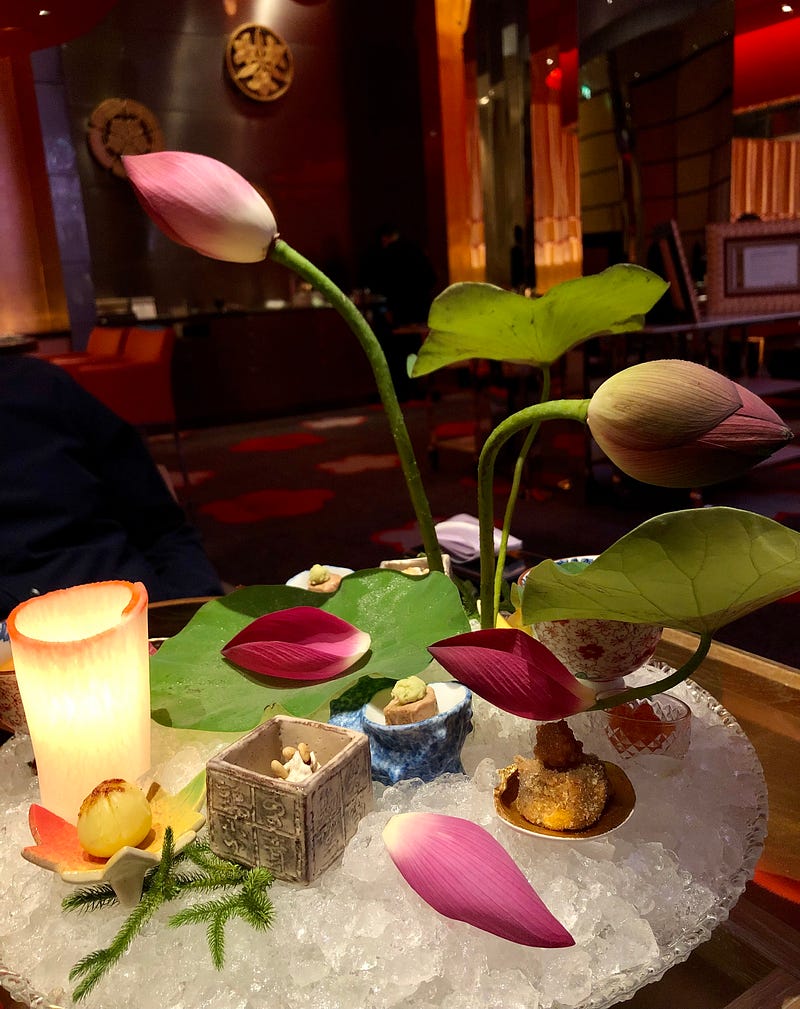
Exit stage, right? Summer raindrops kissed cool lotus blooms — still budding, happy for a leash glorified on kaiseki table, resplendent in chef’s artful essentials. There, your perfume lingers.
A fun treasure hunt beneath blooms and fronds
Two weeks ago my husband and I celebrated a summer send-off with a Japanese kaiseki dinner. Halfway through the elegant 10-course menu, one course of 12 assorted bite-sized delicacies for 2 diners — exemplifying the 6 essential tastes — presented themselves in a stunning lotus mini-stage.
The art element was unmistakable.
We surreptitiously lifted the tempting goodies beneath the blooms and fronds. Did lotus mean enlightenment? Lotus ponds find themselves near shrines and temples in Japan. Did we contemplate the seasons while on a gourmet journey?
A moment ago, our server explained the course with the season’s 6 flavor ingredients on a traditional 8-inch square tray:
plain/light, sour, spicy, salty, bitter, and sweet
That’s right. The flavors of life.
…These represent the “3 virtues, 6 tastes, and 8 inches”(三德六味~八寸)¹ in…the elaborate…Japanese kaiseki menu (懷石料理) with humble origins in Buddhist beliefs.
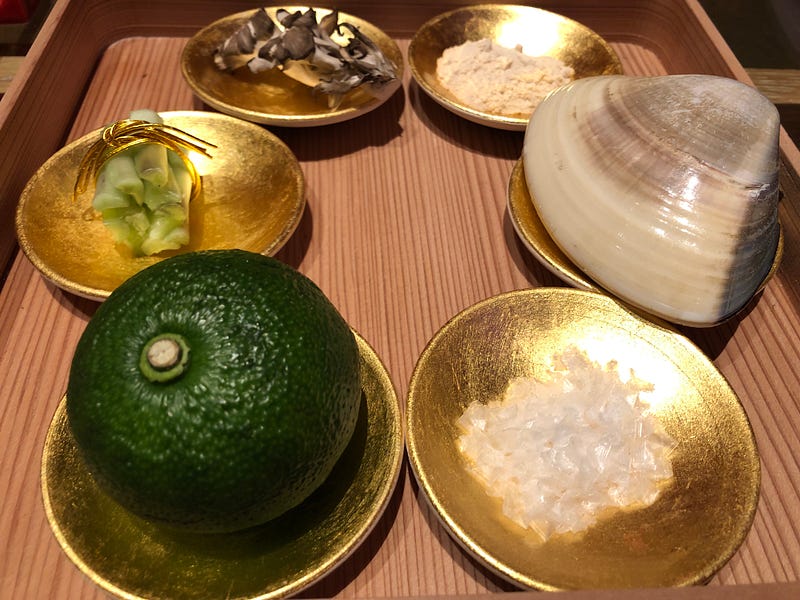
Flavors function specifically in wellness practices (I wrote about this previously). I wondered if these mini bites were different from the January kaiseki dinner we had, celebrating a different festive occasion. They were.
For summer end, Chef chose clams, sea salt, sudaci (Japanese yuzu), wasabi root (Japanese radish), mushrooms, and wasanbon (a fine-grained Japanese light-golden sugar) to bring out the 6 essential tastes.
Think that’s it? Then there’s the “8 inches” theory (1 Japanese inch = 3.03 cm), which originally referred to the length of chopsticks (these have since developed into varied lengths). It’s about discipline, elegance, and efficacy. How we consume these bites is crucial too.
If you're still wondering…
Why do self-disciplined Buddhist monks brand the 6 tastes essential for wellness? Supreme cooks for these monks live it inside out. This wellness concept is worth some thought for common mortals too, not just those in monasteries. …
What? Self-deprecating monks are supposed to eat mouthwatering mouthfuls too? Yes. The cooks are responsible for the monks’ mental and physical well-being and longevity. That involves making every bite not only palatable but enjoyable, so the monks don’t get bored. I know, strange to relate a monk’s spartan life to a sumptuous dinner. Hear me out.
I haven’t dragged you here to tell you salt is salty. Each of the 6 tastes comes with a philosophy and/or a correlation with traditional Chinese wellness theories. This concept, derived centuries ago, traveled to Japan eventually with Buddhism. ~ Seu. Complete Story
Summer exits in style. Cooler season tangos.
© Pseu Pending (Seu) 2022


