avatarTerry Day

Free AI web copilot to create summaries, insights and extended knowledge, download it at here

3040

Abstract

nt</h2><p id="9c81">The train passed through North Philadelphia station ahead of schedule and slowed its speed. Soon afterward, as it passed a rail yard, workers noticed flames coming from a journal box (a hot box) on one of the cars and rang the next signal tower at Frankford Junction, but the call came too late.</p><p id="e46a">Before the tower man could react, disaster struck as the train passed his signal tower traveling at a speed of 56 mph. The journal box on the front of car #7 seized and an axle snapped, catching the underside of the truck, and catapulting the car upwards. It struck a signal gantry, which peeled off its roof along the line of windows “like a can of sardines”.</p><figure id="b80f"><img src="https://cdn-images-1.readmedium.com/v2/resize:fit:800/1*bW4pdfoCl0OIAw9GdhDq9Q.png"><figcaption>A gantry of British semaphore signals seen from the cab of a steam locomotive, Author John Griffiths, ohn Griffiths, the copyright holder of this work, allows anyone to use it for any purpose including unrestricted redistribution, commercial use, and modification. <a href="https://commons.wikimedia.org/wiki/File:SR_signals_from_cab_of_standard_five.jpg">File:SR signals from cab of standard five.jpg — Wikimedia Commons</a></figcaption></figure><p id="de5c">Car #8 also rolled over and over until it plowed into Car #7 and hit the signal tower so heard that it wrapped around the tower in a “U” shape. The next 6 cars derailed and were tossed at odd angles along the 8 tracks.</p><p id="bfd6">When it was over the first six cars and the last two cars of the 16-car train were undamaged. Cars #7 and #8 were demolished and six other cars were strewn about the wreckage.</p><p id="7358">This accident took seconds to happen, it would take hours to free the trapped passengers and days to clear the wreckage.</p><p id="1adf">Death and destruction were everywhere or at least it seemed they were. Passengers had been thrown from the windows of Car #7 and #8. Bodies of the dead were strewn about the wreckage.</p><p id="bb5c">Dazed and injured survivors were stumbling all over the place. Some people were crying, some were stunned into silence. There were 79 dead bodies lying scattered over the tracks.</p><p id="495d">World War II servicemen were on leave from the war, heading home and riding the train. These brave servicemen helped the injured. Workers from the nearby Cramp’s shipyard arrived with acetylene torches to cut open cars to rescue the injured.</p><p id="894a">This took them until the next morning. The rescue work was directed by Mayor Bernard Samuel. The work of removing the dead was not complete until 24 hours after the accident.</p><h2 id="bde1">Inquiry</h2><p id="1601">117 passengers were injured, and some were in serious medical condition. The inquiry established the overheated journal box as the cause of the accident.</p><p id="c474">When interviewed, railroad mechanics who had inspected and lubricated the hot box earlier that day, swore it had been in good order.</p><p id="a6ab">Signal

Options

tower men were expected to watch passing train wheels for signs of problems. Train crews were expected to look back as trains rounded curves. It has never been explained how this hot box escaped attention.</p><h2 id="cc0c">Similar incidents</h2><p id="10ff">This accident was not the first of its kind to ever occur. An overheated journal box caused an axle to break and derail a train and involved passenger fatalities at the Hightstown rail accident of 1833.</p><p id="d548">71 years and 8 months later, along the same location, an Amtrak train, speeding over 100 mph, derailed along the curve. The 2015 Philadelphia train derailment claimed eight lives as well as injuring many others.</p><h2 id="561f">External links</h2><ul><li><a href="https://web.archive.org/web/20110727132447/http:/nrhs1.org/images/Dispatcher_Sep_09.pdf">September 6, 1943 — The Wreck of the Congressional Limited at Philadelphia, Pa</a></li><li><a href="https://www.gendisasters.com/pennsylvania/4193/philadelphia,-pa-congressional-limited-train-wrecks,-sep-1943">[1]</a><a href="https://web.archive.org/web/20120326124249/http:/www3.gendisasters.com/pennsylvania/4193/philadelphia,-pa-congressional-limited-train-wrecks,-sep-1943">Archived</a> 2012–03–26 at the <a href="https://en.wikipedia.org/wiki/Wayback_Machine">Wayback Machine</a></li><li><a href="https://news.google.com/newspapers?id=9UMxAAAAIBAJ&amp;sjid=TA0EAAAAIBAJ&amp;pg=5827%2C3292257">“100 Believed Dead in Wreck of Crack Congressional Train”, The Milwaukee Sentinel, Sep 7, 1943</a></li></ul><p id="04ac"><a href="https://en.wikipedia.org/wiki/Interstate_Commerce_Commission">ICC</a> <a href="https://web.archive.org/web/20150518093840/http:/specialcollection.dotlibrary.dot.gov/file?db=DOT-RAILROAD&amp;filename=s%3A%2Fdot_56gb%2Frailroad%2Fwebsearch%2F2726.pdf">Investigation №2726</a></p><p id="a800">If you liked this article, please clap for it, mark yourself as a follower of mine and join me on my journey in writing as I contribute to various publications on medium.com.</p><p id="338c">The more time people spend reading my articles, the more it encourages me to continue writing. Many thanks for taking the time to read what I have written. Get access to unlimited articles here on Medium!</p><p id="d8d4">Your small membership fee supports Terry Day and other writers you read. You’ll also get full access to every story on Medium. What a bargain!</p><p id="195c">Where else can you read articles written by artistic and creative authors on so many different topics for 5 a month?</p><p id="c59b">If you are not yet a medium member, please consider membership (5 is a steal), and please mark yourself as one of my followers. My account on Medium is @tday597706. Many thanks in advance for your support!</p><p id="078c">Please join my email list, this allows you to be notified as soon as I post something new. My success in writing is dependent on readers like you who appreciate and support my writing. Thanks so much for taking the time to read and support me.</p></article></body>

Catastrophic Accident Caused by Ages Old Technology — Horrific

Warning Challenge Not Acted on In Time
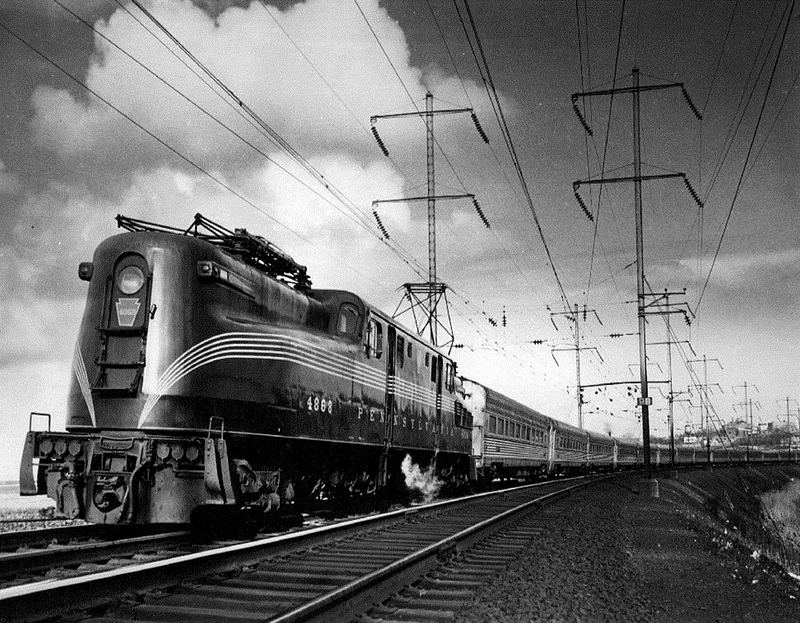
Photo of the Pennsylvania Railroad train “The Congressional”, which traveled between New York and Washington, D.C., Author Association of American Railroads (railroad trade organization)-photo is from the Pennsylvania Railroad. PD-icon.svg This work is in the public domain in the United States because it was published in the United States between 1927 and 1977, inclusive, without a copyright notice. File:The Congressional Pennsylvania Railroad.JPG — Wikimedia Commons

Dear Reader,

This is the seventh article on train crashes, derailments, etc., That said, I hope you saw the first six articles.

Article 1 was titled Frightening Compromise Makes Train Travel a Hazardous Nightmare.

Article 2 was titled This is what happens when the best technology is unused.

Article 3 was titled Hazardous Decision to Text Made Engineer Lose Focus.

Article 4 was titled Lack of Training and Technology Makes Disastrous Train Derailments.

Article 5 was titled What Happens When Approved Backing is not Done Right. Also of note, each article is its own story so please don’t think that if you read one you read them all.

Article 6 was titled Staggering Disaster Results When Best Tested Technology Not Used. Also of note, each article is its own story so please don’t think that if you read one you read them all.

This, the 7th article concerns a train derailment that happened in the Kensington neighborhood of Philadelphia, Pennsylvania. Some changes were made to help ensure safety is the first consideration for train crews when operating a locomotive.

So, welcome aboard! Sit back and learn about this accident. Thanks in advance for your support!

Pennsylvania Railroad’s premier train, the Congressional Limited crashed at Frankford Junction on September 6, 1943. The crash happened in the Kensington neighborhood of Philadelphia, Pennsylvania 79 people were killed and 117 people were injured.

Trains

The Congressional Limited traveled between Washington D.C. and New York City, making one stop in Newark, New Jersey, covering 236 miles in 3½ hours at speeds up to 80 mph. It was Labor Day Weekend in 1943, the company increased the number of cars to 16 to meet the expected high demand.

At Washington’s Union Station 541 passengers boarded the train. The 16 cars were being hauled by PRR GG1 electronic locomotive number 4930, scheduled to travel nonstop to Pennsylvania Station, New York

Incident

The train passed through North Philadelphia station ahead of schedule and slowed its speed. Soon afterward, as it passed a rail yard, workers noticed flames coming from a journal box (a hot box) on one of the cars and rang the next signal tower at Frankford Junction, but the call came too late.

Before the tower man could react, disaster struck as the train passed his signal tower traveling at a speed of 56 mph. The journal box on the front of car #7 seized and an axle snapped, catching the underside of the truck, and catapulting the car upwards. It struck a signal gantry, which peeled off its roof along the line of windows “like a can of sardines”.
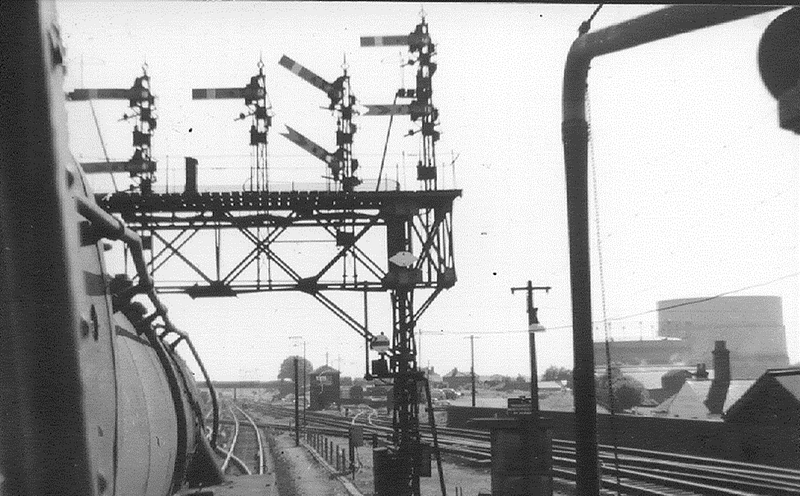
A gantry of British semaphore signals seen from the cab of a steam locomotive, Author John Griffiths, ohn Griffiths, the copyright holder of this work, allows anyone to use it for any purpose including unrestricted redistribution, commercial use, and modification. File:SR signals from cab of standard five.jpg — Wikimedia Commons

Car #8 also rolled over and over until it plowed into Car #7 and hit the signal tower so heard that it wrapped around the tower in a “U” shape. The next 6 cars derailed and were tossed at odd angles along the 8 tracks.

When it was over the first six cars and the last two cars of the 16-car train were undamaged. Cars #7 and #8 were demolished and six other cars were strewn about the wreckage.

This accident took seconds to happen, it would take hours to free the trapped passengers and days to clear the wreckage.

Death and destruction were everywhere or at least it seemed they were. Passengers had been thrown from the windows of Car #7 and #8. Bodies of the dead were strewn about the wreckage.

Dazed and injured survivors were stumbling all over the place. Some people were crying, some were stunned into silence. There were 79 dead bodies lying scattered over the tracks.

World War II servicemen were on leave from the war, heading home and riding the train. These brave servicemen helped the injured. Workers from the nearby Cramp’s shipyard arrived with acetylene torches to cut open cars to rescue the injured.

This took them until the next morning. The rescue work was directed by Mayor Bernard Samuel. The work of removing the dead was not complete until 24 hours after the accident.

Inquiry

117 passengers were injured, and some were in serious medical condition. The inquiry established the overheated journal box as the cause of the accident.

When interviewed, railroad mechanics who had inspected and lubricated the hot box earlier that day, swore it had been in good order.

Signal tower men were expected to watch passing train wheels for signs of problems. Train crews were expected to look back as trains rounded curves. It has never been explained how this hot box escaped attention.

Similar incidents

This accident was not the first of its kind to ever occur. An overheated journal box caused an axle to break and derail a train and involved passenger fatalities at the Hightstown rail accident of 1833.

71 years and 8 months later, along the same location, an Amtrak train, speeding over 100 mph, derailed along the curve. The 2015 Philadelphia train derailment claimed eight lives as well as injuring many others.

External links

ICC Investigation №2726

If you liked this article, please clap for it, mark yourself as a follower of mine and join me on my journey in writing as I contribute to various publications on medium.com.

The more time people spend reading my articles, the more it encourages me to continue writing. Many thanks for taking the time to read what I have written. Get access to unlimited articles here on Medium!

Your small membership fee supports Terry Day and other writers you read. You’ll also get full access to every story on Medium. What a bargain!

Where else can you read articles written by artistic and creative authors on so many different topics for $5 a month?

If you are not yet a medium member, please consider membership ($5 is a steal), and please mark yourself as one of my followers. My account on Medium is @tday597706. Many thanks in advance for your support!

Please join my email list, this allows you to be notified as soon as I post something new. My success in writing is dependent on readers like you who appreciate and support my writing. Thanks so much for taking the time to read and support me.

Illumination
Nonfiction
Business
Technology
Transportation
Recommended from ReadMedium