
FELINE PSYCHOLOGY
Cat Personalities: The Feline Five
Cats now have their own Myers-Briggs type personality metric
Cheerful, moody, lazy, predictable, or easygoing — these are just a few characteristics we observe daily in humans. They’re traits that help define an individual’s personality, and when matched against our own, we may find ourselves drawn to some people and chilled by others.
One’s personality is a summation of all of our individual differences in consistent observable behavioral patterns.
Felines also have distinct personality types. An Australian study uncovered five basic personality traits, based on a metric designed by the study group. The “Australian Feline Five Personality Profile” brings to mind instruments such as the Myers-Briggs Indicator, which ranks humans on four personality spectrums.
This research, published in a scientific journal in 2017, concluded the five feline major personality factors are: Neuroticism, Extraversion, Dominance, Impulsiveness and Agreeableness.
I’ve heard several cat guardians describe their kitties as neurotic. Stephen Baker’s book, How to Live With a Neurotic Cat, illustrates a humorous, tongue-in-cheek account of cats with quirky behaviors and questionable mental stability.
Neuroticism, however, refers to how skittish or anxious a cat is. A cat on the high end of the neurotic personality scale might engage in repetitive, obsessive behaviors or may be anxious and fearful of people or strange objects. On the polar opposite end of the scale, a cat may be lazy or laid-back.
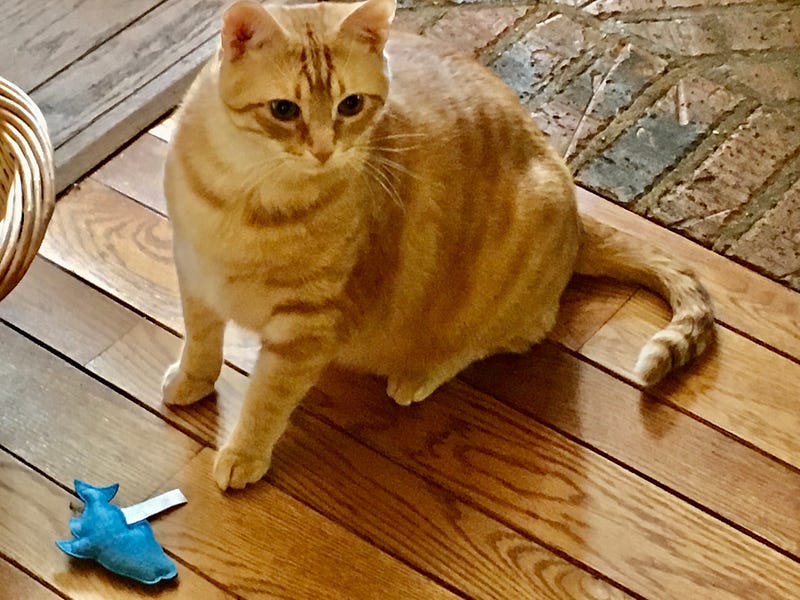
I’m pretty sure this describes our cat Bernie, who is easily frighted and is terrified by vacuum cleaners and loud noises.
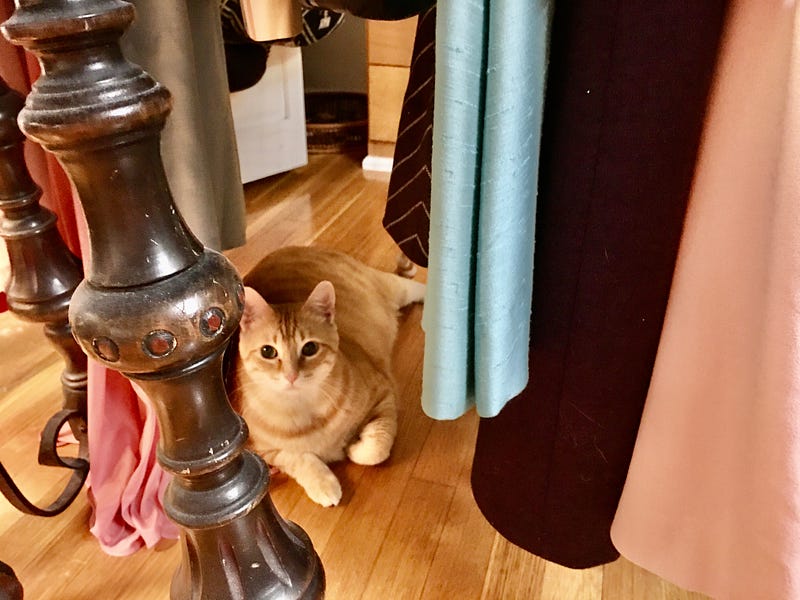
The highly extroverted cat is one who displays vigilance. She is inquisitive about her surroundings, is quick to seek play opportunities, and is energized by admiring groups of people. Curious and inventive, the extrovert may also become easily bored and need additional stimulation from her guardians.
At the opposite pole, a cat may exhibit little interest in being the life of the party. Conversely, she might prefer to observe on the sidelines rather than to engage.
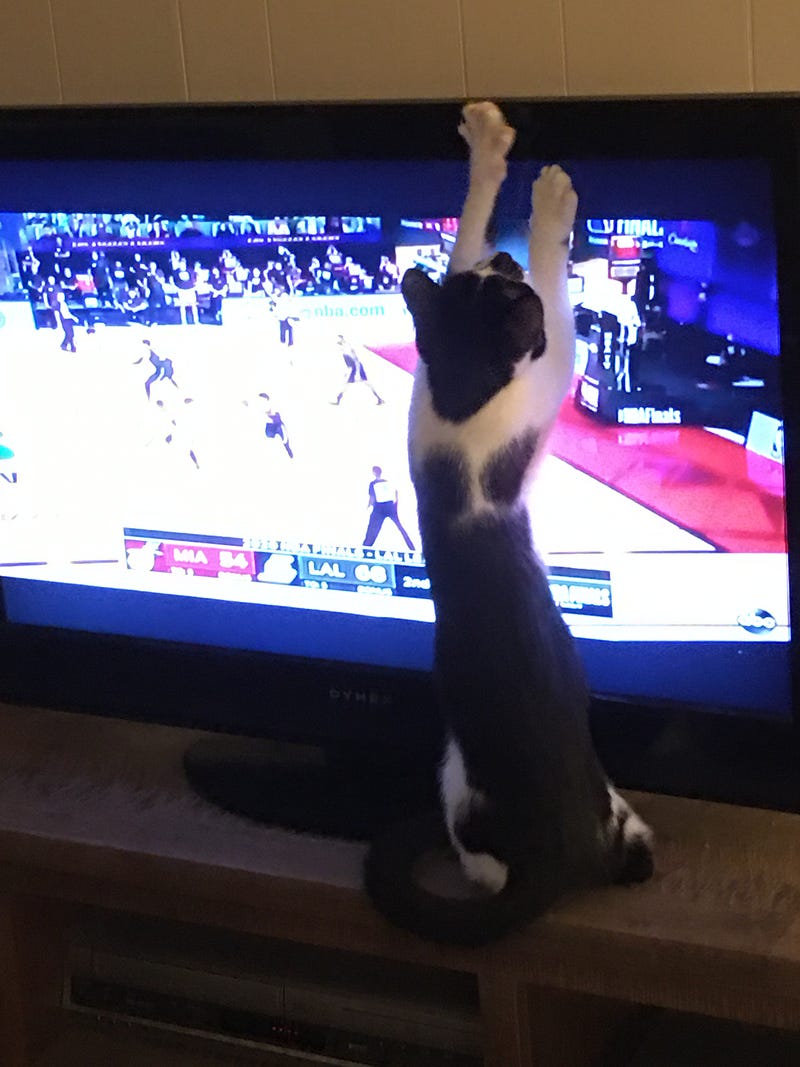
This is definitely our Bella, who is a show boater and is always looking to be the center of attention. Below she’s trying to divert us away from our beloved Grizzlies while they are playing a nail-biting NBA game.
Dominance, as a feline personality trait, refers to a cat that on the high end of the continuum is a bully with jealous tendencies, but on the low end is the one who is submissive.
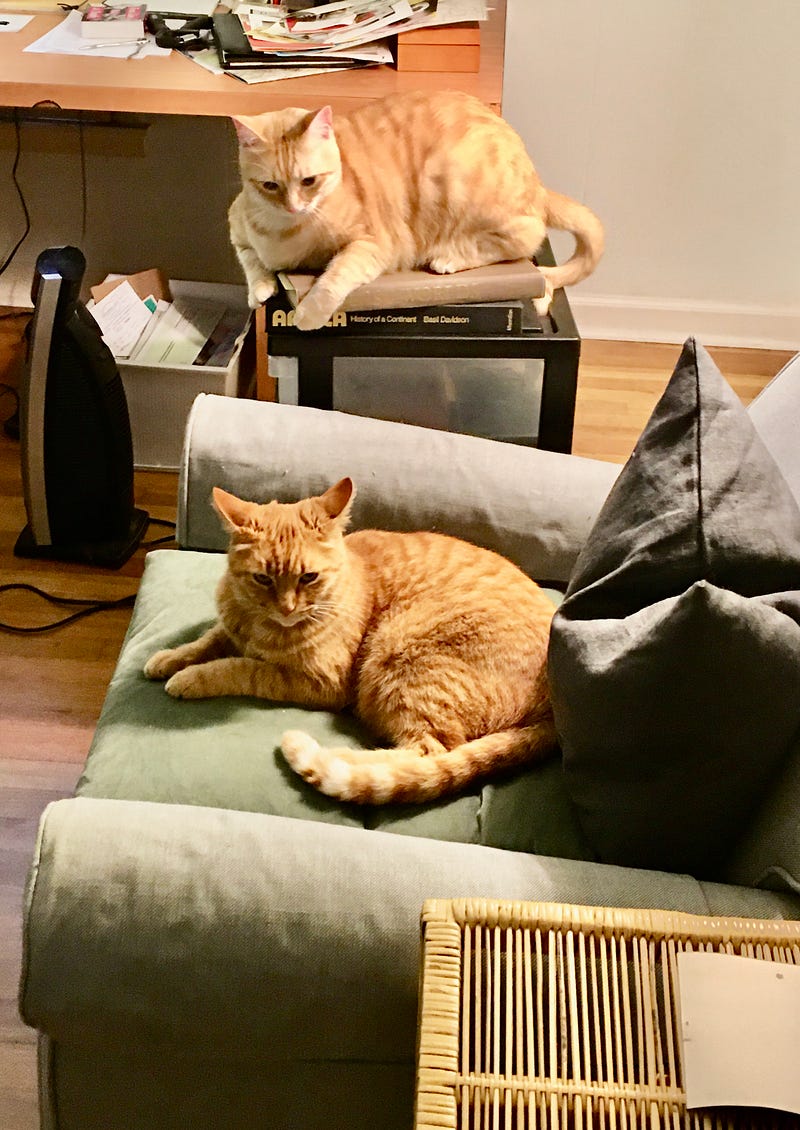
Simple dominance is exhibited by rubbing their faces on items they wish to “claim” as their own. In a multiple cat environment he might engage in urine marking, and can be aggressive at mealtime by pushing around another cat’s food dish or attempting to eat their share.
This may describe Buddy — our newest addition — to a small degree. You can see Buddy sitting in “Bernie’s” chair above while Bernie passively looks on. Buddy is all about claiming bowls, chairs, and toys as he is slowly ingratiating himself into our tribe.
A cat with an Impulsive personality can be erratic and reckless. This type might also react differently to similar situations but on different occasions. When facing uncertainty, like a newcomer entering the house, the Impulsive kitty will take flight and ask questions later. Strict routines may be helpful as she deals with her feline mix of high energy and anxiety.
The fifth of the feline personality types is Agreeableness, which is a scale that measures how well the individual gets along with others. The high end of agreeability is characterized by the cat who is copacetic with everyone.
His tail is typically high and he is quick to give kitty kisses or a head butt. Cats who are highly agreeable have usually been well socialized as a kitten. Those who are less agreeable — irritable or aggressive — are also often the result of early socialization, or the lack thereof.
I wonder if cats can have a mix of these qualities and characteristics? Bernie Cat also has a lot of the Agreeable traits.
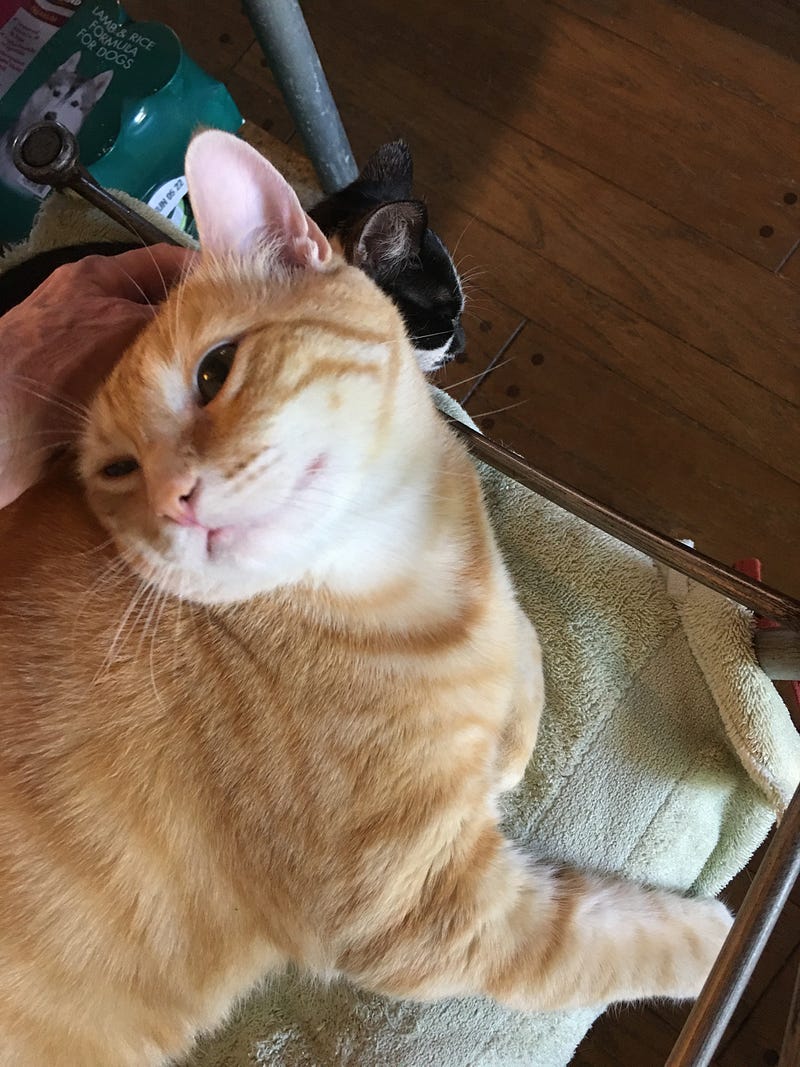
Previous studies on feline personalities tended to focus on shelter cats, but the Australian research was among the first to analyze results from larger groups of domestic cats.
Some of the other findings included the fact that older cats tended to be a bit more dominant and less outgoing than younger ones. And regarding personality types, there was no significant differences between gender or between indoor and outdoor cats.
Naturally, every cat is unique and has their own personality, just as we humans do. But it’s encouraging to see researchers taking more interest in learning about the personalities of our feline companions.
For one thing, understanding them may also help us better track their health. Changes in personality — such as a friendly outgoing cat who suddenly becomes aggressive or withdrawn — can point to an underlying medical condition.
Personality assessments conducted in shelters could also help better match adoptable cats to people with similar, corresponding personalities. And that would be a tremendous step forward.
If you liked this story and want to read more from me, please use my referral link! Your $5 monthly membership fee supports me and other writers on Medium. You’ll get full and unlimited access to every story, every day https://medium.com/@deborah.camp/membership
OR
If you’re already on Medium you can follow me at https://[email protected] if you enjoy true stories on a full range of interesting, sometimes quirky but hopefully entertaining topics!