
The Very First Cat Memes in the Victorian Era
Our collective obsession with photographing and captioning feline antics goes back more than 100 years.
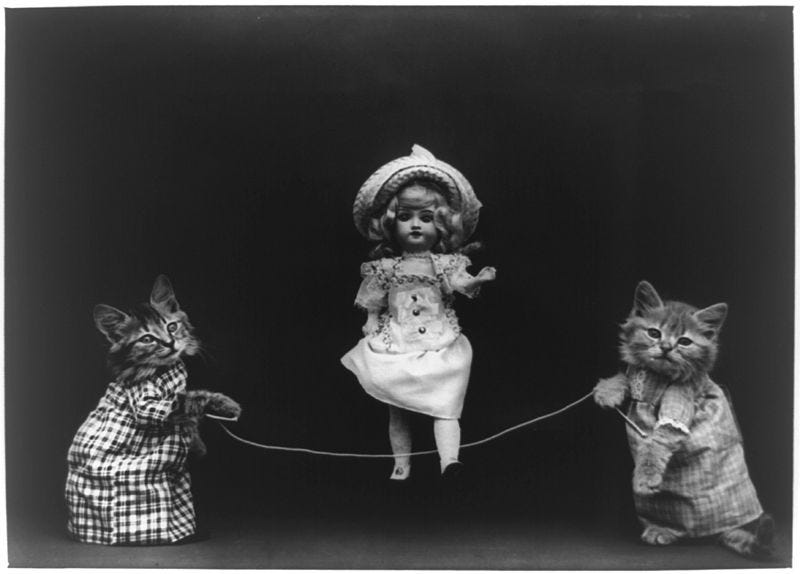
Though it’s easy to assume that the modern fascination with ridiculously posed cat photos began with the advent of high-speed internet, I Can Has Cheezburger was not the first to explore this kind of humor. Instead, two different men named Harry were the ones who made funny cat pictures popular… all the way back when Queen Victoria was on the throne.
In the 1870s, photography had become accessible to the general public. Though the technology for taking photos of people and objects was only about thirty years old, it had already become sufficiently popular for inexpensive photograph cards to be circulated among friends. These small pasteboard cards, called carte de visites (“visiting cards”) or CDVs, could be purchased with a print of your own image or the image of a celebrity such as Sojourner Truth or Ulysses S. Grant.
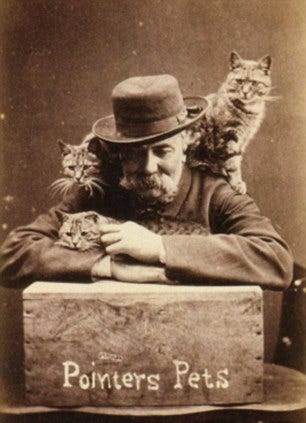
Pets were sometimes photographed along with their owners, but photos of animals became a real craze in 1872 when Harry Pointer released a series of images called the Brighton Cats (named for the English town in which he lived at the time). A former military drill instructor who made a living with a small portrait studio, Pointer did not enjoy overwhelming success with his ordinary photos of paying customers. But his kitten pictures, which he began producing for his own amusement in 1870, delighted his audience. Depicting cats in a variety of situations, ranging from “normal” cat activities such as sleeping, chasing each other, playing, and eating, to the more ridiculous like appearing to ride bicycles or zoom around a roller skating rink, the photos garnered many fans. As shown below, when Pointer added humorous captions to the pictures, the appeal only increased.
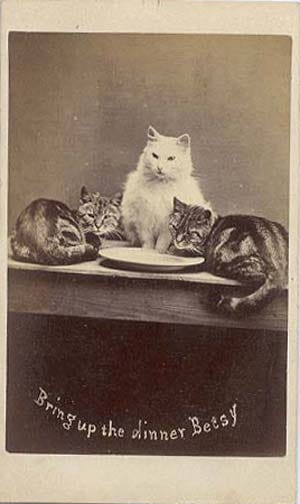
Pointer’s pictures, which became popular as greeting cards, found some measure of fame in exhibits for the Photographic Society of Great Britain. Eventually Pointer branched out to photos of dogs as well, but these were not nearly as well-beloved as his cat collection. By the time of his death in 1889, he had published over 200 images in his Brighton Cats collection.
Harry Whittier Frees, who lived a few decades after Harry Pointer, continued Pointer’s trend with his own posed cat photographs. Beginning in 1906, his art often included cats dressed in miniature human clothing, appearing to perform human tasks. His photos, like Pointer’s, became very popular and inspired rip-offs and — forgive the pun — copycats. Though some other artists used dead, taxidermied animals in ridiculous poses to create images for calendars and greeting cards, Frees stuck to live kittens and insisted that they had well-developed “native reasoning powers.” He worked with several different kinds of animals, including puppies and piglets, but wrote in a book about his photography that he preferred cats above all.
“Rabbits are the easiest to photograph in costume, but incapable of taking many ‘human’ parts. Puppies are tractable when rightly understood, but the kitten is the most versatile animal actor, and possesses the greatest variety of appeal.”
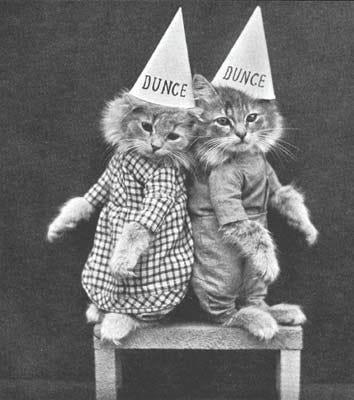
Frees’ images were featured in Life magazine in 1937, and enjoyed quite a bit of commercial success through magazine reprints, children’s books, and advertising materials. Frees, who was exceedingly gentle with his tiny subjects, found the process of posing them and taking exposure after exposure extremely taxing (he had to discard two-thirds of negatives because the animals kept moving). Therefore, he only worked at his cat photo project three months out of the year.
Silly cat pictures are much easier to come by today, and a quick Google search will turn up thousands of humorous images snapped on a cell phone camera and captioned with an easy online meme generator. The methods may have changed, but universal humor hasn’t. Cats may have been worshiped in ancient Egypt, but they were a source of fun for even the most staid Victorians.
For further reading:


