
Castles, Castles, and More Castles of the Middle Rhine River
The end of our European River Cruise is nearing, but today we were treated to the Medieval Castles of the Rhine River.

Yesterday, we arrived at one of the most extraordinary parts of our trip through Europe on three of its most beloved rivers.
Already having traversed the Danube River and Main Canal, we arrived at the Rhine River — a river as extraordinary as the Nile as it flows northward.
The Middle Rhine (Rhein in German) is a place where the topography changes, becoming more hilly. Both sides of the river are dotted with Medieval castles from prior centuries.
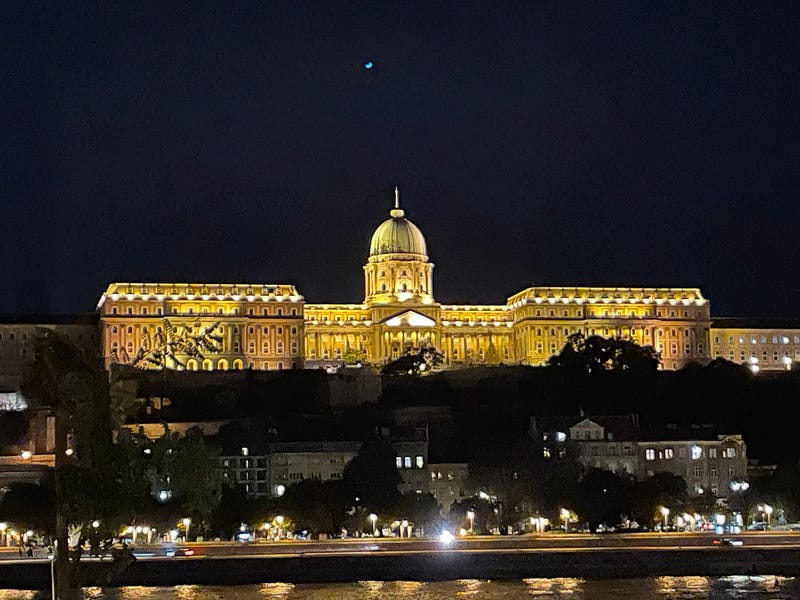
Before arriving in Europe on our trip, we saw castles and palaces of prior strongholds in various countries. Budapest Castle sitting high on a hill was our first introduction to this.
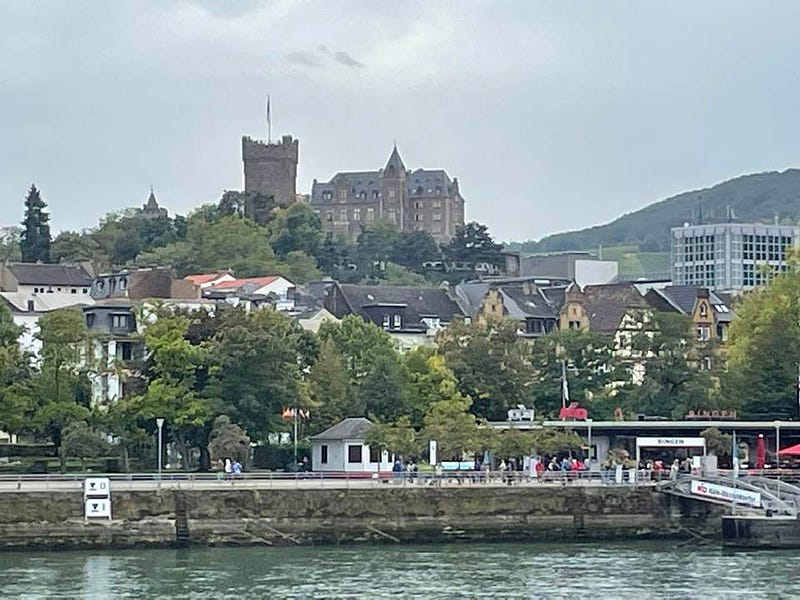
Once on the Rhine, the Klopp Castle was our first view of a Medieval castle, dating back to the 13th century.
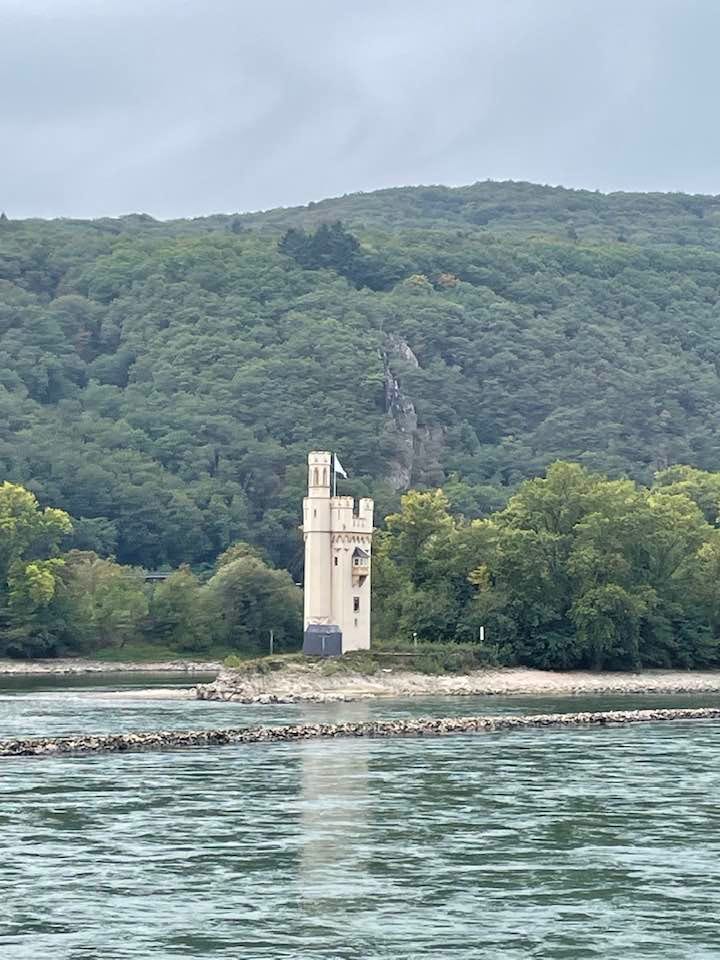
Then we saw the Mouse Tower. There are stories about who ate what (or who) in this tall skinny building that served as a signal tower for ships until 1974.
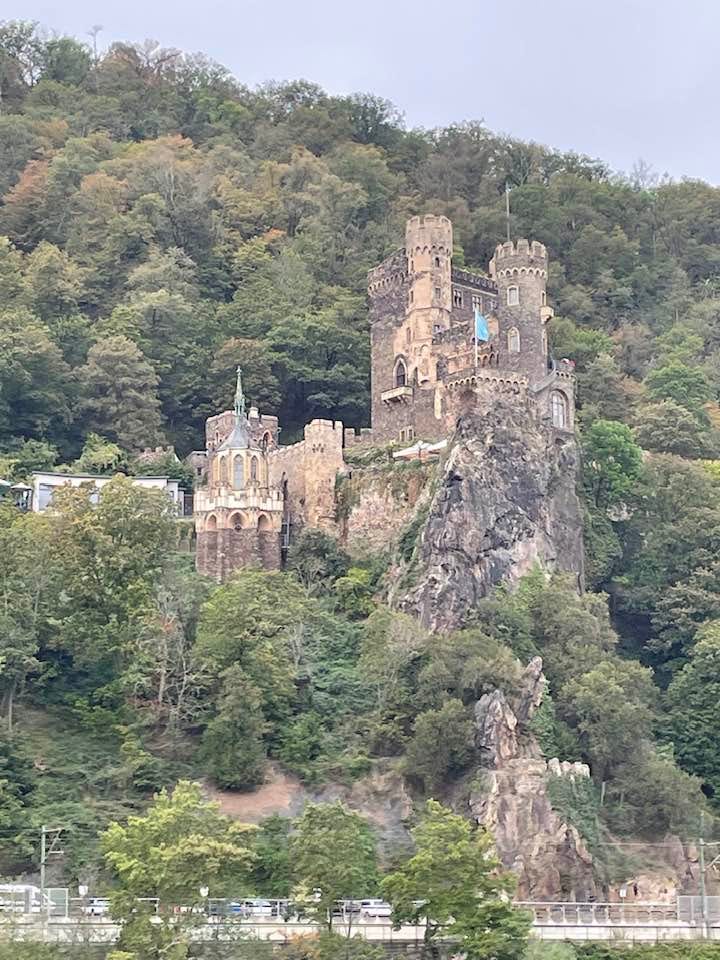
The Rheinstein Castle from the 14th century was also on the port side of the river and was very traditional in what you expected from a castle with turrets, battlements, and a drawbridge. It can be reserved for weddings and is booked out years in advance.
The Reichenstein Castle spans five centuries in its collection of porcelain, and weapons. Its sprawling facade is impressive across the verdant hills of Germany’s Rhein Gorge.

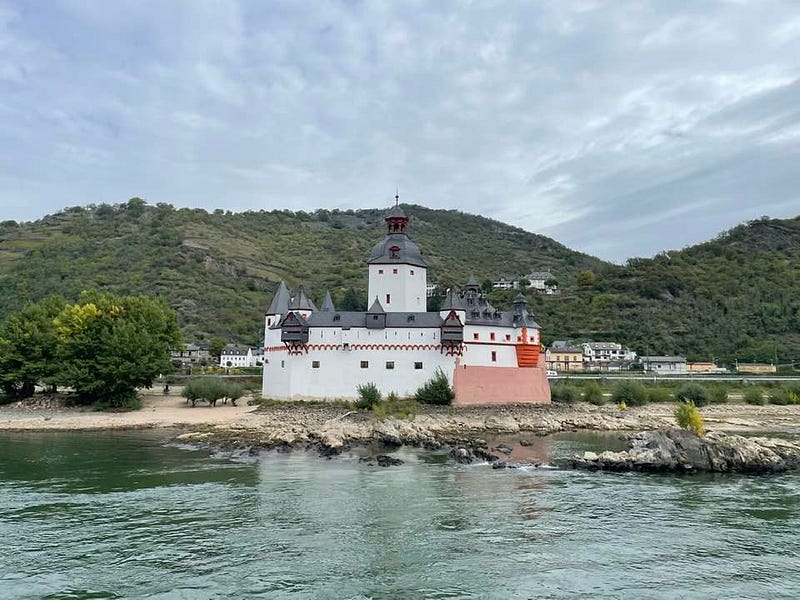
The Pfalzgrafenstein and Gutenfels Castle served as a toll stop on the Rhine. The bathroom facilities can be clearly seen in the grey outer dormers, which allowed human waste to be deposited in the river!

Katz Castle was seen and captioned in the header photograph for this article is imposing with its twin spires. It is on the right bank of the Rhine River.
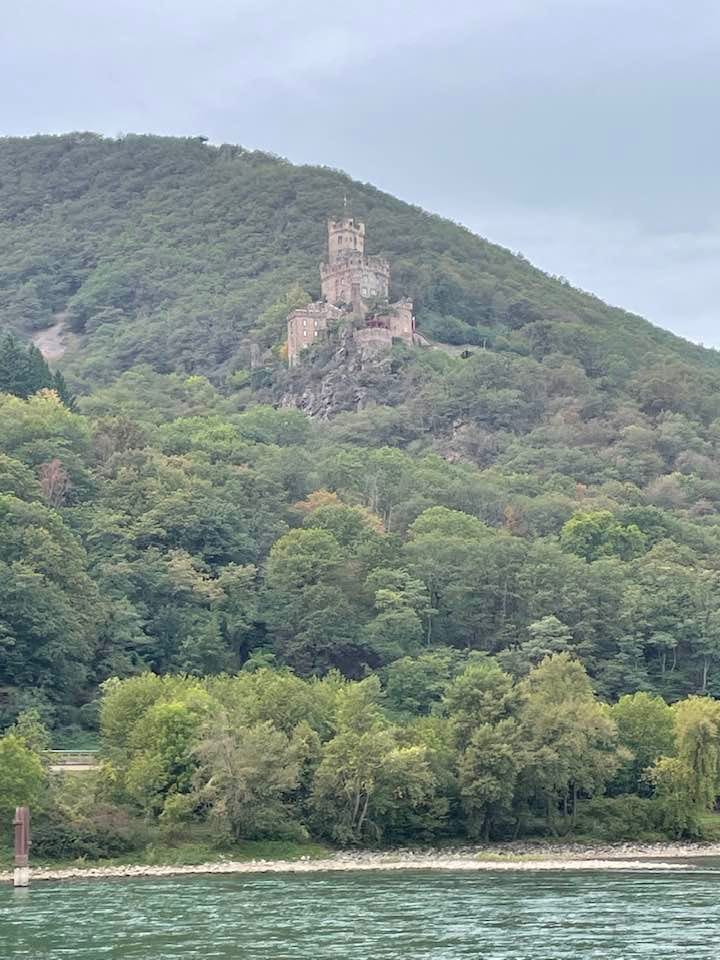
This castle (the Sooneck) was rebuilt in the early 1800s when the Prince of Prussia had it reconstructed. Its tower juts above the water, creating an impressive sight.
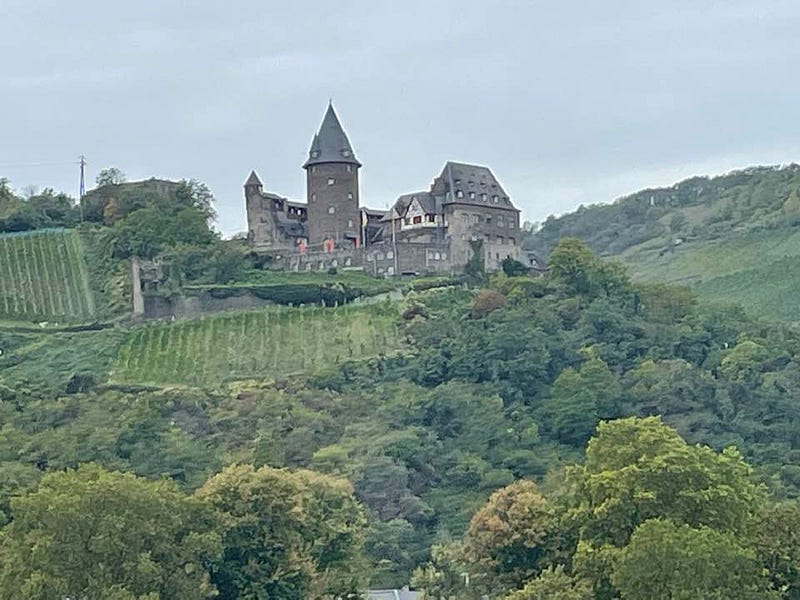
Stahleck Castle, pictured above, is from the 12th century. After existing as ruins for hundreds of years, it has been renovated to be a youth hostel, according to the information we got from Viking.
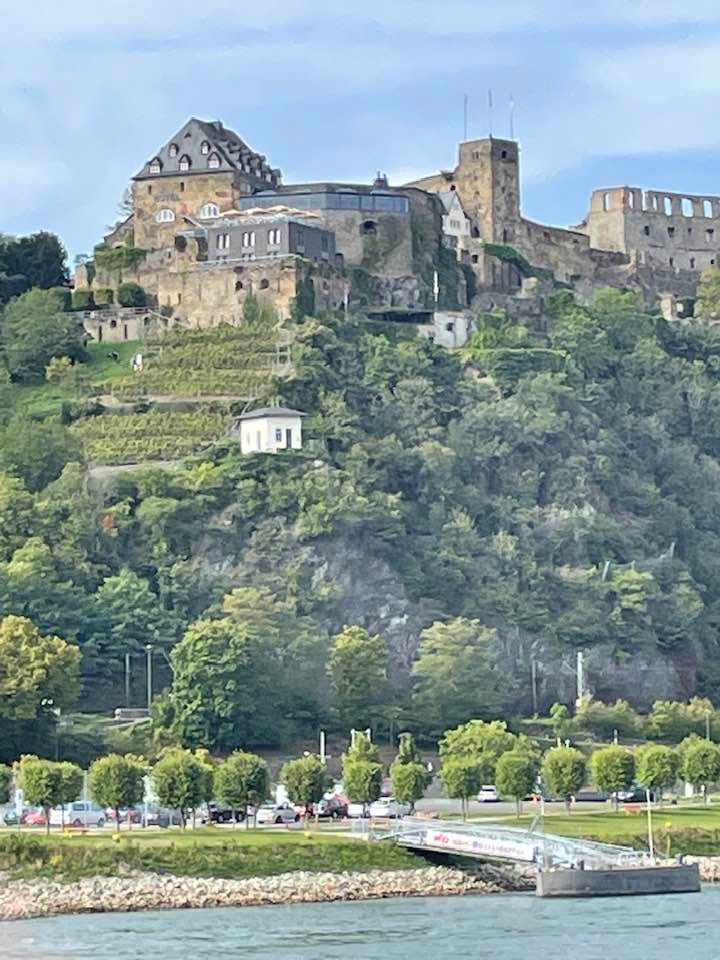
Perched high on a hillside is the Rheinfels Castle. It now serves as a museum and hotel. One can easily see the vineyards from the river, as they line up towards the building above it.
The Schonburg Castle was originally built in 966 A.D. but was burned down by French Troops in the 17th century. It’s been rebuilt and contains a hotel and restaurant onsite.


Some castles had remnants of walls, which were quite impressive.
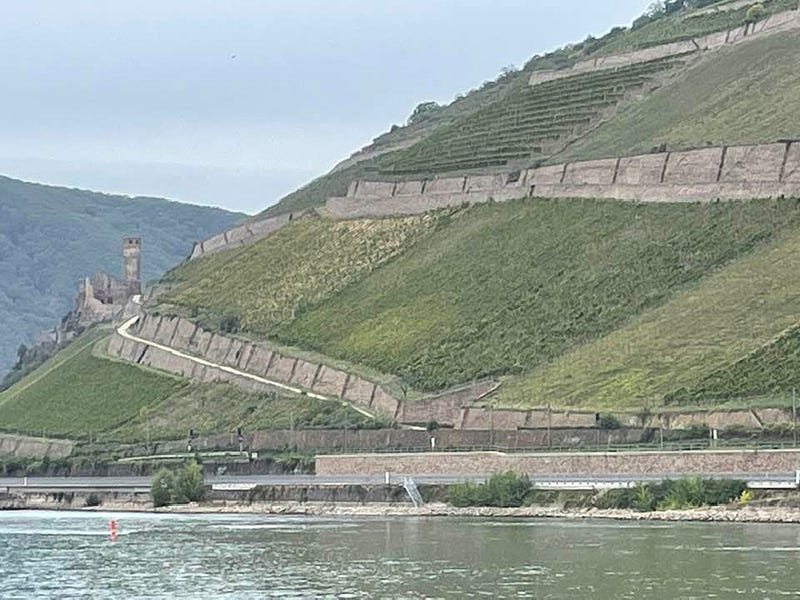
But the castle that had the most to share yesterday of yesteryear, was Marksburg Castle. It has been preserved by the German Castle Association for over 100 years. The castle sits high on a hill over the Rhine River, virtually unchanged over the centuries.
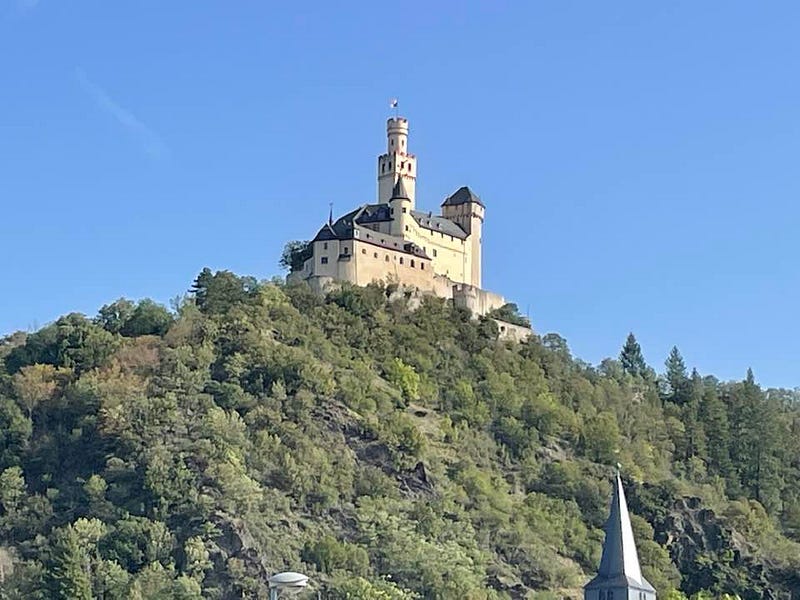
We were taken by tour bus from our ship to the parking lot which led up a steep embankment to the entrance of the castle.

This castle was never overtaken in battle and never destroyed! Most of its buildings date back to the 13th-15th centuries. Rooms are preserved to provide a glimpse into the lives of those who lived here centuries ago.
One can see the bed chamber, the kitchen, the wine cellar, and more.

“Marksburg Castle is the only hilltop castle along the Rhine which has never been destroyed. In the UNESCO World Heritage Site of the Upper Middle Rhine Valley there is a castle to be found every 2.5 kilometres on average, with over 40 of them still more or less intact. Many can be seen along the riverbanks and hilltops, and a lot of them are open to visitors.” — Source.
Seeing these castles was a dream come true for me and a little bittersweet as well. My mom, who passed away this year at the end of July, was always fascinated with knights, castles, and medieval times. I thought of her a lot as we toured this iconic riverway in Northern Europe. It made me thankful it’s been preserved.