Summary
Lucy Dan 蛋小姐 reflects on the culinary versatility of cashews, their cultural significance in Cantonese cuisine, and invites readers to engage with her through nut or fruit-themed poetry prompts.
Abstract
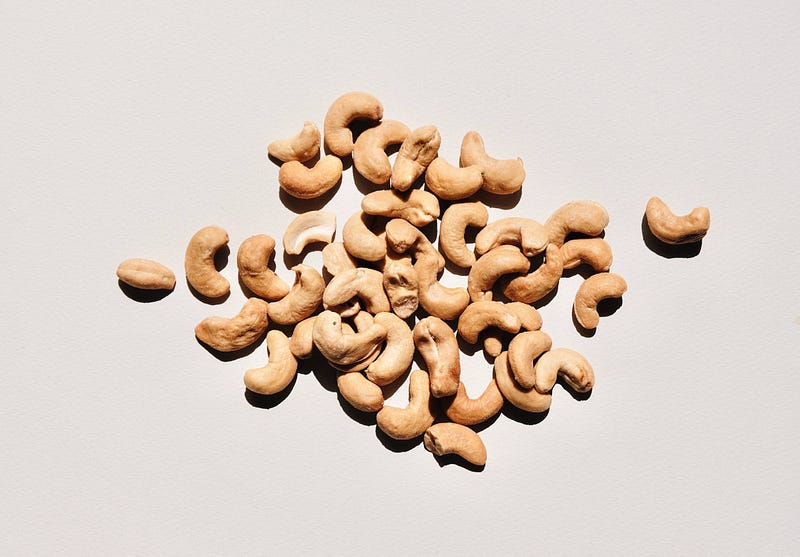
The web content presents a personal reflection by Lucy Dan 蛋小姐 on cashews, a kidney-shaped nut that is as versatile in cooking as it is in language. In Cantonese, cashews are called "yiu gwoh," which translates to "waist fruit," a name that puzzles the author upon deeper contemplation. The piece muses on the origins of using cashews in dishes like stir fry, comparing them to peanuts, and invites the audience to consider the whimsical nature of food names in different languages, such as pistachios being "happy fruit" in Cantonese. Lucy Dan 蛋小姐 opens up a dialogue with her readers, offering a glimpse into her cultural perspective and encouraging interaction through poetry prompts and responses to her work.
Opinions
- The author finds the literal translation of "yiu gwoh" (cashews in Cantonese) to "waist fruit" amusingly nonsensical.
- Lucy Dan 蛋小姐 is intrigued by the history and cultural significance behind the culinary use of cashews, particularly in stir fry dishes.
- She enjoys exploring the etymology and cultural nuances of food names, as evidenced by her comparison of cashews and pistachios in Cantonese.
- The author values reader engagement and creativity, as shown by her invitation for poetry prompts and her encouragement for readers to tag her in replies.
- Lucy Dan 蛋小姐 is keen on sharing her thoughts and experiences, offering a personal insight into her relationship with food and language.