
Casanova’s Secret Weapon
Roquefort is one of the most iconic of French cheeses and has a long history
“Roquefort is an excellent thing to restore old love and ripen a young one.” Casanova
There are between three and four hundred different recognized cheeses in France and on top of that many small farms will produce their own cheese that is not reflected in that figure. To suggest that the French adore cheese would be something of an understatement. It is consumed by 96% of the population and the average French person eats their way through twenty-five kilograms of this product per year. I have eaten at restaurants where bringing out the cheeseboard is a two-man job.
Of all of this country’s many cheeses, Roquefort is probably one of the better known. This creamy blue-veined cheese has been consumed for more than two thousand years. The village of Roquefort was first granted sole production rights in 1666 and it's AOP (appellation d’origine protégée) dates back to 1925.
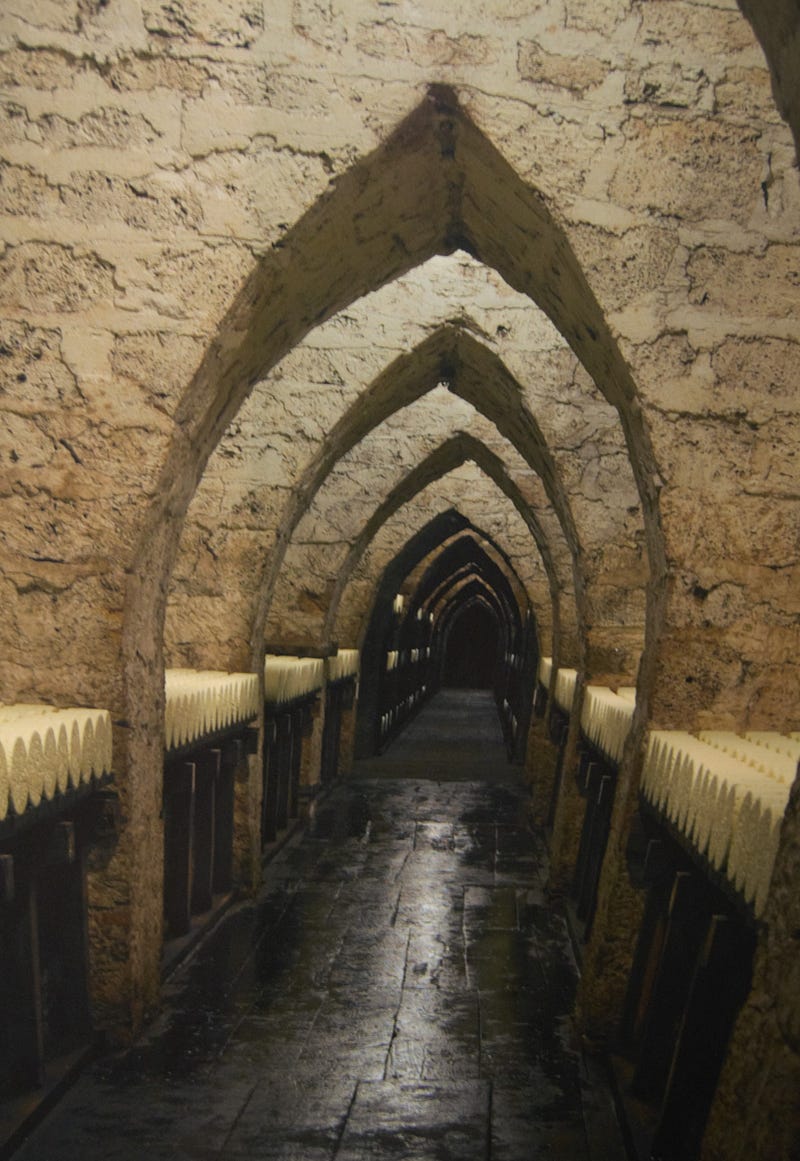
All Roquefort cheese is produced in a series of caves that run in a narrow vein through the Cambalou Mountain. It was here that legend has it that the cheese was first discovered through an accident that many believe was inspired by an angel. A young shepherd sheltering from the rain spotted a beautiful woman deeper in the cave. Mesmerized, he followed her, forgetting his bread and cheese at the cave entrance as he did so. Later the beautiful woman simply vanished but the shepherd was so entranced by her beauty that it was days before he forgot her. He also forgot his piece of cheese and when he discovered it again it had been permeated by strange blue veins that gave it a delicious flavour.
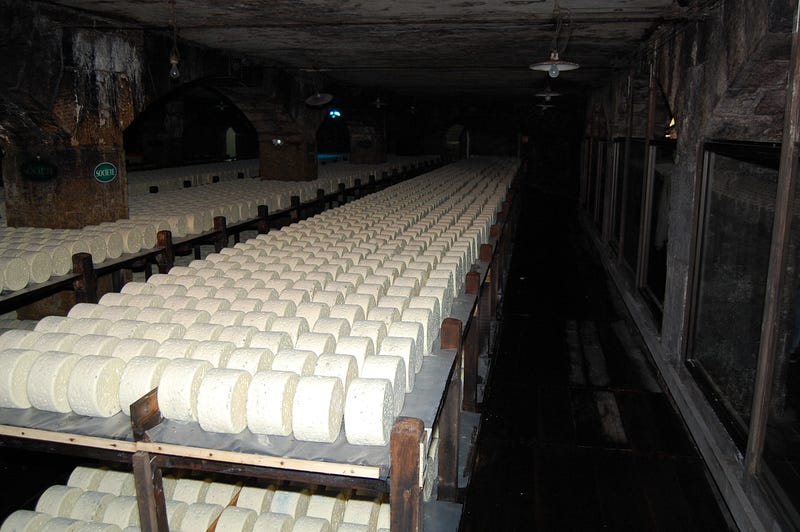
Whether you choose to believe in this miracle or not, there is no denying that Roquefort is an extraordinary cheese. Today production continues in the same long narrow caves where it has always been produced and not in some industrial warehouse. The caves are pierced by narrow fissures called fleurines and these allow the air to flow into the underground galleries. Master cheesemakers control the flow of this air by opening and closing them with nothing more technical than old windows and years of experience.
The full cream sheep’s milk is mixed with a minute amount of bacteria called Penicillium Roqueforti which is found nowhere else in the world. By controlling the bacterial growth and the airflow, the master cheesemaker is able to ensure that each cheese is matured to an equal and exact formula. It is an extremely delicate process that requires constant monitoring and decades of experience.
Each batch of cheese undergoes two hundred tests prior to final wrapping. With each test, the cheesemaker will make fine adjustments to how much air is allowed to flow through the fleurines .
When the cheese is deemed satisfactory it is wrapped in silver foil before being dispatched to its final destination which could be anywhere in the world, such is the demand for this renowned product. Even the wrapping process is delicate. Only women are deemed to have hands delicate enough to perform this part of the operation. These ladies are known as cabaniéres and an experienced cabaniére can wrap upwards of three hundred 3kg cheeses per day.
France may have taken cheese to its heart as a nation but it is by no means the only country in the world where cheese has a long pedigree. Humans have been eating cheese since before recorded history. It was an ideal way to prolong the shelf life of a crucial source of fat and protein and made the end result easy to both store and transport. The only people on earth who don’t have a history of cheese production are the South East Asians. The first written records of cheese production were recorded in Poland about 5500 years ago and cheese was even found in some of the ancient Egyptian tombs. In France, however, cheese making has been elevated to an art form that is dear to the nation’s hearts.
General De Gaul is reputed to have asked: “How does one rule a nation which has more than two hundred and fifty-eight different types of cheese?”
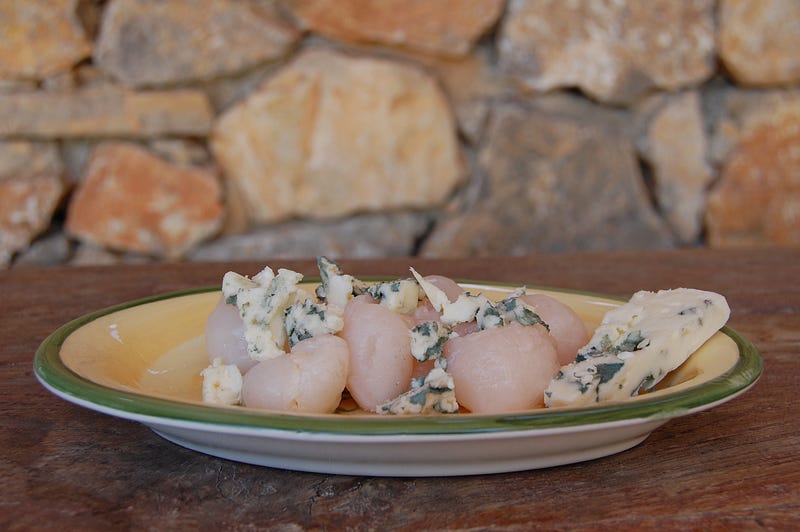
Roquefort is creamy for a blue cheese, with a fairly pungent, though not obnoxious odour. It will be found on most cheese boards at better-known restaurants but one unusual way of eating it is to stuff it into canned litchis and serve it as a starter. The contrast between the sweet fruit and the strong cheese is a pairing that is both pleasing and unusual. It is also really easy to prepare so is a great way to impress guests with little effort.


