
Carnivore Diet: What’s In, What’s Out?

The carnivore diet has been gaining popularity over the last few years. This extreme way of eating involves eliminating all plant foods and eating only animal products. Advocates claim benefits like weight loss, reduced inflammation, and improved mental clarity. But is this meat-heavy regimen healthy long term? Let’s examine what you can and can’t eat on the carnivore diet.
What is the Carnivore Diet?
The carnivore diet, as its name suggests, consists entirely of animal foods. The only items allowed are meat, fish, eggs, and in some versions, dairy products like cheese or butter. All plant foods, including fruits, vegetables, grains, legumes, nuts and seeds are prohibited.
This style of eating is inspired by the diets of early human hunter-gatherers who ate mostly meat and fish. It is also aligned with low-carb, high protein diets like the keto diet, taken to the extreme. There are different variations, with the most strict eliminating all dairy and limiting carbs to almost zero by avoiding even small amounts in dairy.
Foods Allowed on the Carnivore Diet
Since all plant foods are banned on this diet, the only things left to eat are:
- Meats: Unprocessed beef, pork, lamb, chicken, turkey and other meats are limitless. It could be steaks, pork chops or chicken thighs. We are also permitted processed meats such as bacon and deli meats.
- Fish and Seafood: Fish or shellfish, such as salmon , shrimp , lobster , clams and other tuna are best.
- Eggs: Prepared in any style, duck or goose’s egg chicken.
- Dairy: Some carnivores can use a little butter, hard cheese such as cheddar or swiss variety; heavy cream and sour cream but the strict ones should not consume these.
- Animal Fats: Allowed cooking fats include those such as lard, tallow, duck fat and bacon grease etc., which belong to the category of saturated animal fats.
- Beverages: These primary drinks include plain water and carbonated water. Some carnivores may consume moderately unsweetened tea or coffee.
Foods Excluded on the Carnivore Diet
While the allowed foods list is short, the prohibited foods list is very extensive, eliminating entire food groups:
- All grains: breads, pastas , rice , quinoa , oats etc.
- Starchy vegetables: potatoes, sweet potatoes , peas corn and winter squash etc.
- All fruits: these are the basket of groceries containing apples, bananas, berries, citrus fruit and any other tropical fruits.
- Legumes: beans, lentils, peanuts, soybeans.
- Sugar and artificial sweeteners in any form.
- Vegetable/seed oils: canola, sunflower, soybean, corn, etc.
- Alcoholic drinks.
- Juices, sodas etc These are sweetened beverages.
- Moderate amounts of coffee tea and other caffeinated drinks in some carnivorous cultures.
- Processed snacks, even meat ones that can include sugar or other additives.
All plant-only sources of fiber, vitamins , minerals , antioxidants and phytonutrients are omitted; whole food groups. Such severe limitations must be very closely watched in order to prevent nutritional deficiencies.
Pros and Cons of the Carnivore Diet
Like any eating pattern, the carnivore diet comes with both potential benefits and drawbacks:
Potential Benefits:
- Weight loss — high protein and elimination of carbs can promote fat loss.
- Reduced inflammation — for some individuals, limiting plant foods decreases inflammatory compounds.
- Blood sugar stabilization — low carb diets can help regulate blood sugar.
- Mental clarity — some report improved focus due to ketosis and reduced inflammation.
- Simple to follow — with no tracking needed, it’s easy to know what to eat.
Potential Drawbacks:
- Nutrient deficiencies — lack of fruits, vegetables, and grains increases risk for deficiencies in vitamins, minerals and antioxidants.
- Gastrointestinal issues — lack of fiber can cause constipation and other GI problems.
- Increased heart disease risk — high saturated fat intake may negatively impact cholesterol and heart health.
- Loss of beneficial plant compounds — phytonutrients in plant foods have protective health effects.
- Difficult to sustain — very restrictive diets are hard to stick with long term for most people. If struggling with hunger or cravings, medications like semaglutide or tirzepatide peptide injections can help suppress appetite.
- Weight regain — once resumed normal eating, weight is often gained back. Hunger-reducing peptides may aid with weight maintenance after adopting a less restrictive diet.
As with any diet, pay attention to how your body responds. While some may thrive on a carnivore diet initially, it may be hard to sustain forever, and the long-term impacts are still unknown. Moderation and variety are likely healthier strategies for lifelong wellbeing.
Who Might Benefit from Trying It?
While controversial, some individuals may benefit from experimenting with the carnivore diet for a short period under medical supervision. This includes people with:
- Autoimmune diseases — some experience reduced symptoms when eliminating inflammatory foods.
- Food intolerances — cutting common allergens like grains or dairy can provide relief.
- Metabolic disorders — those with obesity, diabetes or insulin resistance may benefit from the blood sugar stabilizing effects short term.
- Mental health conditions — some report clarity from ketosis and reduced inflammation.
However, a carnivore diet should not be undertaken long term without medical monitoring, given the nutritional risks. For certain groups like children, teens, pregnant women and those with kidney disease or other conditions, it can be downright dangerous due to nutrient inadequacies.
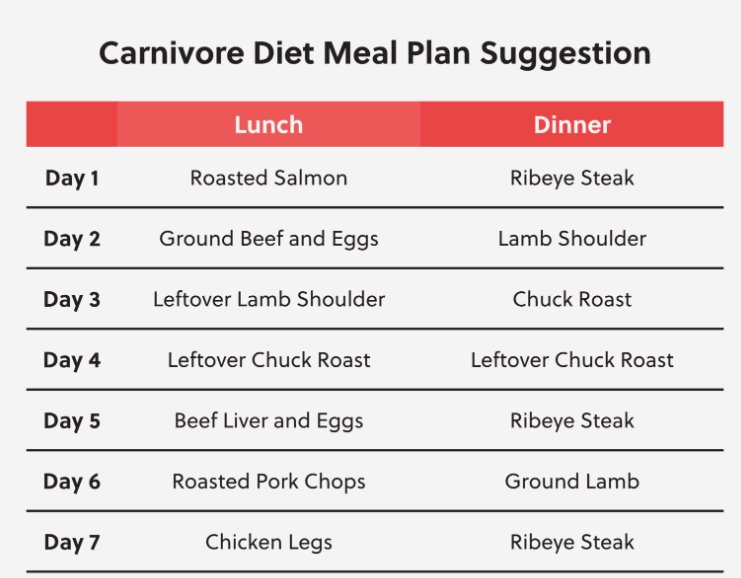
Sample Meal Plan and Recipes
Here is a typical day of eating on the carnivore diet:
- Breakfast: Bacon and eggs
- Lunch: Burger patty topped with cheese
- Dinner: Steak with butter
- Snacks: Hardboiled eggs, pork rinds
- Drinks: Water, tea/coffee (optional)
- Some simple carnivore-friendly recipes include:
- Steak salad with blue cheese dressing
- Zoodle carbonara (zucchini noodles instead of pasta)
- Chicken soup with broth and shredded chicken
- Taco bowls with ground beef, cheese, sour cream
- Butter-seared salmon
- Meatballs with Parmesan
- Chicken wings with buffalo sauce (vinegar-based)
Transitioning On and Off The Carnivore Diet
The carnivore diet represents an extreme shift for most people’s eating habits. Making a sudden and drastic change can be challenging. Here are some tips for transitioning:
Getting Started:
- Gradually reduce carbs over 2–4 weeks leading up to the diet.
- Stock up on meats, fish and allowed foods so you don’t need to shop frequently at first.
- Plan simple meals and snacks to avoid being caught unprepared.
Getting Off It:
- Gradually reintroduce fruits, starchy vegetables, grains etc. Monitor how you feel.
- Limit portions of newly reintroduced foods at first.
- Focus on high fibre plant foods to support gut health.
- Consider a probiotic supplement to replenish gut flora.
The carnivore diet represents a controversial approach with possibly serious drawbacks for long term health. As with any major dietary change, educate yourself on the risks, and work with a healthcare provider if considering this regimen. While some individuals may benefit short term, balance and moderation are likely better strategies for lifelong wellbeing.
In conclusion, the carnivore diet is an extreme eating pattern that eliminates entire food groups and carries significant nutritional risks. Any benefits tend to be short-lived. For sustainable, healthy weight management, a well-balanced diet paired with lifestyle changes and possibly adjunctive medications like semaglutide or tirzepatide peptides, under medical supervision, is the safest approach. As with any diet, it’s wise to consider both the pros and cons. But for most people, moderation, variety and focusing on whole foods are keys to lifelong health.