
Television
Carnival Row Brings the Dark
A smart thriller with a powerful allegorical commentary on racism

Carnival Row is dark. Not only is it a story that contains gruesome murder and suspense, it also provides a biting look at racism and classism from a unique perspective.
Oh, and the screen is literally dark most of the time. One of my pet peeves and the only negative criticism I have on the show as a whole. I suppose it is an artistic approach to suggest mystery and suspense. It probably lends a sinister air to some of the characters and functionally shadows events. Perhaps it is intended. I find it incredibly distracting that I can’t actually see what is going on.
In any case, digression on scene lighting aside, Carnival Row offers some stark insight into racism overtly and takes a little poke at religion in an underscored manner. And, all of that is mostly divested from the plot line, which is a great story in itself.
There aren’t any plot spoilers in this article. However, I will discuss the background world in which it takes place. Much of that can be gleaned from trailers of the show, but if you are one that likes to go into a new show completely naïve to the setting, then probably stop here.
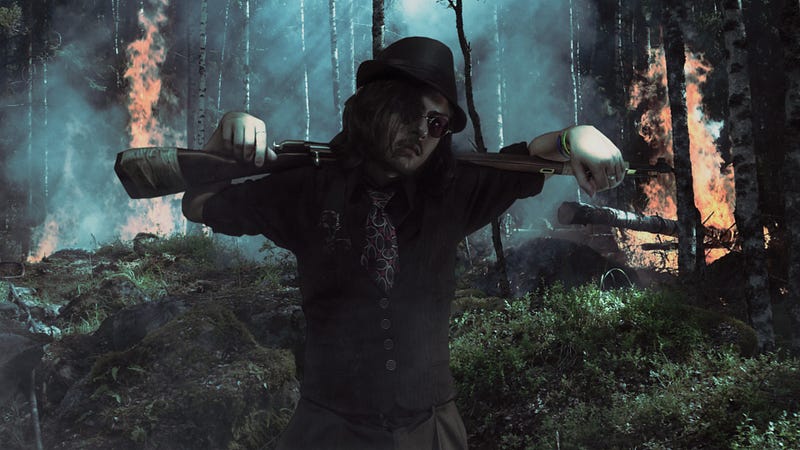
Starring Orlando Bloom and Cara Delevingne as the chief protagonists of the tale, the Amazon Prime original story is set in a sort of Victorian meets fantasy backdrop with hints of steampunk and a lot of rain.
Humans aren’t the only species in this world, there is an array of non-human creatures, most prominent being the Fae (think fairy wings) and Puck (faun-like, with round horns). There are hints of other species seen in background shots such as an ogre-like creature, but they aren’t featured or explained in the story.
As you might suspect, humans have the upper hand in this world, seemingly due to a series of wars. The resultant and current climate being that the three (or more) species inter-exist, but Fae and Puck are often indentured or at least relegated to the lowest of jobs and social status.
As such, with the lower classes being non-human, the show is free to demonstrate a harsh callousness in how they are treated. In this world a “Critch” (slang derived from “creature”) with a police-fired bullet as cause of death is of non-interest to society. Ostensibly they deserved the treatment and no more thought is given.
Likewise, beatings of Critch don’t raise any police (or any human for that matter) eyebrows, nor does the series of murders that begets the plot premise of the first season. After all, they are Critch, perhaps good riddance?

At best, most humans are content to piously disregard the other species as a quasi-tolerated backdrop, much like seeing worms on the sidewalk after a rain.
As the citizenry circumnavigate or stomp on the Critch, depending on preference, the government is principally focused on the class war as well. Tolerate or obliterate seem to be the dilemma with the two political parties divided and willing to go to brutal lengths to achieve their political platform goals.
Meanwhile, for the Critch, who seemingly really have no other place to go, their long-term fate is relegated to subtext as they do what it takes to survive day to day in a hostile world.
Maybe it is because of the state of our current global culture and in particular the awful things going on right now in the United States in terms of race relations, but for me the class and race allegory of Carnival Row is particularly stark and telling.
One particularly ironic comment made by an upstart in one of the scenes shown between the sparring governmental parties was especially sad. She noted how their society had gotten past skin color and achieved racial harmony on the planet; but species integration was an unthinkable concept.
It is evident in this fantasy world that skin color is irrelevant as human, fae, and puck alike all have disparate skin colors. That is an accepted difference amongst the varied species; however, the existence of horns or wings is reason enough for discrimination and hate.
The fact that skin color is a non-issue while horns are reason for disgust speaks rather loudly to how random our biases are. The differences themselves aren’t the problem, our perceptions of differences are.
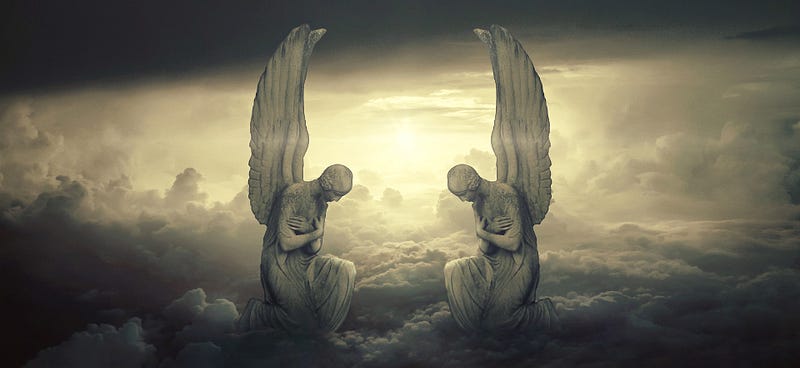
The series also makes an exploratory foray into religion with little attention or explanation offered for the seeming universally accepted belief centered on The Martyr. Rather than a cross as the symbol of the death of the religious icon, apparently the gallows was the end for The Martyr.
In season one there is only occasional reference to religion, but scenes in a religious-centric orphanage where an expected Christ-on-the-cross wall hanging is instead depicted as a figure hanging from a noose, the effect is not only surreal but visceral.
Maybe there is more to come on the religious front in season two of the show, or perhaps it is just one more image that subconsciously ties the show to racial violence and atrocities in our past. Either way, once you see the body hanging from the noose in the sparsely lit background of the orphanage it is hard to disregard.
If you can manage to get past the fact that you can’t see much on the screen for lack of lighting, Carnival Row is a great story and worth your time to watch. The plot has everything you could look for in a series noir. Creepiness, intrigue, gory scenes, interwoven sub plots, deviousness, plotting, war, multiple love interests and cringeworthy violence.
Irrespective of the setting, plot alone is enough to entrance. However, the gloomy fantasy world that looks like an extra-grimy London where it rains every day also provides some very interesting perspective on how grotesquely we treat one another given the slightest of reason to find difference.
As the tag line from the trailer says, “Different is Dangerous”
If you liked this story, you will probably also like:
Timothy Key spent over 26 years in the fire service as a firefighter/paramedic and various fire chief management roles. He firmly believes that bad managers destroy more than companies, and good managers create a passion that is contagious. Compassion, grace and gratitude drive the world; or at least they should. Follow me on Instagram, Facebook, and Twitter, and join the mail list.


