
Carl Jung on Synchronicity
Discovering the Theory of Synchronicity Through Carl Jung’s Philosophy
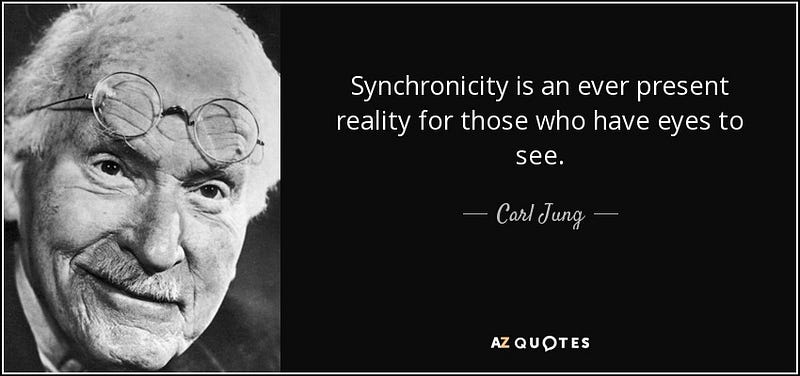
Have you ever had a coincidence that was just too weird to be a coincidence? Carl Jung called these synchronistic events. According to Jung, they’re more than just chance occurrences — they’re meaningful moments that can help us understand the universe and our place in it.
In this article, we’ll explore Jung’s theory of synchronicity and what it means for us. We’ll also look at some famous examples of synchronicity and see how they’ve changed people’s lives. So, buckle up and get ready for an interesting journey into the mind of one of history’s most renowned psychologists!
What Is the Theory of Synchronicity?
The theory of synchronicity was developed by Carl Jung, a Swiss psychologist who pioneered the concepts of analytical psychology. In short, synchronicity is the belief that events are meaningfully related not by cause and effect, but by some other principle.
“We often dream about people from whom we receive a letter by the next post. I have ascertained on several occasions that at the moment when the dream occurred the letter was already lying in the post-office of the addressee.” ― C.G. Jung, Synchronicity: An Acausal Connecting Principle
Jung believed that this principle was at work in cases of coincidence, where two or more events are linked in a way that cannot be explained by chance. He gave the example of a patient who dreamt about a scarab beetle, only to find one on his desk the next day.
to find one on his desk the next day. While the theory of synchronicity is still up for debate, Jung’s philosophy on it is an interesting perspective on coincidence and chance.
Carl Jung’s Philosophy on the Meaning Behind Synchronicity
You’re probably familiar with the term “synchronicity” even if you don’t know its precise definition. The term was coined by Swiss psychologist Carl Jung and refers to the simultaneous occurrence of two events that are not causally related.
“We put thirty spokes together and call it a wheel; But it is on the space where there is nothing that the utility of the wheel depends. We turn clay to make a vessel; But it is on the space where there is nothing that the utility of the vessel depends. We pierce doors and windows to make a house; And it is on these spaces where there is nothing that the utility of the house depends. Therefore just as we take advantage of what is, we should recognize the utility of what is not. [Ch. XL]” ― C.G. Jung, Synchronicity: An Acausal Connecting Principle
For Jung, synchronicity was a sign that there was more going on in the world than what we could see with our eyes. He believed that synchronicity was a way for the universe to communicate with us, and that it held important clues about our lives and our destiny.
Jung’s philosophy on synchronicity is one of the most complex and fascinating topics in psychology. If you’re interested in learning more, I recommend reading one of his many books on the subject.
Examples of Synchronicity in Everyday Life
Synchronicity is all around us, but we often don’t realize it.
It can be as simple as hearing a song on the radio that you haven’t heard in a long time, or as strange as experiencing déjà vu. These coincidences are usually just happy accidents, but they can also be signposts from the universe, nudging us in the right direction.
“Because the eye gazes but can catch no glimpse of it, It is called elusive. Because the ear listens but cannot hear it, It is called the rarefied. Because the hand feels for it but cannot find it, It is called the infinitesimal. … These are called the shapeless shapes, Forms without form, Vague semblances. Go towards them, and you can see no front; Go after them, and you see no rear.” ― C.G. Jung, Synchronicity: An Acausal Connecting Principle
Don’t underestimate the power of synchronicity. When you’re open to the concept, you’ll start seeing it everywhere. Just be patient and stay alert, and the universe will start sending you some pretty amazing clues.
The Connection Between Synchronicity and Karma
When it comes to exploring the relationship between synchronicity and karma, Carl Jung’s philosophy will provide you with great insight. In Jung’s eyes, the apparent meaningfulness of life is a result of synchronicity. He also believed that these meaningful coincidences do not exist by accident but are a reflection of our own personal journey in life.
“This experience punctured the desired hole in her rationalism and broke the ice of her intellectual resistance.” ― C.G. Jung, Synchronicity: An Acausal Connecting Principle
He believed that synchronistic events were a way of reinforcing an individual’s path — further validating the “law of karma” or the idea that all events are connected and that one action can have a ripple effect throughout all aspects of life.
So when something amazing or noteworthy happens seemingly out of the blue, it could be a sign that you’re right on track to finding your true purpose in life.
An Investigation Into Coincidence and Cause and Effect
What distinguishes coincidence from causation and effect? This is something you’ll explore further when studying Carl Jung’s philosophy on synchronicity. He believed that meaningful coincidences were actually unexplainable by cause and effect but instead had a spiritual or deeper meaning.
“Naturally, every age thinks that all ages before it were prejudiced, and today we think this more than ever and are just as wrong as all previous ages that thought so. How often have we not seen the truth condemned! It is sad but unfortunately true that man learns nothing from history.” ― Carl Jung, Synchronicity: An Acausal Connecting Principle
So, how could this be? Jung’s theory suggested that our connection to the collective unconscious could be the explanation. He argued that when two events happen at the same time, it could be because of a psychic connection between them and our experience of perceiving it as meaningful is due to a form of “intersubjectivity” — meaning we share the same understanding of what has happened and interpret it in a similar way.
Using these ideas, Jung concluded that these kinds of coincidences weren’t random — they were actually signs from the unconscious self that held special meaning for us. In other words, our subconscious was trying to communicate with us through this unexpected form of synchronicity — an amazing thing to ponder!
Interpreting Meaningful Coincidences in Dreams and Unconsciousness
Carl Jung’s philosophy on interpreting meaningful coincidences in dreams and unconsciousness proposes that it is possible to uncover a greater meaning to seemingly random events.
He suggested that these events are more than mere coincidences and can be seen as messages from the unconscious. He believed that this could provide a gateway to understanding the inner workings of the psyche, allowing us to make important decisions or gain insight into our lives.
He also suggested that meaningful coincidences in dreams and unconsciousness could offer a way of understanding the collective unconscious, which is the shared experience of all human beings.
Jung’s philosophy on interpreting meaningful coincidences in dreams and unconsciousness, therefore, provides a valuable tool for psychological exploration and self-reflection.
Applying the Theory of Synchronicity to Life Decisions
Carl Jung’s theory of synchronicity offers a powerful tool for understanding life decisions. He proposed that meaningful coincidences in our lives can act as signposts, guiding us to make decisions that are in line with our true selves.
His theory suggests that we can use these coincidences to gain insight into the collective unconscious and our place in the world. He argued that when we pay attention to the meaningful coincidences that occur in our lives, we can use these signs to make decisions that are in alignment with our innermost desires.
By applying the theory of synchronicity to life decisions, we can gain a deeper understanding of ourselves and our true purpose. Jung’s theory of synchronicity therefore provides a valuable tool for psychological exploration and self-reflection.
Analyzing Dreams for Hidden Meanings of Synchronicity
According to Carl Jung’s philosophy, analyzing dreams for hidden meanings of synchronicity can be a powerful tool for understanding and making life decisions.
He argued that dreams often contain meaningful patterns and symbols that can provide insight into our true selves, our relationship with the collective unconscious, and our place in the world. B
y paying close attention to the symbols and patterns that appear in our dreams, we can gain deeper insight into our innermost thoughts and feelings and make decisions that are in alignment with our true desires.
Jung believed that understanding our dreams and the symbolism they contain is an important step in understanding ourselves and the world around us. Therefore, analyzing dreams for hidden meanings of synchronicity can be a powerful tool for self-reflection and personal growth.
How Synchronicity Can Affect Your Life
Carl Jung’s philosophy on how synchronicity can affect your life is a powerful tool for understanding and navigating life’s many complexities.
According to Jung, synchronicity is a meaningful coincidence or set of coincidences that can provide us with insight into our lives, our connections with the universe, and our essential purpose in life.
By paying attention to the patterns that appear in our lives, we can gain a deeper understanding of our true selves and make decisions that are in alignment with our true desires.
By recognizing the significance of synchronicity, we can gain a greater sense of control over our lives and open ourselves up to new possibilities. Therefore, understanding and embracing synchronicity can be a powerful tool for personal growth and transformation.
Exploring the Significance of Synchronicity in Our Culture
Carl Jung’s philosophy on exploring the significance of synchronicity in our culture is an important part of understanding our relationship with the universe. Synchronicity, as defined by Jung, is a meaningful coincidence or set of coincidences that can provide us with insight into our lives and our essential purpose in life.
By exploring the ways in which synchronicity manifests in our culture, we can gain a deeper understanding of our collective identity and how it connects with the wider universe.
By recognizing the patterns of synchronicity that appear in our lives, we can gain insight into our collective experiences and make decisions that are in alignment with our true desires. Thus, exploring the significance of synchronicity in our culture can be a powerful tool for personal and collective growth and transformation.
Conclusion
Even though the concept of synchronicity is still considered new, it has the potential to change the way we view the universe. It’s an interesting idea to think about, and one that can help us understand the world in a different way.
I appreciate your time spent reading my article. do not forget to comment, follow, clap, and highlight. Drop your thoughts, Let’s support authentic thoughts!
✔️ Please subscribe here to receive latest insightful stories by email


