avatarJeremy Roberts

Free AI web copilot to create summaries, insights and extended knowledge, download it at here

8164

Abstract

ion Tour in 2012. An up and coming band would be well served by covering it.</p><p id="39f2">“Hold On, Dear Brother” serves as the final Chaplin/Fataar composition, possibly a plea for Brian’s well-being. Featuring Chaplin’s soul-influenced vocal, it is yet another experimental sojourn, albeit this time with country rock overtones. Ace session cat and Michael Nesmith band mate Red Rhodes supplies the gorgeous pedal steel guitar. So far, prominent rock guitar solos have actually dominated the album, a rarity for much of the band’s discography.</p><figure id="d2c4"><img src="https://cdn-images-1.readmedium.com/v2/resize:fit:800/1*2GR072_e8sjNoVHeYUwdkw.jpeg"><figcaption><b><i>Oh darlin’: Carl Wilson cuts a handsome profile in his prized Nudie suit during a Beach Boys concert at Pacific Lutheran University on March 19, 1974. Image Credit: The Pacific Lutheran University Archives / Courtesy of Jon Stebbins</i></b></figcaption></figure><p id="6f71">The cosmically conscious, Hindu-inspired “All This Is That” has a mesmerizing quality anchored by massive keyboard layers, bass, and the group’s ethereal vocal chants. Carl never sounded as angelic as when his voice reaches near soprano range on the fade… “Jai guru dev, jai…” Jardine brought the song out of the proverbial mothballs at many shows for the band’s 50th anniversary, and it never failed to bring the house down.</p><p id="afe6">Continuing a trend of placing all slow songs towards the end, the remainder of side two gives way to grandiose ballads spearheaded by Dennis, co-written with Daryl Dragon of future ’70s pop hit makers Captain & Tenille. In modern times, the constantly on the move syndrome affecting many listeners may hamper their ability to digest “Make It Good” and “Cuddle Up” sufficiently. A string section accentuates the devastatingly aching mood, particularly on the latter.</p><p id="34b2">“Cuddle Up” is perfect for a wedding ceremony…“I know a man who’s so in love…the night has come, cuddle up to me, keep warm, close to me…” The drummer sings his heart out, frustratingly only a scant few years before cigarettes, alcohol and hard living took their toll on his once fragile voice. Perhaps one day Dennis’ piano demo, if it still exists in the Brother vaults, can be heard. Toni Tenille can be heard on backing vocals.</p><p id="f79f">Noted Beach Boys historian and <a href="http://esquarterly.com/bellagio/index.html">archivist Andrew G. Doe</a> concurred in an exclusive interview. “When I heard Dennis’s two contributions on <i>So Tough</i>, I suddenly realized his immense talent,” said Doe. “His <i>Sunflowe</i>r material was excellent, but so was so much else on that album whereas on <i>So Tough</i>, his two songs just stood out in stark relief. Definite precursors to <i>Pacific Ocean Blue</i>, Dennis’ debut solo masterpiece. In turn, they made me go back to re-evaluate his contributions from <i>Friends</i> [1968] on up.”</p><p id="753c">Once their eighteenth studio long player was mixed and mastered in April, an album cover and title were chosen. Jon Stebbins, author of <a href="http://www.amazon.com/Beach-Boys-Concert-Complete-Americas/dp/1617134562/ref=sr_1_1?s=books&amp;ie=UTF8&amp;qid=1387607815&amp;sr=1-1&amp;keywords=beach+boys+in+concert"><i>The Beach Boys in Concert: The Complete History of America’s Band…</i></a> and definitive biographies on both <a href="https://www.amazon.com/Dennis-Wilson-Real-Beach-Boy/dp/1550224042/ref=sr_1_1?ie=UTF8&amp;qid=1480693708&amp;sr=8-1&amp;keywords=dennis+wilson+jon+stebbins">Dennis</a> and early Beach Boy <a href="https://www.amazon.com/Lost-Beach-Boy-founding-members/dp/1852273917/ref=sr_1_1?ie=UTF8&amp;qid=1480693683&amp;sr=8-1&amp;keywords=david+marks+jon+stebbins">David Marks</a>, offers insight. “I’ve always thought <i>So Tough</i> is just a riff on a typical 1950s doo-wop or R&B group name and title,” posits Stebbins. “It’s a pre-cursor to the 50’s nostalgia wave that was already brewing and would be mainstream in a couple of years — especially in tandem with the cover art which is very retro. The sounds on the LP had nothing to do with nostalgia, but the name and artwork did.”</p><p id="0e76">Containing only eight songs and no mention of the band’s name on the cover, Carl, Dennis and Rieley hoped their ploy would reinvent the band and gain some radio play. While reinvention did occur, albeit briefly, commercial aspirations were scuttled when the solid, forward thinking album was unbelievably paired with <i>Pet Sounds</i> upon its belated arrival in stores in May 1972, a marketing scheme dreamed up by a Warner Bros. / Reprise executive in order to boost sales. The gesture was a head-scratching moment for most buyers and critics, as the seminal <i>Pet Sounds</i> had absolutely nothing in common with the new record except for the band’s name.</p><p id="e118"><i>So Tough</i> was doomed from the start, stalling at No. 50 on the <i>Billboard</i> Pop Albums chart. In the UK, the public still appreciated the band’s musical output, and it reached No. 25 there. Re-released at the dawn of the new millennium as a combined two-fer with their better-selling, excellent follow-up, <i>Holland</i>, and containing liner notes penned by none other than unabashed fan Elton John, over time the album has grown in stature. It easily ranks among the Beach Boys’ Top 12 best records, along with most any gleaned from their glorious 1965–1973 period.</p><p id="e66b">If you wanna hear tunes about surfing, hot rods, school spirit and fun in the sun, you will be sorely disappointed with <i>So Tough. </i>The songs are enjoyable because the boys were stretching their musical boundaries and revamping their signature sound. This unfortunately didn’t happen very often after <i>Holland</i>, not coincidentally the last studio project with Chaplin and Fataar in the line-up. Sure, there is an admitted lack of sonic cohesion, but the album’s ramshackle nature works in its favor. <i>Carl and the Passions — So Tough</i> is especially perfect for rock connoisseurs or first-time listeners of the Beach Boys’ catalogue. Give it a spin, why don’t you?</p><figure id="c636"><img src="https://cdn-images-1.readmedium.com/v2/resize:fit:800/1*AyOvLLJLSxV6ttCTvRqWdQ.jpeg"><figcaption><b>Transcendental meditation, anyone? The TM subscribers in the Beach Boys, i.e. frontman Mike Love and rhythm guitarist Al Jardine [far right], convince blissed-out South African drummer Ricky Fataar [far left], founding drummer-pianist Dennis Wilson, and lead guitarist Carl Wilson [center] to try the technique on July 28, 1974, the day they played a show at the Jeppesen Stadium in Houston, Texas, about five weeks before Fataar exited the band for a stint supporting Eagle Joe Walsh. Photography by Ed Roach / Roach Clips / <i>The Smiley Smile Message Board</i></b></figcaption></figure><figure id="6eff"><img src="https://cdn-images-1.readmedium.com/v2/resize:fit:800/1*Ve-nHuNu99Cc9buBfrqJ-Q.jpeg"><figcaption><b>The Beach Boys, not your parents’ square band anymore, circa May 1972. Left to right are Carl Wilson, Al Jardine, Ricky Fataar, Dennis Wilson, Blondie Chaplin, and a poncho-clad, hatless Mike Love. Image Credit: RB / Getty Images / Pinterest</b></figcaption></figure><figure id="d81d"><img src="https://cdn-images-1.readmedium.com/v2/resize:fit:800/1*O3wIUNRWetxsn3TsoL_12Q.jpeg"><figcaption><b>Taking a nod from the album sleeve of “Carl and the Passions — So Tough” is the German single cover of the Beach Boys’ “You Need a Mess of Help to Stand Alone” b/w Dennis Wilson’s “Cuddle Up”, released on May 15, 1972. The rocker criminally had no impact with the record buying public. Image Credit: <i>Brother Records / Warner Music Group / </i>45Cat user “Serooskerke 2011”</b></figcaption></figure><figure id="8f45"><img src="https://cdn-images-1.readmedium.com/v2/resize:fit:800/1*CPDxtLIsqem4BaImcpkSAA.jpeg"><figcaption><b>The ghostly French single cover of the Beach Boys’ “You Need a Mess of Help to Stand Alone” b/w Dennis Wilson’s “Cuddle Up”, released on May 15, 1972. Image Credit: <i>Brother Records / Warner Music Group / </i>45Cat user “Rocky Gonzales”</b></figcaption></fig

Options

ure><figure id="ff5e"><img src="https://cdn-images-1.readmedium.com/v2/resize:fit:800/1*IifluVvNum6hkdzuLrXJ6w.jpeg"><figcaption><b>The original cover of the Beach Boys’ 18th long player, “Carl and the Passions — So Tough,” released by Brother Records on May 15, 1972. The LP was a moderate hit, charting at No. 50 on Billboard. Later editions had the band’s name embossed in block letters. Image Credit: <i>Brother Records / Warner Music Group</i></b></figcaption></figure><figure id="b5e3"><img src="https://cdn-images-1.readmedium.com/v2/resize:fit:800/1*K0ALUepRqdHLFz0v5FY0UQ.jpeg"><figcaption><b>Circa June 1972, the Beach Boys appear for a Fender Guitar advertisement during the recording of the “Holland” album in Braamberg, Holland. Drummer Ricky Fataar convincingly switches over to pedal steel guitar. Also pictured is Blondie Chaplin, Al Jardine, Mike Love, and Carl Wilson. Image Credit: <i>Fender Guitars / The Smiley Smile Message Board</i></b></figcaption></figure><figure id="5dca"><img src="https://cdn-images-1.readmedium.com/v2/resize:fit:800/1*3oYbld3JlNI1qI9-YUcz-Q.jpeg"><figcaption><b>Founding Beach Boy Al Jardine, resplendent in a shaggy beard and sporting his awesome Gibson Black Beauty guitar, tackles “Heroes and Villains” onstage circa 1972. Image Credit: <i>The Smiley Smile Message Board</i></b></figcaption></figure> <figure id="4b0c"> <div> <div> <img class="ratio" src="http://placehold.it/16x9"> <iframe class="" src="https://cdn.embedly.com/widgets/media.html?src=https%3A%2F%2Fwww.youtube.com%2Fembed%2F_5BmZrW5Qns%3Ffeature%3Doembed&amp;display_name=YouTube&amp;url=https%3A%2F%2Fwww.youtube.com%2Fwatch%3Fv%3D_5BmZrW5Qns&amp;image=https%3A%2F%2Fi.ytimg.com%2Fvi%2F_5BmZrW5Qns%2Fhqdefault.jpg&amp;key=a19fcc184b9711e1b4764040d3dc5c07&amp;type=text%2Fhtml&amp;schema=youtube" allowfullscreen="" frameborder="0" height="480" width="640"> </div> </div> </figure></iframe></div></div></figure> <figure id="3bfc"> <div> <div> <img class="ratio" src="http://placehold.it/16x9"> <iframe class="" src="https://cdn.embedly.com/widgets/media.html?src=https%3A%2F%2Fwww.youtube.com%2Fembed%2FBSMg0Kpt7SQ%3Ffeature%3Doembed&amp;display_name=YouTube&amp;url=https%3A%2F%2Fwww.youtube.com%2Fwatch%3Fv%3DBSMg0Kpt7SQ&amp;image=https%3A%2F%2Fi.ytimg.com%2Fvi%2FBSMg0Kpt7SQ%2Fhqdefault.jpg&amp;key=a19fcc184b9711e1b4764040d3dc5c07&amp;type=text%2Fhtml&amp;schema=youtube" allowfullscreen="" frameborder="0" height="480" width="640"> </div> </div> </figure></iframe></div></div></figure> <figure id="841c"> <div> <div> <img class="ratio" src="http://placehold.it/16x9"> <iframe class="" src="https://cdn.embedly.com/widgets/media.html?src=https%3A%2F%2Fwww.youtube.com%2Fembed%2FB3Xbg7v3Fwg&amp;display_name=YouTube&amp;url=https%3A%2F%2Fwww.youtube.com%2Fwatch%3Fv%3DB3Xbg7v3Fwg&amp;image=http%3A%2F%2Fi.ytimg.com%2Fvi%2FB3Xbg7v3Fwg%2Fhqdefault.jpg&amp;key=a19fcc184b9711e1b4764040d3dc5c07&amp;type=text%2Fhtml&amp;schema=youtube" allowfullscreen="" frameborder="0" height="480" width="854"> </div> </div> </figure></iframe></div></div></figure><div id="670a" class="link-block"> <a href="https://readmedium.com/like-heat-from-a-blast-furnace-the-sheer-raw-force-of-beach-boy-dennis-wilson-8f441e09cad"> <div> <div> <h2>Like heat from a blast furnace — The sheer raw force of Beach Boy Dennis Wilson</h2> <div><h3>It is tough to reconcile Dennis Wilson no longer being among the living. The heart and soul of the Beach Boys emerged…</h3></div> <div><p>medium.com</p></div> </div> <div> <div style="background-image: url(https://miro.readmedium.com/v2/resize:fit:320/1*PDCejrRr4R45u92cqYH2AA.jpeg)"></div> </div> </div> </a> </div><div id="d8ba" class="link-block"> <a href="https://jeremylr.medium.com/cult-horror-movie-director-steve-latshaw-summons-his-beach-boys-fascination-4062bb6f1fe9"> <div> <div> <h2>Cult horror movie director Steve Latshaw summons his Beach Boys fandom</h2> <div><h3>15 Big Ones, comebacks, drummer Dennis Wilson, guitarist Carl Wilson and more onstage shenanigans with the Return of…</h3></div> <div><p>jeremylr.medium.com</p></div> </div> <div> <div style="background-image: url(https://miro.readmedium.com/v2/resize:fit:320/1*3CN3ajxHxjtTlohUpNSzyA.png)"></div> </div> </div> </a> </div><div id="9f3e" class="link-block"> <a href="https://readmedium.com/surfs-up-on-al-jardine-s-bombshell-smile-revelation-27f9d3a24a64"> <div> <div> <h2>Surf’s up on Al Jardine’s bombshell ‘SMiLE’ revelation</h2> <div><h3>Read Beach Boy Al Jardine’s bombshell “SMiLE” announcement plus a revealing history of arguably the greatest lost…</h3></div> <div><p>medium.com</p></div> </div> <div> <div style="background-image: url(https://miro.readmedium.com/v2/resize:fit:320/1*-exI_8Kdw6mqKLqTynUKXQ.png)"></div> </div> </div> </a> </div><div id="1870" class="link-block"> <a href="https://readmedium.com/persistence-pays-off-beach-boy-al-jardine-spills-the-beans-on-a-postcard-from-california-and-62cc15b9f8e6"> <div> <div> <h2>Persistence pays off: Beach Boy Al Jardine spills the beans on ‘A Postcard from California’ and…</h2> <div><h3>Founding Beach Boy Al Jardine delves into debut solo album A Postcard from California, tracking vocals at Big Sur with…</h3></div> <div><p>medium.com</p></div> </div> <div> <div style="background-image: url(https://miro.readmedium.com/v2/resize:fit:320/1*kZpATfQ-RpST7n9-2EQpFw.jpeg)"></div> </div> </div> </a> </div><div id="7a1f" class="link-block"> <a href="https://readmedium.com/i-can-hear-music-the-beach-boys-lowdown-with-passionate-wordsmith-mike-eder-bf45990e37fb"> <div> <div> <h2>I can hear music: The Beach Boys lowdown with passionate wordsmith Mike Eder</h2> <div><h3>Learn all about Brian Wilson and “SMiLE’s” demise, Mike Love’s ego, emotion-wallowing drummer Dennis Wilson and the…</h3></div> <div><p>medium.com</p></div> </div> <div> <div style="background-image: url(https://miro.readmedium.com/v2/resize:fit:320/1*FqbFlC06kaY2lrxb1dzAoA.jpeg)"></div> </div> </div> </a> </div><div id="ffb0" class="link-block"> <a href="https://jeremylr.medium.com/jimmie-honeycomb-rodgers-sloop-john-b-and-the-beach-boys-f225e0b84553"> <div> <div> <h2>Jimmie ‘Honeycomb’ Rodgers, ‘Sloop John B,’ and the Beach Boys</h2> <div><h3>The late ’50s folk rock pioneer amassed 14 Top 40 pop hits, was covered by Elvis and cut “The Wreck of the John B”…</h3></div> <div><p>jeremylr.medium.com</p></div> </div> <div> <div style="background-image: url(https://miro.readmedium.com/v2/resize:fit:320/1*WkEzOH7O1sgSypUcCTpIyg.jpeg)"></div> </div> </div> </a> </div><p id="3b8c"><i>© Jeremy Roberts, 2013, 2016. All rights reserved. To touch base, email <a href="mailto:[email protected]"></a></i><a href="mailto:[email protected]">[email protected]<i></i></a><i> and mention which story led you my way. I appreciate it sincerely.</i></p></article></body>

The Beach Boys’ misunderstood 1972 rock opus, ‘Carl and the Passions — So Tough’
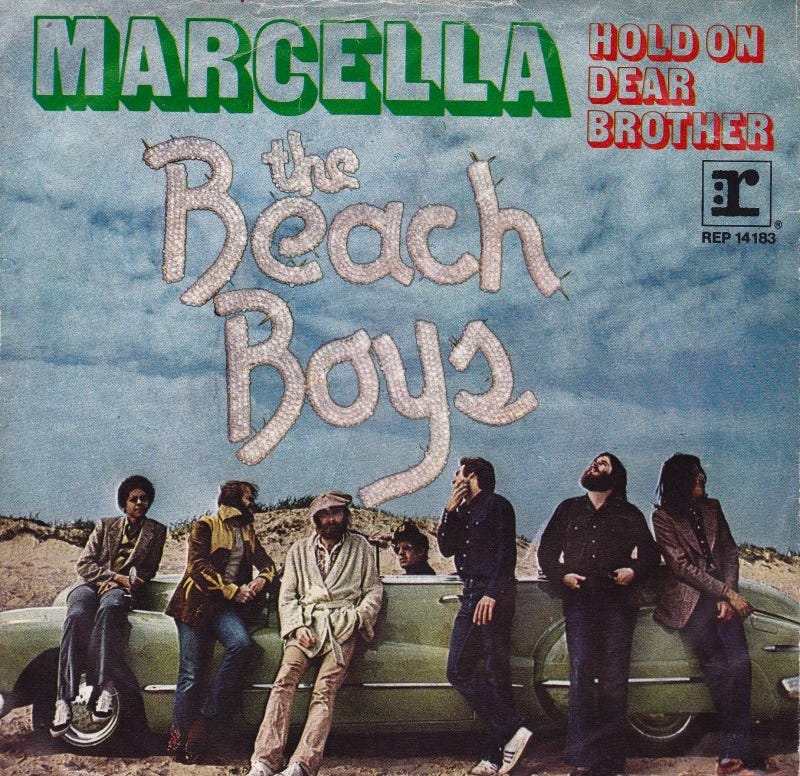
Learn how the Beach Boys soundly dropped their square fun in the sun moniker on 1972’s vastly underrated, rock ’n’ roll-driven “Carl and the Passions — So Tough.” The accompanying vintage still presents “Marcella” b/w “Hold On Dear Brother,” the only Beach Boys single sleeve to feature a photo of Blondie Chaplin and Ricky Fataar. Unleashed on June 26, 1972, the rockin’ track inexplicably failed to chart. Note keyboard sideman Daryl Dragon of future Captain and Tenille fame behind the driver’s wheel. Image Credit: Brother Records / Warner Music Group / 45Cat user “Dr. Doom”

“I need a breeze blowing softly, to keep my wind vane from standing, I need a whole lot of sunshine, to keep my sundial advancing.” And so goes the opening stanza of the Beach Boys’ “You Need a Mess of Help to Stand Alone,” the rocking lead track on the vastly underrated Carl and the Passions — So Tough. No two ways about it, this was not your parents’ square fun in the sun band anymore.

The Beach Boys were at a crossroads in the early ’70s. Brian Wilson, the resident genius, leader, composer, producer, vocalist, and multi-instrumentalist for the group, was falling victim to his long battle with mental illness and inexplicably losing interest in the band’s future. A penchant for over-eating, drug use, non-exercise, and constant sleeping only exacerbated the situation. However, contrary to many oft-told “official” accounts, Brian wasn’t entirely out of the game yet, as he wrote, arranged, and performed multiple instruments on three of the best songs destined for So Tough.

Younger brother Carl had propitiously been demonstrating his burgeoning production skills since the soulful Wild Honey arrived with minimal fanfare five years earlier. Gradually taking over the leadership reins from Brian, the production credit on each album still democratically stated, “Produced by the Beach Boys.” Fittingly, Carl is the only Beach Boy present on every song featured on So Tough.

Since the Smile debacle and their no-show at the legendary Monterey Pop Festival during the Summer of Love, the Beach Boys’ commercial success was dwindling. “I Can Hear Music,” a jubilant Phil Spector homage, had been their last single to reach the Top 30 in February 1969. Their album sales were not much better in America, although the previous album, the critically acclaimed Surf’s Up, demonstrated promise with a surprise placement in the Top 30.

The controversial Jack Rieley, who slyly altered his résumé and convinced Carl to appoint him as the group’s latest manager after the failure of Sunflower in late 1970, had a game plan to revert his client’s decline. He advocated composing more socially conscious songs, longer concert set lists, and the addition of two talented South African musicians, guitarist Blondie Chaplin and drummer Ricky Fataar, to beef up the official band line-up.

Carl had actually discovered Chaplin and Fataar performing as members of the Flames late one night in a seedy London nightclub. Wanting to experiment sonically and confound audiences’ expectations, Carl, and especially middle brother Dennis, met Rieley’s suggestion with much enthusiasm. Low and behold, the manager’s plan eventually proved successful, and the counterculture embraced the significant overhaul, especially at sold-out live shows across America.

Named for a formative rock ’n’ roll band featuring a teenaged Carl, recording sessions for So Tough commenced in December 1971 and continued intermittently into April exacerbated by a heavy touring schedule.

Bruce Johnston, who replaced Brian on the road in 1965 and gradually proved his vocal dexterity in the studio, apparently got into a heated disagreement with Rieley. While the issue remains murky decades later, Johnston resigned from the band suddenly. Incidentally, his only appearance on the album consists of bass and backing vocals on “Marcella.”

Minus Johnston, the presence of Chaplin and Fataar permeated the sessions mightily, since both played multiple instruments, wrote songs, and sang lead vocals. Fataar’s drumming expertise actually saved the day.

Mere days before the premiere of his sole acting role as “The Mechanic” in the esteemed road movie Two-Lane Blacktop, Dennis drunkenly put his right hand through a pane of glass at his Los Angeles home, severing crucial nerves in his hand and wrist. Unable to play drums for several years, the musician cultivated his songwriting and keyboard skills.
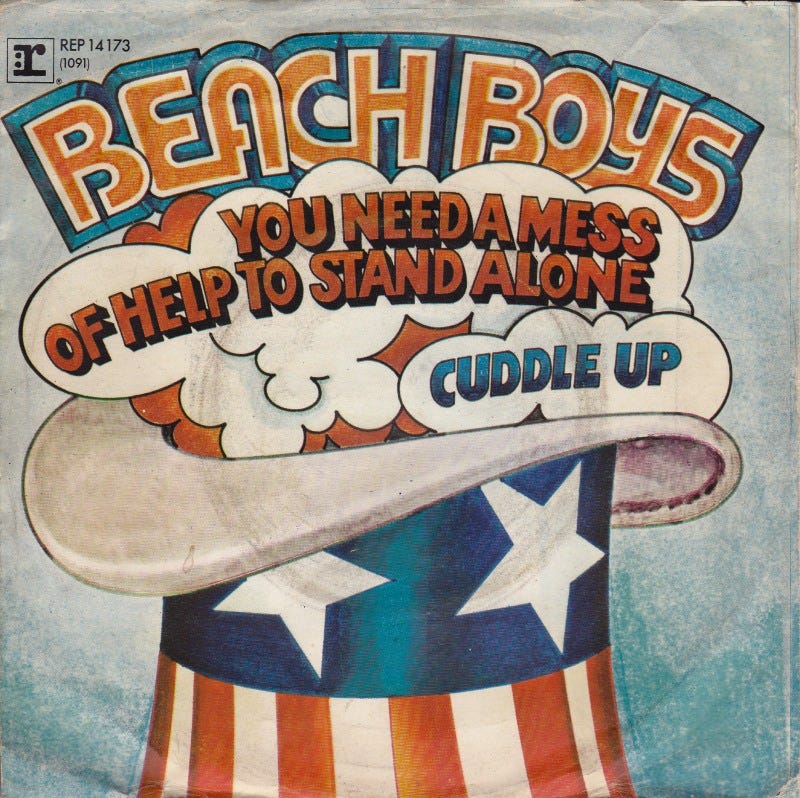
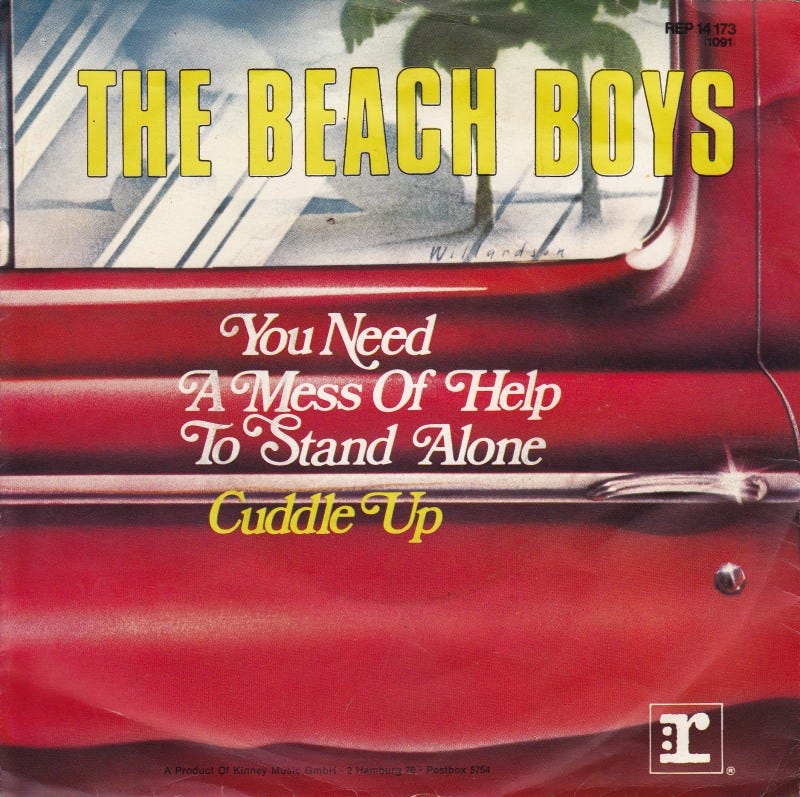
The Beach Boys explore hard rock territory with the blazing “You Need a Mess of Help to Stand Alone” b/w Dennis Wilson’s majestic “Cuddle Up.” Co-written by Brian Wilson, the A-side was released on May 15, 1972 at a time when the group’s commercial appeal was sliding. Neither side saw any chart action although their stature has grown exponentially among fans in modern times. This is a reproduction of the German single 45 cover. Image Credit: Brother Records / Warner Music Group / 45Cat user “Serooskerke 2011”

In listening to the album 50 years later, “You Need a Mess of Help to Stand Alone,” written by Rieley and Brian, is one of the best opening cuts on a Beach Boys album, period. Completely out of left field, a lot of folks back in the day probably didn’t think the boys were capable of such a rocking, powerful song. And it has Carl’s high octane vocal delivery, Brian on harmony, banjo courtesy of Dillards axeman Doug Dillard, and pedal steel breaks, too. Released as the album’s first single, the song died quickly. It certainly is worthy of more attention.

“Here She Comes,” the first of two Chaplin/Fataar co-writes, is more groove-based and sounds nothing like the rest of the Beach Boys’ canon. Not necessarily a bad thing, depending on one’s expectations. It alienates fans to this day, particularly longtime ones. Oddly, the drums are mixed way up front — perhaps Carl let Fataar adjust the mixing console — sometimes overpowering the lyrics. But a fine guitar solo courtesy of Chaplin is icing on the cake.

Original fans probably took the needle off the record in exasperation by the time “He Come Down” arrived. The closest to a gospel number ever laid down by the group, it serves as Mike Love’s Hare Krishna showcase, although he trades verses with Carl, Al Jardine, and Chaplin. For various reasons, Love’s role remained unusually minimal during the sessions. Jardine also curtailed his musical duties, playing no guitar or bass anywhere.

The finger-snapping, wordless breakdown by Carl and Jardine’s “down down down” interlude are memorable, although the clunky lyrics leave much to be desired. Brian co-wrote, arranged the vocals, and kicks the tune into high gear on piano and organ, aided by Billy Hinsche on additional organ.

“Marcella” should have been a comeback single for the band, but once again, received no chart action. Another Brian/Rieley co-write with early participation from reclusive lyricist Tandyn Almer, the chugging pop rock ode to Brian’s former masseuse has a wonderful guitar solo by Carl and a mid-section breakdown sung by Love: “One arm over my shoulder, sandals dance at my feet, eyes that’ll knock you right over, ooh Marcella’s so sweet”, recalling his similar, crucial contribution to the iconic “Good Vibrations.” It was revived after decades of inactivity during the band’s lucrative 50th Anniversary Reunion Tour in 2012. An up and coming band would be well served by covering it.

“Hold On, Dear Brother” serves as the final Chaplin/Fataar composition, possibly a plea for Brian’s well-being. Featuring Chaplin’s soul-influenced vocal, it is yet another experimental sojourn, albeit this time with country rock overtones. Ace session cat and Michael Nesmith band mate Red Rhodes supplies the gorgeous pedal steel guitar. So far, prominent rock guitar solos have actually dominated the album, a rarity for much of the band’s discography.
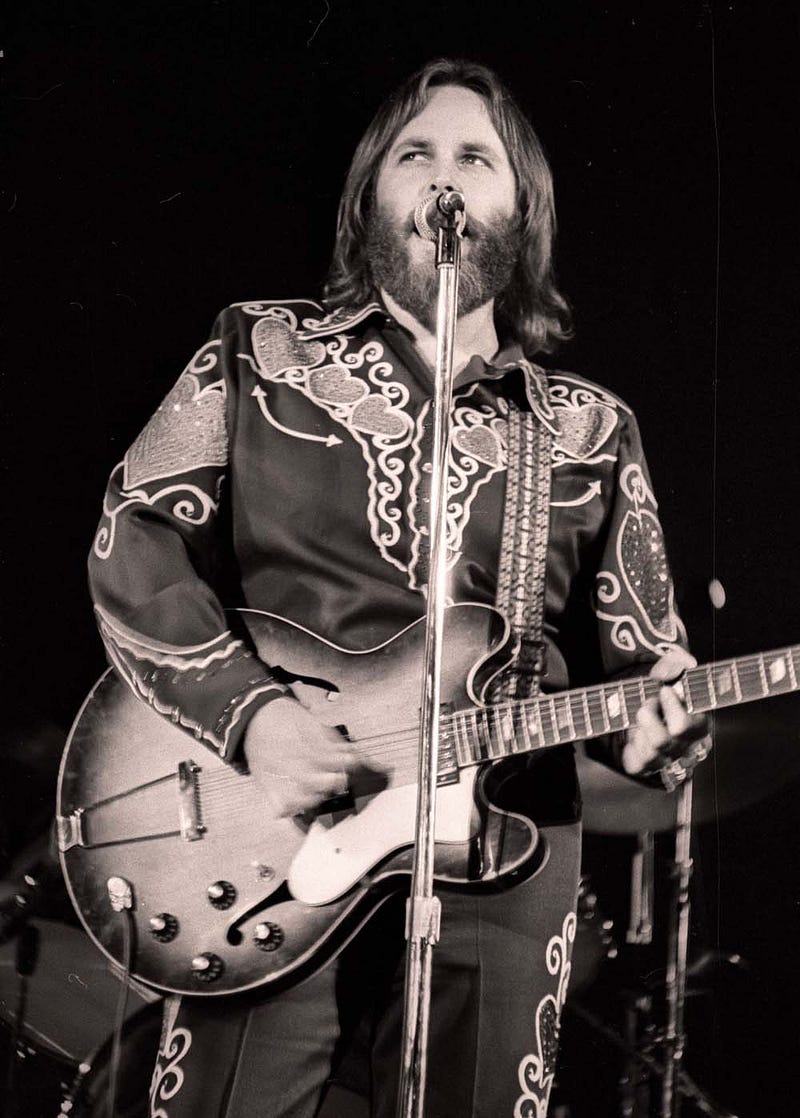
Oh darlin’: Carl Wilson cuts a handsome profile in his prized Nudie suit during a Beach Boys concert at Pacific Lutheran University on March 19, 1974. Image Credit: The Pacific Lutheran University Archives / Courtesy of Jon Stebbins

The cosmically conscious, Hindu-inspired “All This Is That” has a mesmerizing quality anchored by massive keyboard layers, bass, and the group’s ethereal vocal chants. Carl never sounded as angelic as when his voice reaches near soprano range on the fade… “Jai guru dev, jai…” Jardine brought the song out of the proverbial mothballs at many shows for the band’s 50th anniversary, and it never failed to bring the house down.

Continuing a trend of placing all slow songs towards the end, the remainder of side two gives way to grandiose ballads spearheaded by Dennis, co-written with Daryl Dragon of future ’70s pop hit makers Captain & Tenille. In modern times, the constantly on the move syndrome affecting many listeners may hamper their ability to digest “Make It Good” and “Cuddle Up” sufficiently. A string section accentuates the devastatingly aching mood, particularly on the latter.

“Cuddle Up” is perfect for a wedding ceremony…“I know a man who’s so in love…the night has come, cuddle up to me, keep warm, close to me…” The drummer sings his heart out, frustratingly only a scant few years before cigarettes, alcohol and hard living took their toll on his once fragile voice. Perhaps one day Dennis’ piano demo, if it still exists in the Brother vaults, can be heard. Toni Tenille can be heard on backing vocals.

Noted Beach Boys historian and archivist Andrew G. Doe concurred in an exclusive interview. “When I heard Dennis’s two contributions on So Tough, I suddenly realized his immense talent,” said Doe. “His Sunflower material was excellent, but so was so much else on that album whereas on So Tough, his two songs just stood out in stark relief. Definite precursors to Pacific Ocean Blue, Dennis’ debut solo masterpiece. In turn, they made me go back to re-evaluate his contributions from Friends [1968] on up.”

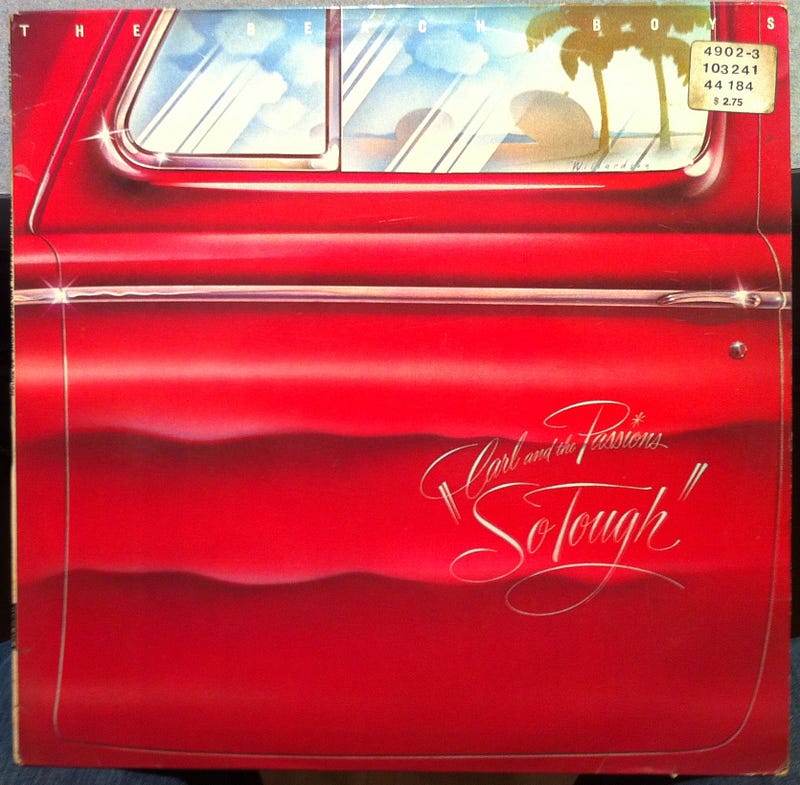
Once their eighteenth studio long player was mixed and mastered in April, an album cover and title were chosen. Jon Stebbins, author of The Beach Boys in Concert: The Complete History of America’s Band… and definitive biographies on both Dennis and early Beach Boy David Marks, offers insight. “I’ve always thought So Tough is just a riff on a typical 1950s doo-wop or R&B group name and title,” posits Stebbins. “It’s a pre-cursor to the 50’s nostalgia wave that was already brewing and would be mainstream in a couple of years — especially in tandem with the cover art which is very retro. The sounds on the LP had nothing to do with nostalgia, but the name and artwork did.”

Containing only eight songs and no mention of the band’s name on the cover, Carl, Dennis and Rieley hoped their ploy would reinvent the band and gain some radio play. While reinvention did occur, albeit briefly, commercial aspirations were scuttled when the solid, forward thinking album was unbelievably paired with Pet Sounds upon its belated arrival in stores in May 1972, a marketing scheme dreamed up by a Warner Bros. / Reprise executive in order to boost sales. The gesture was a head-scratching moment for most buyers and critics, as the seminal Pet Sounds had absolutely nothing in common with the new record except for the band’s name.

So Tough was doomed from the start, stalling at No. 50 on the Billboard Pop Albums chart. In the UK, the public still appreciated the band’s musical output, and it reached No. 25 there. Re-released at the dawn of the new millennium as a combined two-fer with their better-selling, excellent follow-up, Holland, and containing liner notes penned by none other than unabashed fan Elton John, over time the album has grown in stature. It easily ranks among the Beach Boys’ Top 12 best records, along with most any gleaned from their glorious 1965–1973 period.

If you wanna hear tunes about surfing, hot rods, school spirit and fun in the sun, you will be sorely disappointed with So Tough. The songs are enjoyable because the boys were stretching their musical boundaries and revamping their signature sound. This unfortunately didn’t happen very often after Holland, not coincidentally the last studio project with Chaplin and Fataar in the line-up. Sure, there is an admitted lack of sonic cohesion, but the album’s ramshackle nature works in its favor. Carl and the Passions — So Tough is especially perfect for rock connoisseurs or first-time listeners of the Beach Boys’ catalogue. Give it a spin, why don’t you?
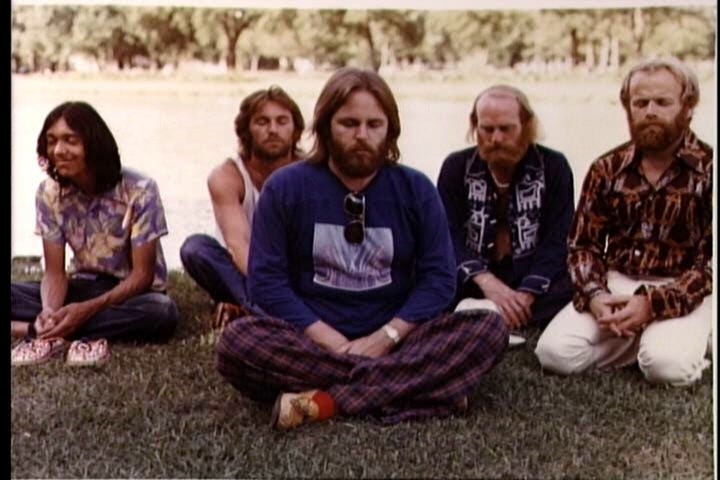
Transcendental meditation, anyone? The TM subscribers in the Beach Boys, i.e. frontman Mike Love and rhythm guitarist Al Jardine [far right], convince blissed-out South African drummer Ricky Fataar [far left], founding drummer-pianist Dennis Wilson, and lead guitarist Carl Wilson [center] to try the technique on July 28, 1974, the day they played a show at the Jeppesen Stadium in Houston, Texas, about five weeks before Fataar exited the band for a stint supporting Eagle Joe Walsh. Photography by Ed Roach / Roach Clips / The Smiley Smile Message Board
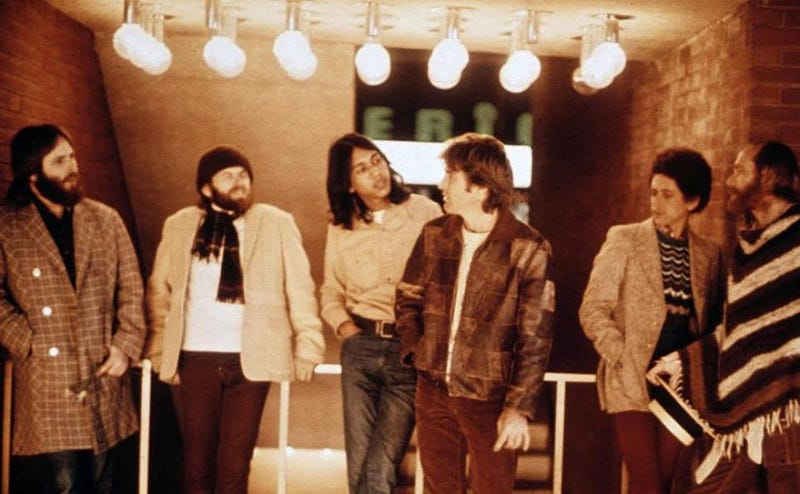
The Beach Boys, not your parents’ square band anymore, circa May 1972. Left to right are Carl Wilson, Al Jardine, Ricky Fataar, Dennis Wilson, Blondie Chaplin, and a poncho-clad, hatless Mike Love. Image Credit: RB / Getty Images / Pinterest
Taking a nod from the album sleeve of “Carl and the Passions — So Tough” is the German single cover of the Beach Boys’ “You Need a Mess of Help to Stand Alone” b/w Dennis Wilson’s “Cuddle Up”, released on May 15, 1972. The rocker criminally had no impact with the record buying public. Image Credit: Brother Records / Warner Music Group / 45Cat user “Serooskerke 2011”
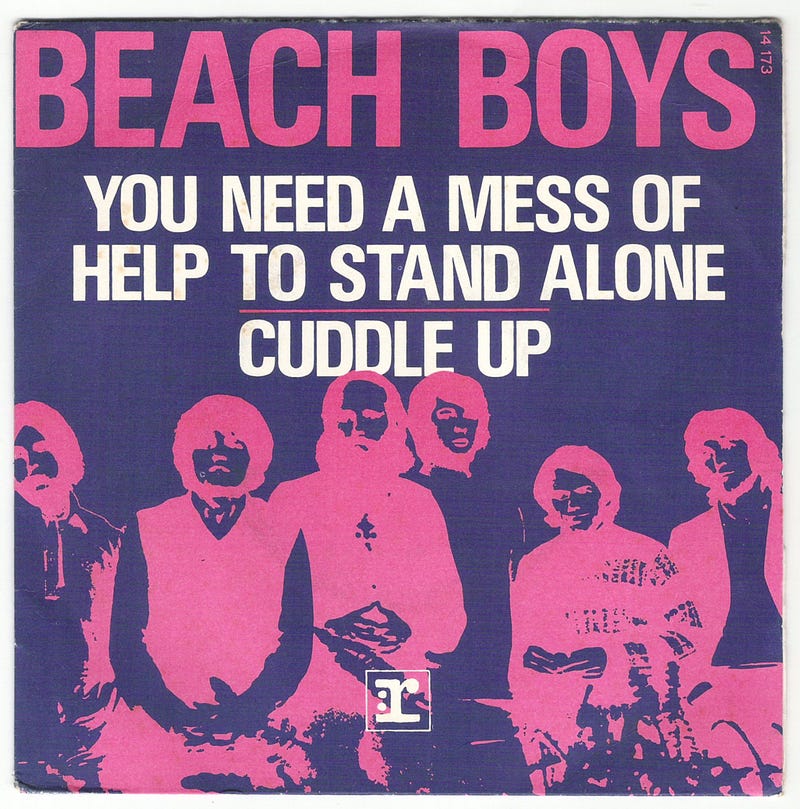
The ghostly French single cover of the Beach Boys’ “You Need a Mess of Help to Stand Alone” b/w Dennis Wilson’s “Cuddle Up”, released on May 15, 1972. Image Credit: Brother Records / Warner Music Group / 45Cat user “Rocky Gonzales”
The original cover of the Beach Boys’ 18th long player, “Carl and the Passions — So Tough,” released by Brother Records on May 15, 1972. The LP was a moderate hit, charting at No. 50 on Billboard. Later editions had the band’s name embossed in block letters. Image Credit: Brother Records / Warner Music Group
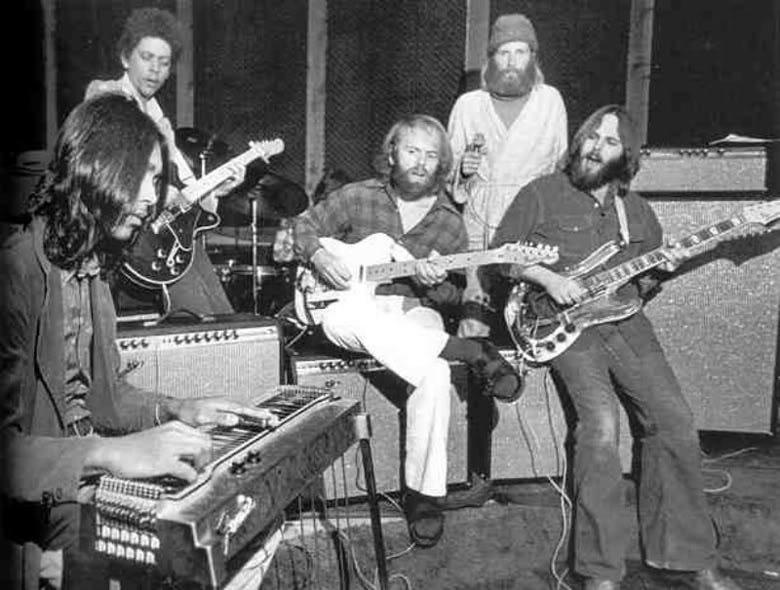
Circa June 1972, the Beach Boys appear for a Fender Guitar advertisement during the recording of the “Holland” album in Braamberg, Holland. Drummer Ricky Fataar convincingly switches over to pedal steel guitar. Also pictured is Blondie Chaplin, Al Jardine, Mike Love, and Carl Wilson. Image Credit: Fender Guitars / The Smiley Smile Message Board
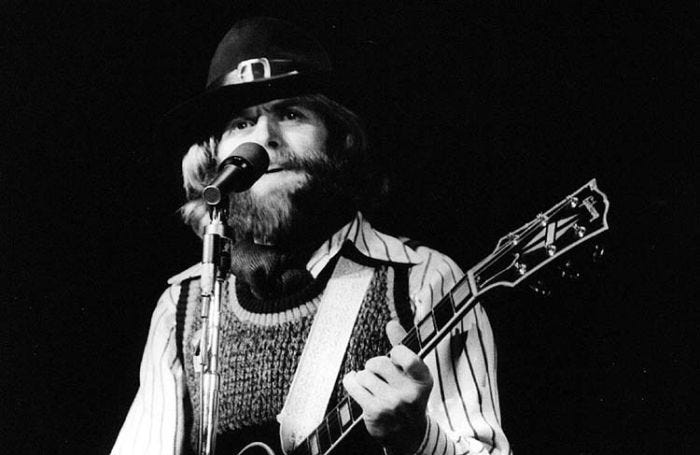
Founding Beach Boy Al Jardine, resplendent in a shaggy beard and sporting his awesome Gibson Black Beauty guitar, tackles “Heroes and Villains” onstage circa 1972. Image Credit: The Smiley Smile Message Board

© Jeremy Roberts, 2013, 2016. All rights reserved. To touch base, email [email protected] and mention which story led you my way. I appreciate it sincerely.

Music
Rock
Beach Boys
Brian Wilson
Album Review
Recommended from ReadMedium