
Careful What You Say
What determines the implications of being “woke”
Like it or not, words have power. Language is not static. It evolves. The implementation of radical changes directly affects all of us. Some are for it, others not so much. Being “woke” is very much on the forefront in our society. And it affects the nature of communications and the formations of words.
Semantics
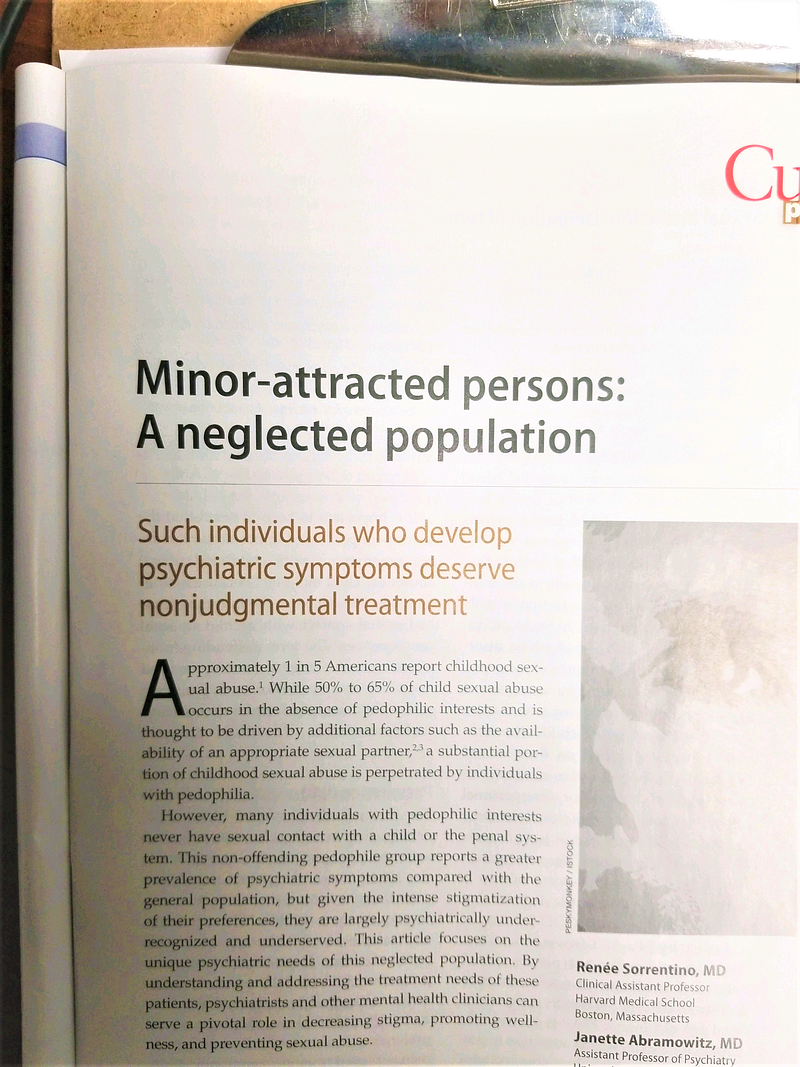
“Minor-attracted persons” may seem outrageous to those who understand the implications. Why would anyone decide to paint pedophiles in a softer light?
For now, the word refers to people attracted to minors but do not act. It is a way to make it easier for this demographic to seek help before becoming a criminal.
But as the years move along, the possibility of the minor-attracted persons can easily slide into people who commit the actions. It all falls behind the baseline of semantics.
Of course, semantics fascinates me as I recognize that the process of linguistics and language development is fluid.
For example, long ago, the children’s poem “Eenie Meenie Miney Mo” preceded “Catch an ‘N-word’ by its Toe…” Luckily, the role of semantics shifted with the times, and the N-word was replaced with tiger (The Process of Semantics, 2020).
Another word worth noting is “silly.” The common understanding of this word is to be foolish and underlines negative connotations. However, tracing the origin of “silly” to Old English, the word “silly” once meant to be blessed (The Process of Semantics, 2020).
The transformation of the word “silly” is known as semantic drift. At a distance, semantic drifts appear to be arbitrary. But through time, changes can be pinpointed to logical connections ( (The Process of Semantics, 2020).
Groupthink tactics
While the pros and cons of “canceling” words, people, institutions, can be debated, replacing them with new the purpose behind some of the changes is long overdue.
However, as we watch social constructs come tumbling down, many people have no idea how these shifts even occur (Greenspan, 2020). People are trapped within systems of beliefs that silence them making communicating far more difficult than in previous decades.
I will give you the word for it: deplatform. The term “deplatform” transfers power to a small group of loud voices that prevent people from debating opposing views on open forums through the use of public shaming and tactics. This creates fear in individuals to use their first amendment rights due to the consequences of losing employment, being ostracized, and being attacked with logical fallacies.
The ability to think critically seems futile to combat the reactionary responses of people on social media. We watched as our words are removed in “real-time” on Facebook, Instagram, and YouTube during the last few years. Private corporations abide by their own laws, allotting the opportunity of free speech or freedom of expression to some people and not to others.
Therefore, the process of adding new words to the dictionary is convoluted. There is a criterion, but there is no exact way to measure it — a complex, subjective process that involves semantics, editors, lexicographers, and the powers that be.
In 2021, adulting, air-fryer, awe walk, contactless, doomstrolling, PPE, truthiness, social bias, and many more words entered the domain of new words. (10 new English words for 2021).
Merriam-Webster
The editors of Merriam Webster diligently forage through documents, articles, social media, books, and any other form of information and create citations for words that seem to be commonplace. Creating 3 x5 cards of each word, they review each source as a “word itself,” how it is used, and its bibliographic history (How Does A Word Get in Merriam-Webster).
“Specifically, the word must have enough citations to allow accurate judgments about its establishment, currency, and meaning” (How Does A Word Get in Merriam-Webster?).
Semantic Drift
In linguistic terms, semantic drift refers to the evolving nature of words through time and the change of their meaning
Over time, Merriam-Webster tracks the establishment of current words in our culture in everyday use by entailing the modern-day meaning and integrating them into our vocabulary (How Does A Word Get in Merriam-Webster).
It is arbitrary to track the meaning of every word as its current meaning is what applies. However, if you enjoy studying the evolution of language, learning about the semantic drift through time may behoove you.
Takeaway
Words possess power that can be unequivocally equal to actions, and meanings change. Therefore, learning alternate ways to communicate, such as non-violent communication, suggests that if one’s message is to be understood, the choice of words truly amplifies the inner workings of effective communication within the context of diction and flection.
Currently being “woke” is the favored concept of many Americans. And at the same time, many other Americans do not understand the concept at all and were never given a proper explanation of its meaning. And that is where people run into problems.
Being “woke” simply means that one is alert to injustices within our culture. Many would contend that its only purpose is to bring the atrocities of racism into the mainstream in order to erect change. However, the concept also includes LGBTQ communities, women’s rights, people of any color or nationality, and the unfair treatment that many refuse to recognize.
One can actualize their communication goals by recognizing how interpretations of word choice lead to smoother conversations within an employer setting, at home, or between strangers.
Better said, to lessen stress and debate, learning to communicate without bias and the willingness to hear other points of view are the gateway to innovations and deepening relationships, and even being “woke.”
Sources
10 new english words for 2021: Pearson PTE. null. (n.d.). Retrieved February 22, 2022, from https://www.pearsonpte.com/articles/10-new-english-words-for-2021
Greenspan, R. E. (2020, August 6). How ‘cancel culture’ quickly became one of the buzziest and most controversial ideas on the internet. Insider. Retrieved February 22, 2022, from https://www.insider.com/cancel-culture-meaning-history-origin-phrase-used-negatively-2020-7
Merriam-Webster. (n.d.). How does a word get into a MERRIAM-WEBSTER DICTIONARY? Merriam-Webster. Retrieved July 31, 2021, from https://www.merriam-webster.com/help/faq-words-into-dictionary
The processes of semantic changes in language. The Great Courses Daily. (2020, August 10). Retrieved July 31, 2021, from https://www.thegreatcoursesdaily.com/the-processes-of-semantic-changes-in-language/


