
Cryptocurrency / Blockchain
Cardano’s Africa Project Proves That Blockchain Might Improve the World
In simple terms, here’s what you need to know.
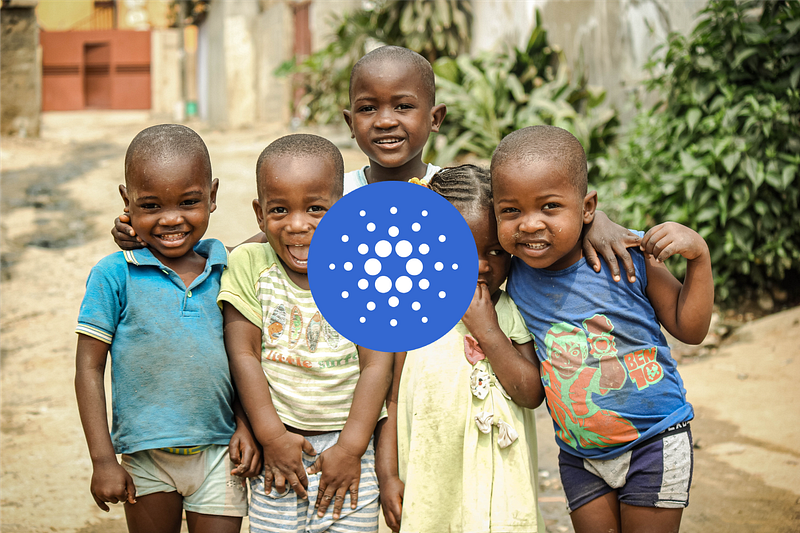
Pitch of this article: You’ll learn what one of the significant factors for first-world prosperity is, how blockchain works in simple terms, and how the Cardano Blockchain is in the process of improving Ethiopia’s infrastructure drastically.
Ready? Let’s start with a simple question.
What constitutes the wealth of the West? Is it the material prosperity we have? The high level of education we enjoy? Or is it the infrastructure that most countries have to offer?
The truth is that all factors are interrelated — well, they depend on one thing: infrastructure. But what exactly do I mean by that?
Infrastructure refers to all non-material institutions, facilities, and systems that are essential to society.
- If you want to start a business, you contact the tax office.
- If you want to get a recognized degree, you go to a university.
- To build a house, you legally acquire land.
None of this is self-evident, but it is one of the foundations of our prosperity. Infrastructure is a main driver of economical development. Let’s have a look at the situation in poorer countries.
In many third-world countries, you effectively have no property when you buy land; for example — there is a lack of the necessary bureaucracy, and often the authorities are corrupt. The modern banking system alone seems self-evident but excludes a large portion of the world’s population.
A whole 2.5 billion people do not have a bank account — they are excluded from the international economy¹.
The reason? The reality of life for the billions of poor people is not profitable for the big banks. Transactions are more complex than we think and involve high costs, so they are not even conceivable for many developing countries.
Blockchain could solve all these problems. While a few years ago, it was all about Bitcoin, that has changed. That’s the mistake the skeptics make. They think of cryptos only as Bitcoin, a digital coin with no intrinsic value or other features. That is no longer the reality.
How Blockchain Offers Much More Than Just Coins
The basis of a cryptocurrency is the blockchain. It’s a decentralized database on which everything that happens gets saved transparently. The fact that all network participants have access and store the data creates a consensus. Only if more than 50% of all participants confirm that the transaction from A to B is legitimate will it be executed.
But what if the majority of participants want to manipulate the blockchain?
This is called a 50+1 or 51% attack³. Since consensus depends on the majority of participants, it can be manipulated.
The good news is that this manipulation is not in the interest of the participants. If the cryptocurrency transactions are tampered with, the currency will become virtually worthless — since the participants usually have massive holdings themselves, they would be shooting themselves in the foot. But what does it have to do with things like documents?
If you can have consensus on transactions, you can have consensus on other content in the blockchain. Smart contracts & NFTs are the best examples of this. Thanks to blockchain, we can also store documents in a decentralized way. Shared consensus and digital retrievability create protection against forgery.
I think now it’s clear that Blockchain technology can have real benefits in business. But away from capitalism, it can also be used for humanitarian purposes and expand the infrastructure of developing countries. Here is how it’s happening right now.
Cardano's Africa Mission
Back to the problems I mentioned in the beginning. In many countries of this world, people cannot make reliable contracts. Either the bureaucracy is lacking, or it is so corrupt that your property is not really yours.
Blockchain reaches beyond the borders of countries. In theory, anyone in the world with Internet access can participate. So, the third world can directly participate in the first world structures. Payments can be made quickly, transparently, and decentrally. Blockchain consensus can grant the validity of documents — no matter how miserable the bureaucracy in your home country is.
Cardano has made a huge move. Adapting blockchain in the free market is nothing new — Cardano has taken it up a notch. Ethiopia, a country of over 100 million people, is partnering with the Cardano project to upgrade the education system. Five million students will receive a blockchain-based ID that will help document student performance as a first step.²
The students will also receive cards on which their credentials are stored. With the cards, it will no longer be a problem if a child doesn’t have a smartphone or tablet themselves to connect to the system.²
This positive change extends even beyond the borders of Ethiopia and will solve a significant problem:
This will resolve the issue of fake certifications, which is a serious problem in Ethiopia, he said. This might give young Ethiopians opportunities they don’t have now because their diplomas are not viewed as being reliable in the West, O’Connor said.²
Final Thought
The topic of blockchain and cryptocurrencies is dividing society (or at least the 3% who know what it’s about). I hope I could prove something to you with this article: Blockchain is much more than just digital currency — it even has the potential to change the world for the better.
Unfortunately, many people are not even aware of all this. Still, our discussions revolve around the high energy consumption of the Bitcoin network. Few people are aware that blockchains like Cardano function pretty differently than Bitcoin and consume only a fraction of the energy thanks to a different algorithm.
“These systems can preserve a fundamental truth, that we are all equal and we all deserve access to the same marketplaces.“— Charles Hoskinson, Founder of Cardano
Thank you for reading! Interested in subscribing to Medium.com and support me at the same time? If your answer is yes, make sure to check this out:
https://louispetrik.medium.com/membership
Through this link, I will receive a share of your monthly payments, if you sign up. Yet, there will be no additional cost to you. Therefore:
Thank you in advance! :)
If you want to support me with some ADA (Cardano’s native coin): addr1q9mgxwqrm83pv3yupcmhln3dw2wh3eqkx9khha7ryu29s2ut4e4nmlqdes4qkqp69225y6zj96hr7qzthvepvleeluvqc8tacm
Join my free newsletter to stay up to date
Sources
[1]: Blockchain Revolution (book) by Don Tapscott and Alex Tapscott
[2]: coindesk.com/from-paper-to-cardano-blockchain-iohk-in-ethiopia
[3]: https://academy.binance.com/en/articles/what-is-a-51-percent-attack


