
Carbon Offsets: The Route to Net Zero or Corporate Greenwashing?
Why we can’t just buy our way out of the climate crisis.

Today, you don’t have to look far to find companies boasting about their plans to reach net zero or become carbon neutral. Amazon says it wants to reach net zero by 2040. Shell says they’ll do it by 2050, as does the airline industry. And if you listened to the recent presentation by Apple, you might be led to believe the tech giant is single-handedly going to save the planet. Countries have also jumped on the trend. For instance, the UK promises to reach net zero by 2050 despite backtracking on many of its green policies.
Going ‘net zero’ means just what it sounds like. It’s a pledge not to increase the amount of carbon in the atmosphere. In practice, that means reducing emissions and ‘cancelling out’ emissions by purchasing carbon offsets or utilizing a combination of both.
For businesses where reducing emissions to zero seems impractical, using carbon offsets seems like the next best thing. It sure sounds great on paper, but do carbon offsets work? Or are they just another greenwashing tactic allowing corporations to keep on polluting?
How carbon offsets work (or don’t)
The idea behind carbon offsets is fairly simple. First, a company, country, organization, or individual calculate their carbon footprint. Then, they invest in projects that reduce or “offset” an equal amount of carbon as they produce. For instance, they might pay someone to protect a forest, plant trees, catch gas emissions from a landfill, or invest in solar farming.
Dozens of companies such as Finite Carbon and Climeworks now sell these offsets, funding thousands of green projects worldwide. It’s a big business, currently valued at over $2 billion. And with more companies pledging net zero, the market is expected to grow tenfold, with some expert predictions suggesting the market will be worth $250 billion by 2050.
The ‘magic’ of the offsets market is that it allows money to flow to the projects that are cheapest, theoretically enabling emissions to be cut faster. But if the climate crisis has taught us one thing, it’s that where there is money involved, corruption isn’t far behind.
The shady world of phantom offsets
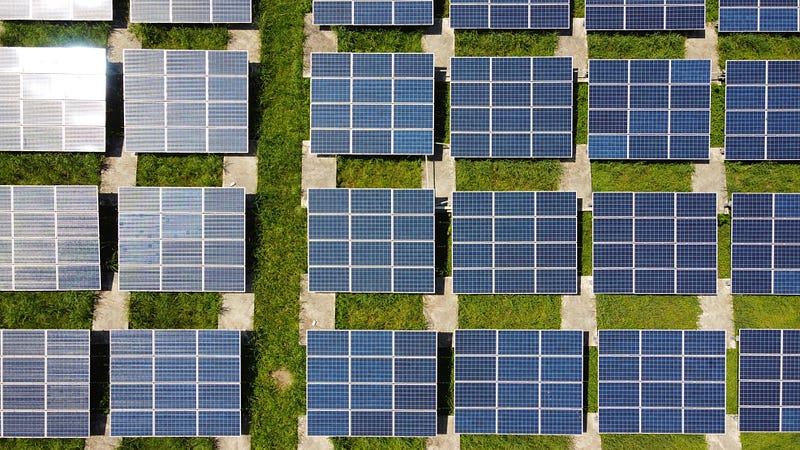
Earlier this year, British newspaper The Guardian, German weekly Die Zeit, and SourceMateriala, a non-profit investigative journalism organization, collectively released a report on a 9-month investigation on carbon offsets. The report found that carbon offsets approved by world-leading certifier, Verra, an organization used by Gucci, Disney, BHP, Pearl Jam (yes, I mean the band), and Shell, are not only largely worthless but could even be making global warming worse.
According to the investigation, around 90% of Verra-approved offsets are likely ‘phantom offsets,’ which do not represent genuine carbon reductions, even though companies use these offsets as proof to their customers that they are reaching their carbon-neutral targets. The investigation also found that “the threat to forests had been overstated by about 400% on average for Verra projects.”
It’s important to note that Verra does dispute these claims. But this isn’t the first time a company has been accused of using useless phantom offsets.
In 2020, Bloomberg reported that GreenTrees, an organization used by companies such as Microsoft as part of their carbon offset strategy, often “takes credit for planting trees that were already there.” Meanwhile, a similar investigation reported that another company was preserving forests that were never in danger of being harvested.
However, perhaps the most damning report of all came from the European Commission, which, back in 2016, found that around 85% of all carbon offset projects probably did nothing to reduce emissions. It would be nice to think that organizations had gotten their act together since then, but much evidence points to the contrary.
One issue is that there’s a massive incentive for landowners to keep offset cash flowing in while doing as little as possible. Meanwhile, there’s an even greater incentive for companies to use cheap, dubious offsets to give the appearance of cutting emissions while avoiding the difficult ( and expensive) job of actually cutting their emissions. In other words, the pessimistic view is that everyone is out to greenwash everyone else, including you, the consumer.
But even when carbon offsets are done with the best of intentions, significant obstacles remain.
Sending IOU’s to the planet
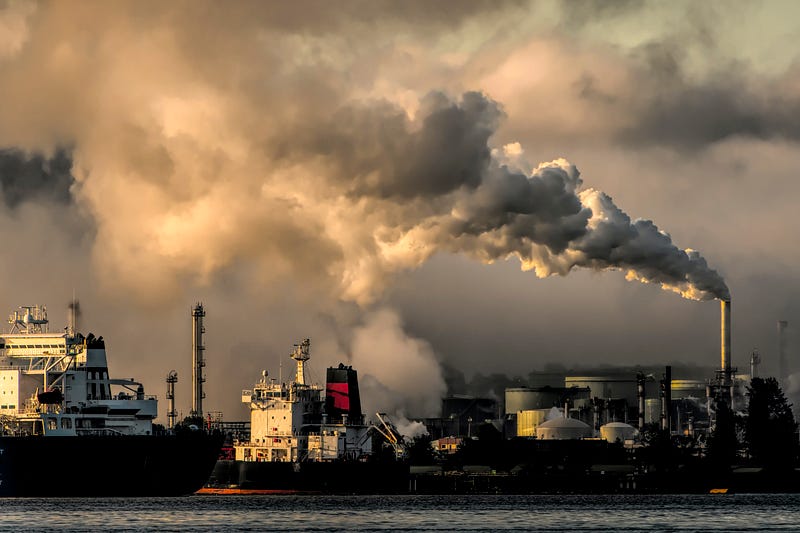
If carbon offsetting projects worked as advertised 100% of the time, that wouldn’t change the fact that there’s still one major issue with the concept: the amount of time it takes for these projects to work. For example, solar farms take time to build and generate energy, carbon storage projects take years to develop, and trees take a long time to grow.
As Alia Al Ghussain writes for Greenpeace:
“A newly planted tree can take as many as 20 years to capture the amount of CO2 that a carbon offset scheme promises. We would have to plant and protect a massive number of trees for decades to offset even a fraction of global emissions.”
She notes another problem with planting trees to reduce atmospheric carbon: trees tend to burn down and, in the process, release the carbon they’ve stored. In fact, a 2022 study found that: “Six forest projects involved in the carbon offsetting market in California have released up to 6.8 million tonnes of carbon dioxide since 2015 because of fires.” And that’s just in California.
Of course, the grand, sad irony is that forest fires are only becoming more common thanks to the emissions companies are releasing and promising to remove. And even if the CEOs of those companies mean well, the problem is that they’re essentially chasing their tails.
When a company says it’s offsetting its carbon, it’s really saying that it’s paid for the emissions it’s releasing today to be removed (hopefully) in years to come, by which point it may well have released tonnes more carbon. Or as Kal Penn puts it in a segment for Getting Warmer:
“Carbon offsets are essentially IOU’s to the atmosphere. But the atmosphere has no power to collect those IOU’s — there’s no atmosphere enforcement agencies. There are carbon offset registries which validate carbon savings, but those aren’t accountable to anyone.”
None of this would matter if we had time on our side, but we don’t. And as we edge ever closer to exceeding the 1.5C global temperature increase that climate scientists warn must be avoided to avoid significant climate disaster, making today’s emission tomorrow’s problem is understandably problematic.
Are we just pushing the problem on?
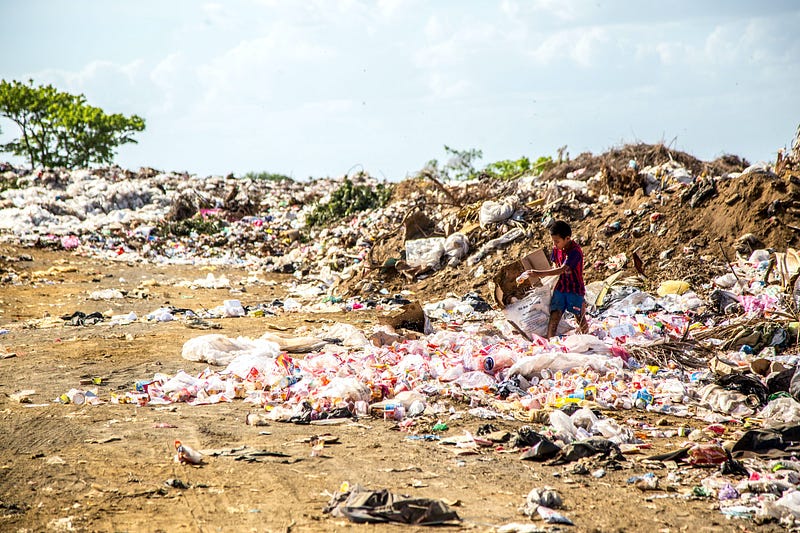
Relying on carbon offsets doesn’t just push the problem of the climate crisis onto tomorrow — it may also be pushing the problem onto the wrong people.
Again, when it comes to carbon offsets, money flows to where it’s cheapest to purchase those offsets. And typically, that means the global South.
In some respects, this isn’t necessarily a negative, as it can result in much-needed investments. However, critics argue that it effectively means that the North’s desires are put before the needs of the South. Or, to put things more bluntly, it means that the same companies get to keep polluting while those who have contributed the least to climate pollution have to pick up the slack. And in some cases, the effects have been devastating.
As reported by Amnesty International at the time, in 2018, the Sengwer people of Embobut forest in Kenya were violently displaced from their ancestral lands as part of a government plan to reduce emissions. These people weren’t consulted, their needs weren’t considered, and they certainly didn’t consent to the idea. But ultimately, they were forcibly removed in the name of fighting the climate crisis.
Needless to say, that’s the opposite of climate justice. Yet, this is a narrative that keeps on playing out in the wider climate situation. Billionaire-led companies pass the buck of the issues they’ve caused on to governments and organizations that are all too desperate for investment, even if citizens ultimately suffer. Meanwhile, we as consumers get to continue our rampant consumerism guilt-free thanks to greenwashing efforts.
Final thoughts: Making climate offsets work
Despite all I’ve just said, carbon offset projects themselves aren’t the issue here. Planting trees, building renewable energy sources, and removing carbon from the atmosphere are all objectively good things. And the people on the ground working on these projects are usually doing important work. There’s no denying that they deserve and need the investment from big companies to keep doing that work.
Furthermore, the fact remains that many industries can’t realistically reach net zero through reducing emissions alone. In this case, carbon offsets are arguably the next best option. The important thing, though, is that carbon offsets don’t become an excuse to not reduce emissions and that measures are put in place to ensure that projects are achieving what organizations are advertising to customers. To use the IOU analogy, the time of living on credit is over.
Late last year, the Climate Change Committee, a UK advisory body, released a report on the effectiveness of carbon offsetting. Perhaps unsurprisingly, they concluded that much criticism directed toward carbon offsetting is well-founded. But the report also concluded that offsets can play a vital role if improvements are made, advising that:
“Government must put in place stronger guidance, regulation and standards to ensure purchase of carbon credits is not used as a substitute for direct business emissions reduction, and to improve the integrity and transparency of carbon credits.”
As individuals, we should push our governments to take action and introduce measures that add much-needed accountability regarding carbon offsets. Yet we also don’t need to wait for them to take such action, if they ever do. Instead, it is more vital than ever to look between the lines of the PR messages companies are selling us.
Climate pledges and net-zero are often intentionally confusing, vague, and frankly boring, often served with a whole lot of flowery, nonsensical greenwashing. But the brutal reality is that if it sounds too good to be true, it often is. There’s no such thing as guilt-free emissions, and there’s no reason we should let polluting companies off the hook until they earn our trust — which means more than paying someone else to tidy up their mess.
Sources and further reading:
- Carbon Offsets: The Big Lie (TedTalk) by David Detzler
- Greenwashing or a net zero necessity? Climate scientists on carbon offsetting by Fiona Harvey
- The fantasy of carbon offsetting by Robert Watt