
Caravaggio’s 5 Most Controversial Paintings
A deep dive into the rebel artist
Caravaggio was born in Milan.
In his early twenties, he travelled to Rome, where he was offered many art commissions from affluent patrons.
Unlike other artists who employed idealism in their paintings, Caravaggio preferred naturalism and used live models to create unprecedented psychological drama and realism in his works.
It is no surprise that his art often stirred up controversy, as breaking conventional norms tends to do.
In this article, we will delve into five of Caravaggio’s most controversial artworks.
1. Crucifixion of Saint Peter (1601)
I wrote an article titled The Secret Behind Paintings With Dirty Feet a while back.
Caravaggio was known for his exceptional ability to depict realism in his paintings, regardless of whether his subjects were God, a saint, or an ordinary man.
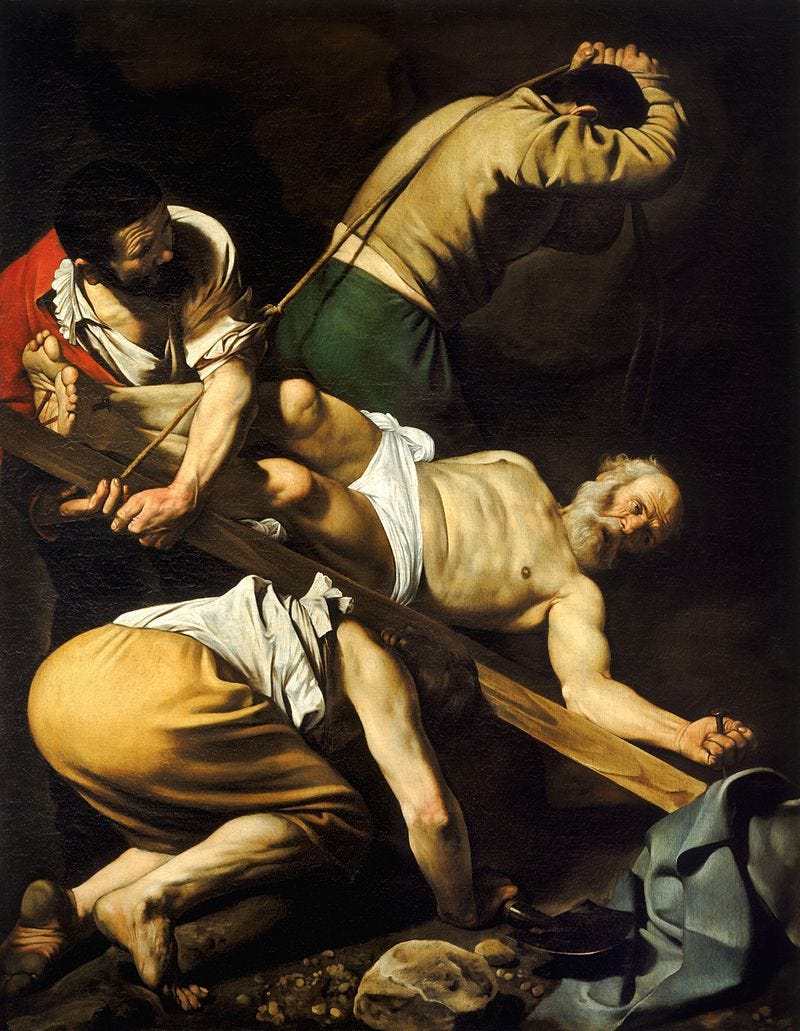
His painting of Saint Peter is a perfect example of this, where he portrays him as an average person rather than a glorified saint.
The painting shows Saint Peter on an upside-down cross, not in the typical crucifixion pose of Jesus. The nails hammered into Peter’s hands and legs, along with his dirty feet, give the painting a sense of authenticity.
One of the executioners in the painting also has dirty feet, adding to the overall realism.
The dark background and chiaroscuro effect create an atmosphere that captures the viewer’s attention. Caravaggio’s decision to depict Biblical characters on the same level as ordinary citizens was a daring move during his time.
2. Amor Vincit Omnia (1601–1602)
The idea of ‘Omnia Vincit Amor,’ or love conquers all, was first introduced by the renowned poet Virgil in his tenth Eclogue, which was published around 37 B.C.
Cupid has been used as both the embodiment of ‘love’ and an attribute of the allegory of ‘love conquering all’ in visual and poetic representations of the Virgilian theme.
However, no significant variations were introduced until Caravaggio came along.
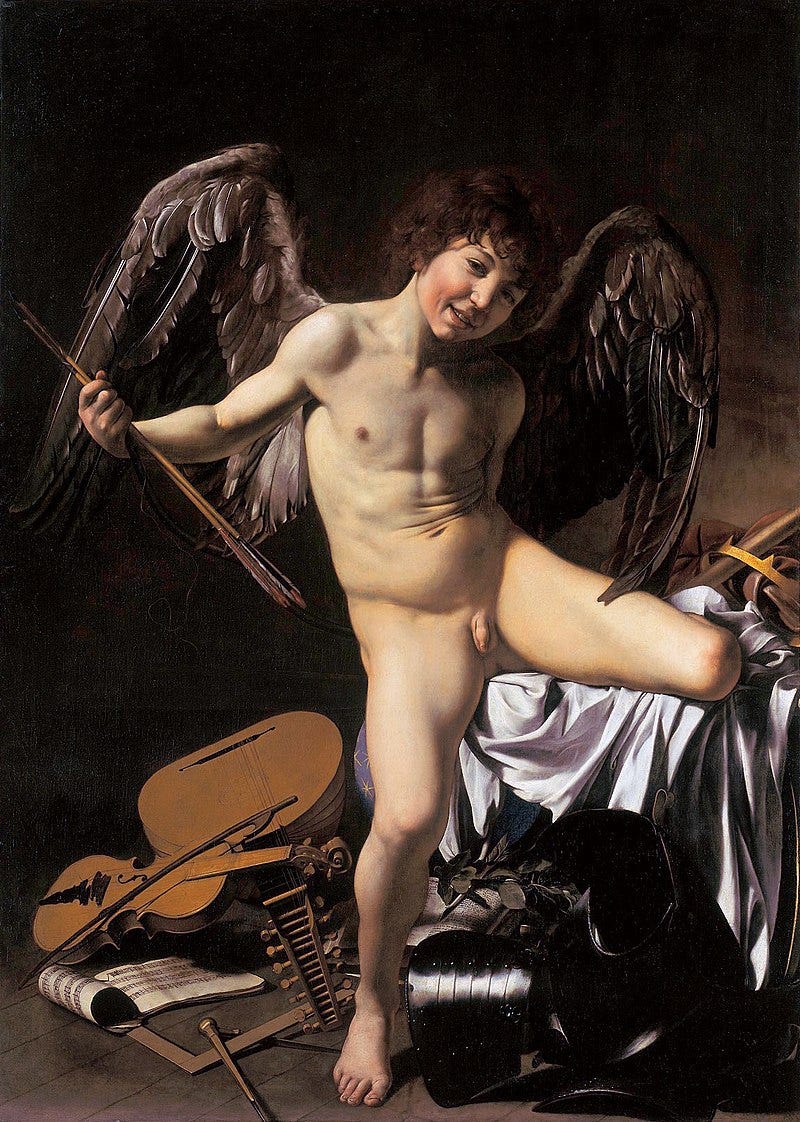
In Caravaggio’s interpretation, Cupid was not portrayed in the standard iconographic style of the Roman god of love. Instead, Caravaggio drew inspiration from Michelangelo’s ‘Victory’ but gave it his unique twist.
His Cupid is vibrant, lively, sexual, and unashamed of his nudity in front of the viewer.
In this masterpiece Amor Vincit Omnia, Cupid is depicted wearing dark eagle wings, half-sitting on or climbing down from what appears to be a table. The objects such as a violin, lute, armor, coronet, square and compasses, pen and manuscript, bay leaves, and flowers, are scattered around and trampled under Cupid’s feet.
3. The Conversion on the Way to Damascus (1601)
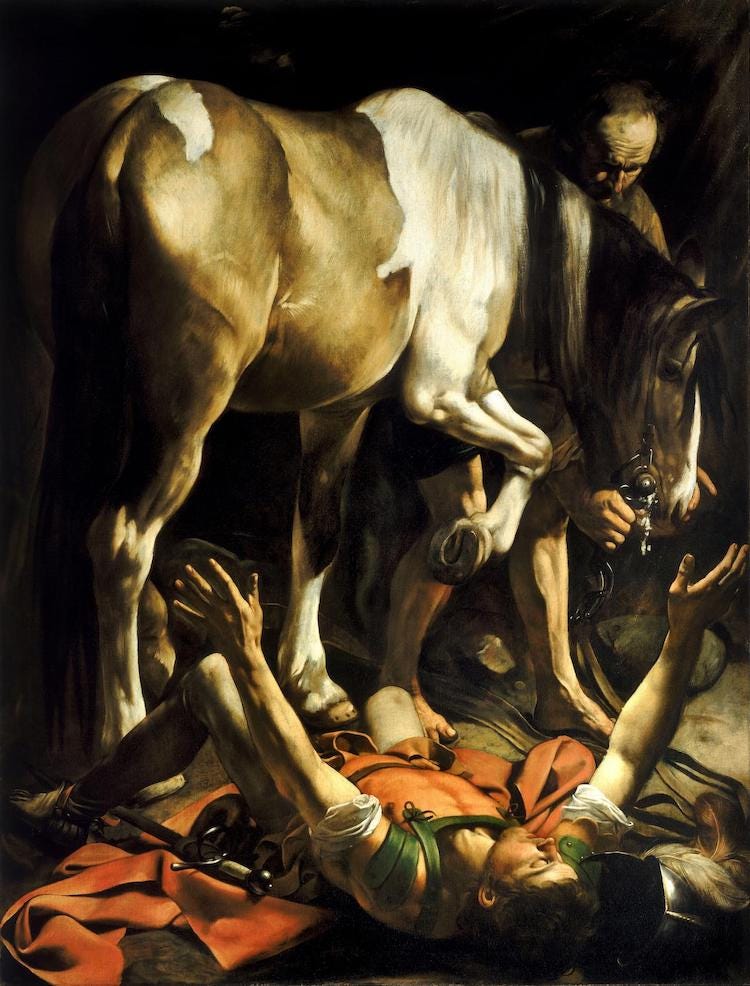
The main character depicted in this composition is Saul, a persecutor of Christians.
The painting portrays the moment when Saul was blinded by the voice of God on the road to Damascus, causing him to fall off his horse and the horse’s hoof is lifted. Saul raises his hands and submit himself to the divine power.
Caravaggio’s art didn’t conform to usual aesthetics of that era and constantly rejected by the Catholic churches.
Unlike the Renaissance era where a clear distinction existed between the realms of God and humans, this painting centers around a horse and a human body, with the power of God depicted through divine light.
The use of tenebrism in this composition effectively captures our attention and accentuates the dramatic effect of the painting.
4. David with the Head of Goliath (1610)
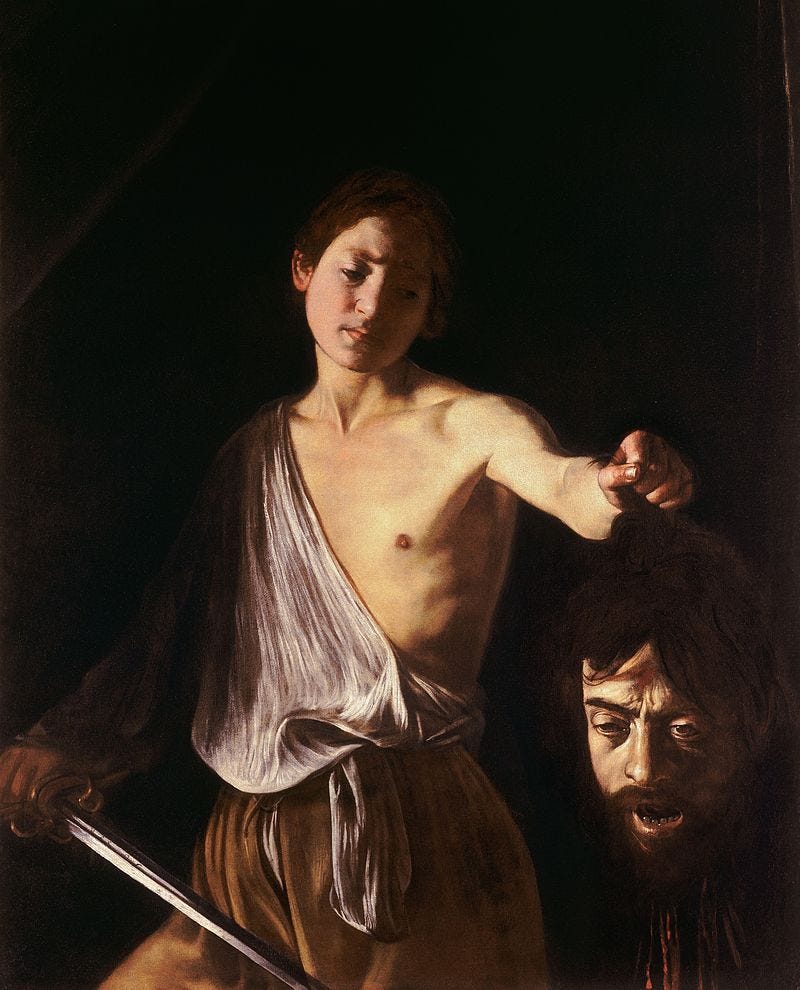
This painting is a psychological masterpiece that showcases Caravaggio’s characteristic tenebrism.
Caravaggio was a rebellious man who frequently involved himself in physical altercations.
In 1606, he ended up killing a man and spent the rest of his life on the run.
This painting features a pensive young David gazing at the severed head of Goliath, with Caravaggio using his own features for the defeated giant, adding yet another morbid self-portrait to his body of work.
5. Sick Bacchus (1593)
Caravaggio utilized many of his friends and family as models in his portraits, including his student and speculated lover, Mario Minniti, who appeared in several paintings such as Bacchus.
In this particular piece, Minniti is depicted as the god of wine exuding youthfulness and inviting viewers to join the revelry.
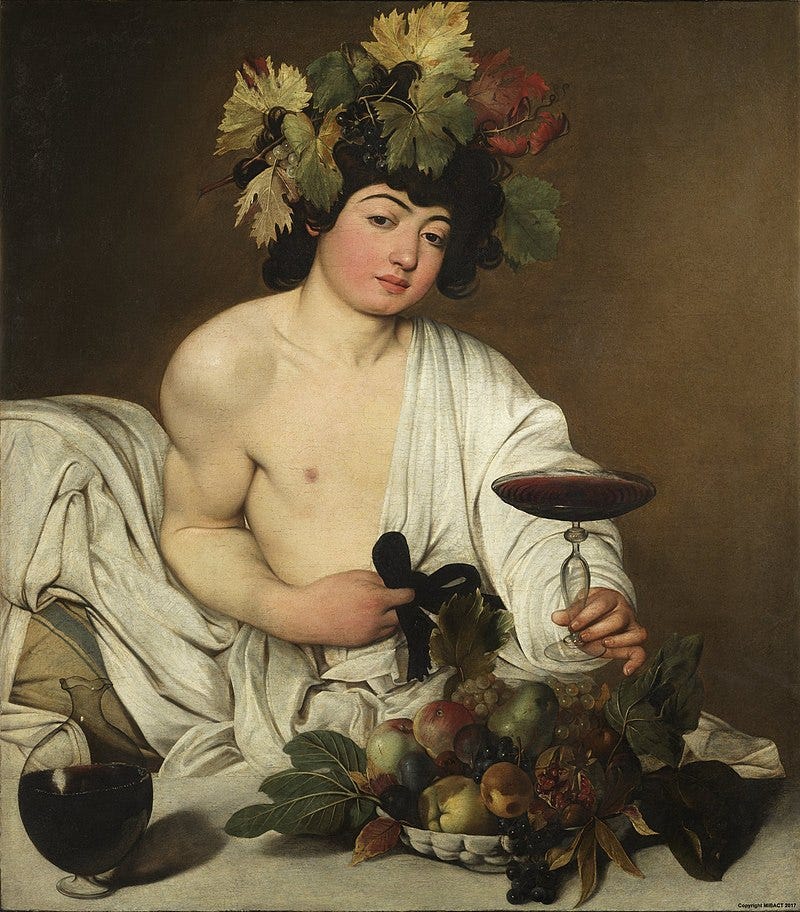
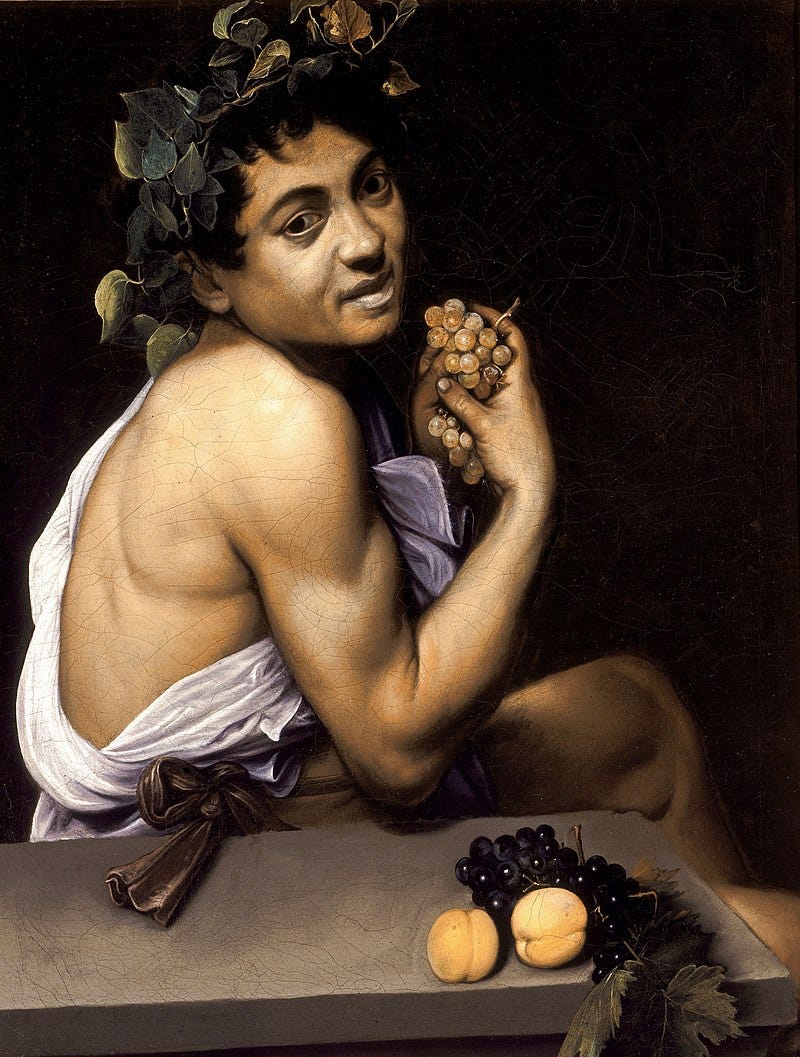
However, Caravaggio challenged conventions and dared to bring God down to earth and portray him as a mortal.
In contrast to the vibrant and beautiful Bacchus with his rosy cheeks and handsome features, Caravaggio depicted a sickly Bacchus with pale skin and haphazardly intertwined vine leaves on his forehead.
Why the subversion of the typical portrayal of this god?
Some art historians speculate that this sickly Bacchus was actually a self-portrait of Caravaggio during a time when he was suffering from acute jaundice.
Here’s my latest article Félix Vallotton’s 4 Unsettling Paintings.
Please subscribe to Medium using my landing page, as your fee directly supports me.


