
Capturing CO2 from Air: Can Direct Air Capture Be the Key to Combating Climate Change?
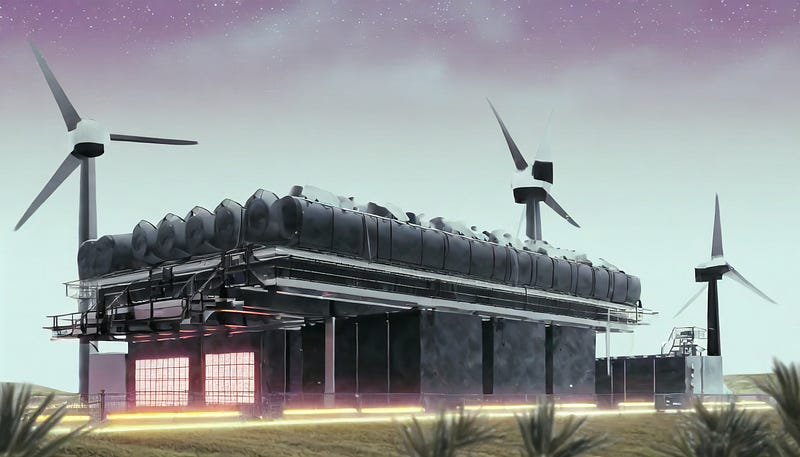
The Earth’s atmosphere is choking on our emissions. Carbon dioxide, the main culprit, has been steadily rising, pushing global temperatures to ever-higher levels and fueling the devastating effects of climate change. While we urgently need to curb emissions at their source, a new technology is emerging that offers a bold, albeit controversial, solution: direct air capture (DAC).
What is DAC?
Imagine giant vacuums sucking CO2 directly from the air. That’s essentially what DAC does. These engineered systems use chemical or physical processes to extract CO2 from the ambient air, concentrating it for storage or utilization. It’s like mimicking nature’s photosynthesis, but on an industrial scale.
How does it work?
There are several DAC approaches, but two main methods dominate:
- Chemical Sorbents: These materials, like amine solutions or metal-organic frameworks, bind with CO2 when air passes through them. The CO2 is then released through heating or pressure changes, allowing the sorbent to be reused.
- Solid Adsorbents: These filters, often made from zeolites or metal oxides, trap CO2 molecules like a sponge. The CO2 is then desorbed using heat or vacuum.
Is DAC the silver bullet?
DAC holds immense promise, but it’s not without its challenges:
- Energy: DAC plants require significant amounts of energy to power the capture and desorption processes. Ideally, this energy should come from renewable sources to avoid creating new emissions.
- Cost: DAC is currently expensive, making it difficult to scale up and achieve meaningful CO2 removal. Technological advancements and policy support are crucial to bring down costs.
- Storage and utilization: Captured CO2 needs to be stored permanently underground or utilized in products like synthetic fuels or construction materials. Safe and sustainable solutions are still under development.
Despite the challenges, DAC offers several advantages:
- Flexibility: Unlike traditional carbon capture, which focuses on concentrated sources like power plants, DAC can be deployed anywhere, making it a powerful tool for addressing diffuse emissions, like those from transportation and agriculture.
- Negative Emissions: When combined with CO2 storage, DAC can achieve negative emissions, meaning it can remove CO2 from the atmosphere, helping to reverse climate change.
- Technological Innovation: DAC is a rapidly evolving field, with constant advancements in materials, processes, and energy efficiency.
The future of DAC
DAC is not a replacement for emissions reduction, but rather a complementary tool in the fight against climate change. Its success hinges on overcoming the technological and economic hurdles while ensuring responsible storage and utilization of captured CO2.
Governments, researchers, and private companies are investing heavily in DAC, recognizing its potential to be a game-changer. With continued innovation and policy support, this technology could become a critical weapon in our arsenal against the climate crisis.
Cost Of Building DAC Plant
The cost structure of a DAC plant is a complex puzzle with several major pieces. Capital expenditures, the initial investment in building the plant, dominates the picture. These include the capture contactor units, where air interacts with the chosen sorbent or adsorbent material, along with regeneration equipment to release the captured CO2 and prepare the material for another cycle. Energy also plays a starring role, as powering the capture and regeneration processes can be quite demanding. Ideally, renewable sources like solar or wind would fuel the plant to avoid adding to the emissions problem. Operating and maintenance costs come next, covering everything from sorbent material replacement to routine upkeep of the machinery. Finally, research and development, both for optimizing existing processes and exploring new capture technologies, add another layer to the financial equation. Each of these factors varies depending on the chosen DAC technology, plant size, location, and energy sources, making it difficult to pinpoint a single cost figure. However, estimates suggest that capturing one ton of CO2 currently ranges from $600 to $1,000, highlighting the need for significant cost reductions to reach below $200 to make DAC a truly viable large-scale climate solution.
Key takeaways:
- DAC is a promising technology that can capture CO2 directly from the air.
- While it faces challenges like energy demand and cost, it offers unique advantages like flexibility and negative emissions potential.
- Continued research, development, and policy support are crucial for DAC to reach its full potential and contribute to a cleaner future.
The conversation around DAC is ongoing, with proponents highlighting its potential and critics raising concerns about its feasibility and environmental impact. However, one thing is clear: DAC is a technology with the potential to reshape our fight against climate change. By carefully considering its benefits and drawbacks, we can ensure that this technology is developed and deployed responsibly, helping us breathe cleaner air and build a more sustainable future.
References
Executive summary — Direct Air Capture 2022 — Analysis — IEA
What will scale direct air capture? A 75 percent price drop, report says | GreenBiz
Visit us at DataDrivenInvestor.com
Subscribe to DDIntel here.
Have a unique story to share? Submit to DDIntel here.
Join our creator ecosystem here.
DDIntel captures the more notable pieces from our main site and our popular DDI Medium publication. Check us out for more insightful work from our community.
DDI Official Telegram Channel: https://t.me/+tafUp6ecEys4YjQ1