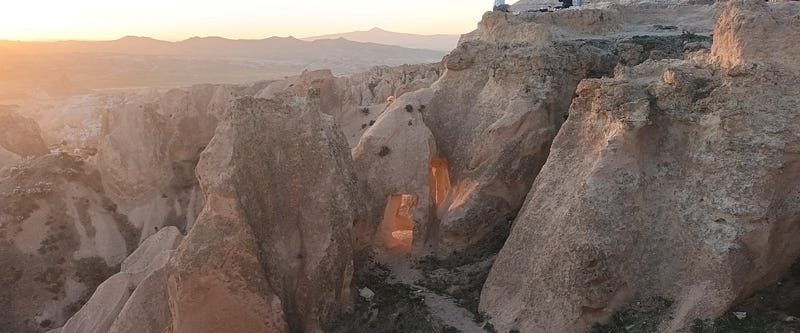
Cappadocia, Turkey — My Shangri-la on Earth
Goreme and the surrounding areas are always a spiritual experience
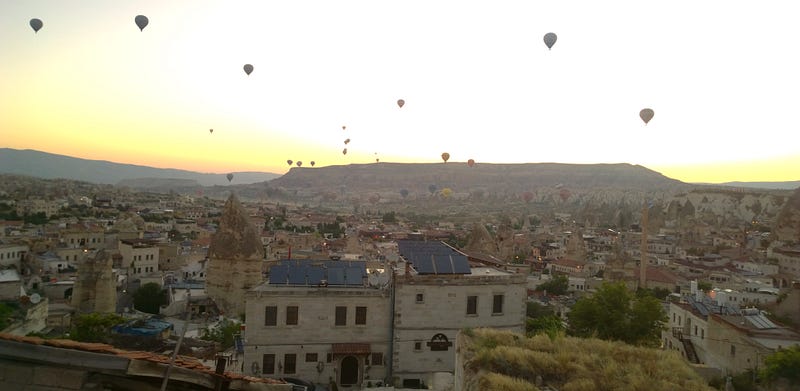
Cappadocia is one place where I can walk around seeing other people, seeing tourists, and yet there is a pervading quietness, a stillness that I feel, no matter what is going on.
Is it the dryness of the air, the golden glow of the sandstone buildings, the sweeping vistas, or the cool of the cave dwellings? Is it the fact that I sometimes feel aware of the presence of the inhabitants of centuries past? I’m not sure.
Cappadocia has always been a deeply spiritual place for me. I’ve been there more than a dozen times, and its magic never changes. If anything, it grows.
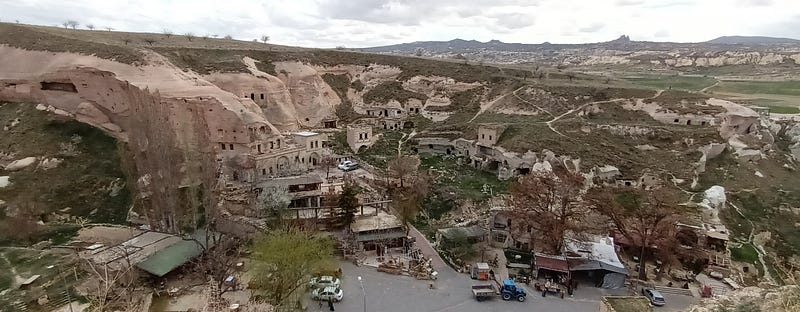
Cappadocia, Turkey — A Mystical Place
It’s no wonder. Let’s travel back in time. Being surrounded by architecture that looks like it’s from Biblical times and “fairy chimney” rock formations that seem prehistoric, that’s not hard to do.
Imagine…1000 years ago, in the center of the modern-day nation of Turkey, Cappadocia was populated by Christians dating from the time of the Apostle Paul. They made their living and homes in this land of fantastic rock formations, carved by the wind.
They discovered that caves and homes could be made easily by digging out hollows in the soft earth, which then had the quality of hardening once the excavation was finished. Thus, inhabitants dug their homes and shops out of the hillsides and rock formations.
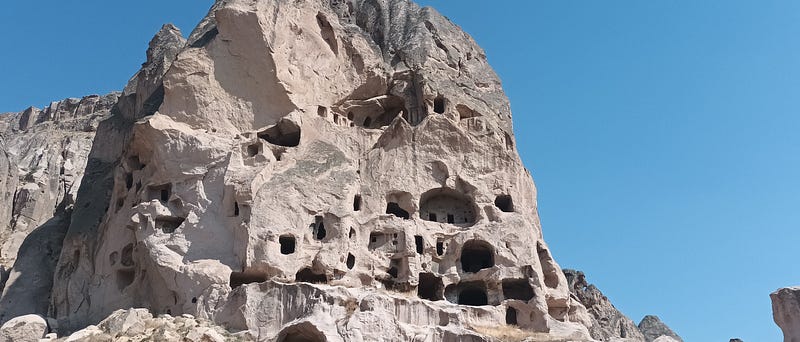
Cave churches were also constructed, with beautiful frescoes illustrating the stories of the Bible in a day when people couldn’t read. Rather, pictures were the way to communicate these stories and spiritual truths. Some of the cave churches were completely sealed and protected from light until recent years, so the paintings are well-preserved and vibrant in color.
Entering some of these churches often takes me on a journey through time. The dim light and cool air in these chapels contrast with the bright sunlight and heat outside and seem to move me into a more spiritual dimension.
My favorite experiences are discovering small cave churches in out-of-the-way and unexpected places. We came upon one of these while on a several-hour hike along the stream of Ilhara Valley. Unlike most of Cappadocia which is fairly barren, Ilhara is riparian, green, and wooded. We noticed a small yellow sign along the stream with the word “Church” and an arrow pointing up the lush hillside. After a short upward climb, there it was, partly hidden by thick undergrowth: a small cave church with paintings on the walls and ceilings.
It was truly an ethereal feeling to be in an ancient site of worship so far from anywhere. When I visit these places, I can almost feel the presence of those who lived there long ago.
How It Feels to Stay in a Cave Hotel Room
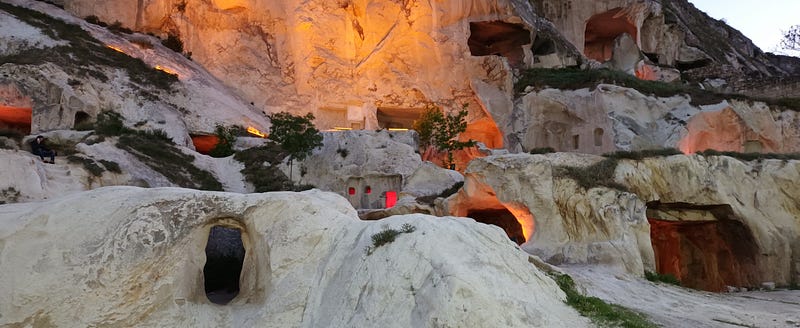
Another unique experience to be found in Cappadocia is staying in a hotel room that is dug into the side of a hill. There is something about this…the warmth in winter, cool in summer, the absolute quiet (no thin hotel walls here!)
Often I’ve had a little balcony outside that provides a spectacular view at sunset, perfect for drinking in the quiet and beauty of the place. It’s an atmosphere where one can reflect on life, pray, meditate, or just enjoy the view and peacefulness for the sheer pleasure of it.
Underground Cities 12 Levels Deep
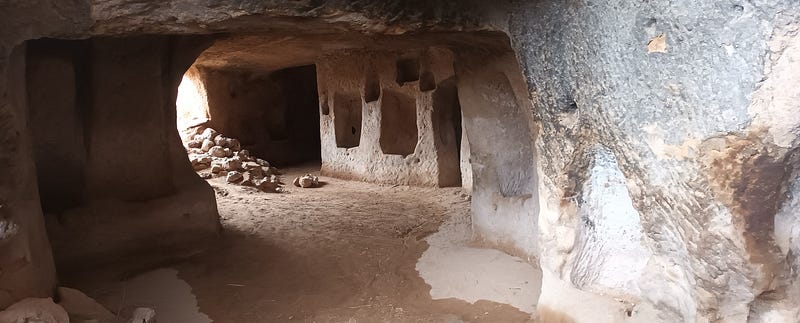
The people of this region were able to construct extensive underground cities, going down 12 floors, with passages up to 12–20 kilometers long connecting the different subterranean dwelling places. Today visitors are allowed down about 7 floors. I get a bit claustrophobic down there, but it’s still fascinating how these places were designed, built, and used.
The first two floors of these underground cities were used to house livestock and food supplies. When Muslim invaders from Arabia swept through the region, Christian and local Muslim inhabitants alike sheltered safely in these underground bastions.
Livestock and food were already housed there, so it was easy to evacuate quickly to the hidden underground refuge. If an entrance were breached, there was a plan B, places where a large immovable slab could be placed across the main underground passageway, blocking invaders, and allowing the inhabitants to escape through a hidden exit far away.
There’s much more I could say about Cappadocia, the experience of going (way) off the beaten path to some of the less-visited villages to see fascinating ancient monasteries, more unique rock formations, and the challenge of driving through a road under construction and half-covered with a pile of gravel.
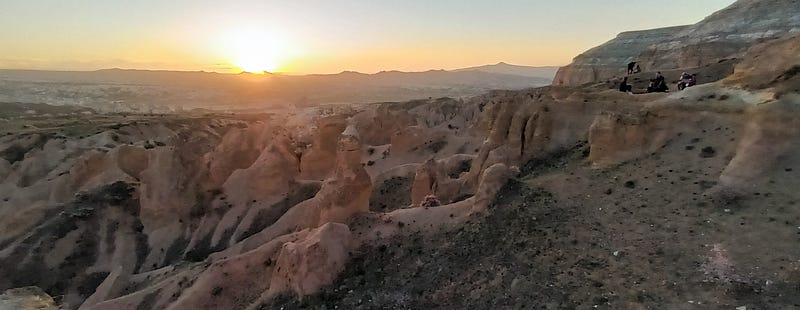
The breathtaking sunset views from any Lookout Point are locked in my memory, along with vast black rock formations that were the setting for a Star Wars episode. And the long hikes through Pigeon Valley, with its white sandstone terrain, where we discovered hidden passageways within the rock towers.
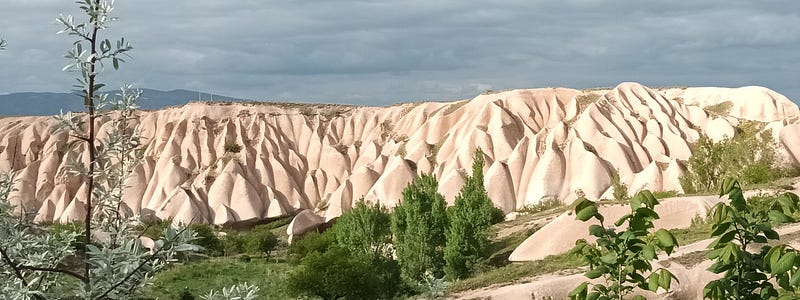
Or I could tell you how we took to the side streets in Avanos, a town famous for its pottery, and the kind old potter in his tiny back street shop who spoke French with my sister and remembered us a few years later on our next visit.
These are just a few of my Cappadocia experiences, that make it a spiritual place for a time-traveling romantic like myself. If you ever get a chance to visit Turkey, give yourself a few days here. You may experience the magic as well.