
Capital Punishment for Capitalist, White-Collar Crimes? What a capital idea!
Because the 99% is sick and tired of paying for the 1%

Ruby Noir 😈 asks: Redesign the sentencing structure of the justice system. What would you factor into criminal penalties? For example, would recidivism statistics play a role? Victim impact? Intent? Would you have the death penalty and if so for what crimes, if not — why not? Go in-depth and think about specific crimes. Do you care about white-collar crime or is the only thing you want to punish violent crime? Is there any such thing as a victimless crime and if so — is it actually a crime? Should criminal penalties be federally enforced or determined by the state? How do you think the criminal penalty structure should be determined and how should it be run? This will take thought to answer completely and cohesively.
That’s right: you read correctly. Those who commit capitalist, white-collar crimes should suffer capital punishment!
Here, let me be more specific. I’m referring to the worst and most egregious instances of what is otherwise known as white-collar crime that encompasses copyright infringement, mortgage fraud, securities fraud, cybercrime, racketeering, insider trading and embezzlement. Let’s not forget that the costs of embezzlement and stock manipulation prove far more costly to society than ordinary street crimes, including robbery, as the FBI cites the annual cost of street crime as $15 billion compared to nearly $1 trillion for white-collar crime.
In fact, numerous sources claim that white-collar prosecutions have declined from the mid-1990s, which stood at 17.6 percent, to 9.4% in the three years ending in 2012. Federal prosecutors rarely bring criminal charges against top executives of large corporations, whether it’s banks, pharma, or tech. And so the American public continues to be ripped off and even killed in certain instances with few repercussions.
In case you’ve forgotten, let me bring up the financial crash of 2008. Although this took place fifteen years ago, it’s worth thinking about what happened — especially since its effects continue to linger.
Let’s begin by considering the enormous costs of the crisis. Between November 2008 and April 2010, 40% of Americans suffered varying degrees of financial distress. Many retirement portfolios dropped by at least 30% by early 2009 — a daunting prospect for those either retired or ready to retire. (My parents’ portfolio dropped by over 50%.) Jobs were lost, resulting not only in a very high 10% unemployment rate but also the rise of structural unemployment (i.e., long-lasting unemployment). The same period witnessed the loss of 3.8 million homes.
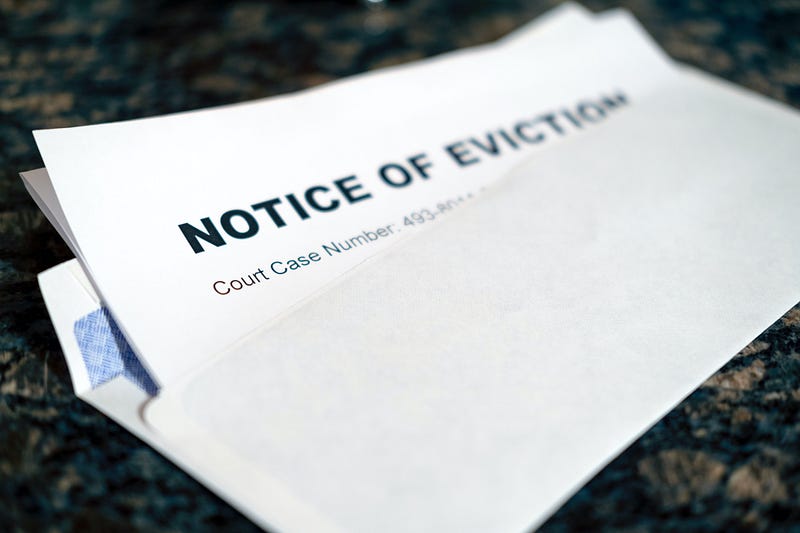
Moreover, according to the Federal Reserve Bank of Chicago, prime borrowers (to say nothing of subprime borrowers) who experienced foreclosure then were especially hard hit and had the most difficulty recovering compared to earlier periods. The adverse economic conditions of the recession also added insult to injury, leading to delinquencies on other credit obligations. At the same time, at least 15% of all prime borrowers suffered permanently lower credit scores, even if they didn’t foreclose.
That’s a helluva lot of people who suffered from the shenanigans of Wall Street bankers, lenders, and regulators — many of whom were actually cognizant of the risks posed by bets for and against the housing market. By now, you are wondering, how and why did they get away with it — despite Barack Obama promising that he would investigate and prosecute Wall Street while campaigning in 2008?
Here are some sobering facts. Privileged miscreants, unlike destitute street criminals, can afford the best defense attorneys as well as great public relations firms. They’re also shielded from prosecution not only by corporate laws, but yes, politicians and their henchmen. In fact, the Justice Department more or less did just that: threaten public disclosure of criminal behavior while exacting a substantial financial settlement as a price for keeping all details sealed from the public. And this is precisely what happened if we look at the separate accounts by William D. Cohan for The Atlantic and Jesse Eisinger for the New York Times. (I recommend a thorough reading of these sources, which I have just briefly distilled here.)
Both reports point out that only one banker was imprisoned: the Egyptian-born Kareem Serageldin, a senior trader at Credit Suisse, who was not even a top-ranking banker (despite his millions earned), but one who committed the relatively venial crime of inflating the value of mortgage bonds in his trading portfolio, thereby making them look better than they actually were.
Others far more directly involved in the crisis were more difficult to nab, Cohan suggests. Preet Bharara, the U.S. attorney for the Southern District of New York, denied that the evidence indicated clear misconduct by individuals (which is already suspicious since alarms had been raised as early as 2006), but instead attributed their actions to mere “recklessness and poor judgment.” Of course, as Cohan wisely reminds us, “this explanation strains credulity,” given the size of the settlements agreed to by the banks and whistleblower allegations. Incidentally, the $190 billions paid in fine and settlements came from the shareholders of the 49 financial institutions — not the pockets of those involved in the crisis — and moreover, were paid out as corporate expenses, some of which were also tax-deductible.
Then there’s the fact that a former prosecutor at the Justice Department in Washington, according to the New York Times, also observed that Breuer’s staff didn’t want to pursue cases if they were only 70% sure they could win a trial — even if they believe someone to be “100% guilty.”

This mentality was certainly at work when Bharara chose only to investigate insider-trading cases which were far easier to deal with than cases from the crash of 2008 which would require years of investigation and possibly never make it to court. As the NYT notes, Bharara was anything but the man “Busting Wall Street” as described by Time Magazine since he didn’t touch any of the top bankers. The only ones he managed to lock up were hedge funders Raj Rajaratnam and Rajat Gupta. (Hmmm, two more foreign-born, brown men…am I seeing a pattern?) Bharara also neglected more winnable cases in their own backyard, including none other than Lehman Brothers at the forefront of the crash.
Benjamin Wagner, the U.S. attorney for the Eastern District of California, operated by similar principles as he investigated JP Morgan Chase, an institution which knowingly tossed the worst mortgages into securities that failed to meet its credit standards before selling them to investors. Although Chase agreed to a $13 million settlement — paid out of shareholder money — the actual miscreants were not charged: indeed, the lengthy “Statement of Facts” simply glossed over the actions mentioned by whistleblowers without naming any names.
What about the delayed handling of the crisis? This begins with the Holder Doctrine — yes, written by none other than Attorney General Eric Holder himself in his days as Deputy Attorney General. Holder had already issued a memorandum in June 1999 that anticipated the “too big to fail” argument — namely, that it was dangerous to prosecute large financial institutions, given the “collateral consequences.” (I call it “too big to flush,” but never mind!) It didn’t help either that the Justice Department had experienced a number of corporate prosecutorial fiascos, which led to a greater focus on settlements rather than the punishment of such crimes. Prosecutorial skills were thus lost in the process.
Perhaps that’s why no serious national investigation of the pre-crash activities took place until mid-2012, more than five years after the criminal activity had passed? By then, the statute of limitations had expired, as Cohan notes — even if civil prosecution of the banks and bankers under a 10-year statute of limitations was still possible. At this point, Lanny Breuer, the head of the criminal division at the Justice Department, also reinforced the “too big to flush” — oops, “fail” — argument, adding that one must also consider the welfare of the company, industry, and markets in deciding whether or not to file charges. (Tell THAT to those who’ve already lost their jobs and homes!)
But perhaps here’s the real clincher for the delayed response and lack of action: several former prosecutors went so far as to admit that pursuing the bankers was never a real priority.
Curious minds want to know why. Not that it’s all that difficult to figure out. As the NYT puts it succinctly:
But again, the very ambitions of its prosecutors played a prominent role. Top governmental lawyers generally don’t want to spend their entire careers in the public sector. Many want to score marquee victories and avoid mistakes and eventually leave for prominent corporate firms with starting salaries at 10 times what they make at the Department of Justice. According to numerous former criminal-division employees, Breuer almost immediately signaled his interest in bigger things.
That’s precisely what happened — with Breuer and Holder returning to their white-shoe firm, Covington and Burling: a firm whose clients include clients Bank of America, Citigroup, and Wells Fargo. In other words, they probably hankered after the same toys beloved by Wall Street —more mansions, more SUVs, more yachts, trust funds for their grandspawn, etc.
Now, imagine if these Ivy-educated, overwhelmingly white Wall Street bankers had been treated like brown or Black street criminals by the Justice Department. There Upper East Side and Greenwich mansions would be raided. We would see public arrests with sirens and handcuffs. Mugshots plastered all over newspapers — and thorough humiliation. As Cohan puts it so precisely:
But without holding real people on Wall Street accountable for their wrongdoing in the years leading up to the financial crisis, the message that their behavior was unacceptable goes undelivered. Instead a very different message is being sent: for financiers, justice is just a check someone else has to write.
How come you can steal five dollars and have a penalty and steal $500 million and get off absolutely scot-free? What kind of message does that send to the basic of democracy?
Perhaps in that sense, America is truly a land for the free and the brave. Those brave enough to commit atrocious crimes and get off scot-free. That is, of course, if you’re sufficiently monied. Attended the right schools and universities. And are relatively pale-skinned. Heck, you can even reap a fat reward as did Jamie Dimon, the CEO of JPMorgan Chase, whose board of directors granted him a 74 percent raise with the resulting salary of $20 million. Obama later praised him as “one of the smartest bankers.”
Again, think of those who’ve lost their jobs and homes because of the crash. The rise of homeless camps. Not to mention the high rate of child poverty. Or the stress, drug addictions, and suicides that followed as consequences of this devastation.

So yes, I’m going to say it once more: I believe in capital punishment for capitalist, white-collar crimes. When criminals destroy the lives and livelihoods of so many Americans, they should pay just like any other criminal — even if they’re Ivy-educated and clad in $5000 suits and $1000 shoes.
© Frances A. Chiu, September 3, 2023. All Rights Reserved.
Recommended reading:
These are by far the best and most comprehensive sources.
How Wall Street’s Bankers Stayed Out of Jail — The Atlantic (William D. Cohan)
Why Only One Top Banker Went to Jail for the Financial Crisis — The New York Times (nytimes.com) (Jesse Eisinger)