
Canyon’s Reveal
Chasing a clearing storm in Bryce Canyon National Park
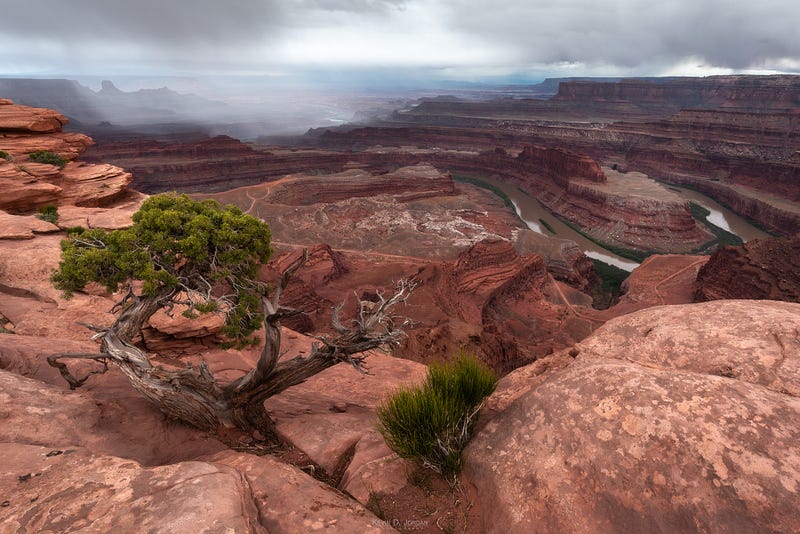
One of the most valuable lessons I’ve learned as a landscape photographer is that no amount of planning can guarantee ideal conditions. The most we can do is strive to give ourselves the highest probability of witnessing the conditions that we’re hoping to capture.
In the two weeks since I had left on a solo 5-week cross-country road trip, that lesson had already proved beneficial in a handful of situations throughout Tennessee and Colorado, so I did my best to stick with it while traveling through Utah.
After shooting sunrise from Dead Horse Point State Park outside of Moab, I made my way toward the southern part of the state. I took a brief stop at Canyonlands National Park to see the iconic Mesa Arch with my own eyes and then moved on so I could reach my evening sleeping destination of Kodachrome Basin State Park.
I spent the day moving through a series of drenching rainstorms, passing by Capitol Reef National Park, which I had to cut out of my 5-week road trip itinerary to save time, during one of them. These types of storms had been the primary weather pattern across central and southern Utah over the past week, but I had somehow managed to stay dry while out shooting in Arches National Park and at Dead Horse Point.
My plan for the following days was to spend a few nights in southern Utah, centrally located between a variety of places I was hoping to visit. I made the 5-hour drive to Kodachrome Basin via Route 12, a scenic byway that offers breathtaking views of the surrounding landscapes, some of which I was able to enjoy during a conveniently timed window when the rain halted and sunshine broke through the clouds.
Upon reaching Kodachrome Basin and setting up camp, I started studying weather forecasts for the surrounding areas I wanted to visit. Originally, my goal for the following day was to hike into the slot canyons of nearby Grand Staircase-Escalante National Monument but the heavy rains made many of the roads to get to those points impassable, and the slot canyons themselves reportedly filled with neck-deep water.
However, I noticed that forecasts for the following morning were calling for snow in the higher elevations that were expected to clear as the day went on. Interested in the chance to photograph the iconic orange rocks of the area under fresh snowfall, I decided to drive up into Bryce Canyon National Park the next morning and spend the day waiting for the storm to clear.
When I reached the entrance of the park the following morning, I was met with whiteout conditions and proceeded to drive slowly toward the view I had scouted on Google Earth the day before. By the time I reached my destination, the snowfall had lightened a bit, so I made my way to the edge of the canyon to assess the situation. As I set up my tripod, I could see a few inches of freshly fallen snow on the rock formations immediately in front of me. Beyond that, the canyon was still shrouded in clouds.
Not wanting to miss when the clouds started to lift, I decided to wait on the edge of the canyon and watch for more signs of a clearing storm. Within only about ten minutes, gaps started to appear in the clouds that had settled within the canyon, and small sections of Bryce’s iconic hoodoos and rock formations began to reveal themselves.
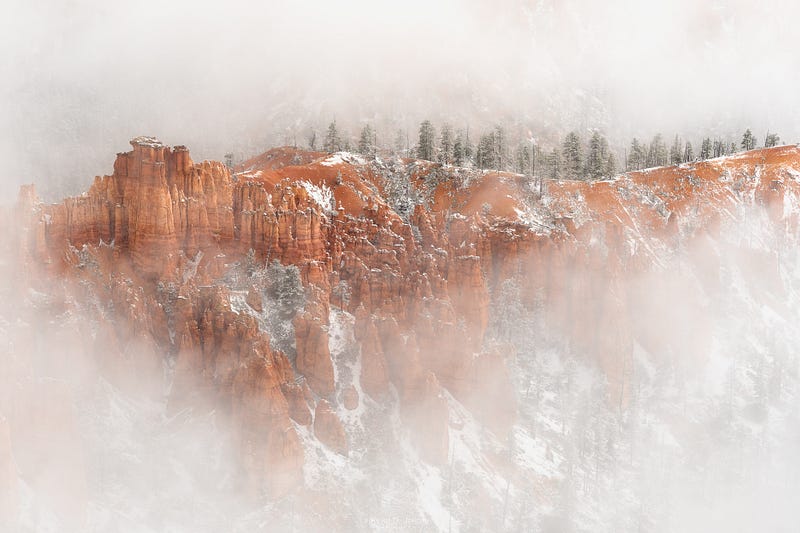
The process of the clouds breaking apart and lifting to reveal the entirety of the canyon in front of me took upwards of a half hour, during all of which time I was excitedly scanning the scene with my telephoto lens, looking for small, isolated sections to capture from within the larger landscape.
Oftentimes with my photography, I habitually begin by taking in a grand vista before starting to key in on smaller slices of the landscape. In this case, the clearing storm at Bryce Canyon provided me with the opportunity to only see snippets of the broader view that would typically be visible from my vantage point, so I experienced the scene as if the landscape was slowly being pieced together like a jigsaw puzzle.
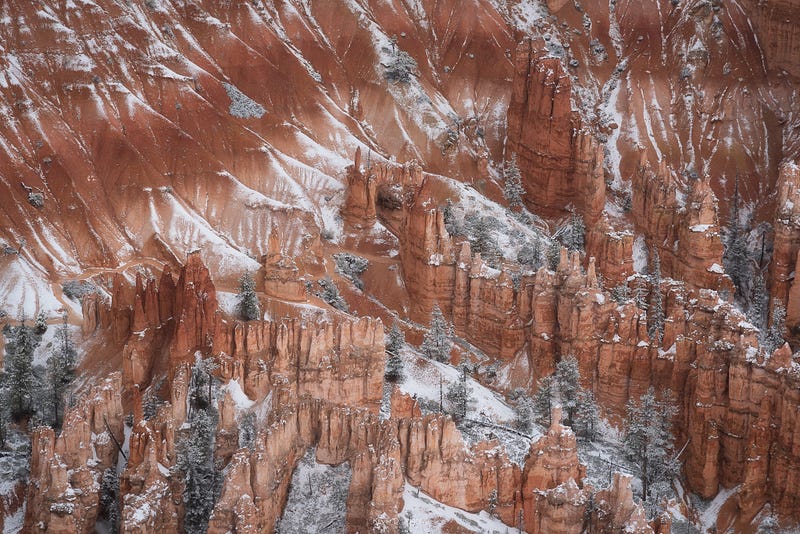
Once the clouds had parted and the sun began to shine into the canyon, I captured a shot of the completed jigsaw puzzle — the mesmerizing scene comprised of interlocking lines of snow-dusted hoodoos and coniferous trees — and packed up my gear so I could hike down into the canyon. The heat from the sun quickly began melting the fresh snow, so I stopped often along the beginning of the hike to capture the snow-dusted scene before it was gone.
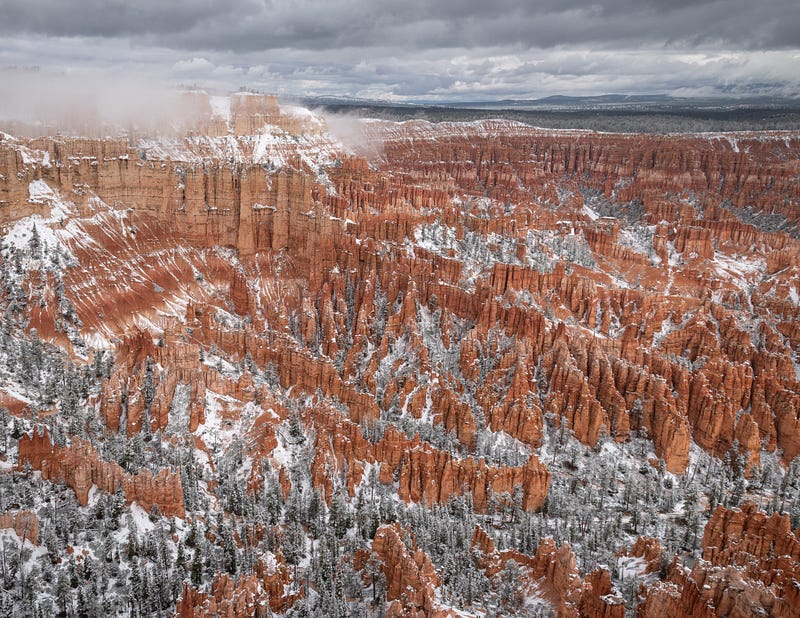
By the time I was making my way back up out of the canyon, the early morning layer of snow had mixed with the silt and clay-packed trails to form a few inches of slop, so I did my best to perfect a skating motion with my hiking boots to avoid getting suctioned into the mud too often. It was a technique I hadn’t used since I was in my 20s sampling sediment in coastal intertidal zones, so it was good to see such a niche skill find a time to come in handy.
Near the top of the canyon, my well-crafted technique had given way to more of a relentlessly determined trudge. When an older couple I passed by asked me how I was moving so quickly, I simply responded with “pure Irish stubbornness” (my best physical attribute) while gasping for air, to which they understandably said absolutely nothing.
I guess that wasn’t the practical advice they were looking for.
When I got back to my car, I caught my breath and ate some lunch, feeling fortunate while looking out over the canyon that had seemed like an entirely different place earlier that morning. Even though I had visited Bryce Canyon with the hope of seeing a clearing storm, I could have just as easily stood at the edge of the canyon and remained enveloped in clouds for hours.
We can always do our best as landscape photographers to put ourselves in a position to succeed, but we’re ultimately limited in what we can control about a landscape. And while it’s gratifying to make plans and have things work out in such a perfect way, it’s the countless times they don’t that have made me a better photographer. Learning to work with what the landscape gives me is what has often led to my best shots over the years.
Maybe I didn’t grow much as a photographer that morning in Bryce Canyon, but sometimes it’s nice to have things go as planned so you can stare in awe, giggle like an idiot, and enjoy the show.