
Can’t Run Like a Kenyan, But Can Cook and Eat Ugali!
Dancing Elephants Press Weekly Prompt 32 of 52
As a marathon runner who is much slower than Kenyan runners, I figured that I can at least eat like a Kenyan and make Ugali, Kenya’s staple food, which in 2017 was added to the UNESCO Representative List of the Intangible Cultural Heritage of Humanity.
Ugali is made exactly like polenta but with white maize flour, which makes it look like grits. For the polenta recipe, please enjoy my short form story Cooking with My Dad — The Daily Cuppa — Medium.
Growing up in communist Romania, I always viewed polenta as the poor man’s meal, as it only requires water, yellow cornmeal, and salt, but I never realized till recently how healthy and nutritious it was. It is also gluten-free and easy to digest. It pairs well with fish, eggs, cheese, and many other foods.
Like polenta, ugali is a great source of carbohydrates and is gluten-free.
Health benefits of Ugali
As a runner, I became fascinated with Kenyan runners for their speed, hard work, and resiliency.
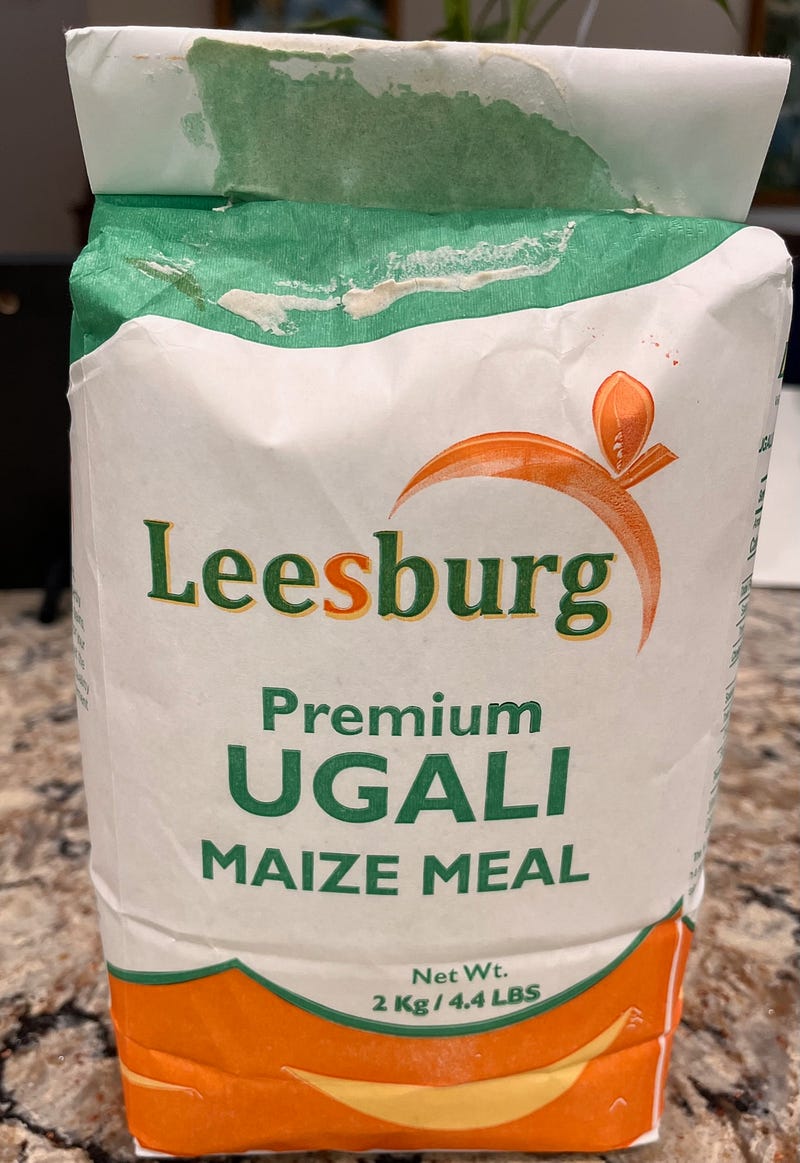
I did some research to find out what kind of carbohydrates and protein they eat and I came upon ugali. After a quick search on Amazon, I found Premium Ugali Maize Flour from Kenya and ordered it. I received it on Monday this week and did some more research.
Besides checking out recipes, I found out that Ugali has the following health benefits, according to Ugali and its nutrition benefits — NutrInformation:
- Ugali is a great source of carbohydrates and a low-glycemic food, especially the whole grain type.
- Ugali is a good source of fiber, especially from whole maize flour, sorghum, or finger millet. The nutritional benefits of fiber include: preventing constipation, effective blood sugar balance, and the management of diabetes.
- Ugali is a good source of B vitamins, especially Thiamin (B1), riboflavin (B2), and Niacin (B3). It also contains some Folate (B9) which is needed especially by pregnant women. Riboflavin also protects our eyes from cataracts which can lead to blindness.
Being creative with Ugali
As soon as I got my big bag of premium Ugali maize meal, I got busy cooking.
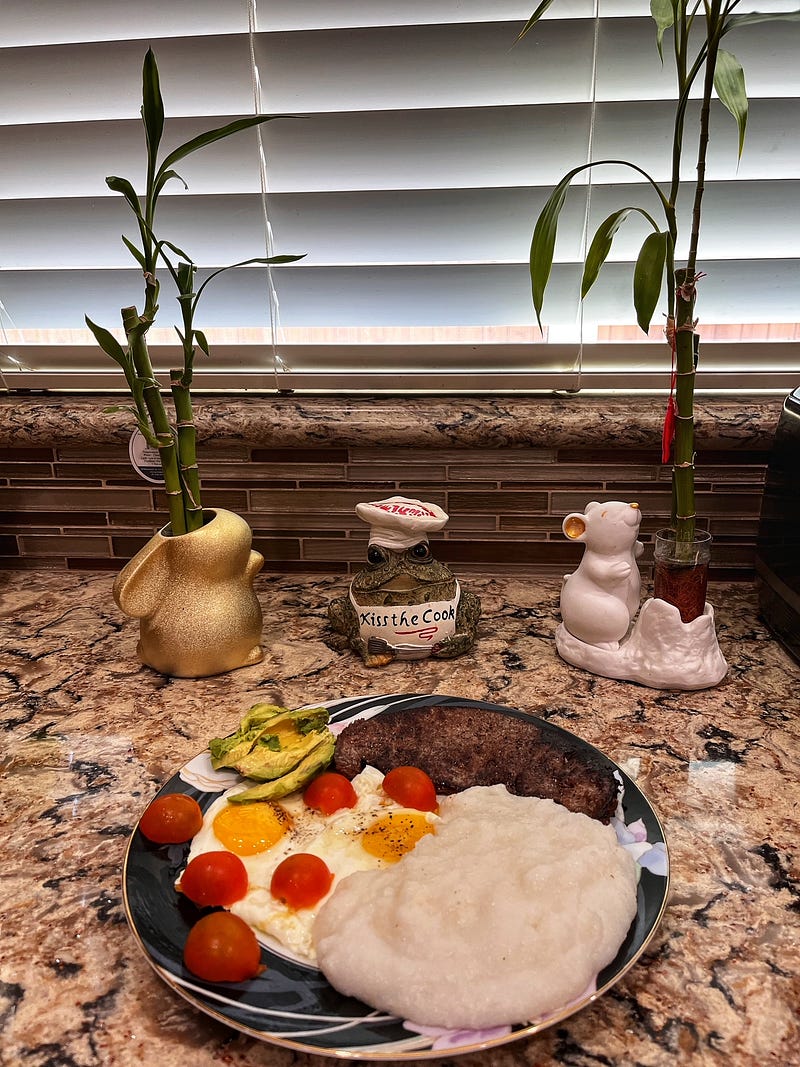
My first dish was not only rich in carbohydrates, but it was also rich in protein, since I ran 10 miles that morning, which included a speed workout with my speedy friend and training partner Bryn. As shown in the top picture, I had Ugali with beef liver and fried eggs, small red tomatoes, and avocado slices.
My second dish was also delicious.
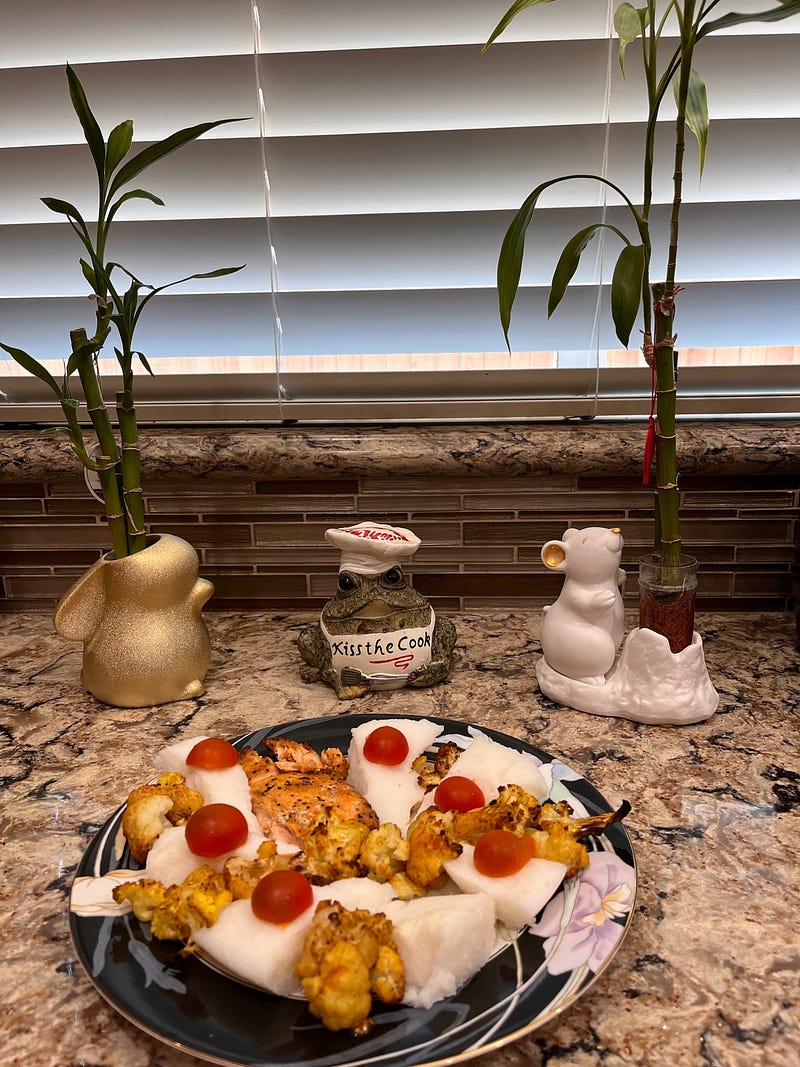
Ugali with roasted salmon and cauliflower hit the spot for lunch. As I relished each bite, I wondered why American restaurants are so unimaginative and serve potatoes and rice as side dishes when there is Ugali or polenta.
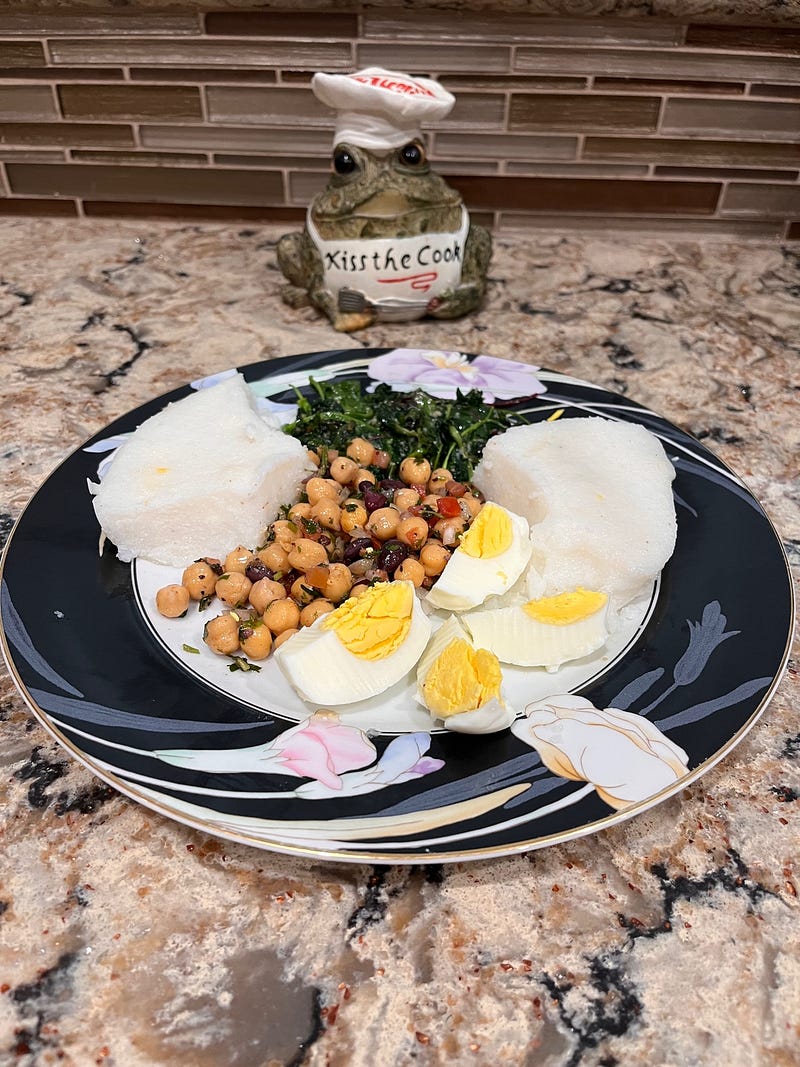
For dinner, I went for a vegetarian dish: Ugali with beans from Trader Joe’s, sauteed greens, and a hard-boiled egg. So light and delicious. And the combinations for Ugali meals are numerous.
Just use your imagination to add any vegetables and protein you wish to your dish — it could be fish, or anything else delish for you to relish.
Final takeaways:
- Although food names differ from Kenya to Romania, it shows you that Ugali and polenta are so similar. I grew up eating polenta. Although my cousins and I called polenta the poor man’s meal, as it requires only yellow cornmeal, water, and salt, I never understood how rich I would feel from cooking polenta with my father — filled with love and memories.
- The fewer ingredients the healthier.
- Ugali is not only simple to make, but it is an extremely nutritious and comforting food to share with loved ones.
- Ugali can be paired with stews, vegetables, eggs, meat, and beans to name just a few, so it’s never boring.
- Whether it’s polenta or Ugali, it shows that we’re all essentially the same.
Works Cited:
Ugali and its nutrition benefits — NutrInformation
Many thanks for the inspiring and fun prompt about food, Vidya Sury, Collecting Smiles! Can’t go wrong writing about food and making readers hungry — ha! ha!
I loved Akemi Sagawa’s food article about comparing cooking to painting. I ran The Tokyo marathon in March this year and I ate Miso soup with rice before running my marathon. It was the perfect fuel.
I also loved Kerrie Gutierrez-Diaz tortilla article. My son loves tacos, so I will try to make them from scratch.
I am honored to be part of The Dancing Elephant Publication and have five of my essays published in Holistic Journey Toward Wellness, a wonderful anthology. Please buy it and enjoy its positivity year-long.
For more poetic musings and short-form philosophy, please check out my new book, Inspirational Signs for More Sunshine in Your Life and Morsels of Love, A Book of Poetry, and Short-Form, published in 2021. You can also order directly from my website www.carmenmicsabooks.com to receive an autographed copy.
If you like podcasts, please listen to Seeds of Sunshine, a multigenerational podcast that I started together with my daughter.
Suppose you like this article and want to read more such articles without any restrictions. Why not consider becoming a Medium member (if you are not one already) by using my referral link below?
Join Medium with my referral link — CARMEN F MICSA
To buy me a cup of coffee, go to https://ko-fi.com/carmenmicsa. Thanks for reading and for your support.


