
No, Black People Cannot Be Appropriators.
Cultural Appropriation
When it comes to appropriation, it seems that there’s a lot of people who are confused. Appropriation is not exactly a term that is learned in high school; I myself cannot ever recall anyone accusing anyone of appropriation when I was coming up as a kid. Appropriation seemed like one of those things that took place, but you just could never place a word on it.
With the confusion on appropriation, there’s a lot of discussion of not only what appropriation is, but if black people are appropriators or not. Let’s at least agree on what appropriation is first.
In essence, black people suffer a multitude of dehumanizations for things that white people do for fun. So yes, that lack of respect for the humanity of the originators, paired with unequal sociological power/privilege dynamics, makes appropriation what it is.
The definition of appropriation is pretty insufficient; it states: the action of taking something for one’s own use, typically without the owner’s permission. The concept of cultural appropriation, however, is loosely defined as “the adoption or use of the elements of one culture by members of another culture.” You see, similar to the word/concept of racism, the concept of appropriation isn’t well placed. Much like the with the concept of racism, we as black people (or any other non-white persons) cannot trust dictionary definitions (yet).
What exactly is Cultural Appropriation?
Cultural appropriation, to my understanding, has two requirements that need to be met that makes it what it is.
The first thing that needs to exist in order for cultural appropriation takes place, is [1] a sociological/institutional power difference between the originators and the takers (much like how racism works). People often miss this first requirement and call any and everything appropriation. Quite often you will find a relatively dense person (even black people miss this detail) who will ignorantly state, “how come it’s not appropriation when black women straighten their hair? Aren’t they appropriating white culture?” What this ignorant person is missing is the fact that black women are FORCED to adhere to white standards just to be accepted in a white supremacist nation. That’s not appropriation, that’s assimilation.
Assimilation, is a survival mechanism, not an artistic take-from-those-with-the-least type of thing. Appropriation, due to sociological power dynamics between various groups of people, is a one way street that one group benefits from, and the other suffers erasure. Consider how privilege systems work here. White privilege versus black status.
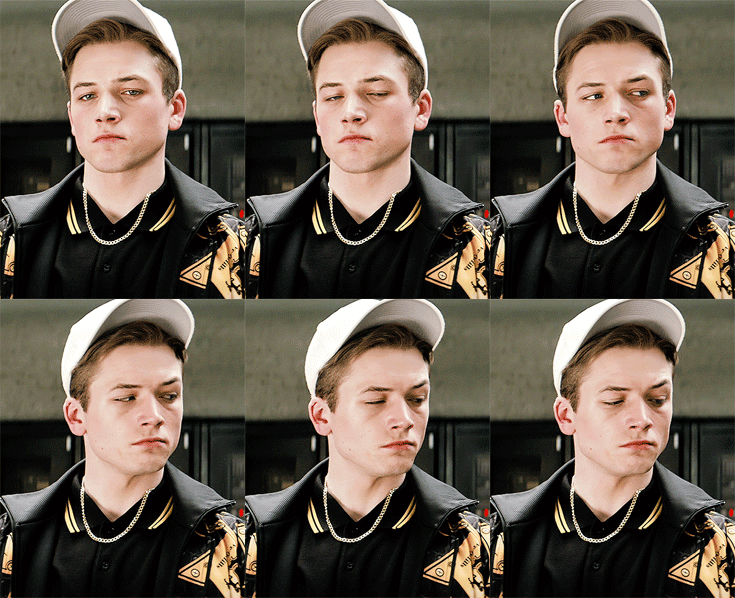
The second requirement that needs to be met, [2] is the lack of Respect, Acceptance, Appreciation and Approval of the originators. This lack of respect, acceptance, appreciation and approval of the original makers and owners of said cultural artifacts. This too, is another detail that conveniently gets dropped.
An example of this, is how black people are often marginalized for their own cultural artifacts, but white people are accepted appreciated and approved of, often substituting black people! When whites receive what we are calling here the respect and appreciation, but black people do not, black people are suffering ERASURE, which is a dangerous, psychologically violent place to be.
From this point, white people, the biggest appropriators in the world, begin Infinity Stone reality warping antics; cornrows become “boxer braids”, Miley Cyrus invented twerking, Rachel Dolezal makes sense. Black people are still marginalized, anathematized, demonized wearing their own protective hairstyles while white women are trendy, edgy, hip, and fashionable when they adopt the same hairstyles. In essence, black people suffer a multitude of dehumanizations for things that white people do for fun. So yes, that lack of respect for the humanity of the originators, paired with unequal sociological power/privilege dynamics, makes appropriation what it is. So from here, it must be understood that merely wearing, using, are performing a cultural artifact of another isn’t appropriation. How you or society answers to the originators and the takers is what matters the most here.
Hold up Johnny — what about cultural exchange?
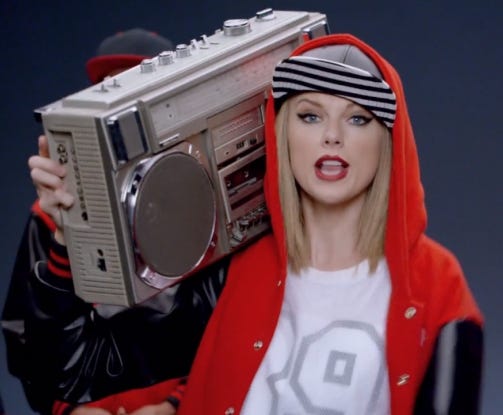
Well let’s talk about that.
A cool cultural exchange occurs when respect is involved. If those with the most sociopolitical power and privilege respect (and defend) the wishes of those whom they emulate, then there wouldn’t be a problem.
If white people all wanted to rock cornrows, copy other black styles of dress, and appearance, then white people as a whole are required to listen to black people when we say your (white supremacist) cops are murdering us (black people) with impunity and need to stop.
If a white person wanted to engage in for example, adopting culturally black artifacts for their music style, then that white person is required to use her white privilege to speak out against racism that her white counterparts continue perpetuate. So no, we are not dealing with a basic cultural exchange when it comes to white people using black cultural artifacts for exploitation.
No, Black People Cannot Be Appropriators.
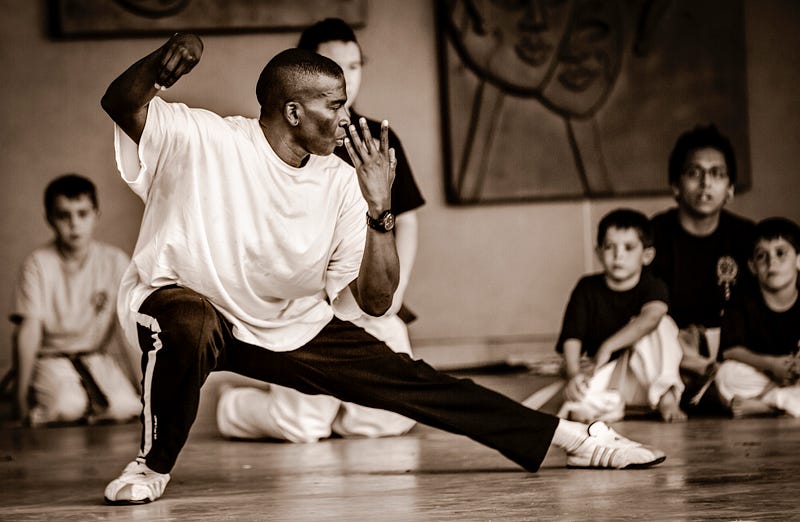
One of the biggest debates raging by the time of this publishing, is if black people — Afro-Americans — can be appropriators. The answer upon further analysis is a resounding NO.
The the photo above we have a black man practicing Wing Chun. Is a black man taking form in a Chinese cultural artifact, appropriation? No. In fact, Martial Arts is one of those easily transferable cultural artifacts. For someone to appropriate a martial arts form, one would have to practice the form while having a disrespect for the originators, and traditional martial arts by default inculcate respect for the craft and the originators before anything else. When it comes to Asian cultural artifacts as a whole, black people cannot appropriate it, and won’t be appropriators. You cannot take a mass of people who were removed from their own last names even, and expect them to not try to find identity somewhere else.
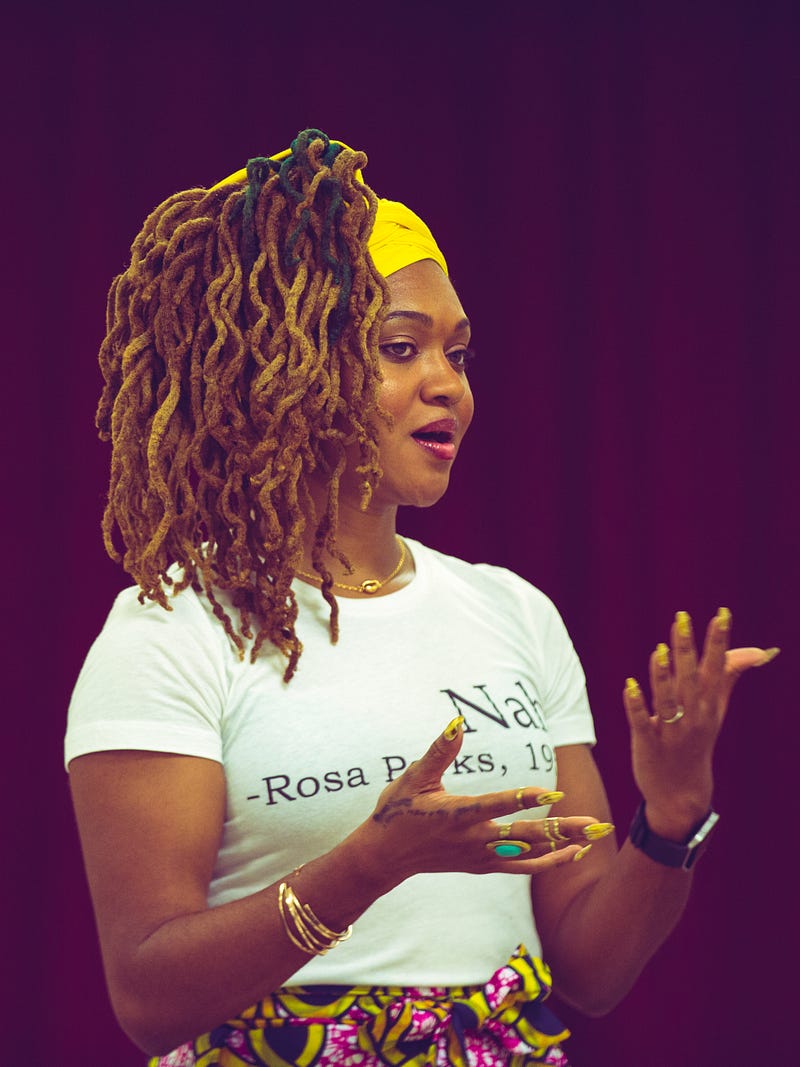
Another fascinating discussion is when African folk attempt to state, suggest, or even accuse Afro-Americans of appropriating African culture.
Once again, no. It’s impossible for Black people to appropriate African culture.
Africa has a significant diaspora around the world, with a considerable portion who is robbed from their African identity via the Trans-Atlantic Slave Trade.
It is categorically cruel for any African people to be upset when black people of the Americas, attempt to reach-back and claim an identity that they were stripped from.
I’ll have to say, that I have no idea why an African person would attempt to accuse Afro-Americans of theft of African cultural artifacts. First and foremost, there has to be a great level of sociological power difference between the takers and the originators. Black people of America have influence, being that we are the most emulated people worldwide (and there’s privilege in that), but we don’t have sociological power. Remember, privilege is NOT power. The second problem with this accusation is the fact that there isn’t a level of disrespect placed onto the originators. In fact, black people of America are often on the forefront of studying everything African, which is a part of that reach-back. There is a hunger for identity in black people because of the institution of American Slavery. So no, black people cannot appropriate African culture.
Black people, while highly influential, are not in position to replace African people, or erase African people; we are African people. For the most part, Afro-Americans adopting traditional African styles of dress is a part of a global trans-continental cultural exchange, which facilitates a worldwide brotherhood/sisterhood.
Have you ever met for example, a member of African Diaspora outside of the United States? Have you ever witnessed hip-hop from another country and language (practiced by black people)? There’s a familiarity, a sense of shared identity. Traditional African styles of dress, American hip-hop, all the pieces matter.


