
EARLY SCREENING COULD BE YOUR CRUCIAL CATCH
Cancer Screening: Who Should Get Which, When?
The Canary Foundation reports between 70% and 100% of cancer deaths can be prevented with early screening.
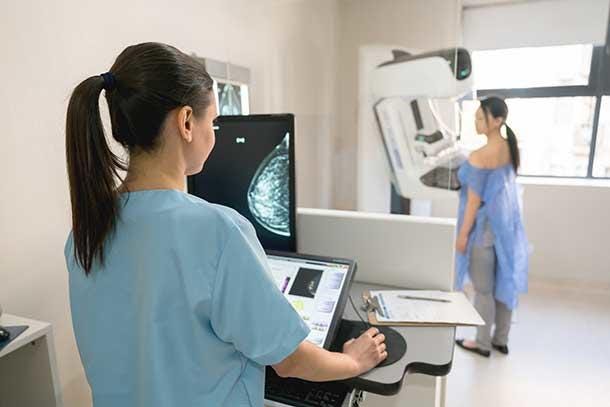
Early Screening Is Crucial
Nearly ten million people will die unnecessarily this year because they skipped or put off early screening. Cancer needs to be caught in the early stages to give a patient the best chances of long-term survival.
If your doctor suggests screening, it is not necessarily because they suspect cancer but that you are in a high-risk group. This risk could be hereditary or due to habitual causation, such as tobacco use, and heavy drinking.
According to the World Health Organization (WHO), “Human papillomavirus (HPV) causes cervical cancer, and hepatitis B virus (HBV) causes liver cancer. Vaccination against these two viruses could prevent 1.1 million cancer cases each year.”
Plus, results have shown that screening by a specific age are more apt to catch cancer early.
Breast Cancer Screening
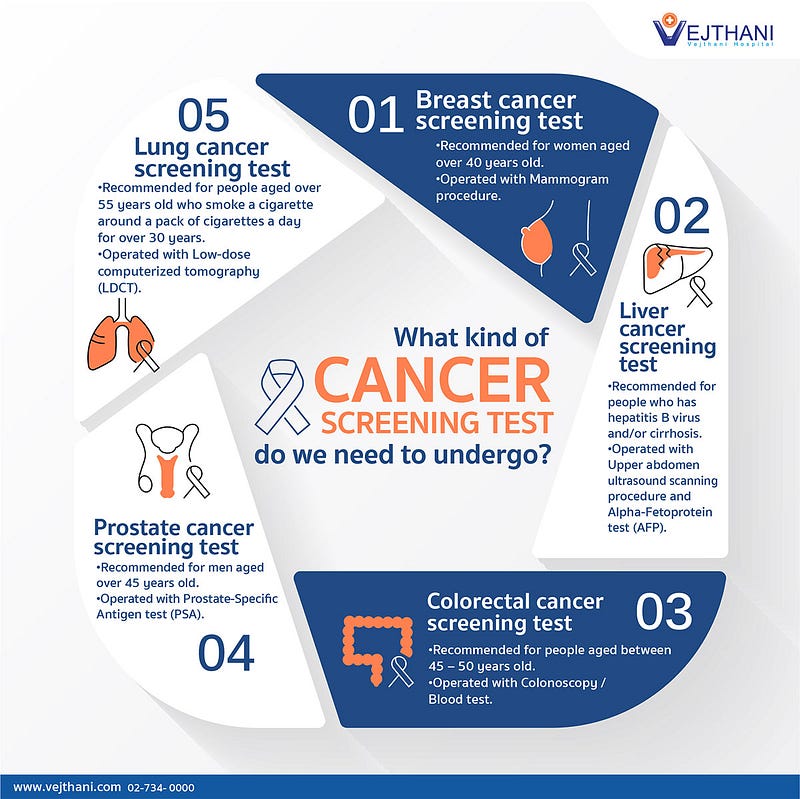
Breast cancer screening involves an x-ray of the breasts called a mammogram. Currently, this is the best way to check for breast cancer in women. Different clinical sources recommend different ages; however, women typically start getting mammograms starting at age 35 to 40. A family history could suggest a younger age for screening.
Breast cancer detected in an early stage has a 98% survival rate for the first five years.
Ovarian Cancer
Screening for this cancer includes a transvaginal ultrasound and the CA-125 blood test. Doctors suggest screening begin at age 30 or 35. If you have a family history of this cancer, that recommendation is five to ten years earlier.
Ovarian cancer has a 90% survival rate for five years if discovered in the early stages.
Colon Cancer
It is recommended people start getting screened for colon cancer at age 50. Currently, the standard test for this cancer is a colonoscopy. There have been advances in stool-based tests, though a positive test still requires a colonoscopy to confirm polyps or cancer. Talking about this subject isn’t the most enjoyable, and neither are colonoscopes, but we know how important early detection is.
This YouTube video presented by Mechanisms in Medicine explains the colonoscopy process.
When caught early, colon cancer is very survivable at a 91% five-year survival rate.
Lung Cancer
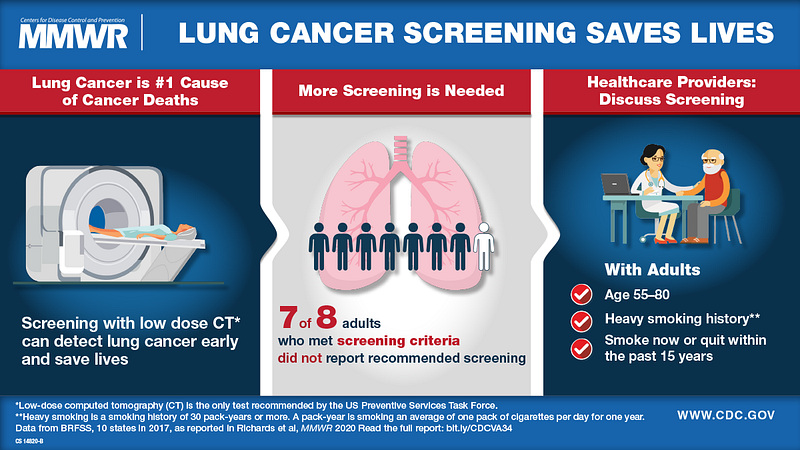
Doctors often recommend either a chest x-ray or a low dose CT scan. Individuals between 55 and 80, especially if they have a history of heavy smoking, are a current smoker, or were a smoker in the last 15 years should get screened annually.
However, a low-dose CAT scan (LDCT) has been proven much more effective at detecting lung cancer early in high-risk patients than chest x-rays alone.
With a 96% survival rate if caught early, treatments are beneficial for lung cancer. Unfortunately, only around half of all cases are detected in the early stages.
Throat & Oral Cancer
An endoscope is used to detect this cancer. This tool takes pictures of the inside of your throat so your doctor can look for any issues.
Coming in a little lower than some other cancers, it has an 80% five-year survival rate if found early on.
The Oral Cancer Foundation recommends annual screening starts at age 18. It is suggested you start being screened at the age you begin tobacco use. This is a two-minute test your dentist can do during your annual check-up.
Prostate Cancer
A PSA blood test or a prostate exam are ways in which it can be detected. A prostate exam does require a digital rectal exam, but again, early detection for cancer is critical. If you are African American or have a family history of this cancer, you should start screening at 45. If not, the recommended age to start screening is 50.
Zero Cancer.org states, “Overall, African American men are 1.8 times more likely to be diagnosed with — and 2.2 times more likely to die from — prostate cancer than white men.”
Prostate cancer caught early has up to an impressive 100% survival rate.
Now that You Know Put Prevention into Practice
We know the statistics of early screening are overwhelmingly positive. If you have concerns or have met the age requirements for any of these forms of cancer, start getting tested. Yes, cancer is scary, but not knowing or starting treatment is much worse in the long run. Put prevention into practice by getting all of your necessary cancer screenings.
And when cancer is discovered, keep in mind; no matter how daunting your treatment might seem, you can get to the other end of it and move forward with your life.
References:
https://www.who.int/health-topics/cancer#tab=tab_1
https://www.canaryfoundation.org/wp-content/uploads/EarlyDetectionFactSheet.pdf

Stephen Dalton is a retired US Army First Sergeant with a degree in journalism from the University of Maryland and a Certified US English Chicago Manual of Style Editor. Top Writer in Fiction, Short Story, VR, NFL, Design, & Creativity. Editor of Pop Off, Top Dalton’s Blog, 100WordStory, B.O.S.S., and SportsShorts100WordsOnly
You can see his portfolio here. Email [email protected]


