
Cancelling Eugene Peterson
The famous pastor got on Evangelicals’ bad side
New details are coming in about the eerie day in 2017 when Eugene Peterson, the most famous pastor in the world, got cancelled.
At age 84, the author of classics like his memoir The Pastor, and his ultra-bestselling Message Bible—felt he was about done. He agreed to an interview with Religion News that was an end-of-career overview.
And indeed, the interview ended it.
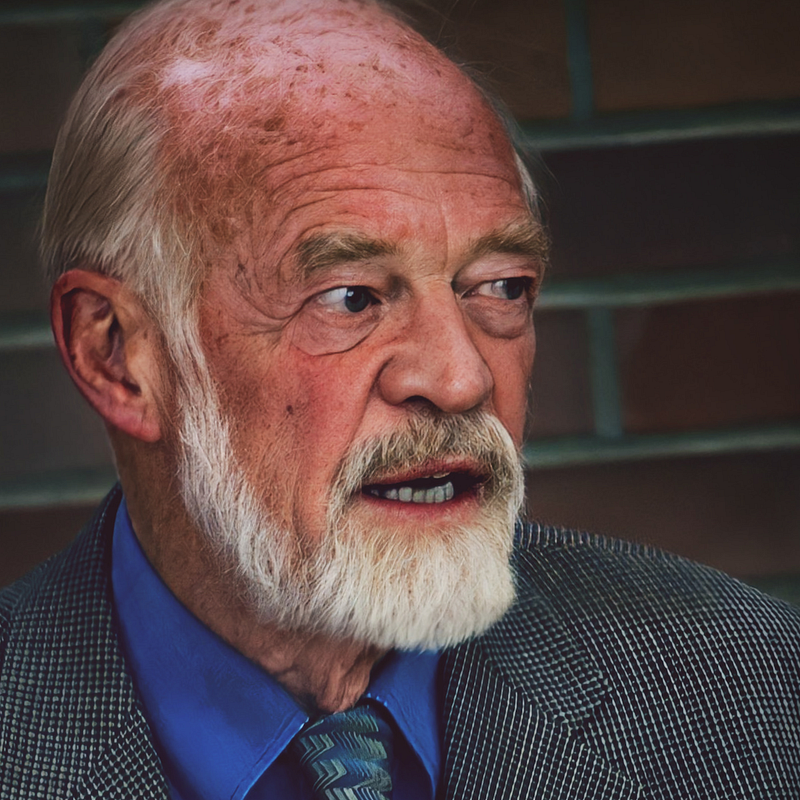
Peterson had been interviewed before by religion journalist Jonathan Merritt. But this time, Merritt seems to have been acting on a tip, and threw in a new question.
“You are Presbyterian, and your denomination has really been grappling with some of the hot-button issues. I think particularly of homosexuality and same-sex marriage. Has your view on that changed over the years?”
In fact, Peterson had been talking for years about his views having evolved.
At an appearance in 2014, he recalls his journey. “I accepted the status quo,” he says. But the issue kept coming up in his church, incited by events like suicide and divorce, and “I started to change my mind.”
He seems to have changed his views on gay marriage in 2014, accepting it on the unusual grounds argued by the Catholic theologian Gerald W. Schlabach. If the apostle Paul says it’s “better to marry than to burn,” he says, then that must be true for gays too.
As he chatters on in the 2017 interview, Peterson seems not to be aware he’s making a statement that will rock Evangelical Christianity.
“I wouldn’t have said this 20 years ago, but now I know a lot of people who are gay and lesbian and they seem to have as good a spiritual life as I do. I think that kind of debate about lesbians and gays might be over. People who disapprove of it, they’ll probably just go to another church. So we’re in a transition and I think it’s a transition for the best, for the good. I don’t think it’s something that you can parade, but it’s not a right or wrong thing as far as I’m concerned.”
When asked if he’d officiate a gay wedding, he says: “Yes.”
A forthcoming biography on Peterson has more.
Set to be released on March 23rd, Winn Collier’s A Burning in my Bones says that Merritt held onto the interview for a few days, unsure of what to do.
Merritt is gay himself. “This changes everything,” he recalls telling a friend.
But he was concerned about Peterson’s well-being. “I knew what would happen if I published this interview,” he says. “He would get crucified. But if I didn’t publish it, from that day on, I could no longer call myself a journalist.”
This, and narrations to follow, strike me as tailored to the point of being misleading. Merritt packaged the interview as sensationally as he could—with the ‘lead’ that Peterson had changed his mind on gay marriage.
It hit social media like a detonation.
Evangelicals are a community that are regularly told to believe that gay people are not ‘saved’, not part of the spiritual community, and even not to be interacted with on the level of friends and family.
To have a respected cleric say that gays should be able to marry?
That wasn’t going to work. For Evangelicals, marriage is the central spiritual practice—often taken to be the step toward full inclusion in the community. To be married often telegraphs as being godly.
Evangelical bloggers went to work denouncing Peterson. That he’d been a vital voice for decades seemed, suddenly, irrelevant. Like heretics from ages past, he had to be cancelled.
Hours later, the LifeWay chain of Christian bookstores put out a statement. They were “attempting to confirm,” they said, that Peterson was not holding to “a biblical view of marriage” — in which case, they “will no longer sell any resources by him, including The Message.”
Collier narrates:
“Eugene’s phone rang like a tornado siren. Friends called and described the inferno — that he was being placarded and shredded, or cheered, by twenty million people. Eugene was dumbfounded. A man who barely knew how to open his email could not comprehend the social media maelstrom or how his interview (that he remembered only in pieces) had set off such a shock wave.”
Peterson’s health was a question.
The next year he was noted to be suffering from dementia. He seems lucid in the interview, but being attacked by twenty million people seems to have gotten to him. Collier continues:
“Confused and distraught, his mind muddy, Eugene tried to understand what was happening and what to do about it. Rick told him he could leave it alone and let others battle it out or he could issue a statement.”
Did Peterson write the statement he put out? Evidently not. It was drafted by others, and put out under his name:
“To clarify, I affirm a biblical view of marriage: one man to one woman. I affirm a biblical view of everything.”
Peterson died the next year. In its obituary, Christianity Today quoted from the 2017 Merritt interview, just not the “gay part.”
The matter was put into a memory hole. The church was back to its true position on the matter, which is, as much as possible: Silence and denial.
The new biography discusses Peterson’s earlier wrangling over the gay issue.
He was a scholar, and yet wasn’t sure if the Bible was being really understood in the traditional readings. The ‘sex passages,’ he suspects, might concern other subjects? Like “promiscuity and pagan religion…”
He writes: “it is pretty clear that homosexual orientation as such is not a sin. I think the evidence is pretty clear on that by this time.”
He keeps coming back to the conclusion that he just doesn’t know. He writes:
“I don’t have a position on this subject. Yes, I have considered the biblical evidence carefully and prayerfully. But I have no certainty. I don’t think the biblical evidence is nearly as black and white as the evangelicals maintain. And…I am highly offended by hate rhetoric in the name of Jesus.”
He hones in on the point that “weighs on” him the most.
“The American evangelical church has been so mean towards homosexuals, excluded and discriminated against, taunted and reviled, that I want nothing to do with the arguments and prejudices that lurk just beneath the surface of so much same-sex concern.”
He liked the idea that a committed relationship was spiritual.
He offers that marriage might do for gays what it does for straight people in Christian theology—make sex not horrible, i.e. ‘sanctified’.
He suspects the Bible doesn’t really know about ‘gay marriage’. He writes: “The biblical world had no notion of what is being proposed now, same sex couples committed by marriage covenant to faithfulness.”
It might’ve been nice if Peterson had broached these issues publicly as of 2014, or earlier. Thinking about these problems for years, he only ever slipped a few lines into Q&A. It’s not much of a ‘profile in courage’—and set up the turbulence of his final interview.
I’m struck that he made no use of the “love” teachings (John 13:34, etc.). He was focused only whether to authorize a clerically-overseen marriage ceremony—an event about which the Bible, truly, knows nothing.
He wasn’t ready for gay clergy, he adds. But if his church does it, he’ll accept it, he says. His own vows call upon him, he notes, “to be subject to my brethren…and to (further) the peace and unity of the church.”
Peterson’s remarks shocked Evangelicals—but he wasn’t even one himself
He was read by Evangelicals out of a bit of cultural necessity. They don’t have many scholars, and fewer pastors who want to really reach people.
What they have are a hell of a lot of consumers.
Evangelicals turned to Peterson as a warm, wise voice who still read as religiously acceptable. But he wasn’t even that Presbyterian. Even back in the 1960s, as he’ll write, he’d realized that existing models of Christianity left him cold. He saw the faith as something closer to ‘higher consciousness’, with an emphasis on community.
He kept up the traditional Christian face, respected as a traditional cleric—while writing in a different mode. In his 1999 book, Christ Plays in Ten Thousand Places, he writes of how being ‘religious’ began to seem like it wasn’t happening in ‘church’, but among:
“…rocks and trees, meadows and mountains, birds and fish, dogs and cats, kingfishers and dragonflies — obscure and fleeting but convincing confirmations that we are in this together, that we are kin to all that is and has been and will be.”
But in his cancelling drama, he didn’t even defend that. He tried his act of being wise and humane. That didn’t play as well as it usually did—and he panicked. 🔶


