
Culture | Politics & Morality
Canceled?
There’s little redemption in a rerun, but maybe some deserve a sequel.
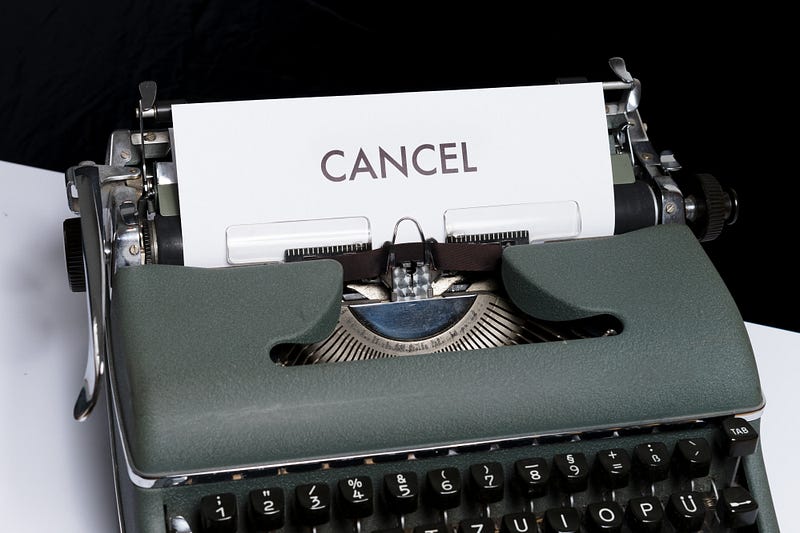
I dislike censorship. I believe in the “marketplace of ideas.” And, in principle, I am opposed to “cancel culture.”
I am glad that John Wayne was never one of my “heroes.” The fact is, I’m not anyone’s superfan; I can’t think of anyone whose sins or feet of clay would “crush” me, should I learn of them, today. Bill Cosby’s convictions for sexual assault were probably the biggest shocker, in recent years, for me. I’ve grown up with celebrities behaving badly, but as we learn some of the more shocking moral failings of our favorite actors, musicians, and politicians, I’m just glad I don’t idolize any of them. As for John Wayne, I lived nearly 50 years without hearing the ill-kept secret that he was a rabid racist, and maybe a generally horrible human being.
I’m not a huge fan of Westerns. To each his own, when it comes to that. I liked “The Hellfighters,” but Wayne’s role in that wasn’t the one I found most memorable, even if he played the lead. It wasn’t until my son took a class on History and Westerns, and another friend shared this link about Wayne’s infamous Playboy interview, that I had any idea what an awful mindset he had. If I had read that, just 20 years ago, I’d have thought it was a joke. Now, it depresses me to think that we still haven’t come much farther.
Cancel Culture
I shared that on social media, recently, and one of my friends remarked, “I do not support ‘cancel culture’ as I feel its excesses are not dissimilar to the Taliban (well, except for the executions in soccer stadiums). And I am able to separate artists from their art. Ted Nugent is a horse’s ass, but he is a damn good guitarist. Wayne was also a horse’s ass but he did make some good movies. Being able to see things with an open mind is something neither [side] are able to do which makes honest conversations on important topics impossible.”
Sometimes, my biggest problem is the ability to see other points of view. Not to agree with them, but you can’t win an argument if you are too stubborn to see that there is one.
But what is “cancel culture”? Here is a very worthwhile look at what “cancel culture” is not:
But I think Barack Obama made a good point, too:
I don’t support “cancel culture” when someone with poor communication skills commits some silly, all-too-public, error in judgment. A typo can get you “canceled” on Twitter, some days. It’s hard to express a worthwhile thought in 280 characters, though it’s a good exercise for writers to try — perhaps using less incendiary thoughts.
Why Cancel Culture is Problematic
We don’t all have advanced degrees in subjects like, “Intersectionality, Sex, Gender, and Race,” nor have we read an entire library on the relevant topics in order to understand the terms of art. Saying “educate yourself” makes sense, but assumes the listener knows what keywords to Google or how to find the library. It assumes they know things they obviously don’t know. And it assumes they won’t find the wrong teachers — people who won’t tell them what you want them, need them, to hear.
Some people really just want to talk, heart-to-heart, with people. And we don’t always do it well.
“Most people do not listen with the intent to understand; they listen with the intent to reply.”
via GoodReads Books
I don’t support “cancel culture” when someone writes badly but treats people well. Intention matters; actions matter. Life experience, too, matters.
When you reject people, they don’t “see the light.” They see the waiting arms of the people who agree with them and validate their opinions.
Still, There Does Come a Point
You can only be disingenuous about it for so long. You can only ask the same questions 3, 4, 5 times before people figure out that you’re just seeking an answer that validates your own opinions and confirms your bias.
And I’m sorry — Ted Nugent’s guitar-playing skills don’t even come close to overshadowing his disgusting character flaws — flaws he openly flaunts at every opportunity. He’s proud of them. If someone is so awful I wouldn’t have them in my home, I don’t want to support them by buying their products or contributing to their royalty payments.
When responsible gun owners think you’ve shown yourself unfit to be on the board of the NRA, due to your hateful and irresponsible bigotry, you may be a has-been:
This isn’t a question of “political disagreement.” This is a matter of morality.
I can compartmentalize — and so can you, if you’re honest. If you’re still finding excuses to use Facebook, don’t judge others too harshly for their ability to straddle a moral ambiguity. But I’m trying to think if there are any racist, sexist, harassing celebs that I would make an exception for, and I’m coming up short. Although I may admire someone’s work, I have never been anyone’s “unconditionally devoted fan.” I also realize there are many talented people in the world who deserve fame and fortune more.
Republicans often say they don’t want to hear a celebrity’s opinion on politics — unless, of course, it’s an endorsement of their favorite candidate, then by God, sing it out, loud and clear. Democrats don’t have a problem with like-minded celebrities behaving badly — up to a point. But I’m happy to hear their opinions, if they care to share them. They have as much right to express them as you and I do, and I have as much right to like or dislike the total package.
Sometimes, the total package is what can make or break someone, in a fan’s eyes.
For example, they’re talented, but I might never have been as much of a Def Leppard fan as I am, had I not heard how they stood by drummer Rick Allen — waited for him to retrain himself! — after he lost his arm, rather than replacing him:
I’m not much into sports, but I did enjoy watching the Rockets play as a team, in 1995 and 1996. I used to say that I’d rather buy a ticket to watch them play than to watch Dennis Rodman win.
I’m not as judgmental as some when it comes to celebs behaving badly, so long as they’re not hurting others. I don’t cut off my nose to spite my face, over political disagreements:
Admittedly, I get most of my crafting supplies and yarn online, these days. Or from little, local “mom and pop” stores. But I haven’t thrown out everything I ever bought from Hobby Lobby.
If celebrities want to get wasted or show off a little too much skin at the Oscars, I don’t care. Drop an F-bomb on prime time? I can live with it. But when celebrities’ egos get so big that they take pleasure letting all their ugly bigotry hang out — dragging impressionable followers along for the ride — don’t count me a fan, if I hear about it.
But back to “cancel culture.” At some point, it’s no longer a conversation — just people talking at each other. Listening for a gaffe or a few flawed keywords on which to pounce. As my friend John Henry says:
Until we’ve clearly reached that point in the conversation, though, I don’t have it in me not to at least try to turn a tired rerun into a successful, second-chance sequel.


