
Canada’s Rocket Reinforcement: CRV7s Set to Boost Ukraine’s Arsenal
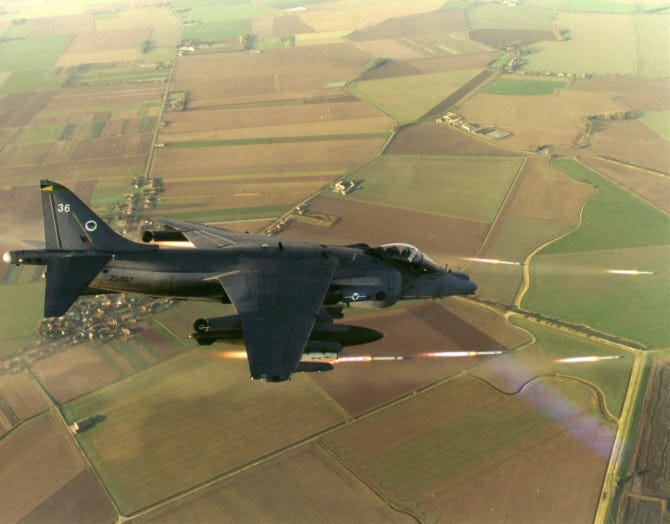
Canada’s consideration to donate tens of thousands of CRV7 rockets, developed in the 1980s and retired in the early 2000s, underscores a significant shift in military support. This approach reflects a broader Western strategy of repurposing older military stockpiles for urgent defense needs. With an inventory of 83,303 CRV7 rockets, Canada aims to enhance Ukraine’s defense capabilities significantly.
Three years ago, Canada had signed a contract to dispose of these rockets. However, recent developments, as reported by CBS News, indicate the Canadian Ministry of Defense is contemplating transferring the air-to-ground CRV7 rockets to Ukraine. This decision comes at a critical juncture, as these rockets are compatible with the F-16 aircraft soon to be incorporated into the Ukrainian Air Force. There’s speculation that Kiev, demonstrating ingenuity as seen with other Western-supplied weapons, may adapt the CRV7s for launch from Soviet-era Su-24 aircraft still in use.
The conservative faction is vocally advocating for the Canadian government to expedite the transfer of these rockets to Ukraine. The Department of National Defence of Canada has acknowledged that these rockets could form part of a future military aid package. Yet, the challenge lies in the fact that, of the tens of thousands of rockets and rocket engines Canada possesses, not all are equipped with warheads. Specifically, only 8,000 rockets have functional warheads and could be immediately donated, while the rest could serve as spare parts.
A quick heads-up: Medium’s been tweaking its algorithms and it’s getting trickier for my stories to land in your feed. So, if you enjoy my work, please make some noise! Hit that clap button, light up the highlights, or drop a comment. Every interaction helps keep the stories flowing. Thanks for your support!
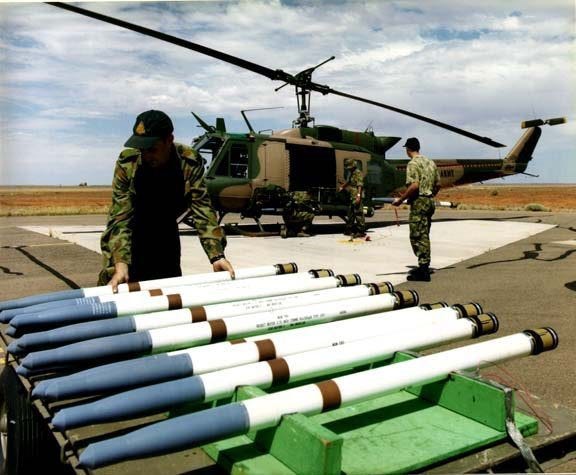
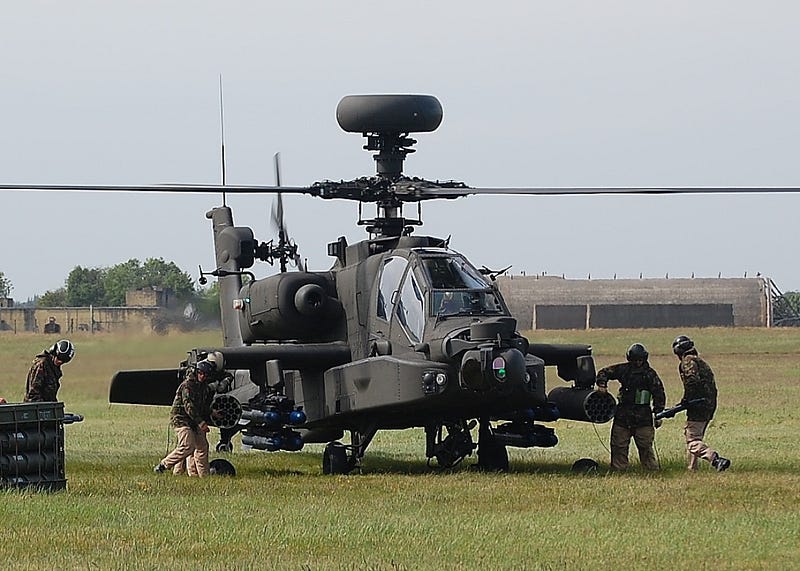
The CRV7 rocket, developed during the Cold War by Bristol Aerospace in Winnipeg, was heralded as one of the most potent air-to-ground missiles of its era, remaining in service through NATO’s intervention in Afghanistan. Magellan Aerospace, the manufacturer, touts the CRV7 as the premier unguided 70 mm air-to-ground rocket system available today, with over 800,000 rocket engines produced. Its design optimized for launch from both fixed-wing aircraft and helicopters, the CRV7 system has been qualified and launched from over 35 fixed-wing platforms, including the F18 Hornet and F-16, as well as helicopters such as the Apache AH-64D, Super Lynx 300, and Rooivalk, to name a few.
This strategic pivot to donate CRV7 rockets to Ukraine not only exemplifies the Western commitment to supporting Ukraine in its conflict with Russia but also highlights a pragmatic approach to military aid. By repurposing existing military assets, countries like Canada are finding innovative ways to contribute to Ukraine’s defense capabilities without the immediate need for new production. This approach not only accelerates the provision of military support but also underscores the adaptability and resilience of allied support in the face of evolving warfare dynamics.
As Ukraine continues to defend its sovereignty against Russian aggression, the potential infusion of CRV7 rockets represents more than just a boost to its military arsenal. It symbolizes the enduring spirit of international solidarity and the strategic ingenuity that has come to define the Western response to the crisis. The story of these rockets, from near obsolescence to a potential lifeline for a nation under siege, is a testament to the axiom that in the realm of international defense and support, nothing is truly lost.
Despite their classification as unguided, the CRV7 rockets poised for donation to Ukraine hold substantial tactical value. These munitions, relics of an era defined by Cold War tensions, are about to be thrust into the limelight of modern warfare, demonstrating the timeless utility of well-engineered military hardware. For the Ukrainian armed forces, the CRV7 represents not just an infusion of firepower but a strategic asset that can be leveraged in multiple facets of their ongoing defense efforts against Russian aggression.
The utility of the CRV7 rockets for Ukraine cannot be overstated. Designed to strike with precision against ground targets, these rockets were initially intended to decimate Soviet military installations. This objective aligns seamlessly with Ukraine’s current needs to counteract Russian forces’ entrenched positions and mobile units. The rockets’ high-velocity impact and blast effects make them particularly effective against a range of targets, from armored vehicles to fortifications and logistic hubs.
Ukraine’s ingenuity in modifying Western military aid to fit its operational requirements suggests that the CRV7 will be no exception. The possibility of adapting these rockets for launch from Soviet-era Su-24 aircraft, in addition to the intended F-16s, exemplifies the flexible strategies employed by the Ukrainian military. This adaptability extends the operational life of older platforms, providing a broader range of options for deploying these munitions effectively on the battlefield.
Furthermore, the CRV7's design, optimized for both fixed-wing aircraft and helicopters, means that Ukrainian forces could employ them in various scenarios, from close air support missions to interdiction operations behind enemy lines. The versatility of the CRV7, capable of being launched from over 35 different platforms, offers Ukraine the ability to integrate these rockets into its existing air operations with minimal adjustment.
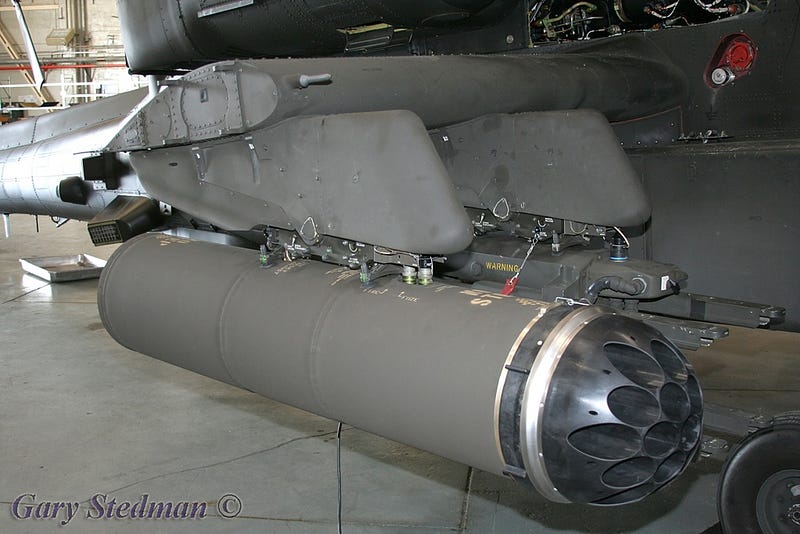
In the broader context of the conflict, the provision of CRV7 rockets to Ukraine underscores the West’s commitment to supporting Kyiv’s defensive war. While these rockets are unguided, their sheer destructive potential and the volume of munitions potentially available for donation represent a significant enhancement of Ukraine’s tactical capabilities. The ability to launch these rockets in salvos can create a psychological and material deterrent against Russian advances, disrupting troop concentrations and supply lines.
Moreover, the operational utility of the CRV7 extends beyond immediate tactical advantages. In the hands of skilled Ukrainian forces, these rockets can serve as a force multiplier, enabling more efficient use of limited resources. By targeting key infrastructure and military assets, Ukraine can potentially alter the dynamics on the ground, complicating Russian operational planning and execution.
For Ukraine to maximize the benefits of the CRV7 rockets, strategic planning and integration into their combined arms approach will be essential. Training and doctrinal adaptation will play a crucial role in ensuring these weapons are used to their full potential. The versatility of the CRV7 system, coupled with the ingenuity of Ukrainian forces, presents a unique opportunity to enhance Ukraine’s defensive operations against a technologically superior adversary.
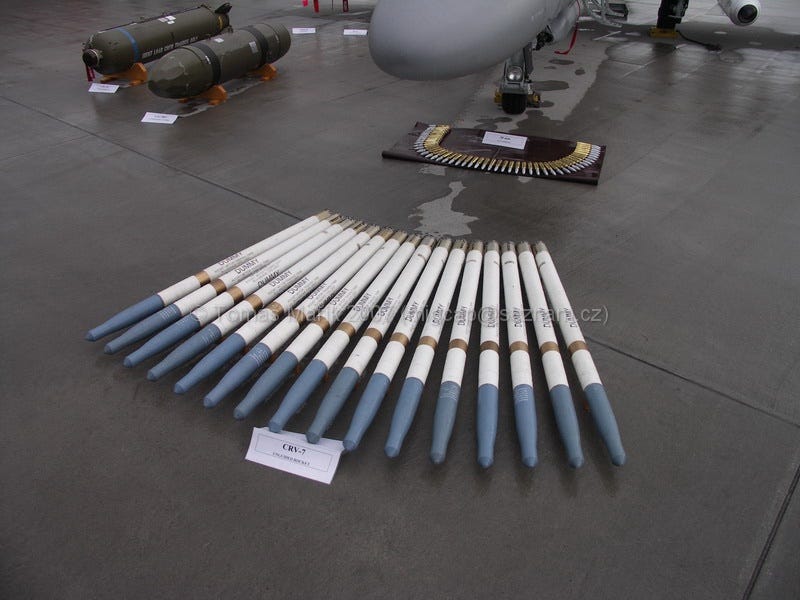
The potential donation of CRV7 rockets by Canada to Ukraine is more than a gesture of military support; it’s a strategic move that could significantly impact the operational landscape of the conflict. As Ukraine continues to navigate the challenges of modern warfare, the integration of these rockets into its arsenal will not only bolster its defensive capabilities but also serve as a testament to the enduring resilience and adaptability of its armed forces. In the face of adversity, Ukraine’s ability to repurpose and optimize the military aid it receives is a powerful reminder of the strategic depth and determination that define its response to aggression.
As we witness the unfolding of Canada’s commitment through the potential donation of 83,303 CRV7 rockets to Ukraine, it’s clear this gesture goes beyond mere military aid; it represents a profound statement of solidarity and strategic support. The integration of these rockets into Ukraine’s defense strategy could significantly alter the tactical landscape, offering new avenues for deterrence and resistance. As the global community watches, the impact of this decision will resonate not just on the battlefield but in the halls of international diplomacy, reaffirming the West’s unwavering support for Ukraine’s sovereignty.
In this pivotal moment, your engagement and discourse on the matter are more crucial than ever. Let’s amplify the conversation around this strategic maneuver and its implications for the future of global security. Share your thoughts, engage in the dialogue, and, most importantly, let’s stand together in support of Ukraine’s fight for freedom. Your voice matters – let it be heard through your claps and comments below.