avatarJillian Amatt - Artistic Voyages

Free AI web copilot to create summaries, insights and extended knowledge, download it at here

6619

Abstract

            <div><p>youtube.com</p></div>
          </div>
          <div>
            <div style="background-image: url(https://miro.readmedium.com/v2/resize:fit:320/0*6IKta3CI2GQIDGBR)"></div>
          </div>
        </div>
      </a>
    </div><figure id="ac08"><img src="https://cdn-images-1.readmedium.com/v2/resize:fit:800/1*L61evVfYSOe7jokm9ptcdQ.jpeg"><figcaption></figcaption></figure><figure id="4415"><img src="https://cdn-images-1.readmedium.com/v2/resize:fit:800/1*nemmwBLFlHKktqFHwLT9jg.jpeg"><figcaption></figcaption></figure><figure id="9886"><img src="https://cdn-images-1.readmedium.com/v2/resize:fit:800/1*Ecj08xxUi9Ha_RZyjWQofw.jpeg"><figcaption>I love the young male with the teeny antler stubs. The rest of these appear to be females. Photo Credit: <a href="undefined">Jillian Amatt - Artistic Voyages</a></figcaption></figure><h2 id="8e75">Canada Geese</h2><p id="32df">Canada geese are an iconic symbol of Canada. In the spring they migrate north from parts of the US where they over-winter, then spend the summer in our vast wilderness. In the fall, they will fly south again to enjoy the winter months in warmth. They are the ultimate ‘<a href="https://www.google.com/search?q=snowbird+definition&amp;sca_esv=567639170&amp;rlz=1C5CHFA_enCR791CR791&amp;sxsrf=AM9HkKkt_gkhqD31ZFaeW5VQNUMwhFN2Zg%3A1695406281476&amp;ei=ydgNZYPSHPqw0PEPwtChuA4&amp;oq=snow+bird+definition&amp;gs_lp=Egxnd3Mtd2l6LXNlcnAiFHNub3cgYmlyZCBkZWZpbml0aW9uKgIIADINEAAYigUYkQIYRhj5ATIIEAAYigUYkQIyCBAAGBYYHhgKMggQABgWGB4YCjIIEAAYigUYhgMyJBAAGIoFGJECGEYY-QEYlwUYjAUY3QQYRhj0Axj1Axj2A9gBA0iPJlCnEVj6HHACeAGQAQCYAboBoAHVCqoBBDAuMTG4AQHIAQD4AQHCAgoQABhHGNYEGLADwgIKEAAYigUYsAMYQ8ICDhAAGOQCGNYEGLAD2AEBwgIQEC4YigUYyAMYsAMYQ9gBAsICFhAuGIoFGMcBGK8BGMgDGLADGEPYAQLCAgUQABiABMICBxAAGIAEGArCAgoQABiABBgUGIcCwgINEC4YgAQYxwEYrwEYCsICCRAuGIoFGAoYQ8ICJBAAGIoFGJECGEYY-QEYlwUYjAUY3QQYRhj0Axj1Axj2A9gBA-IDBBgAIEGIBgGQBhK6BgYIARABGAm6BgYIAhABGAi6BgYIAxABGBM&amp;sclient=gws-wiz-serp">snow birds</a>.’</p><p id="7472">We had a few interactions with them these past few months. One of the photos below shows a mother with what I assumed to be 14 of her goslings trailing behind her. But I have since learned that they will babysit each others’ young ones, so who knows if these are all hers.</p><figure id="8e76"><img src="https://cdn-images-1.readmedium.com/v2/resize:fit:800/1*nfl2ovTqHGlYHnWII08Xwg.jpeg"><figcaption></figcaption></figure><figure id="8a60"><img src="https://cdn-images-1.readmedium.com/v2/resize:fit:800/1*N-kHE9LyL__LoNdEGrUxxw.jpeg"><figcaption></figcaption></figure><figure id="bef9"><img src="https://cdn-images-1.readmedium.com/v2/resize:fit:800/1*DsZLA5bMNFWZ4vUhbLPmIQ.jpeg"><figcaption>Canada geese are mostly found near bodies of water. Photo Credits: <a href="undefined">Jillian Amatt - Artistic Voyages</a></figcaption></figure><p id="f57f">During their migration, which is happening now as they move south, you can hear their <a href="https://youtu.be/QsmEFLHnnO8?si=E7K4aPnncT2MME5Z">loud honks as they fly</a> overhead in large groups.</p><h2 id="51ee">Loons, bald eagles and other birds</h2><p id="77a3">While on the topic of birds, we have had multiple other significant bird sightings since being back in Canada. It was Costa Rica that truly started our appreciation for birds and now we seem to take more time to analyze each one that we see. We love watching them flit about and getting up to their bird antics.</p><p id="7ebb">Loons are a symbol of Canada as well and are, in fact, featured on our one-dollar coin, formally called the<a href="https://readmedium.com/canadians-are-a-bit-loonie-ade0b76f5d32"> Loonie</a>. Hearing the cry of a loon as it floats on a mirror-like lake, while camping far off the beaten track in Canada’s vast wilderness, will always be a fond memory from my childhood.</p><figure id="e81a"><img src="https://cdn-images-1.readmedium.com/v2/resize:fit:800/1*wJ-F33dfMJ3faXHrgXngIQ.jpeg"><figcaption></figcaption></figure><figure id="af1b"><img src="https://cdn-images-1.readmedium.com/v2/resize:fit:800/1*HgPoUMjO8Am2Uq1Bnu_KHg.jpeg"><figcaption></figcaption></figure><figure id="4317"><img src="https://cdn-images-1.readmedium.com/v2/resize:fit:800/1*3I0lw0rkSCxI2a-aR5gY4Q.jpeg"><figcaption>A hairy woodpecker, an osprey’s nest, and a loon floating. Photo Credits: <a href="undefined">Jillian Amatt - Artistic Voyages</a></figcaption></figure><p id="c3ba">By far our best bird encounter, though, just happened a couple of days ago where we are currently staying in Eastern Alberta. We were on a bit of an outing to one of the nearby lakes and had seen two large brown birds flying across the water from us. We initially thought they were hawks because we could see the curved beaks which signified that they were birds of prey, and they can be larger in size than the average bird.</p><p id="55c0">But when we were just getting ready to leave, one of them swooped low to the parking area and then continued flying in a huge loop before coming back to land on a branch just 30 feet (10m) above our heads. We still weren’t sure what it was and were absolutely amazed at the size of it. It wasn’t until the caretaker of the park came out of her house and told us that it was a juvenile bald eagle. Apparently, they don’t get their white heads until they are 5 years old!</p><p id="97f5">It was very difficult to photograph with my iPhone so sadly the photo below is the best I got. We stood and watched it for about 20 minutes, hoping that it would fly away and I could attempt to get a better shot of it mid-flight. But finally, my phone battery went dead and we knew that any further efforts were fruitless. As it was getting close to supper time, we got in our vehicle and drove slowly past the eagle thinking that it might get startled and fly away. But, with the caretaking family still out watching it, that eagle did not seem to be going anywhere.</p><p id="6c8a">The caretaker also told us that they had a kitten go missing a couple of days ago. She figures that it might have been there looking for the second one.</p><p id="4b0f">For size reference, we figure that it was around 2 feet (61 cm) tall from the top of the branch.</p><figure id="6685"><img src="https://cdn-images-1.readmedium.com/v2/resize:fit:800/1*MtOiicqmtImjySBDPs5lwA.jpeg"><figcaption>A HUGE juvenile bald eagle. The caretaker guessed that it was around 2 years old. Photo Credits: <a href="undefined">Jillian Amatt - Artistic Voyages</a></figcaption></figure><h2 id="0d1b">Wild Horses</h2><p id="f903">I can’t believe that I didn’t even know that there are stil

Options

l wild horses in our country. We were on a sightseeing drive around Chris’ sister’s current town in Western Alberta when we came across a group of them just walking down the road. The light snow coming down made this a truly magical moment.</p><figure id="abcd"><img src="https://cdn-images-1.readmedium.com/v2/resize:fit:800/1*Ex-0hJ2ysMN_omlm6DjRtg.gif"><figcaption>Here is a GIF of one that we drove past. They looked really healthy! Photo Credit: <a href="undefined">Jillian Amatt - Artistic Voyages</a></figcaption></figure><p id="48fd">Upon researching what a group of wild horses is called, I read that they can be called a herd, band, harem, harras, mob, rag, or rake. Who knew?</p><h2 id="b578">Rodents</h2><p id="6dcc">Canada also has a fair share of rodents. The notable ones that we saw this past summer are chipmunks, like the adorable one in the photo below, plus we saw a beaver, a porcupine, a few marmots and many squirrels.</p><figure id="7977"><img src="https://cdn-images-1.readmedium.com/v2/resize:fit:800/1*6wpBO95eEYv8-sN0l3ZCSQ.jpeg"><figcaption>This tiny chipmunk is only about 3 inches (8cm) tall. Here it is eating a dandelion head. Photo Credit: <a href="undefined">Jillian Amatt - Artistic Voyages</a></figcaption></figure><p id="b1a4">Being Canada’s national animal, and the largest rodent in North America, it is always a rare privilege to see a beaver. More so than a bear, actually. They typically have very little interaction with people and live well into the wilderness. We were ecstatic to have the chance to see one beaver this past spring for a few seconds as it was swimming along the shore of the Bow River in our direction. But when it saw us, it quickly darted below the water’s surface and we never saw it again. Here is a short video of that interaction.</p><div id="8774" class="link-block"> <a href="https://youtube.com/shorts/dAuwujPBLFU?si=LctO9gZ6NjMsBc2t"> <div> <div> <h2>A Real Canadian Beaver</h2> <div><h3>We were so excited to see this adorable beaver while we were out on a walk the other night. Sadly it was just a quick…</h3></div> <div><p>youtube.com</p></div> </div> <div> <div style="background-image: url(https://miro.readmedium.com/v2/resize:fit:320/0*ny3rAbWtCm-PESdz)"></div> </div> </div> </a> </div><p id="cfd6">We saw a few signs along the river that it had been around, though. No other animal can take down trees this size in Canada!</p><figure id="d5e2"><img src="https://cdn-images-1.readmedium.com/v2/resize:fit:800/1*PJ-_FeopiG4WbPWDx2kcFg.jpeg"><figcaption>This half-eaten tree is proof of the beaver. They chew down the trees with their teeth. Photo Credit: <a href="undefined">Jillian Amatt - Artistic Voyages</a></figcaption></figure><p id="ff34">We also had some sightings of marmots. I have seen them around Canmore, but higher up in the mountains usually past the tree line. However, in central British Columbia, along the Okanagan Valley, there were numerous and at a much lower elevation. On one hike in particular we saw many.</p><figure id="08ad"><img src="https://cdn-images-1.readmedium.com/v2/resize:fit:800/1*F_J58FLw4T0lunjWlLrBBg.jpeg"><figcaption>They are so cute! Photo Credit: <a href="undefined">Jillian Amatt - Artistic Voyages</a></figcaption></figure><p id="71d6">Well, here I am at the 10-minute limit for articles accepted at Globetrotters, and not surprisingly, I haven’t even finished writing about all of our animal encounters in the past 6 months. Maybe there will have to be a second part to this series.</p><p id="c8d6">I hope that you enjoyed learning about some of Canada’s animals. They are certainly taken for granted by many, and most of us just don’t realize how lucky we are to be surrounded by so many amazing creatures.</p><p id="e8f8"><b>Here are some other articles by fellow Globtrotters about animals:</b></p><p id="d006"><a href="undefined">Ronald Smit</a> tells about some animal encounters in Africa.</p><div id="2060" class="link-block"> <a href="https://readmedium.com/creatures-great-and-small-944f6dca4d85"> <div> <div> <h2>Creatures Great and Small</h2> <div><h3>Eating, chilling, or having a ball</h3></div> <div><p>medium.com</p></div> </div> <div> <div style="background-image: url(https://miro.readmedium.com/v2/resize:fit:320/1*hNsXcN-np_Jc62_ofcMzoQ.jpeg)"></div> </div> </div> </a> </div><p id="f1f1"><a href="undefined">Мaria Kriskovich</a> introduced me to Quokkas. I had never heard of them!</p><div id="82dd" class="link-block"> <a href="https://readmedium.com/rottnest-island-warning-wild-quokkas-ahead-7dedffd71a59"> <div> <div> <h2>Rottnest Island. Warning: Wild Quokkas Ahead</h2> <div><h3>I had 6 hours to find as many quokkas as possible</h3></div> <div><p>medium.com</p></div> </div> <div> <div style="background-image: url(https://miro.readmedium.com/v2/resize:fit:320/1*[email protected])"></div> </div> </div> </a> </div><figure id="f8b5"><img src="https://cdn-images-1.readmedium.com/v2/resize:fit:800/1*IDlDKuxoG0gmCX-cVp-Utw.png"><figcaption>Click to learn more about us⇧</figcaption></figure><p id="f7cc"><b><i>If you like my writing and want to read more, follow me and sign up <a href="https://artisticvoyages.medium.com/subscribe">here</a> to get my articles by email. We would also be happy if you considered leaving me a tip by using the link to Patreon or Ko-Fi below:)</i></b></p><p id="818c"><i>We have been nomadic since 2017! Join our journey by hitting these links:</i></p><p id="f034"><a href="http://www.artisticvoyages.com/">Website</a> | <a href="http://www.instagram.com/artisticvoyages">Instagram</a> | <a href="http://www.facebook.com/artisticvoyages">Facebook</a> | <a href="https://www.linkedin.com/in/jillianamatt/">LinkedIn</a>| <a href="http://www.patreon.com/artisticvoyages">Patreon</a>|<a href="http://www.youtube.com/c/artisticvoyages"> YouTube</a> | <a href="http://www.medium.com/@artisticvoyages">Medium</a> | <a href="http://www.twitter.com/artisticvoyages">Twitter</a> | <a href="http://www.ko-fi.com/artisticvoyages">Ko-Fi</a> | <a href="https://unsplash.com/@jillamatt">Unsplash</a></p></article></body>

CANADA | WILD LIFE | ANIMALS | CANADIANA

Canada Is Wild

Bears, Beavers, Elk, Chipmunks, Eagles…..the list goes on and on
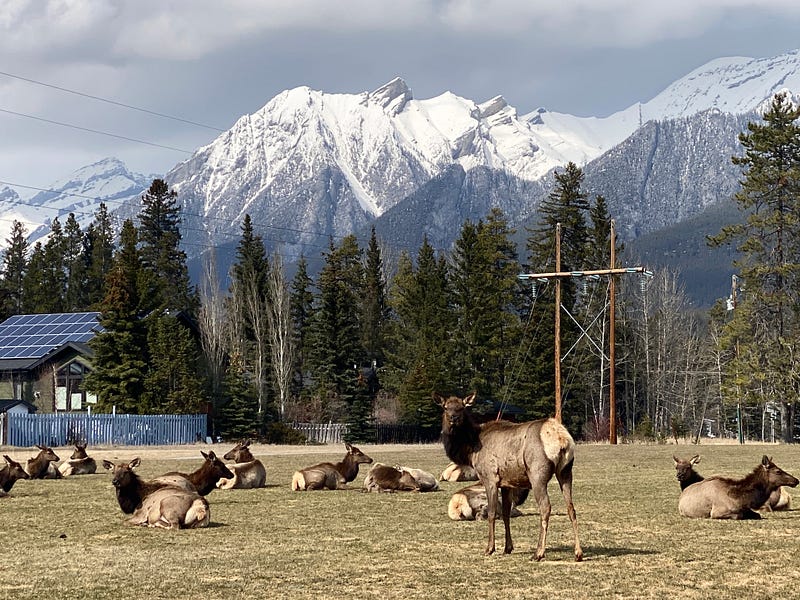
A herd of elk hanging out in a park in Canmore, Alberta. Spring 2023. Photo Credit: Jillian Amatt - Artistic Voyages

With Globetrotter’s September monthly challenge being ‘Wildlife’, and despite writing three other articles about wildlife in other parts of the world, I suddenly realized that I would be doing a huge disservice to myself and my country if I didn’t share my experiences with wildlife here in Canada. Often we overlook the things that make our own countries unique and focus on other countries where things are new and exciting.

Despite the animals of Canada being just a normal part of my everyday life while I have lived in Canada, I realize that they are unique and different to those that live outside of our borders.

Plus, Canada is certainly well known for its wildlife on the world stage.

In fact, Canada is just plain wild.

Being the second largest country by land mass at almost 10 million square kilometers (6.2 million square miles), and with a population of just 38 million people, Canada has a TON of uninhabited space. Of course, much of it is uninhabitable and too extreme, but the parts we do live in are mostly covered in vast forests and untouched wilderness. Sadly, over the past few years, we have seen much of our forests burn down, but it doesn’t mean that all of our wildlife has gone with it.

A quick search on Google gives us a sample of the sort of wildlife that is found in Canada, but this surely is not a complete list. If you are visiting Canada, you will be sure to see a few from this list below, plus many others, I’m sure.
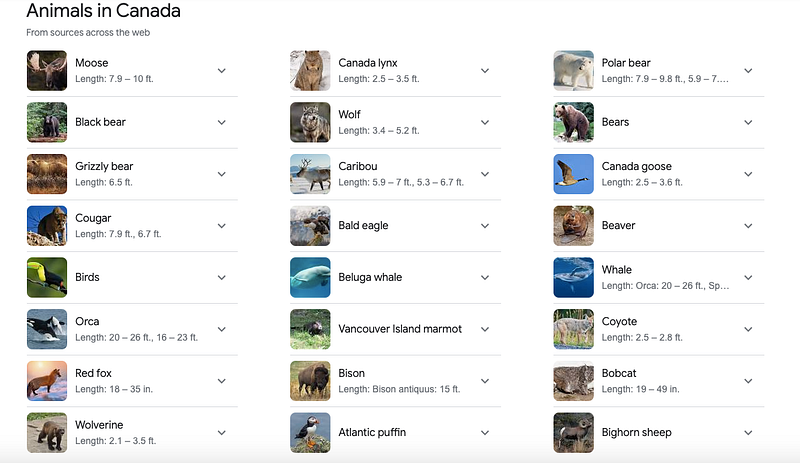
. Screenshot by author.

Bears

We had a friend visiting us this summer while we were housesitting in Canmore, Alberta who was from Belgium. He had already traveled around a bit and had declared that there were no bears to be found in Canada.

He was disappointed because he was under the impression that Canada was crawling with bears.

From brown and black bears, to grizzly bears and polar bears, we certainly have this species of animals covered. But they certainly aren’t around every corner.

“I think it’s a PR scam by the government just to get more tourists to come to the country.” He told me one day. I’m not sure if he was serious or not.

We also had a friend from Hong Kong come and stay with us. She was desperate to see a bear and also didn’t have the good fortune to do so. Sadly, we didn’t get to see any over our summer in the mountains either.

When I lived on the West Coast of Canada, we would be guaranteed to see them every year during the apple harvest. Many people have at least one apple tree in their yards and the bears would be the first to let us know that they were ready for eating.

I’ll never forget one occasion when my ex-husband and I were renting a large house with a few apple trees in the backyard. It was our first year in the house and one morning we woke up to large piles of, what looked to be, apple sauce littered on the ground in large bear-poo-like piles.

“That looks good enough to eat.” My ex-husband declared. “It looks like it went in and straight back out again.”

On another occasion, I was painting the exterior of a house when, from high up on the ladder, I looked into the neighbor's yard to see a mother bear and her two cubs up an apple tree. They hung out for many hours, even taking a nap in one fluffy lump beneath the tree after they gorged themselves silly.

Yes, bears were certainly a common occurrence out there and usually, they want nothing to do with humans, just the apples. Heaven forbid you get between them and the apple tree, though!

But let’s get back to the animals that we did see during our past 6 months in Canada. The list is longer than I thought!

Elk

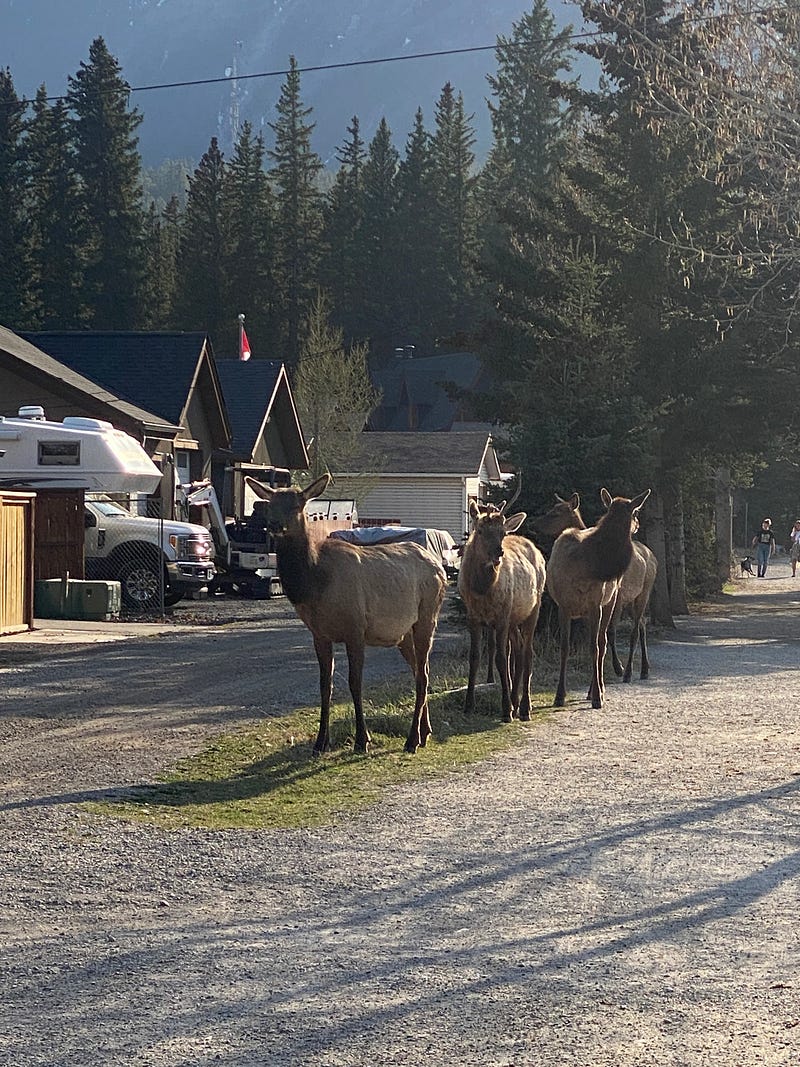
Almost immediately after arriving to Canmore in March, we started seeing a large herd of elk hanging out around town. I remember them from my childhood as I used to live across from a treed forest area with an adjacent open field. They would use this area as one of their many lounge spots, and seeing them lying in the grass and coming and going, just became a regular occurrence.

Sadly that area is now completely built up with condos, so they have moved to another nearby park where they hang out frequently. This park is also used by the high school for some gym classes so I’m sure there are conflicts here and there because of the competition for space. One thing I hate about Canmore is that they are choking off the wildlife with the excess development, but that is a story for another day.

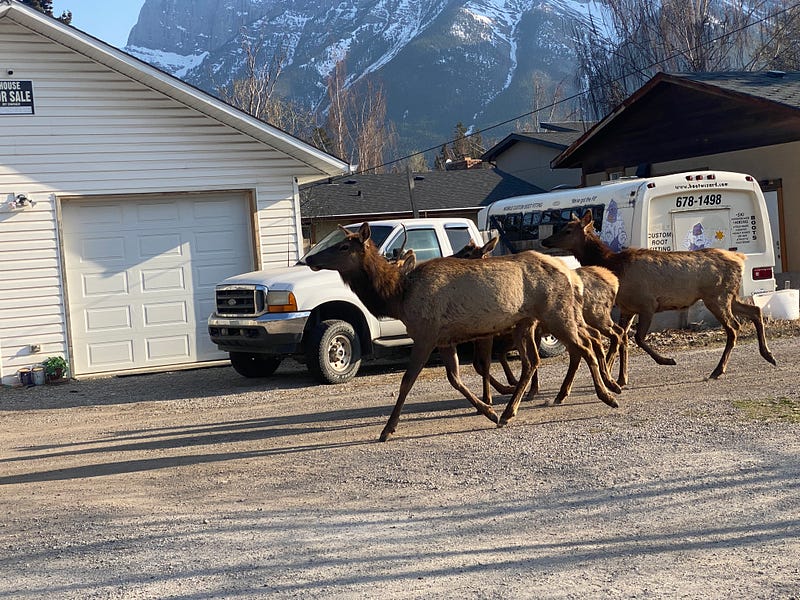
My lead photo shows them lounging in this park, but we also saw them running down an alleyway, and chewing on grass near my parent’s condo. They are always fascinating to watch, but they can get aggressive especially in calving and rutting (mating) seasons, so it’s always best to give them space. After all, they can weigh up to 700 pounds (330 kilograms)!

This short video shows a time when we saw the whole herd crossing the Bow River on our last visit to Canada in 2019. You can even hear the bugling.
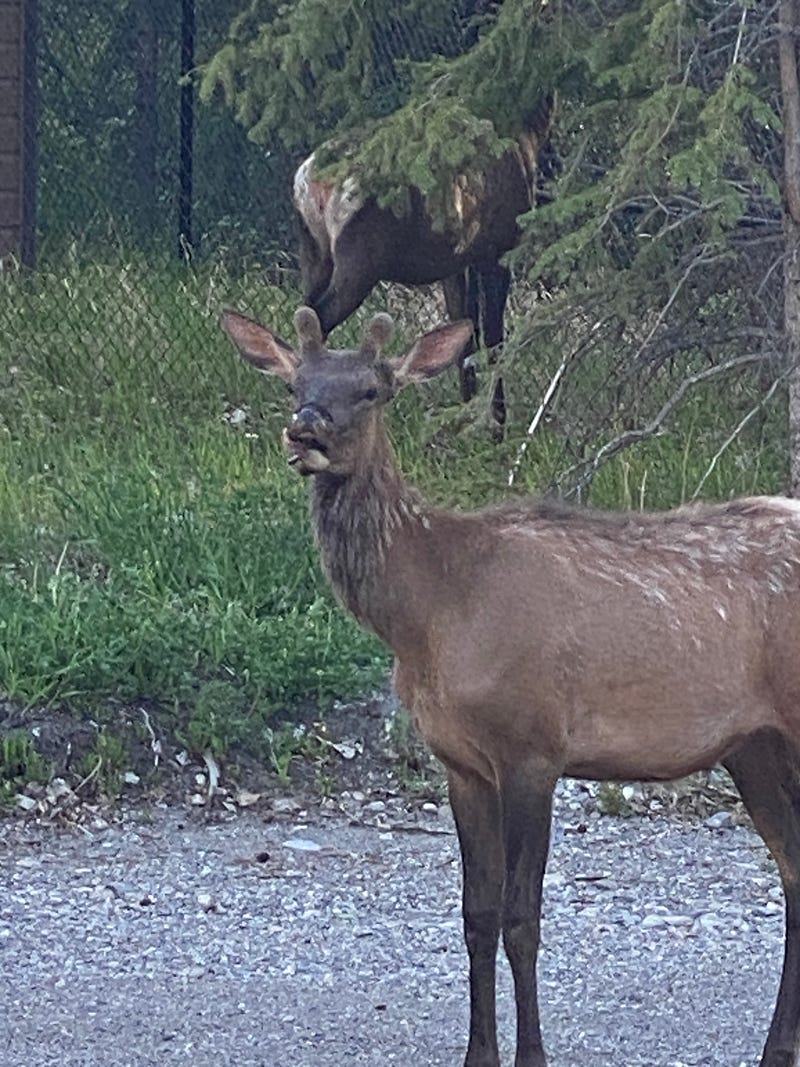
I love the young male with the teeny antler stubs. The rest of these appear to be females. Photo Credit: Jillian Amatt - Artistic Voyages

Canada Geese

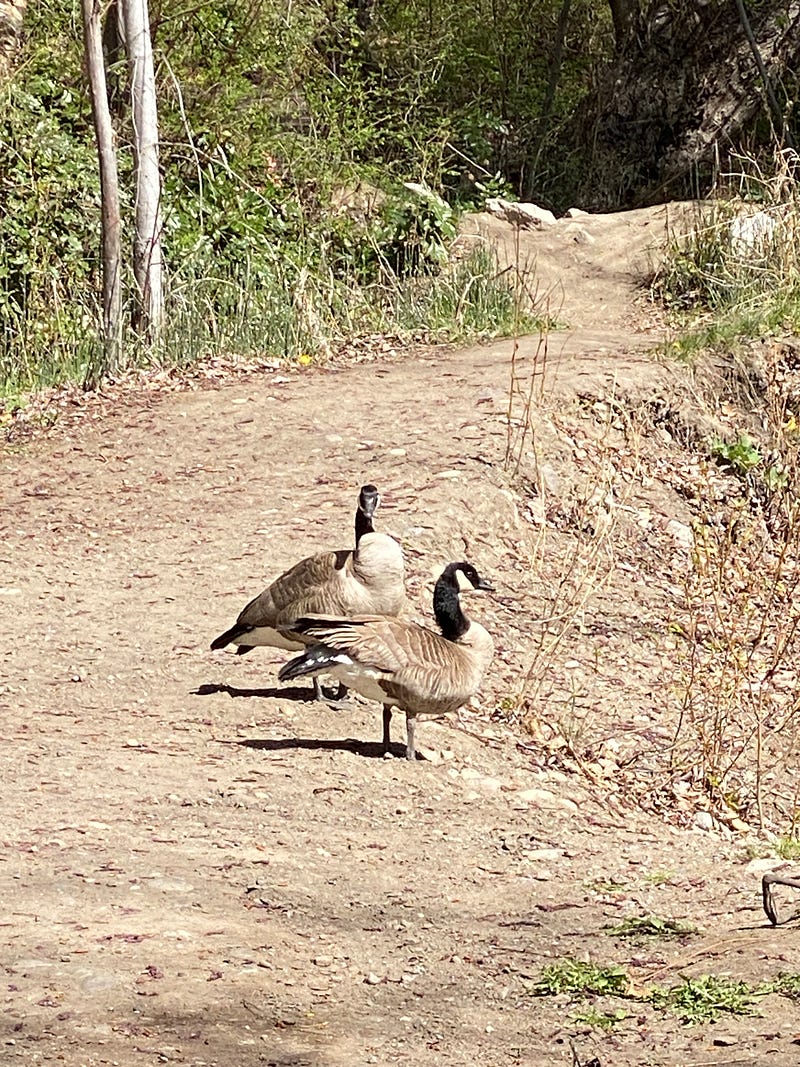
Canada geese are an iconic symbol of Canada. In the spring they migrate north from parts of the US where they over-winter, then spend the summer in our vast wilderness. In the fall, they will fly south again to enjoy the winter months in warmth. They are the ultimate ‘snow birds.’

We had a few interactions with them these past few months. One of the photos below shows a mother with what I assumed to be 14 of her goslings trailing behind her. But I have since learned that they will babysit each others’ young ones, so who knows if these are all hers.
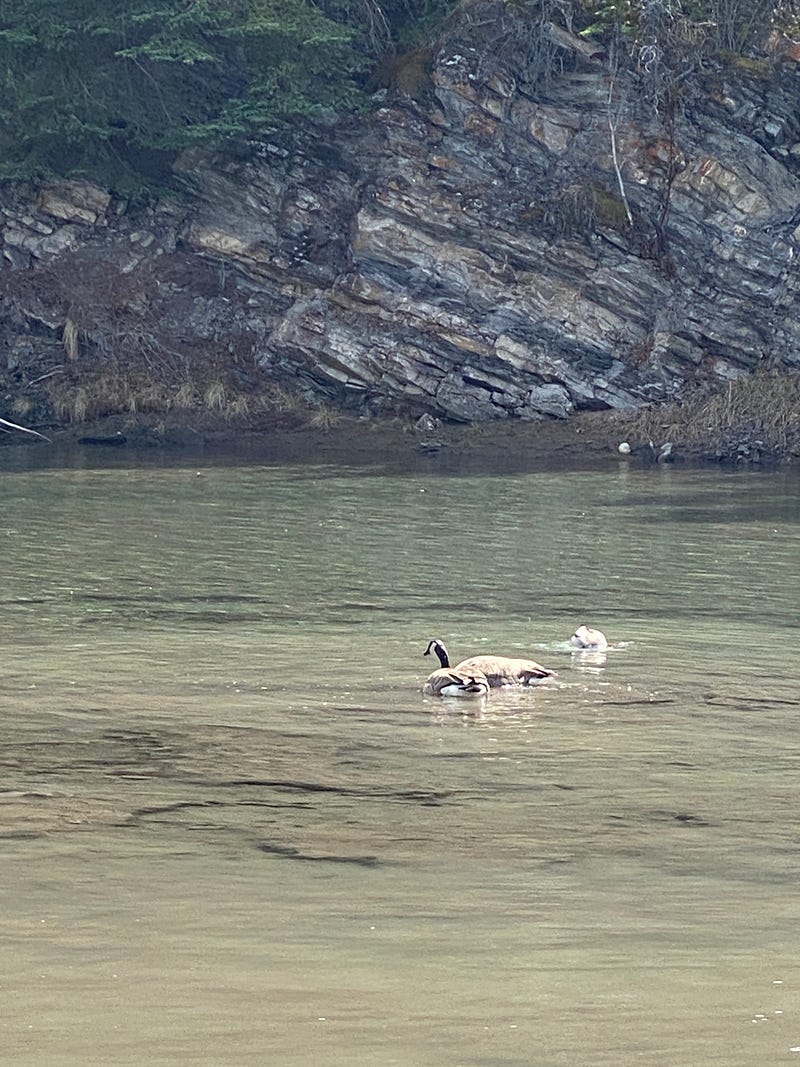
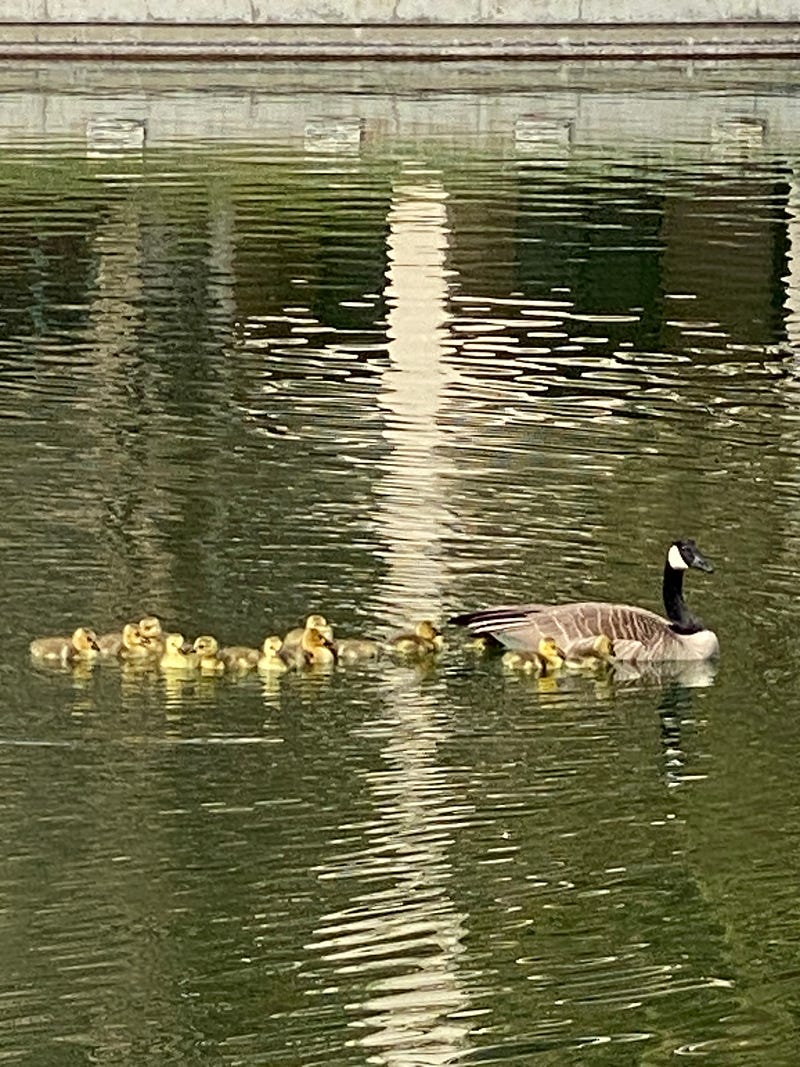
Canada geese are mostly found near bodies of water. Photo Credits: Jillian Amatt - Artistic Voyages

During their migration, which is happening now as they move south, you can hear their loud honks as they fly overhead in large groups.

Loons, bald eagles and other birds

While on the topic of birds, we have had multiple other significant bird sightings since being back in Canada. It was Costa Rica that truly started our appreciation for birds and now we seem to take more time to analyze each one that we see. We love watching them flit about and getting up to their bird antics.

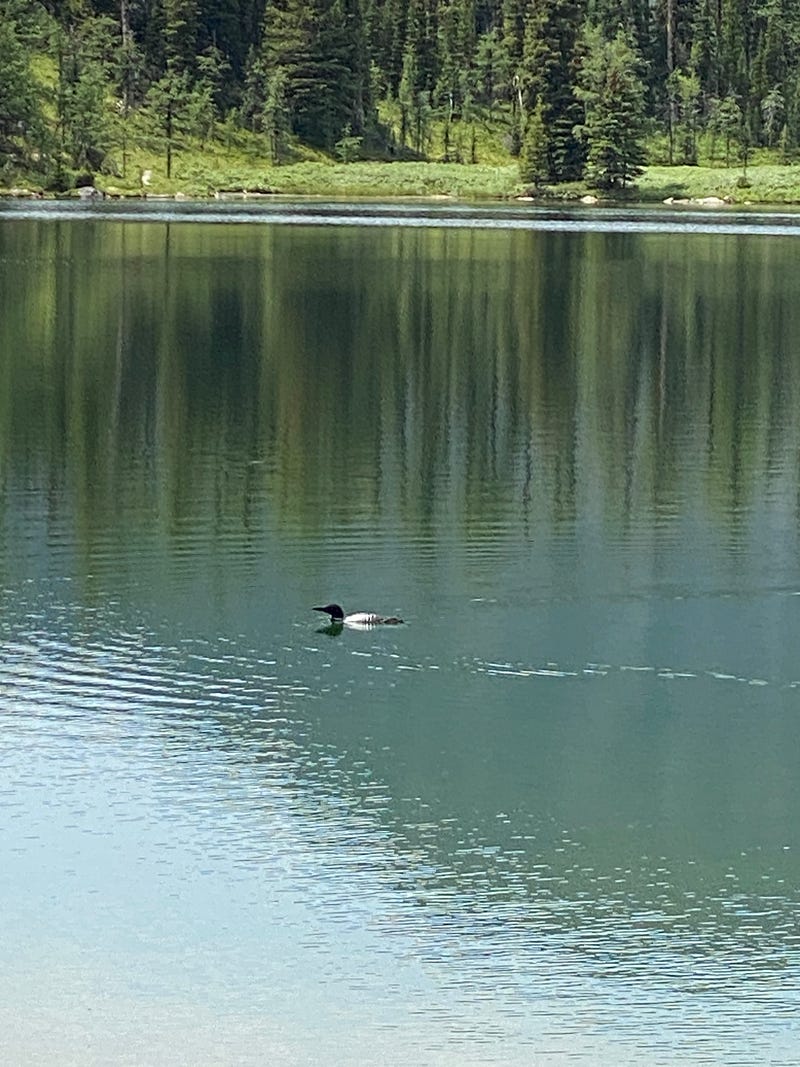
Loons are a symbol of Canada as well and are, in fact, featured on our one-dollar coin, formally called the Loonie. Hearing the cry of a loon as it floats on a mirror-like lake, while camping far off the beaten track in Canada’s vast wilderness, will always be a fond memory from my childhood.
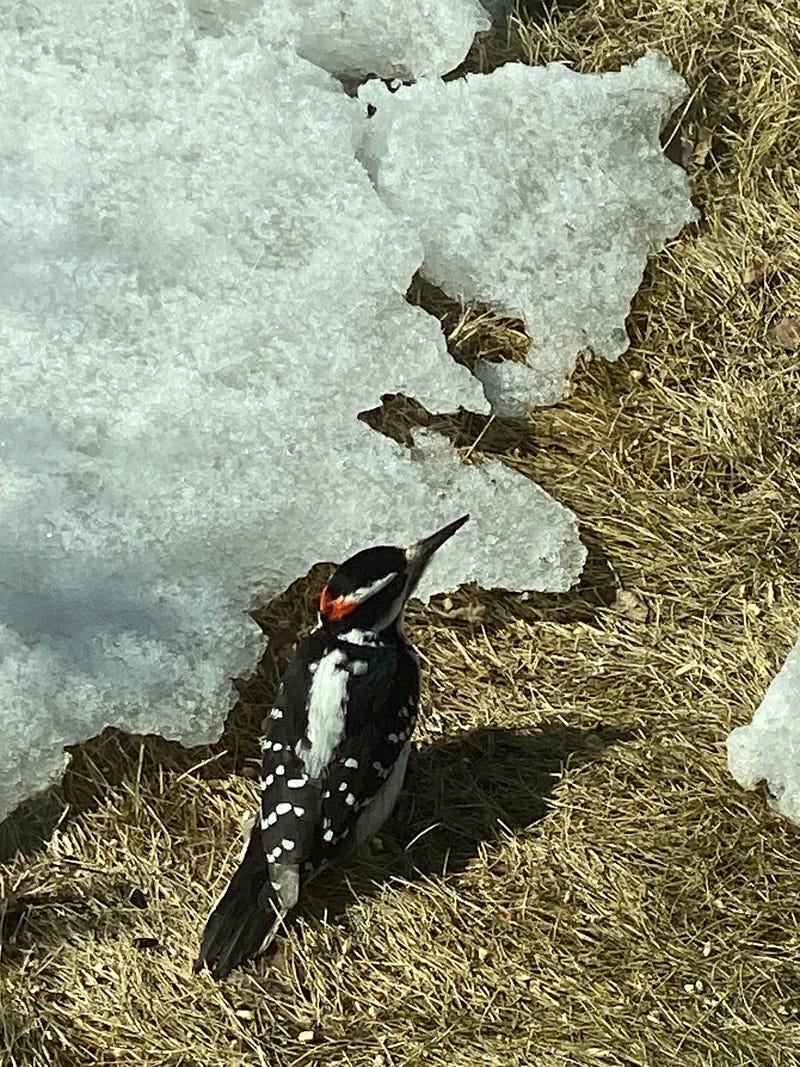
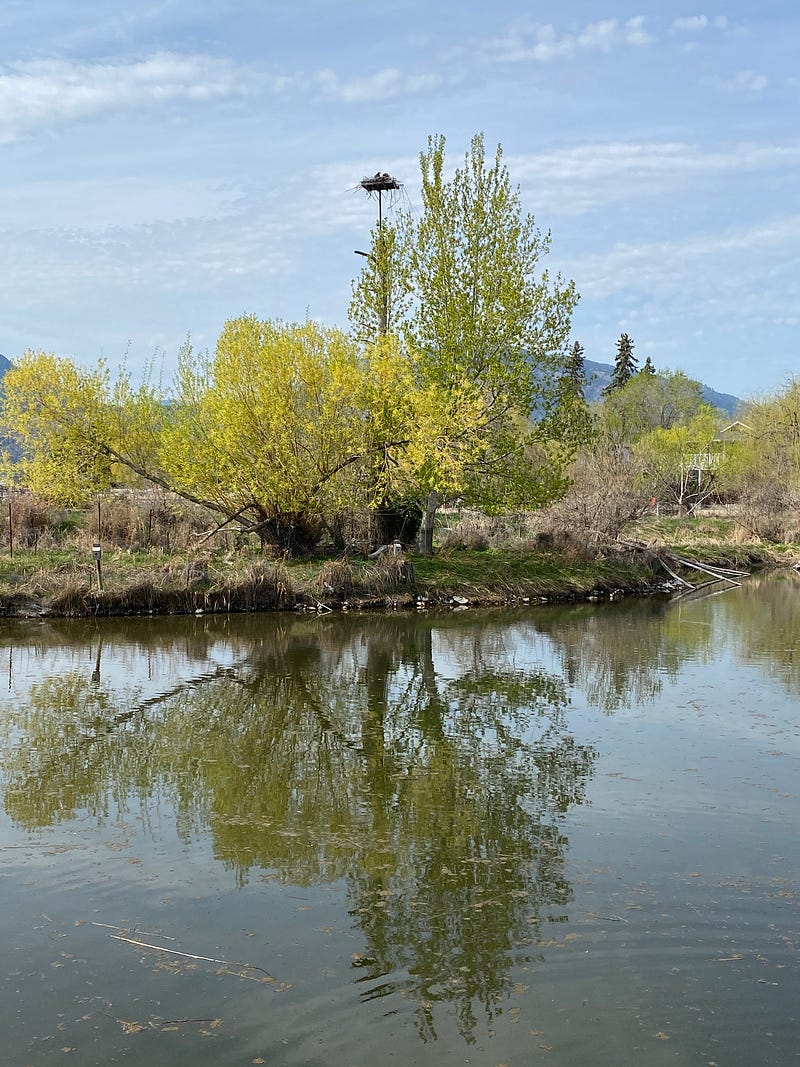
A hairy woodpecker, an osprey’s nest, and a loon floating. Photo Credits: Jillian Amatt - Artistic Voyages

By far our best bird encounter, though, just happened a couple of days ago where we are currently staying in Eastern Alberta. We were on a bit of an outing to one of the nearby lakes and had seen two large brown birds flying across the water from us. We initially thought they were hawks because we could see the curved beaks which signified that they were birds of prey, and they can be larger in size than the average bird.

But when we were just getting ready to leave, one of them swooped low to the parking area and then continued flying in a huge loop before coming back to land on a branch just 30 feet (10m) above our heads. We still weren’t sure what it was and were absolutely amazed at the size of it. It wasn’t until the caretaker of the park came out of her house and told us that it was a juvenile bald eagle. Apparently, they don’t get their white heads until they are 5 years old!

It was very difficult to photograph with my iPhone so sadly the photo below is the best I got. We stood and watched it for about 20 minutes, hoping that it would fly away and I could attempt to get a better shot of it mid-flight. But finally, my phone battery went dead and we knew that any further efforts were fruitless. As it was getting close to supper time, we got in our vehicle and drove slowly past the eagle thinking that it might get startled and fly away. But, with the caretaking family still out watching it, that eagle did not seem to be going anywhere.

The caretaker also told us that they had a kitten go missing a couple of days ago. She figures that it might have been there looking for the second one.

For size reference, we figure that it was around 2 feet (61 cm) tall from the top of the branch.
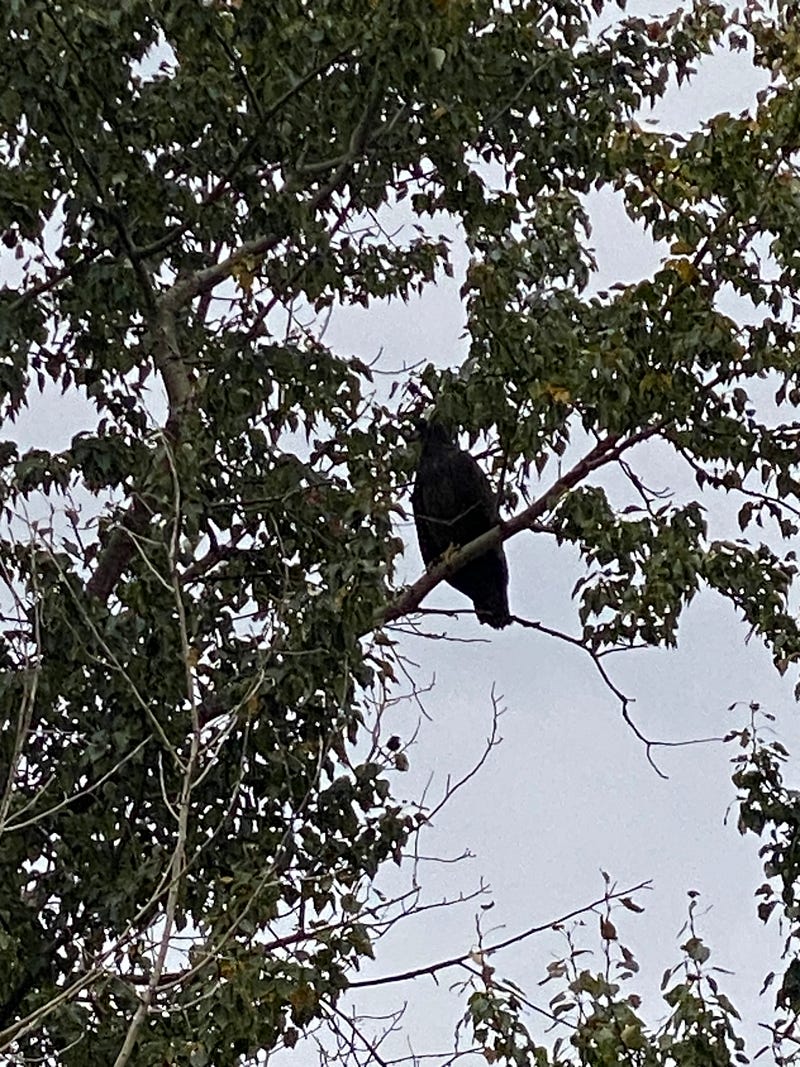
A HUGE juvenile bald eagle. The caretaker guessed that it was around 2 years old. Photo Credits: Jillian Amatt - Artistic Voyages

Wild Horses

I can’t believe that I didn’t even know that there are still wild horses in our country. We were on a sightseeing drive around Chris’ sister’s current town in Western Alberta when we came across a group of them just walking down the road. The light snow coming down made this a truly magical moment.
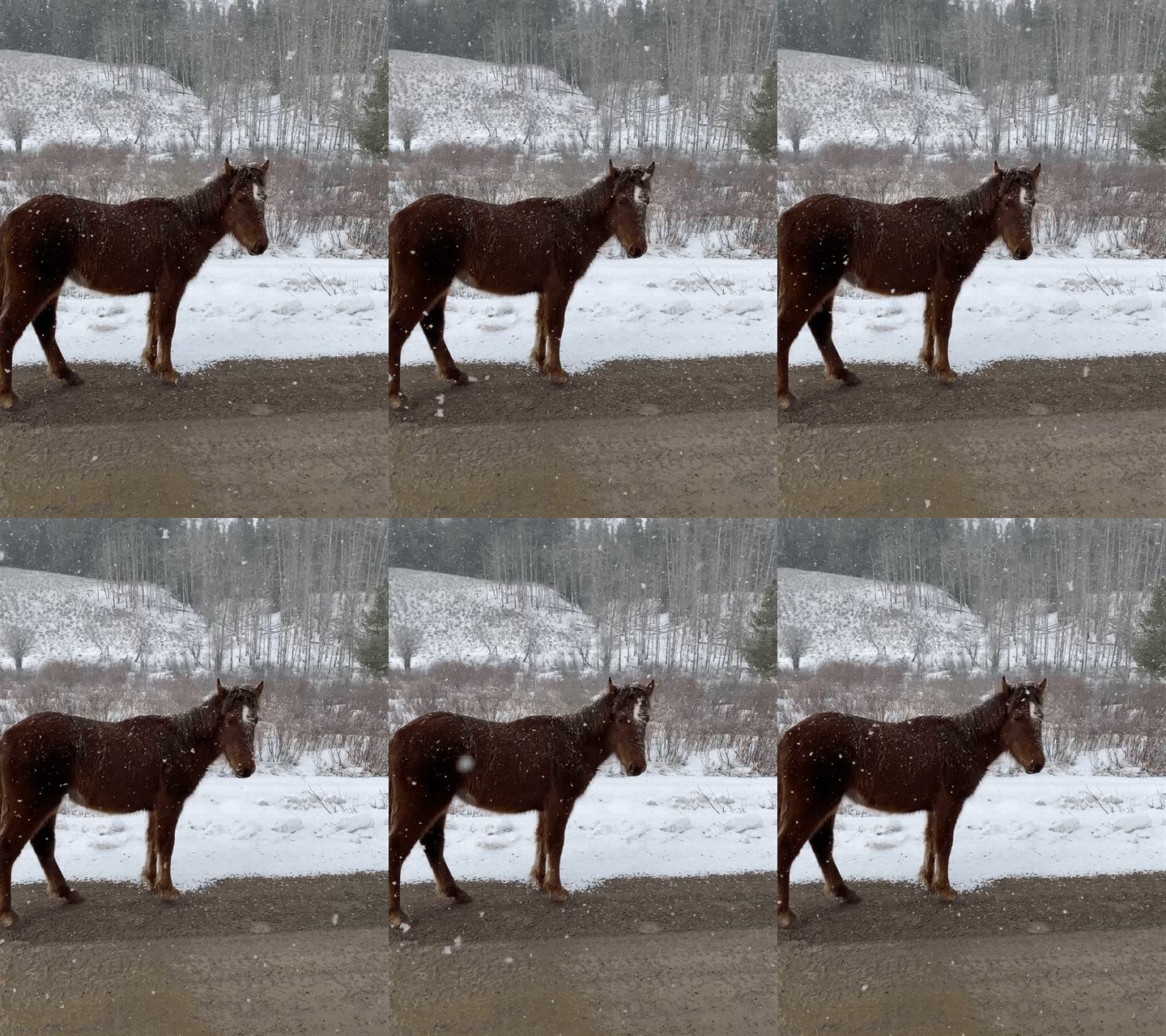
Here is a GIF of one that we drove past. They looked really healthy! Photo Credit: Jillian Amatt - Artistic Voyages

Upon researching what a group of wild horses is called, I read that they can be called a herd, band, harem, harras, mob, rag, or rake. Who knew?

Rodents

Canada also has a fair share of rodents. The notable ones that we saw this past summer are chipmunks, like the adorable one in the photo below, plus we saw a beaver, a porcupine, a few marmots and many squirrels.
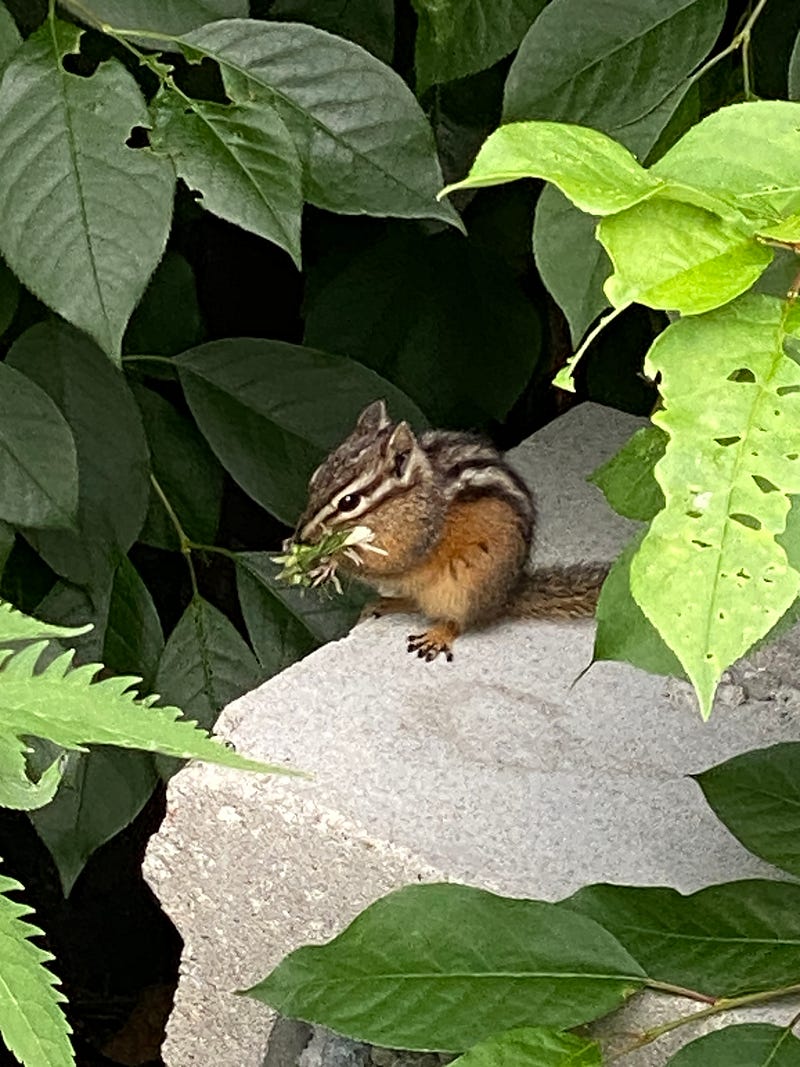
This tiny chipmunk is only about 3 inches (8cm) tall. Here it is eating a dandelion head. Photo Credit: Jillian Amatt - Artistic Voyages

Being Canada’s national animal, and the largest rodent in North America, it is always a rare privilege to see a beaver. More so than a bear, actually. They typically have very little interaction with people and live well into the wilderness. We were ecstatic to have the chance to see one beaver this past spring for a few seconds as it was swimming along the shore of the Bow River in our direction. But when it saw us, it quickly darted below the water’s surface and we never saw it again. Here is a short video of that interaction.

We saw a few signs along the river that it had been around, though. No other animal can take down trees this size in Canada!
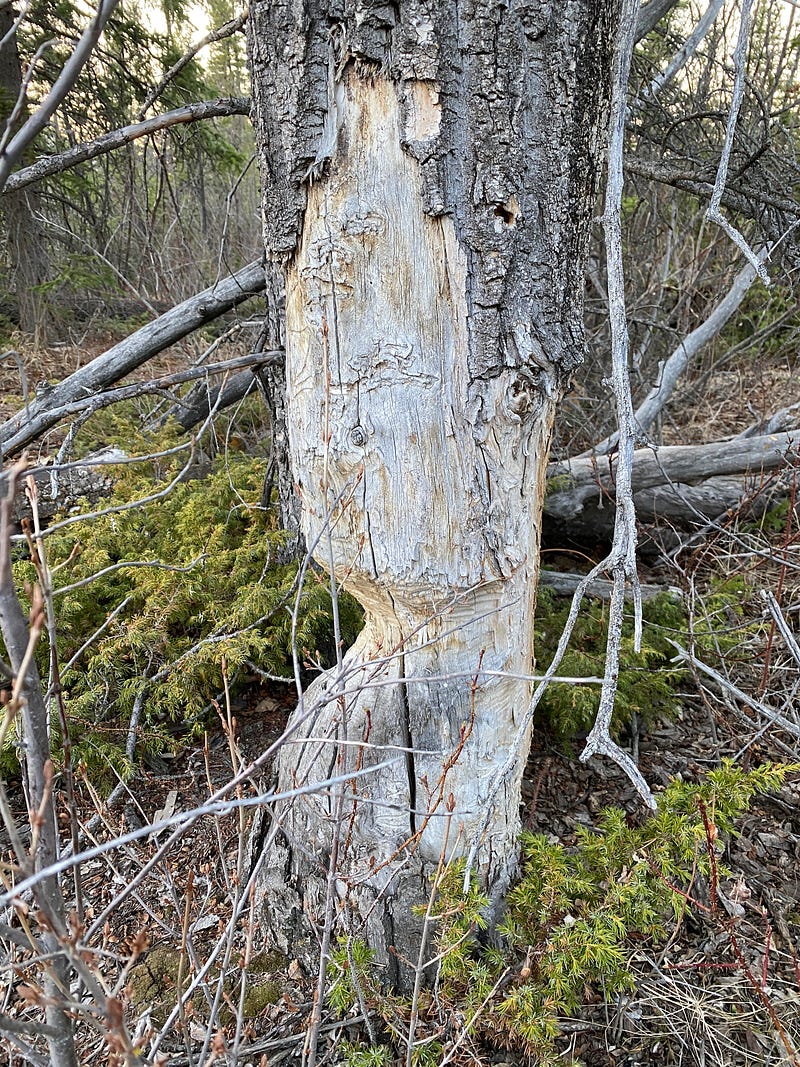
This half-eaten tree is proof of the beaver. They chew down the trees with their teeth. Photo Credit: Jillian Amatt - Artistic Voyages

We also had some sightings of marmots. I have seen them around Canmore, but higher up in the mountains usually past the tree line. However, in central British Columbia, along the Okanagan Valley, there were numerous and at a much lower elevation. On one hike in particular we saw many.
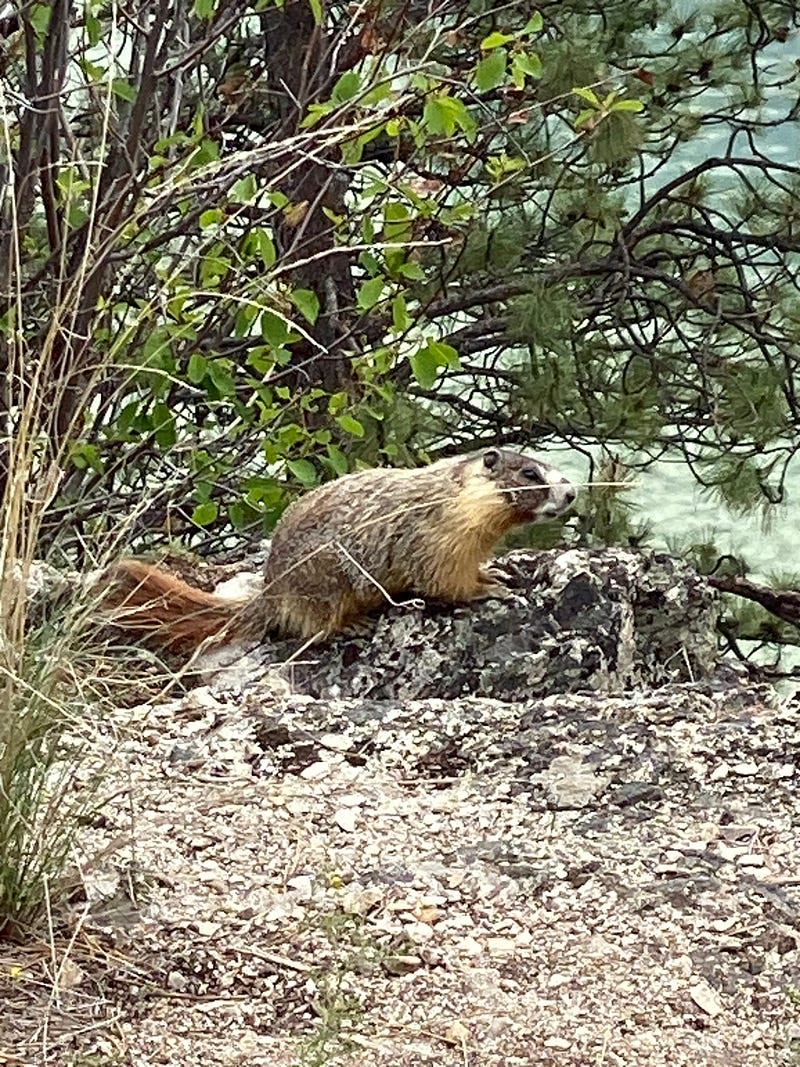
They are so cute! Photo Credit: Jillian Amatt - Artistic Voyages

Well, here I am at the 10-minute limit for articles accepted at Globetrotters, and not surprisingly, I haven’t even finished writing about all of our animal encounters in the past 6 months. Maybe there will have to be a second part to this series.

I hope that you enjoyed learning about some of Canada’s animals. They are certainly taken for granted by many, and most of us just don’t realize how lucky we are to be surrounded by so many amazing creatures.

Here are some other articles by fellow Globtrotters about animals:

Ronald Smit tells about some animal encounters in Africa.

Мaria Kriskovich introduced me to Quokkas. I had never heard of them!

Click to learn more about us⇧

If you like my writing and want to read more, follow me and sign up here to get my articles by email. We would also be happy if you considered leaving me a tip by using the link to Patreon or Ko-Fi below:)

We have been nomadic since 2017! Join our journey by hitting these links:

Website | Instagram | Facebook | LinkedIn| Patreon| YouTube | Medium | Twitter | Ko-Fi | Unsplash

Wildlife
Canada
Animals
Canadian
Monthly Challenge
Recommended from ReadMedium