
Can you pray your way to Good Health? by Dr. Bruce
When dogma becomes physically harmful
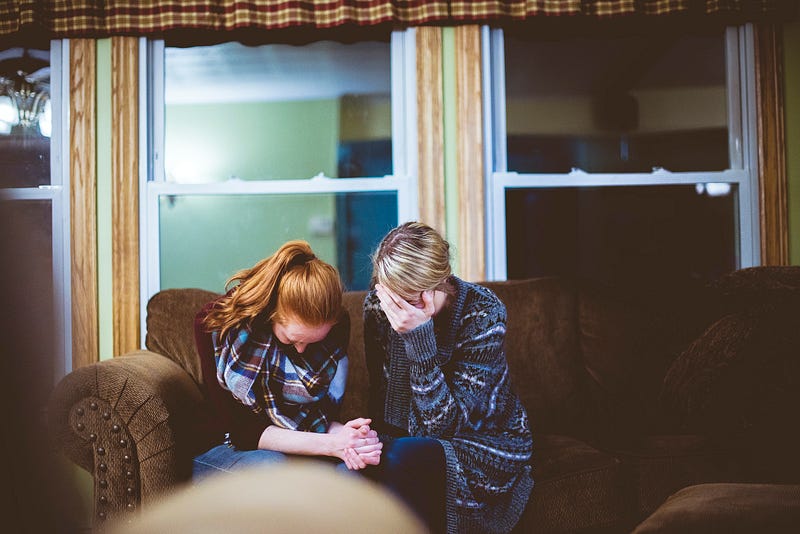
Have you ever heard Christians say that devotion to God will bring you good health. It’s in the bible. The new testament tells us time and again that God can do anything. Yet, the most specific verses in regards to physical health are in the old testament. For instance, in Proverbs, we are told that revering God makes your body healthy and nourishes your bones. That’s fairly precise. So, what’s the harm with such dogma? Well, what if someone’s good health is because of genetics or some other non-divine factor? You see, there’s a tendency among humans to assign meaning to random events. Believers may consider their physical condition as a blessing, a sign of God’s favor. And, when a person embraces that perspective, there’s a temptation to judge those who are infirmed. The answer to another person’s ill-health is then clear, “He/she needs to get right with God!” Equally damaging as judging, some believers may force this dogma on others, exposing them to risk. Thus, for believers who are either under someone’s influence or struggle with poor health, the dogma can be harmful; and not just physically, but emotionally as well.
I once had a college classmate named Gwendolyn. She had a heart of gold and was a nurse by trade. But no more. Tragically, she had been shot at work one day, during a rampage by a crazed patient. When we met, she was returning to school to find a different career, now being in a wheelchair. Gwendolyn was a Christian, but did not push it on anybody. Yet, there was another religious student in the class, a fire-breathing evangelical named Josh. Nobody really liked him, for he was obnoxious about his faith. One day, before class, when only a few of us were in the room, he decided to go all faith-healing on us. Let me take you to that moment. Josh sits by himself, silent. His face wears a look of consternation. His forearms rest on the table over which his body leans. Fists are clenched. Jaw tight. The others, including Gwendolyn, chat about light topics, enjoying the few minutes of repose before the rest of the class and teacher join. Suddenly, Josh rises and storms out.
The chatting ladies look up briefly, then return to conversation. In a few moments, Josh sweeps back into the room. He approaches the table at which Gwendolyn sits and with a loud voice says, “Gwendolyn, by the power of our Lord Jesus Christ, I command you to rise and walk!” Thrusting his arms out, he finishes, “Be healed!” The others in the room stare, mouths agape. Silence grows as everyone holds their breath. Expressions of concern drift across their faces. I can only imagine the thoughts percolating in the minds of the observers, such as: What if she will actually be able to walk? What happens if she can’t even stand? Or tries to and falls? What’s wrong with Josh for putting her on the spot? And so on. Gwendolyn presses her hands firmly to the table and slowly, grimacing, shakily, begins to rise. Whispery words of thanks escape from Josh’s mouth, “Yes, praise Jesus,” he says, still standing in front of her, arms raised. As she continues to rise, his words change and the following phrase begins and repeatedly slithers out of him, “Praise Jesus. Thank you, Lord, for this miracle.” When she is finally standing up, his head drops back, as if in ecstasy. “Yes, Yes,” he hisses. Gwendolyn, her entire body trembling, stands for just a few moments before carefully lowering herself to the chair. Josh sternly looks at her and says, “Jesus has healed you, Gwendolyn. Go. Live your life and serve God.” Then he grabs his books and leaves. The ladies around her are teary-eyed, “Gwendolyn, you stood! How do you feel? Did it work?” “Well,” she says softly. “I could always stand that much.” She looks down. “I still can’t walk.” “Well, then,” I ask, “why didn’t you tell him that it didn’t work?” She quietly responds, “Because he means well and I didn’t want to hurt his faith or his feelings.” Yet, what about Gwendolyn, I wonder. What about her faith? Her feelings?
Like Gwendolyn, many people find it difficult to speak up when the faithful push dogma on them. Others, have few options. In my youth, there was a teenager in our church, named Betty. Although her mother was also fundamentalist in her beliefs, Betty came to church by herself. She and I also attended the same high school until one day she was absent. It was noticeable because she was a very dedicated student. Days stretched into weeks and she attended neither school nor church. None of the faithful had a way of reaching out to her. She had not joined, so there was no contact information on file. Finally, one Sunday, Betty shows up. She enters the sanctuary late. There are only about fifty people in attendance, so she can’t easily blend into the crowd. During the invitation, the part of the service in which people are invited to approach the pulpit and have the pastor pray with them, she does. Even for quite some time after the service, she remains at the front of the church, shoulders heaving from the burden of her grief.
What was the reason for Betty’s absences and subsequent breakdown? She finally told us, her mother didn’t believe in vaccinations against childhood diseases; thought that God would protect the faithful, her daughter in this case, from any illness. In response, the school had suspended Betty until which time her vaccinations were up to date. Betty was inconsolable. She loved school. Yet, why had she stopped attending church? Since the school had suspended her for being a public health danger, she was embarrassed and afraid of putting people at the church at risk. When finally at her breaking point, she decided to come, tell the pastor and ask for help. The church called the authorities and Betty eventually got her vaccinations. So, here’s my question. Did Betty’s mom put her child at risk? It’s not like measles ever killed anyone, right? Oh, wait, yeah, only millions. Many of whom were probably bible believing Christians. And, as a result of such terrible times, we now have the ability to protect ourselves and our children. But Betty’s mom wouldn’t, until forced. For what reason? To prove a magical belief? Her irrational adherence to the dogma of good health potentially put her daughter and many others at risk. And, caused Betty much emotional stress.
To be sure, Betty’s situation was unusual. It is much more common for people to experience betrayal at the hand of the dogma itself. Good health tends to decline as we age, and many believers seek help from the Almighty, and see their prayers unanswered. My own mother suffered terribly the last three years of her life. Her body was wracked with a plethora of health issues, some new, some that had been building for years. Her suffering was difficult to watch, for she was a person who tried to be healthy and loved God. She would call me, her skeptical son, and ask why God was doing this to her. She would cry, explaining that she had been devout, didn’t drink or smoke, took care of herself. Day after day she spent much time in both physical and emotional torment praying and attempting to figure out what sin she had committed. What wrong she could right in order to stop the constant agony of her pitiful existence. And all that stress and worry didn’t help, it only exacerbated her condition. I spent many hours trying to explain that her body was just breaking down. That she had suffered from many different ailments throughout her life. That it was not a punishment, but a sad reality of human existence. “At one point, everyone’s body has issues,” I told her. Yet, it gave her no solace. Her brain was hardwired to believe in the bible and the dogma of good health. Thus, she continued to accept that her suffering must be a punishment from God.
Like many others, my mother trusted in the dogma, and endured much emotional and physical pain. Like Gwendolyn, she believed that God might eventually heal her. That with enough faith, something miraculous could happen. As if some pretender in a classroom could restore your body through invoking a name. I have often wondered if Josh’s failed attempt caused Gwendolyn more suffering by recalling that terrifying event to mind. Did his command for her to rise and subsequent praise of God remind her of the times that she had begged heaven for help, only to be answered with silence? And Betty. Controlled by the madness of a religious mother. How many others have been pressured to turn away from medicine because of this dogma? How many others have suffered, confused because their prayers fell on deaf ears? Too many. And that’s the problem.
If you like this story and want to read more of this type of content, click here. If you’re interested in reading other articles I have written over a wide-range of topics, click here. Share this link for Medium membership with family and friends to join the Medium community, support the writers and enjoy all the great content! Thank you for your support!