
Can You Get a COVID-19 Vaccine?
Not yet. Hopefully soon. If you can afford it
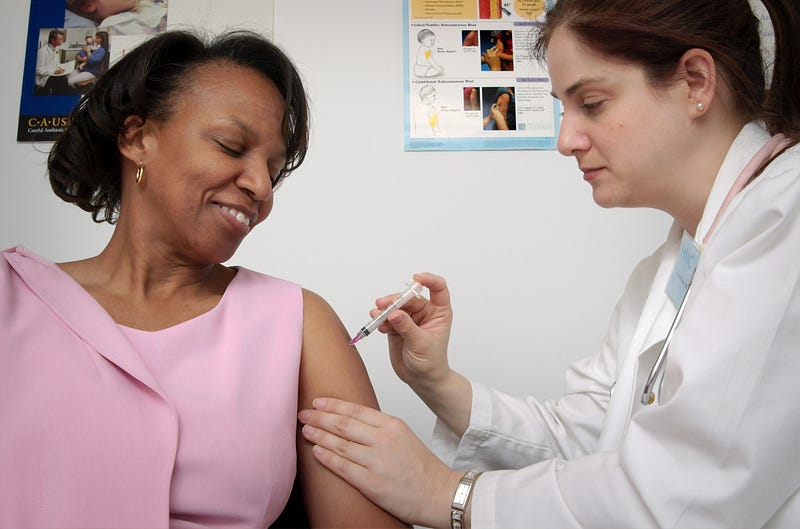
We’re going back to “normal” life, but not really
Even as much of the U.S. begins to edge — and in some cases, leap — out of shelter-in-place restrictions, there is general agreement that we can’t return to anything like our former glad-handing, socially cozy ways. Sure, we can get our hair cut if we’re careful about it, or even eat at our favorite restaurant if it has a nice patio where we can sit far enough away from everybody else. But forget about crowds at the ballpark this summer, or concerts, or watching live theater.
All of that, and all of the social, cultural, and economic vitality that comes with it, will have to wait until the risk of contacting COVID-19 comes down to a level we can live with. And since our nation has recently passed the 100,000-mark death toll, we’re nowhere close to an acceptable threshold yet.
So we hold our collective breath, waiting for a vaccine
The vast majority of us have yet to become infected with coronavirus, a fact that both hampers our resolve to maintain our diligence and renders us more vulnerable to a disease for which there is no proven treatment and virtually no immunity.
As Nadja Popovich and Margot Sanger-Katz reported on May 28 in the New York Times (“The World Is Still Far From Herd Immunity for Coronavirus”), from the virus’s perspective, it’s just getting started. As they write,
The herd immunity threshold for this new disease is still uncertain, but many epidemiologists believe it will be reached when between 60 percent and 80 percent of the population has been infected and develops resistance.
Even in New York City, the worst-hit city in the country, the best estimate of the percentage of residents with antibodies to COVID-19 comes in at just under 20%. In many places in the U.S., that percentage is in the single digits. Simply put, we’ve got a long way to go.
Given the fact that we’ve already lost more Americans to COVID-19 than in the Vietnam and Korean Wars combined, simply heading out to the mall and letting the chips fall where they may is not an appealing option.
But what will a vaccine cost us?
There are far more questions than answers when it comes to a SARS-CoV-2 (the specific coronavirus that causes COVID-19) vaccine. How soon can we develop one? Can we fast-track the process? Are we willing to accept a trade-off in safety for speed? What will it take to go into mass production? Who will have access to it, and when?
And who bears the cost?
Dennis Thompson, a HealthDay News reporter for WebMD, wrote on May 11 (“A COVID-19 Vaccine by Fall Is Possible, But at What Cost?”):
The holdup isn’t in creating a vaccine. The World Health Organization lists eight candidate vaccines currently in human clinical trials, and 100 more candidates are undergoing preclinical evaluation in laboratories worldwide.
What takes months, and usually years, is testing for safety and effectiveness. The specter of the thalidomide tragedy of the 1960s has recently been cited as an example of what can happen when a drug is rushed into circulation without adequate testing. And for vaccines in particular, the consequences can include effects such as antibody-dependent enhancement, or ADE, in which the antibodies formed in response to a vaccine actually make the body more susceptible, resulting in an even worse infection than if the person had received no vaccine at all.
Let’s say all those hurdles are met. Now can you get vaccinated?
If you live in America, that might depend on the size of your wallet. In late February, Alex Azar — the Trump administration’s Secretary of Health and Human Services, told Congress that if a vaccine was developed, there was no guarantee that all Americans could afford it. Considering that Mr. Azar is a former Big Pharma lobbyist who was also president of Eli Lilly for five years, that’s a fairly chilling remark.
Elisabeth Buchwald, writing for Market Watch, quotes Azar’s comments to the House Energy and Commerce Committee on February 26:
“We would want to ensure that we work to make it affordable, but we can’t control that price because we need the private sector to invest . . . The priority is to get vaccines and therapeutics and price controls won’t get us there.”
Buchwald also notes that, unlike European Union countries, the U.S. has no say on how private manufacturers set prices on new vaccines. Since it takes heavy investment to research and develop a vaccine — which may not make it through all the testing phases and therefore never come to market — the American free-market approach has been that you can’t expect pharma companies to lay out up to a billion dollars unless there’s the prospect of a big payoff down the road.
What if taxpayers foot some of the bill? Haven’t we already paid?
The National Institutes of Health launched a public-private partnership, announced on April 17, 2020, to speed development of vaccine and treatment options for COVID-19. That’s encouraging, but it doesn’t mean a private company — here in the U.S., or elsewhere in the world — won’t get there first. If so, that company could charge whatever the American market would bear for its vaccine.
And even if pharma companies take government money to fund their work toward a vaccine, does that mean they’ll be obligated to provide their successful product to all of us, since we’ve ostensibly already paid for at least a significant portion of it with our tax dollars? That might depend on who holds the patent rights.
In the case of remdesivir, an anti-viral drug that has shown some promise in shortening recovery time from COVID-19, a big chunk of government funding went into its development. But the company that holds its patent — Gilead Sciences — gets to set its own price for the drug, despite receiving tens of millions of taxpayer dollars. As The Washington Post reported last week (“Taxpayers paid to develop remdesivir but will have no say when Gilead sets the price,” by Christopher Rowland, May 27, 2020)
“Despite the heavy subsidies, federal agencies have not asserted patent rights to Gilead’s drug, potentially a blockbuster therapy worth billions of dollars. That means Gilead will have few constraints other than political pressure when it sets a price in coming weeks.”
Rowland notes there is pressure on the Trump Administration to take a firmer hand in controlling the price of remdesivir. Democratic legislators are asking Alex Azar for a full accounting of public money invested in the drug’s development, and a team of health and legal advocacy groups assert that the government could have a legal right to claim it co-invented remdesivir:
“It contends government scientists should have been listed as co-inventors on remdesivir patents because of their contributions. It says the Trump administration should be leveraging the government’s involvement to ensure the United States and other countries can get access at a low cost.”
What’s the point of a vaccine unless it’s affordable for everyone?
Back to the concept of herd immunity: in order to loosen the grip of the virus on our lives, once an effective vaccine is available we need as many people as possible to access it. Otherwise, it could take many years, or many avoidable deaths, or both, before we reach that 60% threshold to prevent another devastating outbreak.
Given the stakes, it’s reasonable to expect the administration to step in and do everything in its power to make sure that not only are we moving as quickly as possible toward a safe and effective defense from COVID-19, but that whatever that is will be broadly available and accessible to everyone, regardless of income, age, race, or any other status.


