
Reflections on “In Treatment”: Season 1, Episode 1
Can You Fall in Love with Your Therapist?
And what should happen if you do?
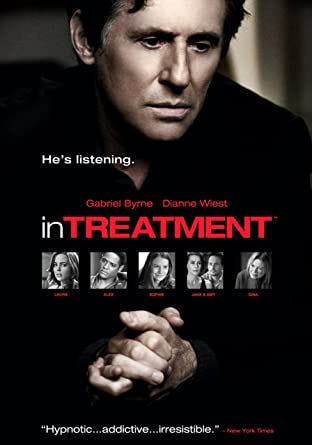
I heard the critically acclaimed series, In Treatment is coming back this year for a new season, so I thought I’d catch up and see what the excitement is about. It’s an unusual show that’s set entirely in a therapist’s office. I’ve avoided the series so far because, why I would want to watch therapy in my time off when I’m seeing clients as a therapist all day long? It seemed to be a drama best left for a wanna-be therapist, in the same way as, when I watch football, I imagine myself as Buffalo Bills quarterback Josh Allen.
However, Josh Allen may like to watch football from time to time. He can appreciate how Tom Brady picks apart defenses. I should be able to enjoy seeing the therapeutic expertise of Dr Paul Weston. Weston is no slouch when it comes to overcoming defenses, in his own way.
The scene of episode one, season one, opens with Weston’s patient, Laura Hill, in agony on the couch. She arrived hours early and waited in the parking lot, but now does almost everything possible to avoid talking about what she needs to talk about.
[Spoiler alert]
The scene was familiar to me. In fact, it happens several times a day, in every session. It’s not that my clients arrive hours early and writhe on the couch, but they all must get past their shame to talk about what they’ve never talked about before. In Laura’s case, we soon find out why she’s so squeamish. She is “in love” with her therapist.
I put “in love” in quotes because Laura’s love for her therapist is not love as we usually understand it. To the layperson, Laura’s love sure looks authentic. It has all the hallmarks of love in the usual sense of the word. She is obsessed, she fantasizes, she is drawn, she sacrifices herself to it, and she’s hornier than all get out. But, to us shrinks, love for one’s therapist can never be love in the usual sense of the word. Nothing in shrinkdom is as it appears. Laura’s love is not love, it’s erotic transference.
No therapist should be surprised when erotic transference comes along. It’s one of the hazards of our profession. Just as a farmer might get kicked by a cow if he works around cows, therapists encounter erotic transference. Most patients don’t come right out and tell us like Laura told Dr Weston — Laura was in desperate straits — but it’s there, even when the therapist is not a hunk like Paul Weston. An attraction to the therapist needs to be there to overcome shame or the patient would never talk about what she needs to talk about.
You may object and say, just because I want to talk with my therapist doesn’t mean I’m in love with him. I’m glad you feel that way. That shows you have a flexibility of mind that allows for all kinds of relationships with varying degrees of intimacy and limits. Not everyone has so many categories to sort things into. They have one big box into which to put all attraction.
This is what I mean. You met someone who listens to every word you say, accepts you for who you are, and consistently puts your needs ahead of his own. Your other relationships are much more problematic, but this man has a way of helping you sort even those out. You find yourself telling him things you never told anyone before. Why wouldn’t you value having that person in your life? Sure, but what do you call that relationship? Of course, you don’t need to call it anything, but if you do, the name you call it determines what you do with it. Since what I’ve described has a lot in common with love affairs you’ve had or heard about people having, you call it love. Once you call it love, that opens the door for many other things to be included that you associate with love, like sexual desire, romantic declarations, and the wish to grow old together. The next thing you know, you’re “in love” with your therapist.
We therapists call it transference because you have transferred many aspects of being in love onto this new kind of relationship. We try to give it a new name, we call it a “therapeutic relationship”. It need not include sexual desire, romantic declarations, or growing old together. Usually, renaming it works. When it doesn’t, it’s because the client has some heavy-duty preoccupations with being In Love. We shrinks call these preoccupations complexes. Complexes suck everything near into them, like black holes, swallowing whole galaxies. Laura has a complex about being In Love, and that amplifies her transference.
Being In Love is not the only complex that comes between a client and her therapist, and erotic transference is not the only kind of transference. As I’ve gotten older, I get more and more clients who look at me as their father, sometimes the father they never had. Sometimes they say so since that is less dangerous to admit than erotic transference. In this case, they transfer everything they think, feel, and believe about their father, or their idea of fathers, onto me. I’m surprised Laura didn’t have that kind of transference, since Dr Weston has got to have about twenty-five years on her. The fact she didn’t, may reveal a lot about her daddy issues. Did eroticism get mixed up with her being a daughter?
When I work with people referred by probation, I often find the client’s attitude towards law enforcement transferred on to me. They think I’m just another cop. That’s transference, too. So are a client’s attitudes towards my age, race, ethnicity, the clothes I wear, or the art I have on my walls. They may draw erroneous conclusions about me, based on appearances and earlier experiences. Transference is just another name for prejudice.
You might think that transference is an impediment to therapy. Sometimes it is, but it could be the very stuff of which therapy is made. I’ve supervised therapists who believe that if their client confesses to erotic transference, they must sever all contact with them and refer them to someone else. I’ve worked in clinics where they made that a matter of policy. They all say it’s too dangerous to have a client who’s “in love” with their therapist. I agree it’s dangerous if the client is the stalker type or if the therapist is as tangled up as the client is in his own transferences and complexes. It’s more dangerous if the therapist is “in love” with the client.
When that isn’t the case, therapy can go on doing what it’s meant to do; getting a person thinking about the way they think. You want to have transferences and complexes out in the open so we can dismantle them and replace them with something that works better.
I’ve only seen the first episode. But, Laura, I think we’ll find, has a thing about love. If she can remain in a caring, but limited relationship with Dr Weston, the power of the complex can be diminished, and she’ll replace it with a more sophisticated and nuanced way to think about all her intimate relationships.
I’ll have to watch more episodes to see if that happens. I’ll also be curious to see whether Dr Weston also has an In Love complex that his healthy relationship with his patent will be sucked into.
Keith R Wilson is a mental health counselor in private practice and the author of three self-help books, three novels, and innumerable articles.


